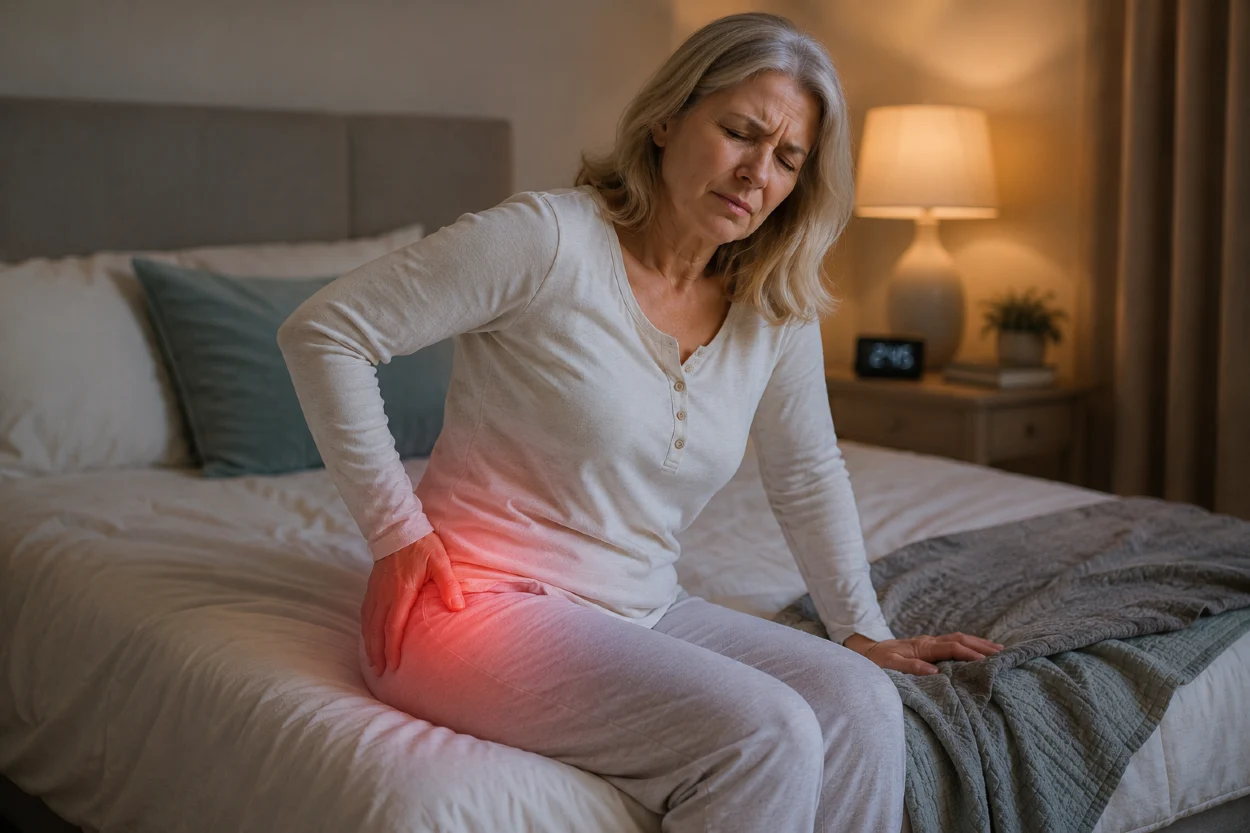
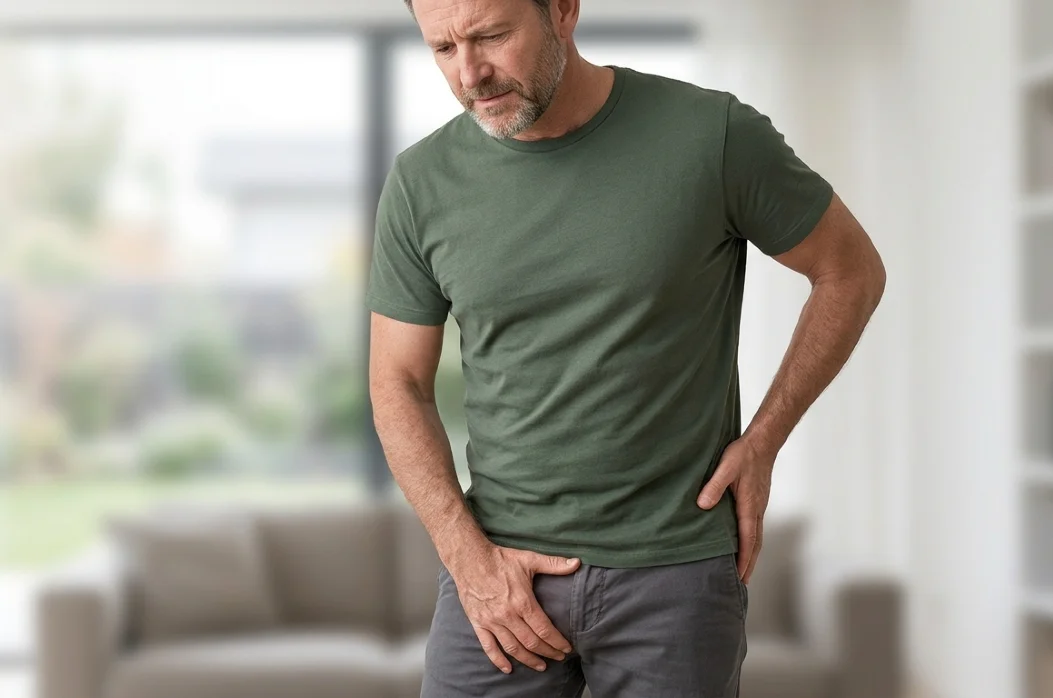
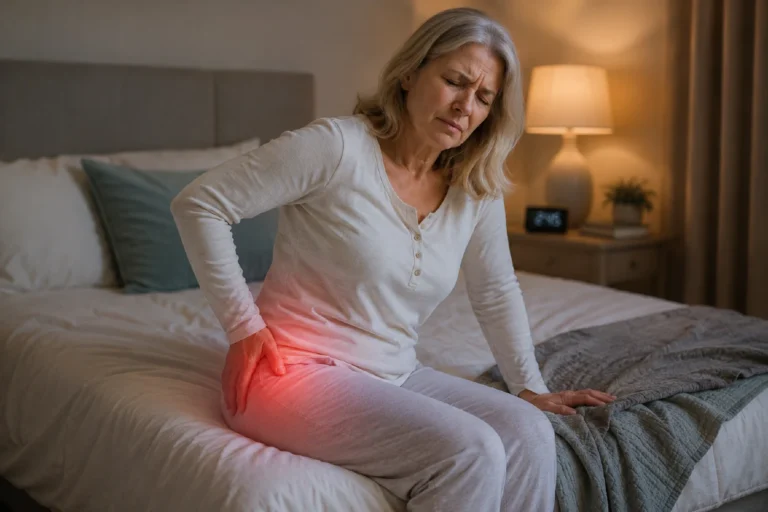
Pain in the groin and hip is a common complaint that can have many different causes. The pain may originate from the hip joint itself, the muscles and tendons around the hip and pelvis, or structures outside the musculoskeletal system.
The location and character of the pain can provide important clues about its cause. Hip problems often cause deep pain in the groin, while muscle and tendon injuries may produce more localized pain that worsens with specific movements or physical activity.
In this article, we will cover the most common causes of pain in the groin and hip, how to recognize the typical symptoms of each condition, and when medical evaluation or imaging may be necessary.
Why Does Pain Occur in Both the Groin and Hip?
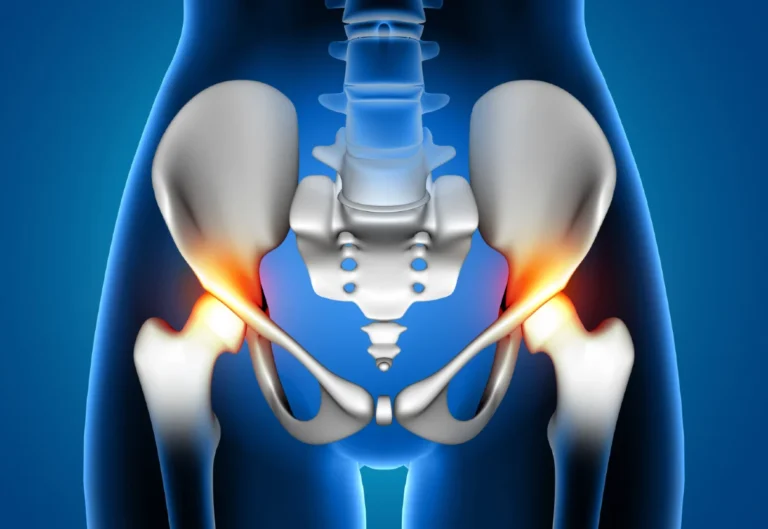
Pain in the groin and hip often occurs at the same time because these areas are closely connected anatomically. The hip joint, surrounding muscles, tendons, and other soft tissues can produce pain that is felt not only directly over the hip but also deeper in the groin or upper thigh.
The location of pain does not always indicate exactly where the problem is. For example, problems inside the hip joint, such as hip osteoarthritis, femoroacetabular impingement, or a labral tear, commonly cause deep groin pain that may also be felt around the front or side of the hip. Similarly, irritation or injury of the hip flexors, iliopsoas, or adductor muscles and tendons can cause pain that extends between the groin and hip.
In some cases, the pain does not originate from the hip itself. Problems involving the lower back, nerves, abdominal or pelvic structures, or the groin can also cause pain in this region. This is why identifying the exact source of pain in the hip and groin may require considering several possible causes rather than focusing on the location of the pain alone.
What Does Pain in the Groin and Hip Feel Like?
Pain in the groin and hip can feel different depending on which structure is causing the problem. It may be felt deep inside the groin, at the front or side of the hip, or along the inner thigh. Some people experience pain mainly with movement, while others notice discomfort when sitting or resting.
Common symptoms include:
- Deep groin pain that may feel like it comes from inside the hip joint
- Pain at the front of the hip or groin, particularly with hip flexion
- Inner thigh pain, which may be related to the adductor muscles or tendons
- Pain when walking or putting weight on the leg
- Pain when sitting, especially for prolonged periods or with the hip flexed
- Pain with hip rotation, such as when getting in or out of a car
- Stiffness and limited hip range of motion
- Clicking, catching, or a locking sensation in the hip
Where Exactly Is the Pain?
The exact location of pain can provide useful clues about its possible cause, although pain location alone cannot reliably identify the underlying problem.
- Front of the hip and groin: Common with problems originating inside the hip joint, such as osteoarthritis, femoroacetabular impingement, or a labral tear.
- Inner thigh and groin: Often associated with adductor muscle or tendon problems, particularly after sports or sudden changes in activity.
- Side of the hip: More commonly associated with structures around the outside of the hip, including the gluteal tendons and greater trochanteric pain syndrome.
- Buttock: Pain in the buttock may be related to the hip, lower back, or surrounding muscles.
- Lower abdomen and groin: Pain in this area may be associated with a hernia, abdominal or pelvic conditions, or athletic pubalgia.
Causes of Pain in the Groin and Hip
Pain in the groin and hip can have many different causes. Some originate inside the hip joint, while others involve the muscles, tendons, abdominal wall, or structures around the pelvis. In some cases, pain felt in the groin or hip is actually referred from the lower back or another part of the body.
The most common causes include hip osteoarthritis, femoroacetabular impingement, labral tears, muscle and tendon injuries, and hernias. The pattern of pain and the activities that trigger it can provide important clues about the underlying cause.
The table below summarizes the main causes according to their most likely source.
| Category | Common Causes |
|---|---|
| Hip Joint Conditions |
Hip osteoarthritis Femoroacetabular impingement (FAI) Hip labral tear Hip fracture Femoral neck stress fracture |
| Nerve-Related and Referred Pain |
Lumbar spine disorders Nerve root irritation or compression Referred pain from the lower back |
| Overuse Syndromes and Sports Injuries |
Iliopsoas tendinopathy Hip flexor strain Adductor strain Adductor tendinopathy Athletic pubalgia |
| Internal and Other Causes |
Inguinal hernia Kidney and urinary conditions Testicular conditions Pelvic conditions Abdominal conditions Enlarged lymph nodes |
1. Hip Osteoarthritis
Hip osteoarthritis is one of the most common causes of persistent hip and groin pain, particularly in middle-aged and older adults. The pain is often felt deep in the groin and may also spread toward the front of the thigh or knee.
Typical symptoms include hip stiffness, pain when walking or standing, and reduced range of motion. Internal rotation of the hip is often particularly limited or painful. Activities such as putting on socks, getting into a car, or climbing stairs may become increasingly difficult as the condition progresses.
2. Femoroacetabular Impingement (FAI)
Femoroacetabular impingement occurs when the shape of the hip joint causes abnormal contact between the femoral head and the acetabulum. It can involve a cam deformity, a pincer deformity, or a combination of both.
FAI commonly causes deep groin pain that is aggravated by hip flexion, squatting, prolonged sitting, or activities involving repeated hip movement. It is particularly common in younger and physically active people.
3. Hip Labral Tear
A hip labral tear affects the ring of cartilage that surrounds the socket of the hip joint. It can cause deep groin pain, particularly during movements that load or rotate the hip.
Some people also experience clicking, catching, or a feeling that the hip is locking. Labral tears may occur together with femoroacetabular impingement, repetitive sports activities, or previous hip injury.
Related Guides
4. Iliopsoas Tendinopathy
The iliopsoas is an important hip flexor located at the front of the hip. Irritation of its tendon can cause anterior hip and groin pain, particularly during activities that require repeated or forceful hip flexion.
Pain may be aggravated by lifting the knee, climbing stairs, running, or getting up from a chair. Some people also experience a snapping or clicking sensation at the front of the hip, sometimes referred to as snapping hip.
5. Hip Flexor Strain
A hip flexor strain occurs when one or more of the muscles responsible for lifting the thigh are overstretched or injured. It is more common after sprinting, kicking, jumping, or other activities involving sudden or forceful hip flexion.
The pain is usually felt at the front of the hip or upper thigh and may become worse when lifting the knee or walking. Acute strains may also cause tenderness, weakness, or pain with resisted hip flexion.
6. Adductor Strain and Adductor Tendinopathy
The adductor muscles are located along the inner thigh and help bring the leg toward the midline of the body. An acute adductor strain can occur during sports involving sudden changes of direction, kicking, sprinting, or stretching.
Adductor problems typically cause inner thigh or groin pain. Pain may be reproduced when the legs are squeezed together against resistance. Chronic overload can lead to adductor tendinopathy, which may cause persistent groin pain during sports and other demanding activities.
7. Athletic Pubalgia
Athletic pubalgia is a cause of chronic or recurrent sports-related groin pain, particularly in athletes involved in running, kicking, twisting, or rapid changes of direction.
Despite sometimes being called a “sports hernia,” athletic pubalgia is not the same as a traditional inguinal hernia. It involves injury or dysfunction of structures around the lower abdominal wall and pubic region and may cause pain that worsens with sports activity, coughing, or certain movements.
8. Inguinal Hernia
An inguinal hernia occurs when tissue pushes through a weakened area of the abdominal wall in the groin. It may cause groin pain, pressure, burning, or a visible or palpable bulge.
Symptoms often become more noticeable with coughing, lifting, straining, or prolonged standing and may improve when lying down. A painful lump that cannot be pushed back into the abdomen, particularly when accompanied by nausea, vomiting, or severe abdominal pain, requires urgent medical assessment.
9. Hip Fracture and Stress Fracture
A hip fracture is an important cause of acute hip and groin pain, particularly in older adults after a fall or other trauma. Severe pain and an inability to bear weight on the affected leg are important warning signs.
A stress fracture of the hip or femoral neck is different. It can develop gradually from repetitive loading and is more relevant to runners, athletes, and people with reduced bone strength. Pain may initially occur only during activity but can progress to pain with walking or even at rest.
Because some hip stress fractures can worsen or become displaced, persistent or increasing weight-bearing pain should not be ignored.
10. Referred Pain From the Lower Back
Not all pain felt around the hip and groin originates in the hip. Problems affecting the lumbar spine or nearby nerves can sometimes produce pain that is felt in the hip, groin, or thigh.
Nerve-related pain may be described as burning, shooting, or electric and may be accompanied by numbness, tingling, or weakness. The presence of lower back pain or symptoms that radiate down the leg can provide additional clues that the lumbar spine may be involved.
11. Other Causes of Groin Pain
Although musculoskeletal conditions are common, pain in the groin can also come from structures outside the hip and surrounding muscles. Depending on the symptoms, other possible causes include:
- Kidney or urinary problems, including kidney stones or urinary tract conditions
- Testicular conditions, which can cause pain that is felt in the groin
- Pelvic conditions, including gynecological causes of pelvic or groin pain
- Abdominal conditions, which can sometimes produce pain near the groin
- Enlarged lymph nodes, which may cause localized tenderness or discomfort in the groin
These causes are particularly important to consider when groin pain is accompanied by urinary symptoms, abdominal pain, fever, genital symptoms, or other symptoms that cannot be explained by a musculoskeletal problem.
The location and behavior of your pain can provide clues about where it is coming from. However, symptoms often overlap, so these patterns cannot replace a medical examination.
How to Tell Where Groin and Hip Pain Comes From
The pattern of your pain, what triggers it, and which movements are limited can provide useful clues about whether the problem comes from the hip joint, muscles and tendons, a hernia, or the lower back.
Signs the Pain May Come From the Hip Joint
Pain is more likely to originate inside the hip joint when you have:
- Deep groin pain, often felt inside the hip rather than on the surface
- Reduced or painful hip rotation, especially internal rotation
- Pain with weight bearing, walking, or standing
- Pain getting in or out of a car
- Difficulty putting on socks or shoes because moving the hip is painful or restricted
- Stiffness and reduced hip range of motion
These features are commonly seen with conditions such as hip osteoarthritis, femoroacetabular impingement, and labral problems.
Signs the Pain May Come From Muscles or Tendons
A muscle or tendon problem is more likely when:
- Pain started after sports, a sudden movement, or increased activity
- The pain is localized and tender to touch
- Pain increases when the affected muscle or tendon is contracted against resistance
- Stretching the affected muscle reproduces the pain
- Symptoms are mainly related to specific movements rather than general weight bearing
For example, adductor problems typically cause inner-thigh or groin pain that increases with resisted hip adduction.
Signs the Pain May Be From an Inguinal Hernia
A hernia becomes more likely when groin pain is accompanied by:
- A visible or palpable bulge in the groin
- Pain or pressure that increases with coughing, lifting, or straining
- A sensation of pressure, burning, or heaviness in the groin
- Symptoms that improve when lying down
A painful groin lump that cannot be pushed back in, especially when accompanied by nausea or vomiting, requires urgent medical assessment.
Signs the Pain May Come From the Lower Back
Consider a lower-back or nerve-related source when groin or hip pain occurs with:
- Low back pain
- Pain that radiates into the thigh or leg
- Numbness or tingling
- Burning, shooting, or electric-like pain
- Muscle weakness or changes in reflexes
This is particularly important when the hip itself has relatively normal movement but neurological symptoms are present.
Why the Location of Pain Is Not Enough
No single symptom can reliably identify the source of groin and hip pain. For example, both a hip joint problem and an adductor injury can cause groin pain, while nerve-related pain can sometimes be felt around the hip.
The combination of pain location, aggravating movements, range of motion, strength, and associated symptoms provides much more useful information than pain location alone.
Related Guides
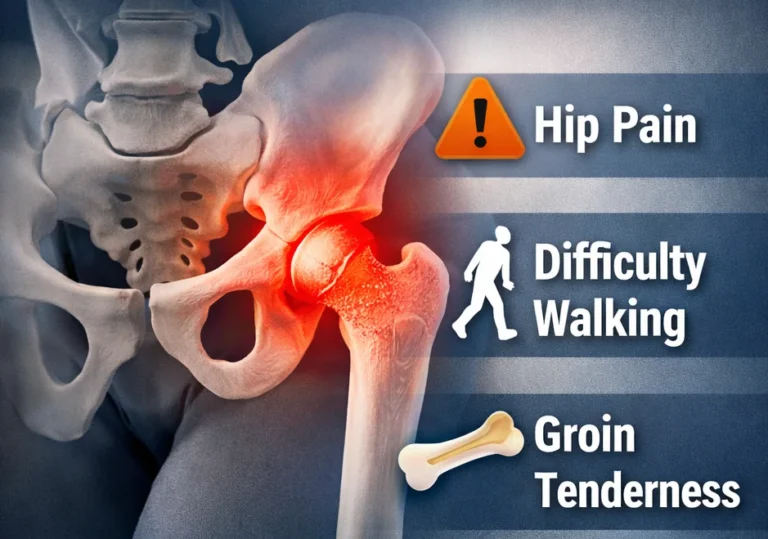
Groin and Hip Pain: How to Recognize the Possible Cause
The combination of pain location, associated symptoms, and clinical findings can help narrow down the possible cause of groin and hip pain.
This table provides a quick overview of common causes and the tests that may be used to confirm the diagnosis.
| Possible Cause | Common Symptoms | Common Diagnostic Tests |
|---|---|---|
| Hip Joint Conditions | Deep groin or hip pain Pain with walking or prolonged sitting Stiffness and reduced hip rotation Possible night pain | Physical examination X-ray MRI when indicated |
| Lumbar Spine and Nerve-Related Pain | Burning or shooting pain Pain radiating into the thigh Numbness or tingling Back pain or weakness | Neurological examination MRI of the lumbar spine EMG/nerve conduction studies when indicated |
| Muscle, Tendon and Sports Injuries | Localized groin or inner-thigh pain Pain after sports or increased activity Pain with resisted muscle contraction Tenderness over the affected area | Physical examination Ultrasound MRI when needed |
| Hernias and Internal Causes | Groin pain or pressure Bulge in the groin Symptoms with coughing or straining Abdominal, urinary, genital, or pelvic symptoms | Physical examination Ultrasound Blood or urine tests Additional specialist evaluation when indicated |
How Is Pain in the Groin and Hip Diagnosed?
The cause of groin and hip pain is usually determined through a combination of the medical history, physical examination, and targeted imaging or other tests when needed.
Medical History and Physical Examination
The doctor will assess the location and character of the pain, what triggers it, previous injuries, and associated symptoms such as stiffness, clicking, numbness, weakness, or a groin bulge.
The examination may include:
- Hip range of motion and strength testing
- Palpation of the hip, groin, and surrounding muscles
- Resisted hip flexion and adduction
- Gait and weight-bearing assessment
- Lumbar spine and neurological examination
- Abdominal and groin examination when indicated
This helps determine whether the pain is more likely to originate from the hip joint, muscles and tendons, lower back, nerves, or another structure.
X-ray
X-rays of the hip and pelvis are commonly used when a joint or bone problem is suspected. They can show osteoarthritis, fractures, and other structural abnormalities, but provide limited information about soft tissues.
Ultrasound
Ultrasound is useful for examining muscles, tendons, bursae, fluid collections, and some groin conditions. It can also be used dynamically to assess structures during movement.
MRI
MRI provides detailed images of the hip joint and surrounding tissues. It may be recommended when a labral tear, stress fracture, cartilage or soft-tissue injury is suspected or when the diagnosis remains unclear.
MRI of the lumbar spine may be appropriate when symptoms suggest referred pain or nerve compression.
Other Tests
Blood or urine tests and additional abdominal, pelvic, or urological investigations may be needed when symptoms suggest an infection, urinary problem, or another internal cause.
Electromyography and nerve conduction studies may be considered when nerve dysfunction or radiculopathy is suspected.
When Is Imaging Needed?
Imaging is not necessary for every case of groin and hip pain. It is more likely to be needed when pain is severe or persistent, follows an injury, causes significant limitation, fails to improve with treatment, or is accompanied by red-flag symptoms.
When Should You See a Doctor for Groin and Hip Pain?
Most cases of groin and hip pain are not emergencies, but persistent or unexplained symptoms should not be ignored. A medical evaluation can help identify the cause and prevent a minor problem from becoming a more serious one.
You should see a doctor if you have:
- Persistent or worsening pain that does not improve with rest or activity modification
- Difficulty walking or increasing limitation of daily activities
- Recurrent groin pain during sports or exercise
- Clicking, catching, or locking of the hip
- A new lump or bulge in the groin
- Pain that repeatedly returns without a clear explanation
When Is Groin and Hip Pain an Emergency?
Seek urgent medical attention if you have:
- Sudden severe hip or groin pain
- Inability to bear weight on the affected leg, particularly after an injury
- Severe pain with fever or chills, which may indicate an infection
- Sudden severe testicular pain
- A painful groin lump that cannot be pushed back in, especially with nausea or vomiting
- Severe pain following significant trauma or a suspected hip or pelvic fracture
Clinical Insight
These symptoms can indicate conditions that require prompt assessment and should not be managed with home treatment alone.
Frequently Asked Questions
What is the most common cause of pain in the groin and hip?
Hip osteoarthritis is a common cause, particularly in older adults. Other frequent causes include muscle and tendon injuries, femoroacetabular impingement, labral tears, and lower back problems.
Can hip problems cause groin pain?
Yes. Problems inside the hip joint commonly cause deep groin pain because the hip joint and surrounding structures share sensory nerve pathways. Hip osteoarthritis, femoroacetabular impingement, and labral tears can all cause pain in the groin.
What causes pain in the groin without an injury?
Groin pain can develop without a specific injury due to conditions such as hip osteoarthritis, femoroacetabular impingement, tendinopathy, a hernia, or referred pain from the lower back. Some abdominal, urinary, pelvic, or genital conditions can also cause groin pain.
How do I know if my groin pain is a hip problem?
A hip problem is more likely when the pain is deep in the groin and associated with reduced hip movement, painful rotation, weight-bearing pain, or difficulty with activities such as getting into a car or putting on socks. However, these symptoms can overlap with other causes, so a physical examination may be needed.
Can a hernia cause hip and groin pain?
Yes. An inguinal or femoral hernia can cause pain, pressure, burning, or discomfort in the groin that may extend toward the lower abdomen or upper thigh. A groin bulge that becomes more noticeable with coughing, lifting, or straining is an important clue.
When should I see a doctor for groin and hip pain?
You should seek medical evaluation if the pain is persistent, worsening, recurrent, or limiting walking and daily activities. Medical assessment is also recommended for a new groin lump, recurrent sports-related pain, or clicking and locking of the hip. Sudden severe pain, inability to bear weight, fever with severe hip pain, acute testicular pain, or a painful irreducible hernia requires urgent assessment.
What is the best treatment for pain in the groin and hip?
The best treatment depends on the underlying cause. Treatment may include activity modification, physical therapy and targeted exercises, pain medication, injections, or surgery when appropriate. Because different conditions can cause similar symptoms, treatment should be directed at the specific diagnosis rather than the pain location alone.
Quick Overview – Pain in the Groin and Hip
- Pain in the groin and hip can originate from the hip joint, muscles and tendons, lower back and nerves, hernias, or internal organs.
- Deep groin pain with stiffness, reduced hip rotation, or pain when walking is more suggestive of a hip joint problem.
- Muscle and tendon problems often cause localized groin or inner-thigh pain that worsens with specific movements, resisted contraction, or sports activity.
- A groin bulge or pain that increases with coughing, lifting, or straining may indicate an inguinal or femoral hernia.
- Back pain, radiating pain, numbness, or tingling may indicate that the symptoms are coming from the lumbar spine or nerves rather than the hip itself.
- Diagnosis usually starts with a medical history and physical examination, with X-ray, ultrasound, MRI, or other tests used when indicated.
- Treatment depends on the underlying cause and may include activity modification, physical therapy, medication, injections, or surgery.
- Sudden severe pain, inability to bear weight, fever with severe hip pain, acute testicular pain, or a painful irreducible hernia requires urgent medical assessment.
Pun M, Ng T, Vermeylen K, Tran J. Innervation of the hip joint: implications for regional anaesthesia and image-guided interventional pain procedures. BJA Education. 2024;24(6):191-202. BJA Education: Hip joint innervation and regional pain
Groh MM, Herrera J. A comprehensive review of hip labral tears. Current Reviews in Musculoskeletal Medicine. 2009;2(2):105-117. PubMed: Comprehensive review of hip labral tears
Matthews AH, Davis DD, Fish MJ, et al. Avascular Necrosis. StatPearls [Internet]. Updated 2023. NCBI Bookshelf: Avascular necrosis
Robertson GA, Wood AM. Femoral Neck Stress Fractures in Sport: A Current Concepts Review. Sports Medicine International Open. 2017;1(2):E58-E68. PubMed: Femoral neck stress fractures in sport
Bisciotti GN, et al. Italian Consensus on Groin Pain in Athletes. BMJ Open Sport & Exercise Medicine. 2016;2:e000142. BMJ Open Sport & Exercise Medicine: Consensus on groin pain in athletes
Chamberlain R. Hip Pain in Adults: Evaluation and Differential Diagnosis. American Family Physician. 2021;103(2):81-89. AAFP: Hip pain evaluation and differential diagnosis
Maloy W, Merrigan B, Hulsopple CD. Groin Pain and Injuries: Evaluation and Management. American Family Physician. 2025;111(4):337-343. AAFP: Groin pain and injuries evaluation and management
Weir A, Brukner P, Delahunt E, et al. Doha agreement meeting on terminology and definitions in groin pain in athletes. British Journal of Sports Medicine. 2015;49(12):768-774. BJSM: Doha agreement on groin pain in athletes
Wilson JJ, Furukawa M. Evaluation of the patient with hip pain. American Family Physician. 2014;89(1):27-34. AAFP: Evaluation of the patient with hip pain