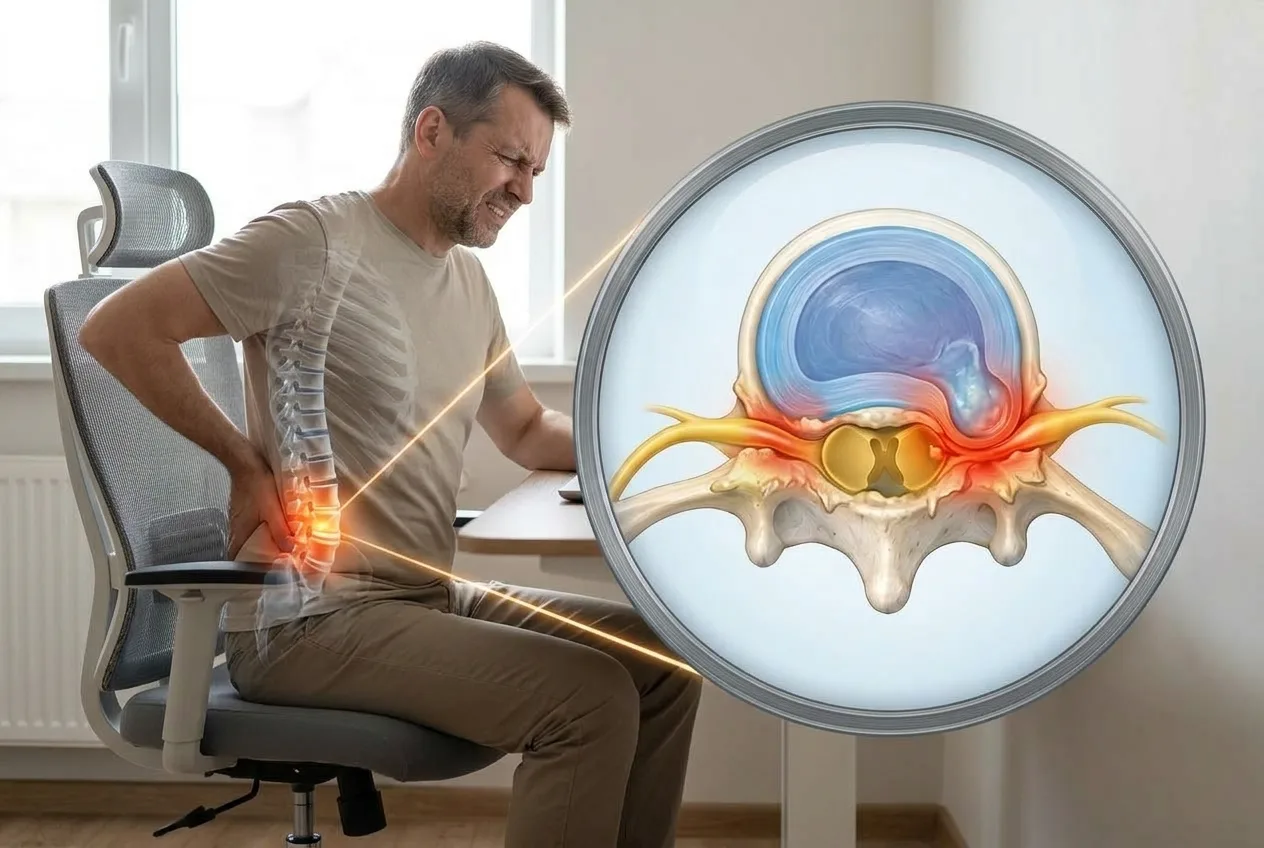

Pain that starts in your neck and travels into your shoulder, arm, or hand can be more than a simple muscle strain. In some cases, the problem begins with irritation or compression of a nerve root in the cervical spine—a condition known as cervical radiculopathy. It is often described as a pinched nerve in the neck.
Unlike ordinary neck pain, cervical radiculopathy can cause symptoms that extend well beyond the neck. You may experience sharp or burning pain along the arm, tingling or numbness in the hand, or weakness in certain arm or hand muscles. The exact pattern depends on which cervical nerve root is affected.
But how can you tell whether your arm pain is actually coming from a nerve in your neck? Understanding the cervical nerve distribution, the typical symptoms of radiculopathy, and how these symptoms differ from shoulder or peripheral nerve problems can provide important clues. In this article, we’ll explain what cervical radiculopathy is, what causes it, how it is diagnosed, and which treatments can help.
Key Clinical Points – Cervical Radiculopathy
- Cervical radiculopathy occurs when a cervical nerve root becomes irritated, inflamed, or compressed, causing symptoms that may extend from the neck into the shoulder, arm, or hand.
- The most common causes are cervical disc herniation and age-related degenerative changes such as cervical spondylosis and foraminal stenosis.
- Typical symptoms include radiating arm pain, numbness, tingling, and muscle weakness, although the exact pattern depends on the affected nerve root.
- Dermatomes, myotomes, and reflexes overlap, so symptoms do not always follow a textbook pattern and should be interpreted together with the neurological examination.
- Diagnosis is based primarily on the medical history and clinical examination, while MRI and EMG/NCS may be used when symptoms are persistent, severe, or diagnostically unclear.
- Most cases improve with conservative treatment over several weeks to a few months. Surgery is generally reserved for progressive neurological deficits or persistent disabling symptoms despite appropriate non-surgical treatment.
What Is Cervical Radiculopathy?
Cervical radiculopathy occurs when a nerve root in the neck becomes irritated, inflamed, or compressed. Because these nerve roots contribute to the nerves that supply the upper limb, the resulting symptoms may extend well beyond the neck and into the shoulder, arm, forearm, or hand.
Unlike ordinary neck pain, cervical radiculopathy can cause neurological symptoms, including pain, numbness, tingling, or muscle weakness. The location and pattern of these symptoms depend largely on which cervical nerve root is affected.
Radiculopathy is a condition caused by irritation or compression of a spinal nerve root, leading to pain, numbness, tingling, or weakness in the area supplied by that nerve.
Radiculopathy Definition
The term radiculopathy refers to dysfunction of a spinal nerve root. A nerve root is the part of a spinal nerve that emerges from the spinal canal near the spinal cord and passes through an opening between adjacent vertebrae.
In the cervical spine, these nerve roots carry sensory and motor signals between the spinal cord and the upper limb. If a nerve root becomes irritated or compressed, these signals can be disrupted, resulting in sensory or motor symptoms.
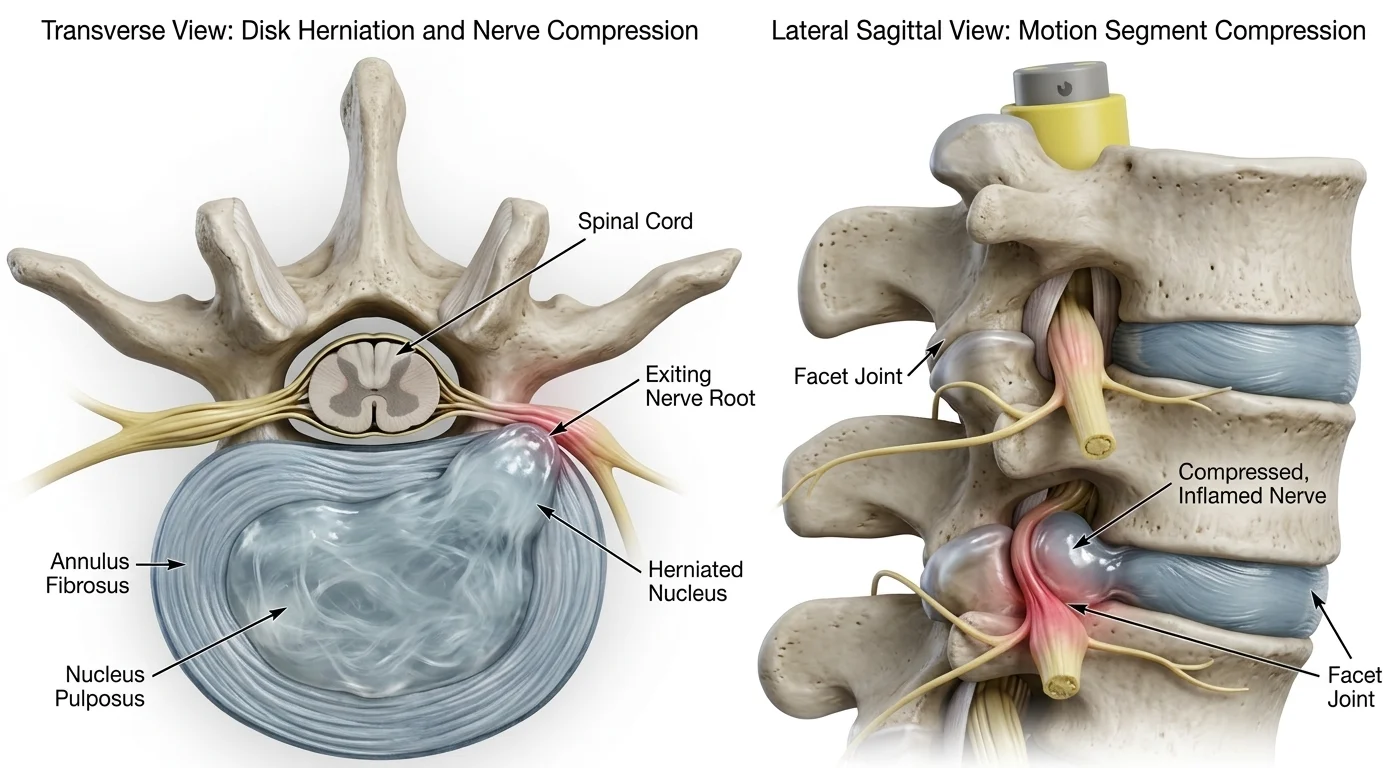
The most common causes of cervical radiculopathy include a herniated cervical disc, cervical spondylosis, and narrowing of the neural foramen (foraminal stenosis). A disc herniation can directly irritate a nearby nerve root, while age-related changes such as bone spurs and loss of disc height can gradually reduce the space available for the nerve.
This helps explain why cervical radiculopathy can produce symptoms in the arm even though the underlying problem is in the neck. For example, irritation of the C6 nerve root may cause pain or altered sensation extending toward the thumb, while C7 nerve root involvement may produce symptoms that travel toward the middle finger.
The pattern is not always perfectly predictable, however. Cervical nerve roots have overlapping areas of sensory and motor supply, so symptoms can vary from one person to another.
It is also important to distinguish radiculopathy from radicular pain and referred pain:
- Radiculopathy is a neurological condition involving a spinal nerve root and may cause sensory loss, muscle weakness, or changes in reflexes.
- Radicular pain is pain caused by irritation or inflammation of a nerve root. It may feel sharp, burning, electric, or shooting and can travel from the neck into the arm.
- Referred pain is pain that is felt away from its actual source. It can occur with problems affecting muscles, joints, or other structures in the neck and shoulder, but it does not necessarily follow a specific nerve-root distribution or cause neurological deficits.
Importantly, nerve root compression does not always cause symptoms. Imaging studies may show disc bulges, degenerative changes, or narrowing around a nerve root in people without neurological symptoms. The diagnosis of cervical radiculopathy therefore relies primarily on the patient’s symptoms and clinical examination, with imaging used when appropriate to confirm the suspected cause or investigate persistent or concerning symptoms.s on the combination of symptoms and clinical examination rather than an MRI finding alone.
What Causes Cervical Radiculopathy?
Cervical radiculopathy develops when a cervical nerve root becomes irritated or compressed, most often because of changes involving the intervertebral discs or the structures surrounding the nerve. The two most common causes are cervical disc herniation and degenerative changes in the cervical spine.
Cervical Disc Herniation
A herniated cervical disc occurs when the inner material of an intervertebral disc pushes through a weakened or damaged outer layer. If the herniated material comes into contact with a nearby nerve root, it can cause mechanical compression and inflammation, resulting in radicular pain or other neurological symptoms.
Cervical Spondylosis and Foraminal Stenosis
Cervical spondylosis refers to age-related degenerative changes in the cervical spine. Disc degeneration can lead to loss of disc height, while bone spurs (osteophytes) and thickening of surrounding tissues may further narrow the space available for a nerve root.
When the opening through which a nerve root exits the spine becomes narrowed, this is called foraminal stenosis. Depending on its severity, foraminal narrowing can irritate or compress the nerve root and contribute to cervical radiculopathy.
Less Common Causes
Less commonly, cervical radiculopathy can result from trauma, inflammatory conditions, infections, or tumors affecting the cervical spine or surrounding tissues.
In many people, more than one structural change is present at the same time. For example, disc degeneration may reduce the height of a disc while bone spurs and foraminal narrowing further reduce the space around an exiting nerve root.
Cervical Radiculopathy Symptoms
Cervical radiculopathy symptoms vary depending on which nerve root is affected and how severely it is irritated or compressed. The most characteristic symptoms include pain that radiates from the neck into the arm, numbness, tingling, and muscle weakness. Symptoms may affect the shoulder, upper arm, forearm, hand, or fingers.
The pain associated with cervical radiculopathy is often described as sharp, burning, shooting, or electric. It may travel along the arm rather than remaining in one localized area.
Certain movements of the neck, such as extension or rotation toward the affected side, may aggravate the symptoms. Coughing, sneezing, or straining can also sometimes increase radiating arm pain by temporarily increasing pressure around the nerve root.
Not everyone with cervical radiculopathy experiences significant neck pain. In some people, arm pain is the dominant symptom, while neck discomfort is mild or absent. This can make it difficult to recognize that the source of the problem is actually in the cervical spine.
Numbness and tingling may occur in part of the arm or hand and often provide useful clues about the affected nerve root. Some people describe these sensations as pins and needles, burning, or an unusual sensitivity to touch. The exact sensory pattern varies because adjacent cervical nerve roots have overlapping areas of supply.
Muscle weakness may occur when nerve-root dysfunction affects the muscles supplied by the affected nerve, causing difficulty with movements such as lifting the arm, extending the wrist, or moving individual fingers.
The symptoms of cervical radiculopathy do not always follow a perfectly predictable pattern. Because cervical nerve roots have overlapping sensory and motor territories, two people with the same affected nerve root may experience somewhat different symptoms. For this reason, the distribution of pain or numbness alone is not enough to establish the diagnosis.
Clinical Insight
A combination of radiating arm pain, sensory changes, and muscle weakness is more suggestive of cervical radiculopathy than isolated neck or shoulder pain. However, similar symptoms can occur with conditions affecting the shoulder or peripheral nerves, so a clinical examination is important when symptoms persist, are severe, or are associated with weakness.
Cervical Nerve Distribution: Which Nerve Is Affected?
The symptoms of cervical radiculopathy often provide clues about which nerve root is affected. Each cervical nerve root contributes to specific areas of sensation and muscle function, although these patterns overlap considerably.
| Nerve Root | Typical Pain / Sensory Area | Key Motor Findings | Reflex |
|---|---|---|---|
| C5 | Shoulder and lateral upper arm | Shoulder abduction | Biceps |
| C6 | Lateral forearm and thumb | Elbow flexion, wrist extension | Brachioradialis |
| C7 | Middle finger | Elbow extension, wrist and finger extension | Triceps |
| C8 | Medial forearm, ring and little fingers | Finger flexion | — |
| T1 | Medial forearm | Finger abduction and adduction | — |
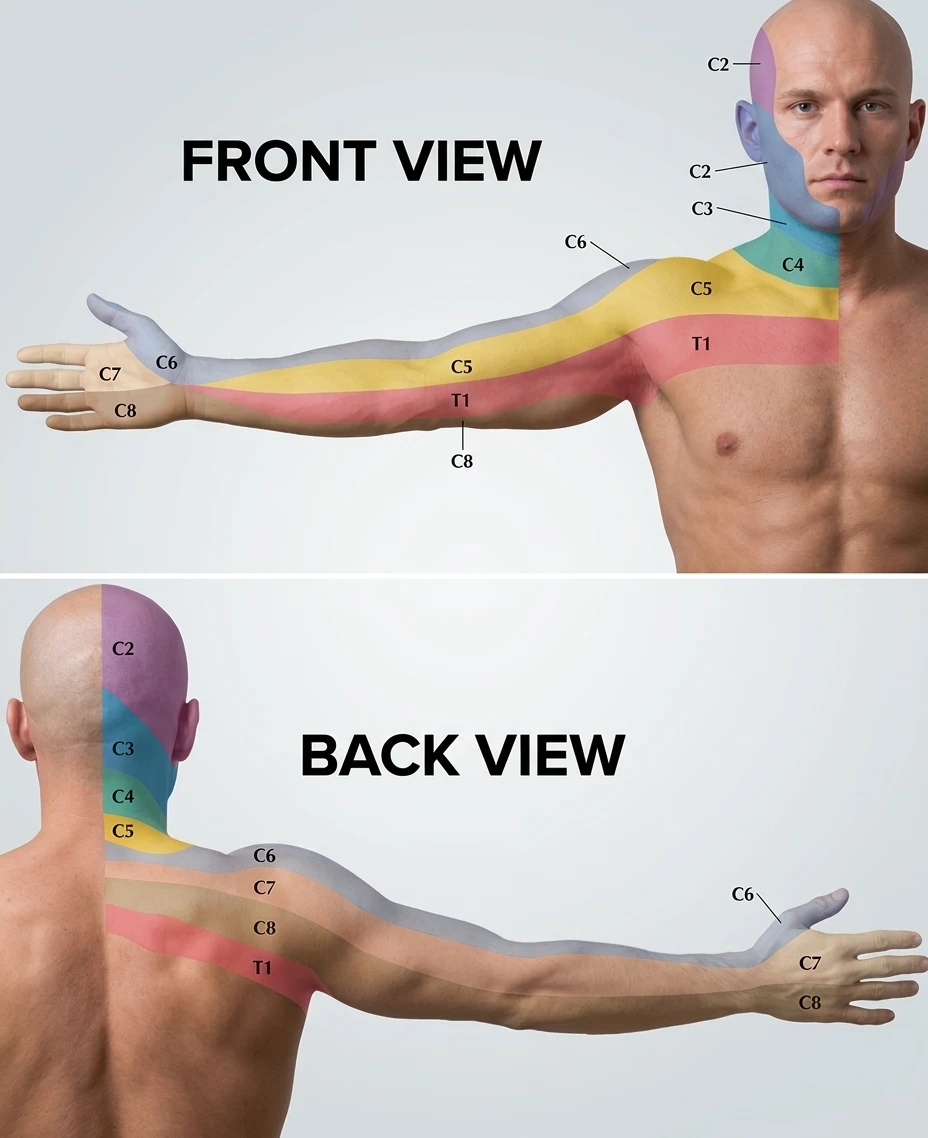
The distribution of symptoms can vary between individuals. Dermatomes, myotomes, and reflexes overlap, so cervical radiculopathy does not always follow a textbook pattern. The sensory distribution of pain or numbness should therefore be interpreted together with muscle strength, reflexes, and other findings from the neurological examination.
Cervical Radiculopathy vs. Other Causes of Arm Pain
Arm pain can originate from the cervical spine, shoulder, or peripheral nerves, and the symptoms can sometimes overlap. A few key differences can help distinguish cervical radiculopathy from other common causes.
Cervical Radiculopathy vs. Pinched Nerve in the Neck
“Pinched nerve in the neck” is a common lay term often used to describe cervical radiculopathy. In medical terms, cervical radiculopathy refers to dysfunction of a cervical nerve root caused by irritation, inflammation, or compression.
Cervical Radiculopathy vs. Cervical Myelopathy
Cervical radiculopathy affects a nerve root, typically causing pain, numbness, tingling, or weakness in one arm. Cervical myelopathy, in contrast, results from compression of the spinal cord and may cause problems with balance, walking, hand coordination, or weakness affecting multiple limbs. Symptoms suggesting spinal cord involvement require prompt medical evaluation.
Cervical Radiculopathy vs. Carpal Tunnel Syndrome
Carpal tunnel syndrome results from compression of the median nerve at the wrist rather than a nerve root in the neck. It typically causes numbness and tingling in the thumb, index, middle, and part of the ring finger, often without neck pain. The distribution of symptoms and neurological examination can help distinguish it from C6 or C7 radiculopathy.
If your hand symptoms are mainly affecting the thumb, index, or middle fingers, learn more about carpal tunnel syndrome and how it differs from cervical radiculopathy.
Cervical Radiculopathy vs. Shoulder Problems
Shoulder conditions such as rotator cuff disorders, subacromial pain syndrome, or adhesive capsulitis can cause pain extending into the upper arm and may sometimes resemble cervical radiculopathy. Shoulder problems are usually more closely related to shoulder movement, whereas cervical radiculopathy is more likely to produce radiating pain, numbness, tingling, or weakness following a nerve-root pattern. However, the two conditions can coexist.
Ovo mi je taman za JHG: dovoljno korisno za čitatelja, ali ne odvlači članak u zasebnu raspravu o myelopathy, carpal tunnelu i patologiji ramena. Posebno bih zadržao zadnju rečenicu o tome da shoulder pathology i radikulopatija mogu koegzistirati — to je klinički važnije nego pokušavati napraviti umjetno oštru granicu između njih.
How Is Cervical Radiculopathy Diagnosed?
Diagnosis is based primarily on the medical history and physical examination, with imaging or electrodiagnostic testing used when necessary.
Medical History and Physical Examination
The doctor will ask about the location and character of pain, numbness, tingling, weakness, and factors that aggravate or relieve symptoms. The examination includes muscle strength, sensation, reflexes, and cervical range of motion, as well as provocative tests such as the Spurling test. During this test, the neck is extended and rotated toward the symptomatic side while gentle downward pressure is applied. Reproduction of the patient’s typical radiating arm pain may support the diagnosis, but a negative test does not completely exclude cervical radiculopathy.
When Is an MRI Needed?
MRI of the cervical spine provides detailed images of the discs, nerve roots, spinal cord, and other soft tissues. It is particularly useful when symptoms are severe or progressive, when significant neurological deficits are present, or when symptoms persist despite conservative treatment. MRI findings should always be interpreted together with the clinical examination because degenerative changes are common even in people without symptoms.
Do You Need an X-ray?
X-rays can show cervical alignment, loss of disc height, osteophytes, and other bony degenerative changes, but they cannot directly visualize nerve-root compression. They are therefore less useful than MRI for confirming cervical radiculopathy but may be helpful when evaluating the overall structure of the cervical spine.
Electromyography and Nerve Conduction Studies
Electromyography (EMG) and nerve conduction studies (NCS) can help determine whether symptoms are caused by cervical nerve-root dysfunction or a peripheral nerve disorder such as carpal tunnel syndrome. They are particularly useful when the diagnosis is uncertain or when cervical radiculopathy needs to be distinguished from another neurological condition.
Cervical Radiculopathy Treatment
Most cases of cervical radiculopathy improve with conservative treatment, particularly when there is no significant or progressive neurological deficit. Treatment focuses on reducing pain, maintaining activity, restoring neck and upper-limb function, and allowing the irritated nerve root to recover. Interventional treatments may be considered when symptoms persist, while surgery is reserved for selected cases.
Activity Modification
Short-term modification of activities that aggravate symptoms can help reduce irritation of the affected nerve root. Prolonged bed rest is generally not recommended; maintaining normal activity within comfortable limits is preferable.
Pain Relief and Anti-inflammatory Medication
Pain relievers and anti-inflammatory medications may help reduce pain and inflammation during the acute phase. The choice of medication depends on individual factors, including other medical conditions and potential contraindications.
Physical Therapy
Physical therapy aims to reduce pain, restore cervical mobility, and improve strength and function. Treatment may include manual therapy, postural correction, cervical stabilization, and a structured exercise program tailored to the patient’s symptoms.
Cervical Traction
Cervical traction may temporarily reduce nerve-root compression and relieve radiating arm pain in some patients. It is usually used as part of a broader physical therapy program rather than as a standalone treatment.
Therapeutic Exercises
Exercises can help restore cervical and upper-limb strength, mobility, and endurance. Depending on the individual’s symptoms, a program may include deep neck flexor exercises, scapular stabilization, mobility exercises, and gradual strengthening.
Epidural Steroid Injections
Cervical epidural steroid injections may be considered when significant radicular pain persists despite conservative treatment. They can provide short-term pain relief in selected patients, potentially allowing participation in rehabilitation, but they do not correct the underlying structural cause of nerve-root compression.
When Is Surgery Needed?
Surgery is not required for most cases of cervical radiculopathy. It is generally considered when there is progressive motor weakness, a significant neurological deficit, or persistent disabling symptoms despite an adequate trial of conservative treatment. Surgery may also be necessary when cervical radiculopathy is associated with spinal cord compression or myelopathy. The specific procedure depends on the underlying cause and level of nerve-root compression.
How Long Does Cervical Radiculopathy Last?
Most cases of cervical radiculopathy improve within a few weeks to several months, with many patients experiencing significant improvement within approximately 2–3 months. Recovery time depends on the underlying cause, severity of nerve-root irritation, and individual response to treatment.
Pain often improves before numbness or muscle weakness, which may take longer to recover. Persistent or worsening weakness, severe neurological symptoms, or symptoms that do not improve with appropriate treatment should be reassessed by a healthcare professional.
For most patients, the overall outlook is favorable, and surgery is not necessary unless significant or progressive neurological problems develop or disabling symptoms persist despite conservative treatment.
When Should You See a Doctor?
You should see a doctor if neck or arm pain persists, is severe, or interferes with daily activities, particularly when it is accompanied by numbness, tingling, or weakness.
Seek medical evaluation promptly if you develop progressive muscle weakness, significant loss of sensation, or worsening neurological symptoms. Symptoms such as difficulty walking, loss of hand coordination, or weakness affecting multiple limbs may indicate spinal cord involvement (cervical myelopathy) and require urgent assessment.
Frequently Asked Questions About Cervical Radiculopathy
What is radicular pain?
Radicular pain is pain caused by irritation or inflammation of a spinal nerve root. In cervical radiculopathy, it typically travels from the neck into the shoulder, arm, forearm, or hand and may feel sharp, burning, shooting, or electric.
What are the symptoms of a pinched nerve in the neck?
Pinched nerve in the neck symptoms may include neck pain, radiating arm pain, numbness, tingling, and muscle weakness. The exact symptoms depend on which cervical nerve root is affected.
What is the best test for cervical radiculopathy?
There is no single Cervical Radiculopathy test that can confirm the diagnosis in every patient. Diagnosis is based on the medical history and neurological examination, including strength, sensation, reflexes, and provocative tests such as the Spurling test. MRI or EMG/NCS may be used when the diagnosis is uncertain or symptoms are persistent or severe.
What is the difference between radiculopathy and neuropathy?
Radiculopathy results from dysfunction of a nerve root as it exits the spine, whereas neuropathy generally refers to damage or dysfunction of a peripheral nerve or multiple peripheral nerves. Their symptoms can overlap, so the distribution of symptoms and neurological examination help determine the underlying problem.
How should you sleep with cervical radiculopathy?
When sleeping with cervical radiculopathy, choose a position that keeps the neck in a neutral, comfortable position and avoids prolonged rotation or extension. Sleeping on your back or side may be more comfortable than sleeping on your stomach. A pillow that supports the natural position of your neck can also help reduce symptoms.
What is the difference between radiculopathy and myelopathy?
Radiculopathy affects a spinal nerve root and typically causes symptoms along one arm, such as pain, numbness, tingling, or weakness. Myelopathy results from compression of the spinal cord and may cause balance problems, difficulty walking, loss of hand coordination, or weakness affecting multiple limbs. Myelopathy requires prompt medical assessment.
Can cervical radiculopathy go away on its own?
Yes. Many cases improve without surgery, particularly when caused by a herniated disc or temporary inflammation around the nerve root. Symptoms often improve over several weeks to a few months, although numbness or weakness may take longer to recover.
Can cervical radiculopathy cause shoulder pain?
Yes. Cervical radiculopathy can cause pain in the shoulder and upper arm, particularly when the C5 or C6 nerve roots are involved. However, shoulder disorders can produce similar symptoms, so the source of pain may require a clinical examination to distinguish between the two.
Is cervical radiculopathy serious?
Most cases are not serious and improve with conservative treatment. However, progressive muscle weakness, significant neurological deficits, or symptoms suggesting spinal cord involvement should be evaluated promptly.
Iyer S, Kim HJ. Cervical Radiculopathy. Curr Rev Musculoskelet Med. 2016;9(3):272-280. PubMed: Cervical radiculopathy – diagnosis, differential diagnosis and treatment
Eubanks JD. Nonoperative Management of Cervical Radiculopathy. Am Fam Physician. 2010;81(1):33-40. Clinical review: Diagnosis and nonoperative treatment of cervical radiculopathy
Wainner RS et al. Reliability and Diagnostic Accuracy of the Clinical Examination and Patient Self-Report Measures for Cervical Radiculopathy. PubMed: Clinical examination and diagnostic accuracy
Thoomes EJ et al. Value of physical tests in diagnosing cervical radiculopathy: a systematic review. Spine. PubMed: Systematic review of diagnostic physical tests
Iyer S, Kim HJ. Cervical Radiculopathy: Diagnosis and Management. PMC: Clinical review of diagnosis, natural history and treatment
Carette S, Fehlings MG. Cervical Radiculopathy. N Engl J Med. 2005;353:392-399. PubMed: Cervical radiculopathy – diagnosis and treatment
Bono CM, Ghiselli G, Gilbert TJ, Kreiner DS, Reitman C, Summers JT, Baisden JL, Easa J, Fernand R, Lamer T, Matz PG, Mazanec DJ, Resnick DK, Shaffer WO, Sharma AK, Timmons RB, Toton JF; North American Spine Society. An evidence-based clinical guideline for the diagnosis and treatment of cervical radiculopathy from degenerative disorders. Spine J. 2011 Jan;11(1):64-72. doi: 10.1016/j.spinee.2010.10.023. PMID: 21168100. PubMed: Evidence-based guideline for diagnosis and treatment of cervical radiculopathy
Childress MA, Becker BA. Nonoperative Management of Cervical Radiculopathy. Am Fam Physician. 2016;93(9):746-754. Clinical review: Conservative treatment and electrodiagnostic testing
Kuijper B et al. Cervical Collar or Physiotherapy versus Wait and See Policy for Recent Onset Cervical Radiculopathy. BMJ. 2009;339:b3883. PubMed: Conservative treatment and natural recovery
Bono CM et al. Nonoperative Management of Cervical Radiculopathy. Spine J. PubMed: Evidence-based treatment recommendations