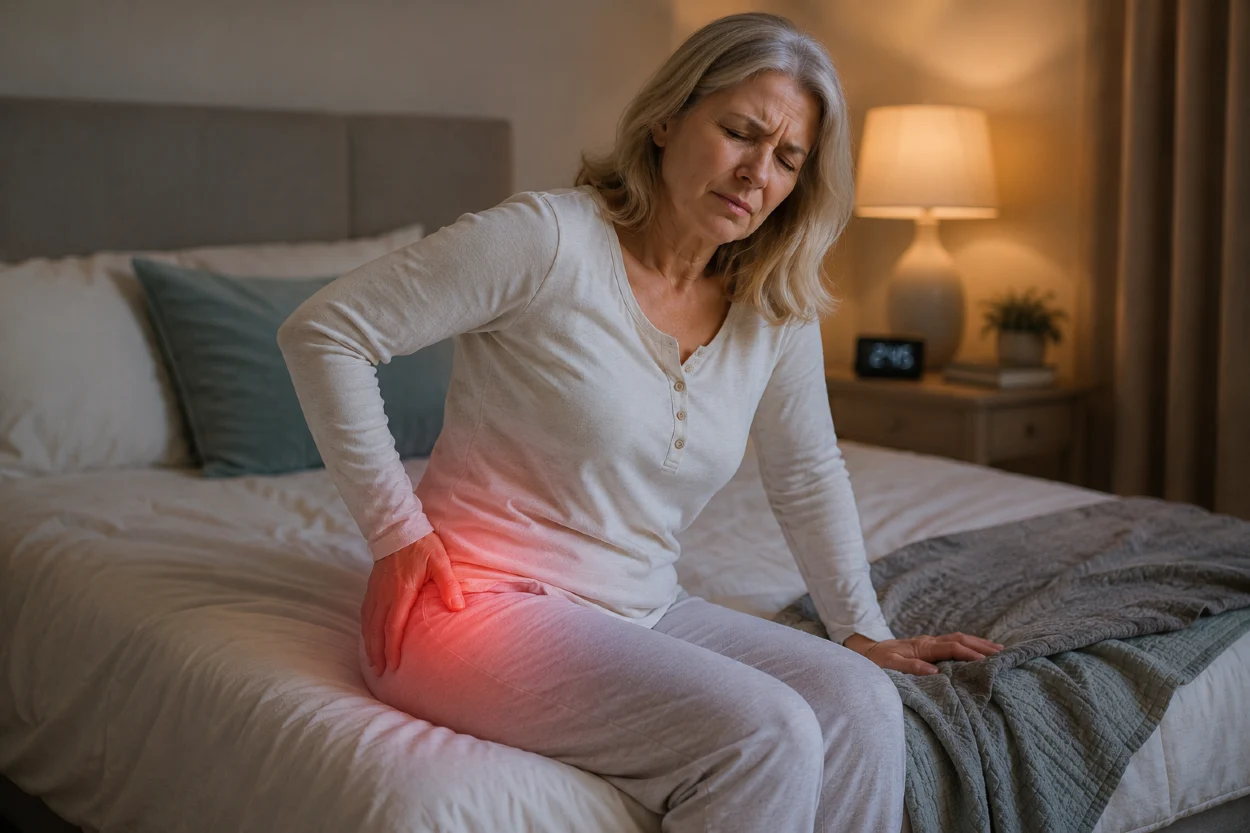
Hip pain while sleeping can make it difficult to fall asleep, wake you repeatedly during the night, or leave you feeling stiff and sore in the morning. For many people, the pain is worse when lying on one side, particularly when the painful hip is pressed against the mattress. In other cases, hip pain may occur regardless of sleeping position and can be related to a problem within the hip joint, surrounding tendons, or nearby structures.
The good news is that changing your sleeping position and using pillows to better support your hips and legs can often reduce pressure and make sleeping more comfortable. However, persistent pain should not always be attributed to your sleeping position, especially if it is severe, progressively worsening, or regularly wakes you from sleep.
In this article, we explain the most common causes of hip pain while sleeping, why side sleeping can make symptoms worse, and practical ways to relieve pain and improve your sleeping position.
Why Does My Hip Hurt While Sleeping?
Hip pain while sleeping can have several causes, and the reason is not always the sleeping position itself. In some people, prolonged pressure on the outer hip triggers pain, while in others, lying still for several hours makes an underlying joint, tendon, or spine problem more noticeable.
Common causes include:
- Pressure on the hip when sleeping on your side – prolonged pressure from the mattress can irritate sensitive tissues around the outer hip.
- Greater trochanteric pain syndrome (GTPS) – a common cause of lateral hip pain that is often aggravated by lying on the affected side.
- Hip osteoarthritis – damage and inflammation within the hip joint can cause aching, stiffness, and pain that becomes more noticeable during periods of rest.
- Hip labral problems – a damaged labrum can cause deep pain in the groin or hip, sometimes aggravated by particular sleeping positions.
- Referred pain from the lower back – problems involving the lumbar spine can sometimes be felt as pain around the hip or buttock.
- Pregnancy-related changes – changes in body weight, posture, pelvic mechanics, and ligament flexibility can contribute to hip discomfort, particularly later in pregnancy.
- Less common causes – stress fractures, avascular necrosis, inflammatory conditions, and other disorders can also cause hip pain at night or during rest.
The location of your pain can provide important clues about its cause. Pain over the outer side of the hip that becomes worse when lying on that side is often related to structures around the greater trochanter, such as the gluteal tendons or bursae. In contrast, deep pain felt in the groin is more commonly associated with problems inside the hip joint itself. If the pain radiates into the buttock or down the leg, the source may not be the hip at all, but rather the lower back or nearby nerves.
If your pain occurs mainly when you lie in a particular position, changing how you sleep may provide significant relief. If it persists regardless of position or regularly wakes you from sleep, however, it is worth considering whether an underlying medical condition is responsible.
Hip Pain From Sleeping on Your Side
Sleeping on your side is one of the most common reasons people develop or aggravate hip pain during the night. When you remain on one side for several hours, your body weight places prolonged pressure on the outer part of the hip. This can irritate the tissues around the greater trochanter, particularly the gluteal tendons and surrounding bursae.
Side sleeping can also place the hips in a less optimal position. If the upper leg falls forward or downward without adequate support, it can increase tension on the muscles and tendons around the hip. A mattress that is too firm may further increase pressure on the outer hip, while one that is too soft may allow the pelvis to sink and alter hip alignment.
For people who already have greater trochanteric pain syndrome, gluteal tendinopathy, or another condition affecting the outer hip, these effects can make symptoms considerably worse.
Why Does Side Sleeping Cause Hip Pain?
Several factors can contribute to hip pain from sleeping on your side:
- Direct pressure on the outer hip: Body weight is concentrated over the greater trochanter, especially on a firm mattress.
- Compression of the gluteal tendons: The tendons attached around the greater trochanter may become compressed when lying directly on the affected side.
- Prolonged positioning: Staying in the same position for several hours can increase stiffness and sensitivity in irritated tissues.
- Hip and pelvic alignment: An unsupported upper leg can allow the pelvis to rotate and place additional stress on the lateral hip.
- Mattress firmness: A very firm mattress may increase pressure over the outer hip, while a very soft mattress can allow the pelvis to sink and alter alignment.
This is particularly relevant in people with greater trochanteric pain syndrome (GTPS) or gluteal tendinopathy, both of which commonly cause pain when lying on the affected side.
Why Does My Hip Hurt on the Side I Sleep On?
When the hip you are lying on becomes painful, direct pressure is often an important factor. The greater trochanter lies relatively close to the skin, making the surrounding tissues susceptible to sustained compression.
This pattern is particularly common with lateral hip pain, including greater trochanteric pain syndrome and gluteal tendinopathy. The discomfort may be felt directly over the outside of the hip and can become more noticeable after remaining in the same position for an extended period.
Why Does My Opposite Hip Hurt When Sleeping on Your Side?
Not everyone with hip pain when sleeping on their side experiences symptoms on the side they are lying on. Sometimes the upper hip—the side facing upward—can become painful instead.
One reason is the position of the upper leg. Without adequate support, the knee may drop toward the mattress, pulling the upper leg across the body and changing the position of the pelvis. This can increase tension on the muscles and tendons around the lateral hip.
This explains why some side sleepers with hip pain find that their symptoms occur on the opposite side from the one resting against the mattress.
If changing sides does not resolve the problem, the pattern of pain, its location, and whether it occurs during the day can help determine whether the sleeping position is the main factor or whether an underlying hip condition may be contributing.
Related Guides

Hip Pain While Sleeping Without Side Sleeping
Not all hip pain while sleeping is caused by pressure from lying on the side. Some conditions cause pain regardless of sleeping position, with the discomfort becoming more noticeable during prolonged rest.
Hip Osteoarthritis
Hip osteoarthritis typically causes deep pain in the groin, which may spread toward the front of the thigh or knee. The pain is often accompanied by stiffness and reduced hip mobility. It may become more noticeable at night or after several hours of inactivity and does not necessarily depend on which side you sleep on.
Hip Labral Tears
A hip labral tear can cause deep pain in the groin or front of the hip, sometimes extending toward the thigh or knee. Pain may occur while lying in any position and can become more noticeable when changing position during sleep. Clicking, catching, or locking of the hip may also occur.
Referred Pain From the Lower Back
Pain felt around the hip may originate from the lumbar spine rather than the hip itself. When sleeping on your back, fully straightening the legs can sometimes aggravate nerve-related pain. Symptoms may extend from the buttock down the thigh or leg and can feel burning, shooting, tingling, or electric.
Clinical Insight
The pattern of pain can therefore provide useful clues: deep groin pain is more typical of a hip-joint problem, while buttock pain radiating down the leg may suggest a lumbar spine or sciatic nerve problem.
How to Relieve Hip Pain While Sleeping: Best Sleeping Positions
Finding a comfortable sleeping position can reduce pressure on the hip and make it easier to stay asleep. The best position depends on the cause and location of your pain, but small adjustments to how you support your legs and pelvis can make a significant difference.
Sleep on Your Back
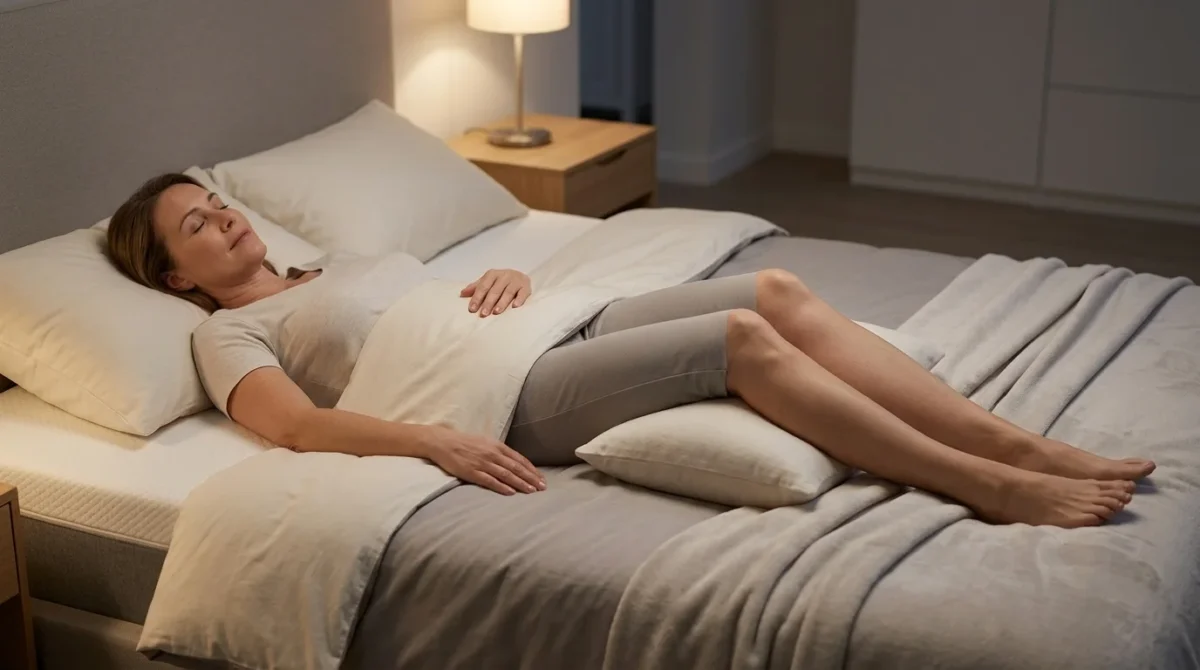
Sleeping on your back can be a good option for people with lateral hip pain, such as greater trochanteric pain syndrome (GTPS) or trochanteric bursitis, especially when lying on the side increases pressure on the painful area. Place a pillow under your knees to keep them slightly bent and improve comfort around the hips and lower back. The pillow should support the knees without lifting them excessively high.
Sleep on Opposite Your Side
If you prefer side sleeping, choose the less painful side when possible. Keep the upper leg supported with a pillow between your knees, extending it far enough toward the ankles to prevent the upper leg from dropping forward. This can help keep the hips and pelvis in a more neutral position.
If both sides are comfortable, alternate positions rather than staying on one side for the entire night.
Avoid Sleeping Directly on the Painful Hip
If you have lateral hip pain, particularly from greater trochanteric pain syndrome or gluteal tendinopathy, lying directly on the painful side can increase pressure on sensitive tissues. Avoiding prolonged direct pressure may help reduce nighttime discomfort.
If Your Opposite Hip Hurts When Sleeping on Your Side
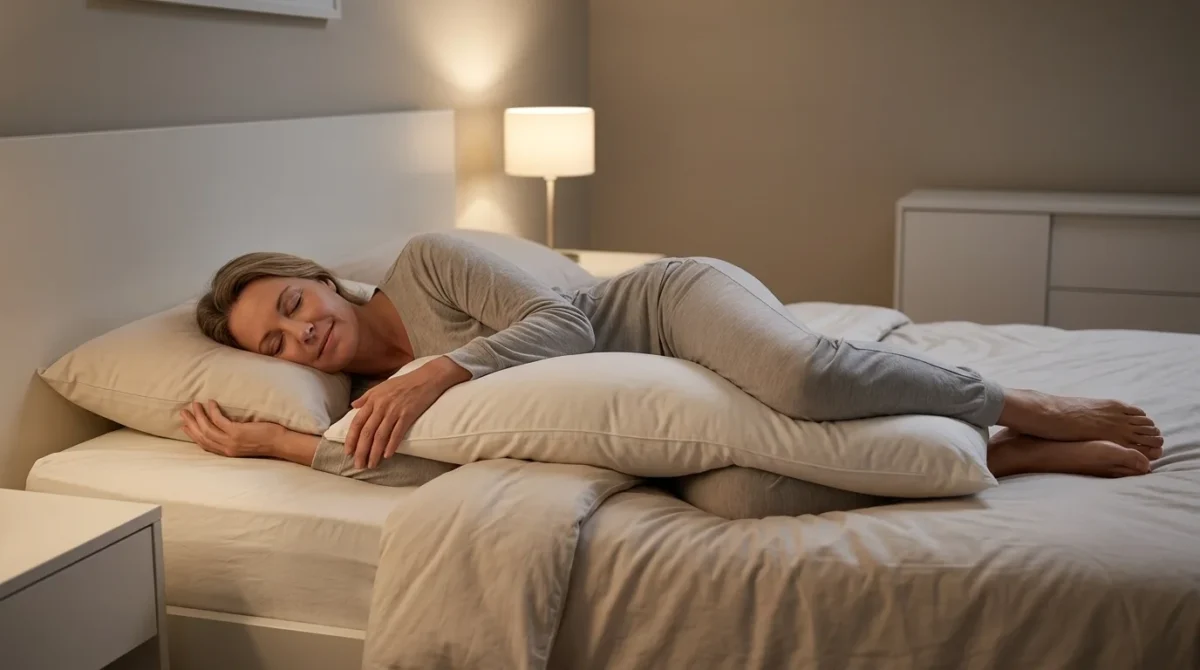
If your opposite hip hurts when sleeping on your side, the problem may be related to the position of your upper leg rather than pressure from the mattress. Without support, the upper knee can fall forward, rotating the pelvis and placing additional tension on the outer hip.
Try placing a pillow between your knees and lower legs to support the upper leg and keep your hips and pelvis more aligned. The pillow should be thick enough to prevent the upper leg from dropping forward, but not so thick that it forces the hips into an uncomfortable position.
This can be particularly helpful for side sleepers with lateral hip pain, including people with greater trochanteric pain syndrome or gluteal tendinopathy.
What If Both Hips Hurt?
When both hips hurt while sleeping, back sleeping may be more comfortable because it avoids direct pressure on either side. A pillow under the knees can provide additional support, while a small pillow or folded blanket can be used to improve comfort if needed.
There is no single sleeping position that works for everyone. Experiment with pillow placement and leg position to find the arrangement that keeps your hips comfortable without creating pressure or excessive tension.
Is Sleeping on Your Stomach Bad for Hip Pain?
Sleeping on your stomach is not necessarily harmful, but it may be uncomfortable for some people with hip pain. The position can place the hips in rotation and may increase stress on the lower back. If stomach sleeping aggravates your symptoms, try sleeping on your back or side instead.
Can Your Mattress Cause Hip Pain While Sleeping?
Your mattress can influence how much pressure is placed on your hips during the night, particularly if you are a side sleeper. However, there is no single mattress firmness that is best for everyone. The right choice depends on your body weight, sleeping position, and the underlying cause of your hip pain.
A mattress that is too firm may create excessive pressure over the outer hip when you sleep on your side. This can be particularly uncomfortable for people with lateral hip pain, greater trochanteric pain syndrome (GTPS), or gluteal tendinopathy.
On the other hand, a mattress that is too soft may allow your pelvis and hips to sink too deeply. This can alter spinal and hip alignment and may contribute to discomfort, particularly if you sleep on your side.
A mattress that distributes your body weight more evenly can reduce pressure points and allow the hips to remain in a more comfortable position. Women with wider hips may be particularly sensitive to a firm mattress when sleeping on their side, as the greater width of the pelvis can create greater pressure over the outer hip. If your hip pain while sleeping began after changing mattresses or is consistently worse on a particular mattress, the mattress may be contributing to the problem.
Clinical Insight
Before replacing it, however, consider whether adjusting your sleeping position or using appropriate pillow support improves your symptoms. If the pain persists regardless of the mattress or sleeping position, an underlying hip or lower-back condition may be more likely.
Hip Pain While Sleeping During Pregnancy
Hip pain while sleeping is common during pregnancy, particularly as the pregnancy progresses. Increased body weight, changes in posture, widening of the pelvis, and hormonal changes can place additional stress on the hips and surrounding tissues. Sleeping on the side may also increase pressure on the outer hip.
Using a pillow between the knees and another pillow to support the abdomen can help keep the hips and pelvis in a more comfortable position. Changing sides during the night may also reduce prolonged pressure on one hip.
If hip pain during pregnancy is severe, persistent, or significantly interferes with sleep and daily activities, it is worth discussing with your healthcare provider.
When Should You See a Doctor About Hip Pain While Sleeping?
Occasional hip discomfort while sleeping is not necessarily a cause for concern, particularly if it improves after changing your sleeping position. However, persistent or worsening pain should be evaluated to determine whether an underlying hip or lower-back condition is responsible.
You should seek medical evaluation if:
- the pain persists or progressively worsens despite changing your sleeping position
- hip pain repeatedly wakes you during the night
- you have difficulty bearing weight or walking
- hip movement becomes significantly restricted
- the pain started after a fall, injury, or other trauma
- the hip is swollen, red, or warm, particularly if you also have a fever
- you develop severe, unexplained hip pain
- pain occurs even when you are completely still and is not affected by your sleeping position
- you have symptoms that could indicate a fracture or another serious condition, such as sudden severe pain or an inability to put weight on the leg.
Nighttime hip pain that persists regardless of sleeping position should not automatically be attributed to your mattress or the way you sleep. A medical assessment can help identify the underlying cause and determine the appropriate treatment.
Frequently Asked Questions
Why does my hip hurt when I sleep on my side?
Sleeping on your side places prolonged pressure on the outer hip. This can aggravate the tissues around the greater trochanter, particularly in people with greater trochanteric pain syndrome or gluteal tendinopathy.
How can I relieve hip pain while sleeping?
Try changing your sleeping position and using pillows to support your legs. Sleeping on your back with a pillow under your knees or on your side with a pillow between your knees may reduce pressure and improve hip alignment.
Should I sleep on the painful or non-painful side?
If possible, sleep on the non-painful side to avoid direct pressure on the affected hip. If the opposite hip becomes uncomfortable, try additional support between your knees and lower legs.
Is it better to sleep on your back if you have hip pain?
Sleeping on your back can be helpful, particularly for people with lateral hip pain, because it avoids direct pressure on either side of the hip. A pillow under the knees may make this position more comfortable.
Can a mattress cause hip pain?
Yes. A mattress that is too firm may increase pressure on the outer hip, while one that is too soft may allow the pelvis to sink and affect alignment. The ideal firmness depends on your body type, sleeping position, and individual comfort.
Why does my hip hurt only when I sleep?
Pain that occurs primarily during sleep may be related to prolonged pressure, reduced movement, or a particular sleeping position. However, conditions such as hip osteoarthritis, tendon problems, or referred pain from the lower back can also become more noticeable during prolonged rest.
How should I sleep with hip pain during pregnancy?
Side sleeping with a pillow between the knees and additional support for the abdomen can help maintain a more comfortable hip and pelvic position. If pain is severe or significantly interferes with sleep, discuss it with your healthcare provider.
Quick Overview – Hip Pain While Sleeping
- Side sleeping can increase pressure on the outer hip and aggravate conditions such as greater trochanteric pain syndrome (GTPS) and gluteal tendinopathy.
- Changing your sleeping position and using pillows to support the knees and legs can reduce pressure and improve hip alignment.
- Sleeping on your back may be more comfortable for people with lateral hip pain, particularly when direct pressure on the painful side aggravates symptoms.
- Hip pain while sleeping is not always caused by sleeping position. Hip osteoarthritis, labral tears, and referred pain from the lower back can cause pain regardless of which position you sleep in.
- A firm mattress may increase pressure on the outer hip, particularly in side sleepers with wider hips, while a mattress that is too soft may affect hip and pelvic alignment.
- Persistent, severe, or worsening nighttime hip pain, especially when it repeatedly wakes you or occurs regardless of position, should be medically evaluated.
Lespasio MJ. Lateral Hip Pain: Relation to Greater Trochanteric Pain Syndrome. The Permanente Journal. 2022;26(2):83-88. Clinical review: Lateral hip pain and greater trochanteric pain syndrome
Mallow M, Nazarian LN. Greater trochanteric pain syndrome diagnosis and treatment. Physical Medicine and Rehabilitation Clinics of North America. 2014;25(2):279-289. Clinical review: Diagnosis and treatment of greater trochanteric pain syndrome
Redmond JM, Chen AW, Domb BG. Greater Trochanteric Pain Syndrome. Journal of the American Academy of Orthopaedic Surgeons. 2016;24(4):231-240. PubMed: Greater trochanteric pain syndrome review
Smith MT et al. Mechanisms by which sleep disturbance contributes to osteoarthritis pain: a conceptual model. Current Rheumatology Reports. 2009. Clinical review: Sleep disturbance and osteoarthritis pain
Pickering ME, Chapurlat R, Kocher L, Peter-Derex L. Sleep Disturbances and Osteoarthritis. Pain Practice. 2016;16(2):237-244. PubMed: Sleep disturbances associated with osteoarthritis
Sorel JC et al. Pain-induced sleep disturbances fully mediate the association between symptomatic hip and knee osteoarthritis and poor sleep quality: a cross-sectional study. Bone & Joint Open. 2026;7(3):348-356. Full-text study: Hip and knee osteoarthritis, pain and sleep quality
Pumarejo Gomez L, Li D, Childress JM. Greater Trochanteric Pain Syndrome (Greater Trochanteric Bursitis). StatPearls [Internet]. Updated 2024. NCBI Bookshelf. NCBI Bookshelf: Greater trochanteric pain syndrome diagnosis and management