
Neck pain, medically known as cervicalgia, is a very common problem that can occur for many different reasons. In most cases, it is caused by relatively minor problems such as muscle tension or strain, prolonged computer use, poor posture, or sleeping in an uncomfortable position. Neck pain can also develop after a sudden movement, physical activity, or exposure to cold air.
Although most cases of cervicalgia are not serious, neck pain can sometimes be a symptom of a more significant condition. For example, a herniated cervical disc can compress a nerve and cause cervical radiculopathy, while pressure on the spinal cord can lead to symptoms that require prompt medical evaluation.
Cervicalgia can be uncomfortable and may interfere with everyday activities, but most cases improve within a few days or weeks and do not indicate a serious underlying condition. Understanding the possible causes of neck pain can help you choose appropriate treatment and recognize symptoms that should not be ignored.
In this article, we explain what cervicalgia is, its most common causes and symptoms, how it is diagnosed, and how it can be treated. We will also discuss exercises that may help relieve neck pain and when it is important to see a doctor.
What Is Cervicalgia?
Cervicalgia Definition
Cervicalgia is the medical term for pain located in the neck or cervical region, typically between the base of the skull and the upper shoulders. It is one of the most common musculoskeletal complaints and can result from a wide range of causes, including muscle strain, poor posture, injuries, and age-related changes in the cervical spine.
Neck pain may be felt as a dull ache, stiffness, or sharp pain and can sometimes spread to the shoulders, upper back, or arms. In most cases, cervicalgia is not caused by a serious underlying condition and improves with conservative treatment and time. However, persistent or severe symptoms, particularly those accompanied by neurological problems, may require medical evaluation.
What Does Cervicalgia Mean?
The word cervicalgia comes from cervical, referring to the cervical spine (the seven vertebrae in the neck), and -algia, meaning pain. Therefore, cervicalgia simply means pain in the cervical region of the spine.
Cervicalgia can be acute, subacute, or chronic, depending on how long the symptoms have been present. Acute neck pain generally lasts less than six weeks, while symptoms lasting between six and twelve weeks are considered subacute. When neck pain persists for more than three months, it is classified as chronic cervicalgia.
Neck pain is extremely common. Studies suggest that a substantial proportion of adults experience neck pain each year, and many people experience recurrent episodes over their lifetime. Although most episodes are short-lived, chronic neck pain can significantly affect daily activities, sleep, work, and overall quality of life. Psychological factors such as stress, anxiety, and poor sleep may also contribute to the persistence and severity of chronic neck pain.
Cervical Anatomy: Understanding the Neck
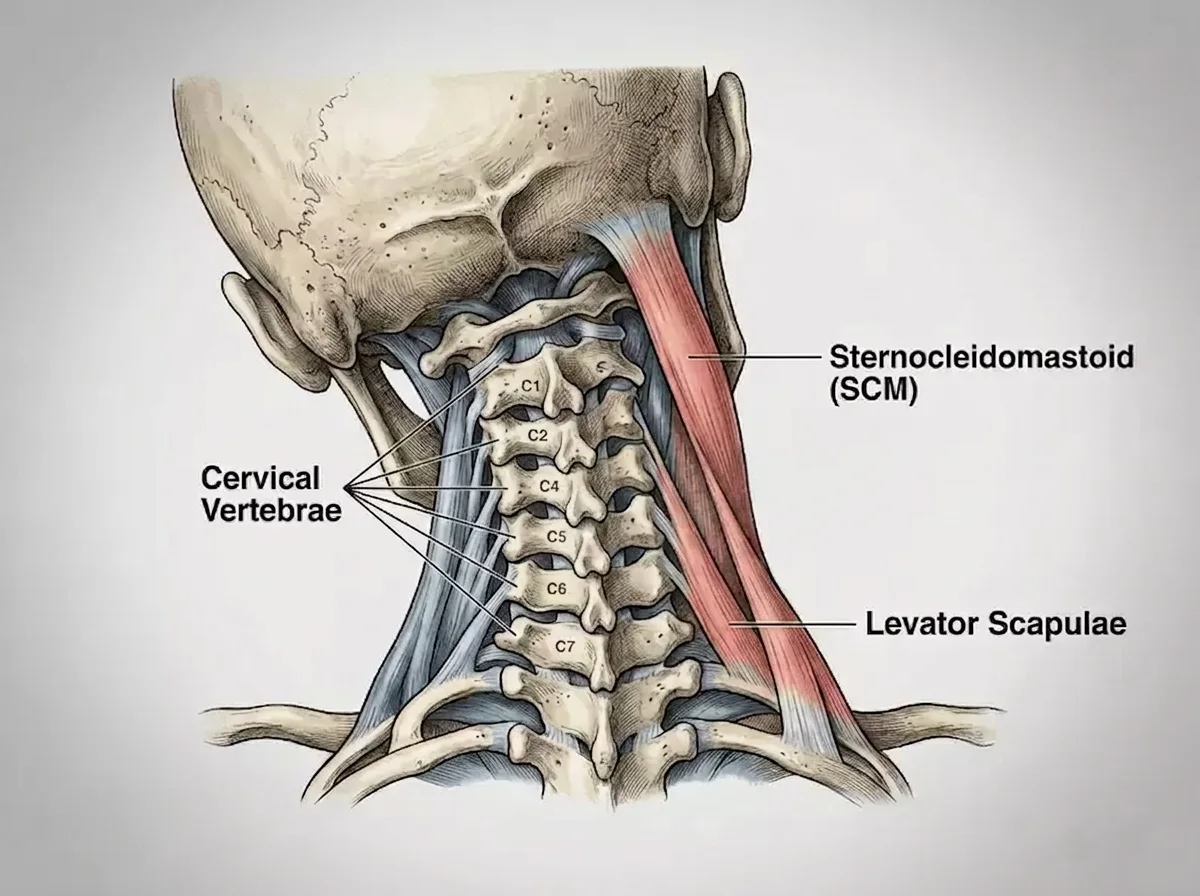
The cervical spine consists of seven vertebrae (C1–C7) that support the head and allow a wide range of neck movement. The first two vertebrae, C1 (atlas) and C2 (axis), are specialized for supporting the skull and allowing head rotation. Between most cervical vertebrae are intervertebral discs, which absorb shock and help distribute loads, while the facet joints contribute to stability and controlled movement.
The neck is also supported by numerous muscles and ligaments that maintain posture and control movement. Strain or prolonged tension in these structures can contribute to neck pain and stiffness. Cervical nerves exit the spine between the vertebrae and supply the neck, shoulders, arms, and hands. Irritation or compression of these nerves can cause cervical radiculopathy, with symptoms such as pain, numbness, tingling, or weakness extending into the arm or hand.
Cervicalgia Symptoms
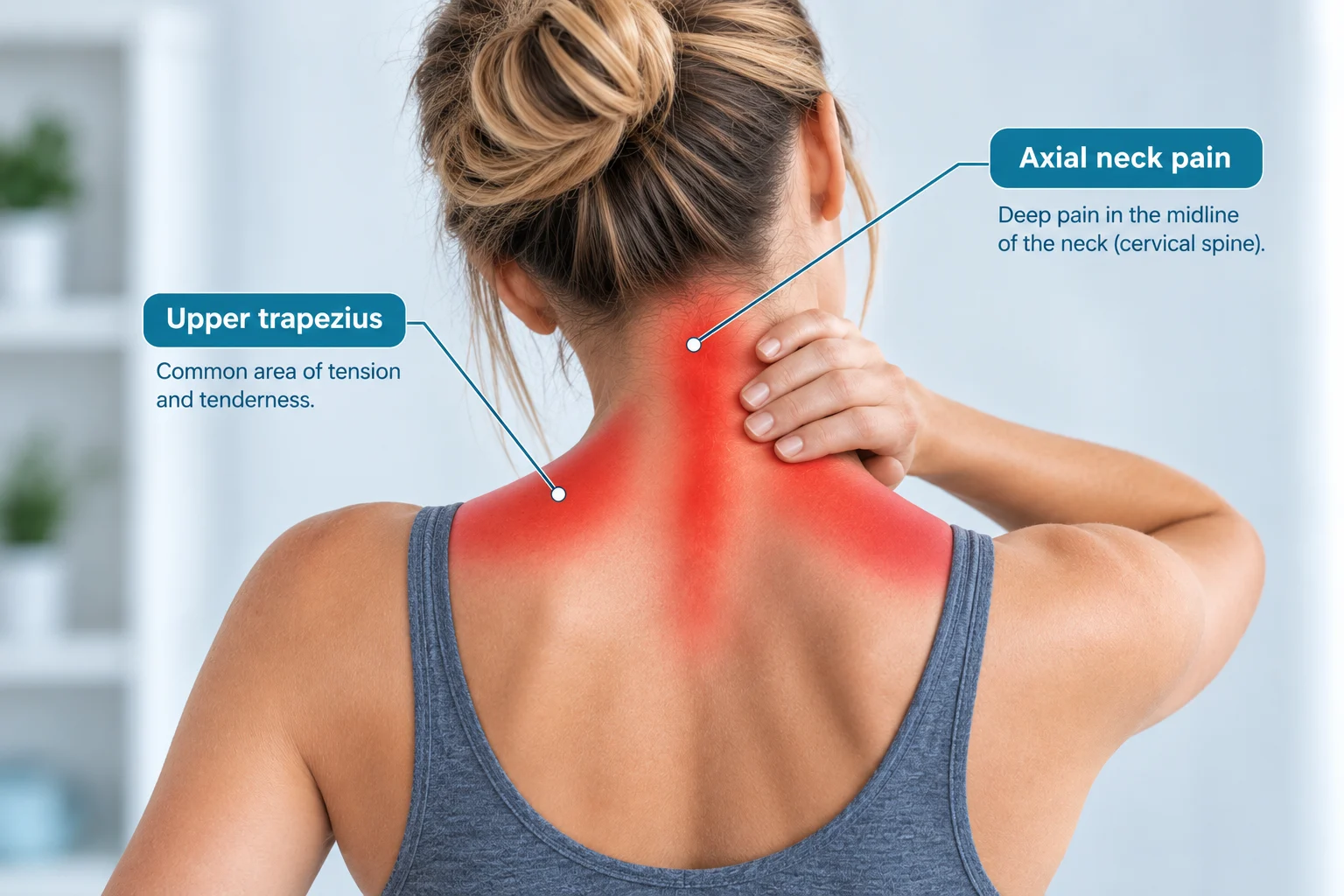
Cervicalgia can present in different ways, depending on the underlying cause. One of the most useful clinical distinctions is between axial neck pain, which remains localized to the neck and upper shoulder region, and neck pain associated with arm symptoms, which may indicate irritation or compression of a cervical nerve.
Axial Neck Pain
Axial neck pain is localized primarily to the neck and may extend into the upper shoulders or the area around the shoulder blades. It is often related to muscle strain, prolonged static posture, overuse, or degenerative changes in the cervical spine.
The pain may feel dull or aching but can become sharper with certain neck movements. Neck stiffness, reduced range of motion, and muscle tightness or spasm are also common. Symptoms may become worse after prolonged sitting, computer work, driving, or other activities that keep the neck in one position for an extended period.
Neck Pain With Arm Symptoms
When neck pain radiates into the shoulder or arm, particularly when accompanied by numbness, tingling, or weakness, cervical nerve irritation or compression should be considered. This condition is known as cervical radiculopathy and is commonly caused by a herniated disc or degenerative changes that narrow the space around a cervical nerve root.
Depending on the affected nerve, symptoms may extend from the neck into the shoulder, shoulder blade, upper arm, forearm, or fingers. Radicular pain is often described as sharp, burning, electric, or shooting and may be accompanied by altered sensation or weakness in specific areas of the arm or hand.
Cervical radicular symptoms may occur even at rest and can sometimes disturb sleep. Certain neck movements, particularly rotation or extension, may aggravate the symptoms. In some people, placing the affected arm over the head may temporarily reduce the pressure on the nerve and provide relief.
Other Symptoms Associated With Cervicalgia
In addition to pain, cervicalgia may be associated with several other symptoms:
- Neck stiffness and reduced mobility – turning or tilting the head may be painful or restricted.
- Muscle tightness or spasm – increased tension in the neck and upper shoulder muscles is common, particularly with prolonged poor posture or overuse.
- Clicking or cracking sounds – sounds or sensations of clicking in the neck are common and are usually harmless when they occur without pain or neurological symptoms.
- Headaches – neck disorders can contribute to cervicogenic headaches, which typically begin in the neck or back of the head and may radiate toward the forehead, temple, or around the eye.
Some people with neck pain also report dizziness or a sensation of unsteadiness. However, dizziness has many possible causes and should not automatically be attributed to the cervical spine. Persistent, severe, or unexplained dizziness warrants appropriate medical evaluation.
Similarly, symptoms such as facial numbness, significant visual disturbances, difficulty speaking, severe sudden headache, or pulsating tinnitus are not typical features of uncomplicated cervicalgia. When these symptoms occur, particularly if they develop suddenly, medical assessment is important to exclude other causes.
Related Guides

When Should You Seek Urgent Medical Attention?
Most cases of neck pain are not caused by a serious condition. However, certain symptoms can indicate a potentially serious problem and require prompt medical evaluation, particularly when they develop suddenly or worsen rapidly.
Seek urgent medical attention if your neck pain is associated with any of the following:
- A recent injury or accident, such as a car accident, fall, or sports injury, particularly if the pain is severe or the neck is difficult to move.
- Severe neck stiffness with fever and headache, especially when accompanied by sensitivity to light, nausea, vomiting, or a feeling of being seriously unwell.
- New or progressive neurological symptoms, including weakness, significant numbness, loss of coordination, difficulty walking, or problems moving an arm or hand.
- Loss of bladder or bowel control, particularly when accompanied by weakness or numbness in the legs or changes in sensation around the groin or buttocks.
- Severe or rapidly worsening neck pain that is not relieved by rest or changes in position.
- Unexplained fever, chills, weight loss, or significant fatigue, particularly when neck pain persists without an obvious cause.
- A sudden, severe headache or neurological symptoms such as difficulty speaking, facial weakness, vision changes, or loss of balance.
These symptoms do not necessarily mean that a serious condition is present, but they should not be ignored. Prompt medical assessment can help identify potentially serious causes of neck pain and ensure appropriate treatment.
Causes of Cervicalgia
Neck pain can develop for many different reasons. The cervical spine is exposed to repeated mechanical stress from everyday activities, including prolonged sitting, computer work, repetitive movements, and sustained or awkward positions. Muscle strain, degenerative changes, and injuries are among the most common causes, while less frequently, neck pain may be related to nerve or spinal cord compression, inflammatory disease, or other medical conditions.
The most common causes of cervicalgia include:
- Neck muscle strain or overuse
- Cervical spondylosis and other degenerative changes
- Whiplash and other neck injuries
- Cervical radiculopathy
- Less common but potentially serious conditions
1. Neck Muscle Strain or Overuse
Muscle strain or overuse is one of the most common causes of acute neck pain. It can occur after prolonged static postures, repetitive movements, sudden neck movements, or sleeping in an awkward position. Long periods of computer use and looking down at a phone can also place increased demands on the muscles that support the head and neck.
Symptoms typically include localized neck pain, stiffness, and muscle tightness or spasm. Pain may become worse with movement or after maintaining the same position for a prolonged period and may extend into the upper shoulders or upper back.
Most uncomplicated muscle-related episodes improve gradually with continued gentle movement, activity modification, and appropriate conservative treatment.
2. Cervical Spondylosis
Cervical spondylosis refers to age-related degenerative changes affecting the structures of the cervical spine, including the intervertebral discs, facet joints, uncovertebral joints, ligaments, and vertebral bones.
These changes may include disc degeneration, loss of disc height, osteophyte formation, and changes in the facet joints. Over time, they can contribute to narrowing of the spaces through which the spinal nerves pass or, less commonly, narrowing of the spinal canal.
Importantly, degenerative changes are common with aging and do not necessarily cause symptoms. When symptoms occur, cervical spondylosis may cause neck pain and stiffness. In some people, narrowing around a nerve root can lead to cervical radiculopathy, with pain, numbness, tingling, or weakness extending into the arm.
Learn more about cervical spondylosis, including its symptoms, causes, and treatment options.
3. Whiplash
Whiplash is a neck injury caused by a sudden back-and-forth movement of the head, most commonly following a motor vehicle collision. The rapid acceleration and deceleration can strain muscles, ligaments, and other soft tissues of the neck.
Common symptoms include neck pain, stiffness, reduced range of motion, and muscle tenderness. Headache, shoulder pain, dizziness, and fatigue may also occur.
Most people improve gradually with early, gentle movement and a progressive return to normal activities. Symptoms can occasionally persist for several weeks or months and may require further assessment and rehabilitation.
4. Cervical Radiculopathy
Cervical radiculopathy occurs when a nerve root exiting the cervical spine becomes irritated or compressed. Common causes include a herniated cervical disc and age-related degenerative changes that narrow the space around the nerve root.
Symptoms typically include pain radiating from the neck into the shoulder and arm, sometimes extending into the forearm and fingers. Numbness, tingling, altered sensation, or weakness may occur depending on which nerve root is affected.
Radicular pain may worsen with certain neck movements, particularly extension and rotation, and can sometimes be present even when the neck is relatively still.
For a closer look at how a pinched nerve in the neck can cause tingling, numbness, and pain in the arm or hand, read our guide to cervical radiculopathy, including its common causes, symptoms, diagnosis, and treatment options.
5. Less Common but Potentially Serious Causes
Although most cases of cervicalgia are not caused by a serious disorder, neck pain can occasionally be associated with conditions that require medical evaluation.
Less common causes include inflammatory disorders, infection, fractures, tumors, cervical spinal stenosis, and cervical myelopathy. These conditions may cause persistent or progressive neck pain and can be accompanied by neurological symptoms such as weakness, numbness, loss of coordination, balance problems, or difficulty walking.
Neck pain that is persistent, progressively worsening, associated with systemic symptoms, or accompanied by neurological changes should be evaluated by a healthcare professional.
Nonspecific Neck Pain
In many people, it is not possible to identify a single specific structure responsible for neck pain. Imaging may show degenerative changes, but these findings do not always explain the patient’s symptoms.
When no specific underlying disorder can be identified, the condition is often described as nonspecific neck pain.
This is particularly common in chronic neck pain, where mechanical, physical, behavioral, and psychosocial factors may all contribute to the persistence and intensity of symptoms.
Most cases of neck pain are nonspecific and improve with conservative management.
How Is Neck Pain Diagnosed?
The diagnosis of neck pain usually begins with a medical history and physical examination. Your doctor will ask about the location and duration of your symptoms, factors that make the pain better or worse, previous injuries, and any associated symptoms. The examination may include assessment of neck movement, muscle tenderness, strength, sensation, reflexes, and other neurological signs.
In most people with mild, uncomplicated neck pain, imaging tests are not necessary. X-rays, CT scans, or MRI may be recommended when there are signs of a serious underlying condition, significant trauma, progressive neurological symptoms, or when a specific cause such as a fracture, infection, tumor, or nerve compression is suspected.
Routine imaging is generally not helpful for nonspecific neck pain.
Degenerative changes are common in people without symptoms, while some people with significant neck pain may have little or no abnormality on imaging. Therefore, imaging findings do not always identify the actual source of pain.
Clinical Insight
The goal of diagnosis is not always to identify a single anatomical structure responsible for the symptoms. Instead, the priority is to rule out serious conditions, identify clinically relevant problems, and guide appropriate treatment while avoiding unnecessary investigations.
Treatment of Cervicalgia
Most cases of neck pain improve within a few days or weeks without specific treatment. Some people, however, develop persistent or recurrent symptoms. Neck pain lasting more than three months is generally considered chronic.
Nonspecific neck pain is often influenced by several factors, including physical demands at work, prolonged sitting, repetitive activities, poor sleep, and psychological stress. Because these factors can interact, treatment usually focuses not only on reducing pain but also on restoring movement, improving strength and function, and gradually returning to normal activities.
Although neck pain can be uncomfortable, most cases are not dangerous. Prolonged bed rest is generally not recommended. Staying active and continuing normal activities as tolerated can help maintain mobility and support recovery.
1. Self-Care and Home Treatment
Simple measures can often help relieve neck pain and stiffness. Heat therapy, such as a warm shower or heating pad, may reduce muscle tension and provide short-term pain relief. Some people find cold therapy helpful during the early stages of pain or after a minor injury. A towel or cloth should be placed between the skin and the heat or cold source to prevent skin damage.
Gentle neck movements and exercises are an important part of recovery. Regular exercise can improve mobility, strengthen the muscles supporting the neck and upper body, and reduce the risk of recurrent symptoms.
Common types of exercises include:
- Stretching exercises – gentle, controlled movements can improve neck mobility and reduce stiffness.
- Isometric exercises – these strengthen the neck muscles without significant movement of the head. For example, you can gently press your head against your hand while resisting the movement.
- Strengthening and dynamic exercises – progressive exercises for the neck, shoulders, and upper back can improve strength, endurance, and postural control.
Exercises should be introduced gradually and should not cause significant or worsening pain. A physical therapist can help select appropriate exercises, particularly when symptoms are persistent or associated with arm pain.
2. Medications
Medications may be used for short-term relief when neck pain interferes with daily activities. Nonsteroidal anti-inflammatory drugs (NSAIDs), such as ibuprofen or naproxen, may help reduce pain and inflammation in some people. They should be used at the lowest effective dose for the shortest appropriate period, taking into account individual contraindications and risks.
Acetaminophen (paracetamol) may be used by some people, although evidence for its effectiveness in nonspecific neck pain is limited.
A doctor or pharmacist can help determine which medication is appropriate based on your medical history and other medications you may be taking.
3. Physical Therapy and Rehabilitation
Physical therapy can be useful when neck pain persists, recurs, or significantly limits daily activities. Treatment is usually centered around active rehabilitation rather than passive treatments alone.
A physical therapist may use therapeutic exercises, mobility exercises, strengthening, education, and selected manual therapy techniques to reduce symptoms and improve function. Manual therapy may provide short-term relief in some patients, particularly when combined with exercise.
The treatment program should be individualized according to the underlying problem, symptoms, physical findings, and functional goals.
4. Injections and Surgery
Injections are not routinely required for uncomplicated nonspecific neck pain. In selected patients with cervical radiculopathy, procedures such as targeted epidural or nerve-root injections may sometimes be considered when significant arm pain persists despite conservative treatment.
Surgery is reserved for specific conditions rather than routine neck pain. It may be considered when there is significant or progressive neurological impairment, spinal cord compression, or persistent symptoms caused by a structural problem that has not responded adequately to conservative treatment.
The vast majority of people with nonspecific neck pain do not require surgery and can be successfully managed with conservative treatment and rehabilitation.
When Should You See a Doctor for Neck Pain?
Most cases of neck pain improve with time and simple conservative measures. However, you should consider seeing a doctor if pain persists, repeatedly returns, or interferes significantly with your daily activities.
Medical evaluation is particularly important if neck pain is accompanied by:
- Pain that does not improve after several weeks of self-care.
- Pain that progressively worsens or becomes increasingly difficult to manage.
- Pain radiating into the arm, especially when accompanied by numbness, tingling, or weakness.
- Persistent or significant limitation of neck movement.
- Symptoms that interfere with sleep, work, or normal daily activities.
- Unexplained fever, weight loss, or general feeling of being unwell.
- A history of significant trauma, such as a fall or motor vehicle accident.
You should seek urgent medical attention if neck pain is associated with progressive weakness, difficulty walking or coordinating movements, loss of bladder or bowel control, severe headache with fever and marked neck stiffness, or sudden neurological symptoms.
In most cases, neck pain does not indicate a serious problem. However, persistent or unusual symptoms deserve appropriate assessment to identify the cause and determine whether further treatment or investigation is needed.
Preventing Neck Pain
Preventive measures can help reduce the frequency and severity of neck pain, particularly in people who spend long periods sitting at a desk or using computers and mobile devices. Workplace ergonomics can reduce unnecessary strain on the neck and shoulders. Adjust your chair, monitor, and keyboard so that your head and neck remain in a comfortable, neutral position and your shoulders can stay relaxed.
Good posture during sitting and standing is also important, but there is no single “perfect” posture that prevents neck pain. More importantly, avoid staying in the same position for prolonged periods. Regularly changing position and taking short movement breaks can help reduce muscle fatigue and stiffness.
If you work at a computer, try to take regular breaks and perform gentle neck and shoulder movements throughout the day. Even brief periods of movement can help prevent prolonged static loading of the neck.
Regular physical activity and strengthening exercises for the neck, shoulders, and upper back can improve muscle endurance, mobility, and overall physical function. Staying active may also reduce the risk of recurrent episodes of neck pain.
Finally, stress management and adequate sleep may be helpful, particularly in people with recurrent or chronic neck pain. Stress can increase muscle tension and may contribute to the persistence of symptoms. Relaxation techniques, regular physical activity, and healthy sleep habits can support overall recovery and help manage chronic neck discomfort.
Neck Pain Prevention Checklist
- Adjust your workstation to keep your head and neck in a comfortable position.
- Change positions regularly instead of sitting for prolonged periods.
- Take short movement breaks during computer or desk work.
- Stay physically active and avoid prolonged inactivity.
- Strengthen your neck, shoulders, and upper back with regular exercises.
- Limit prolonged phone use with your head tilted forward.
- Prioritize adequate sleep and a comfortable sleeping position.
- Manage stress through physical activity, relaxation, or other effective strategies.
Key Clinical Points – Cervicalgia (Neck Pain)
- Cervicalgia is the medical term for pain in the neck or cervical region and is one of the most common musculoskeletal complaints.
- Common causes include muscle strain, prolonged static postures, cervical spondylosis, whiplash injuries, and cervical radiculopathy.
- Most cases are nonspecific neck pain and improve with conservative treatment without the need for imaging or surgery.
- Cervical radiculopathy may cause neck pain that radiates into the shoulder or arm and can be associated with numbness, tingling, or weakness.
- Diagnosis is primarily based on the medical history and physical examination. Imaging is usually reserved for trauma, suspected serious disease, or significant or progressive neurological symptoms.
- Treatment typically focuses on staying active, therapeutic exercise, physical therapy, and short-term pain relief when appropriate. Surgery is reserved for selected structural or neurological conditions.
- Progressive weakness, difficulty walking, bowel or bladder dysfunction, severe trauma, fever, or sudden neurological symptoms require prompt medical evaluation.
Frequently Asked Questions About Cervicalgia
What is cervicalgia?
Cervicalgia is the medical term for pain in the neck or cervical region. It can result from muscle strain, prolonged postures, injuries, degenerative changes in the cervical spine, or irritation of a cervical nerve. Most cases are nonspecific and improve with conservative treatment.
What is the best pillow for neck pain?
The best pillow for neck pain is one that keeps your head and neck in a comfortable, neutral position while you sleep. There is no single pillow that works best for everyone. The appropriate height and firmness depend on your sleeping position, body shape, mattress, and personal comfort.
Side sleepers often benefit from a somewhat higher pillow that fills the space between the head and mattress, while back sleepers may prefer a lower pillow that supports the natural curve of the neck. Stomach sleeping can place the neck in a prolonged rotated position and may aggravate neck pain.
What are the best pillows for neck pain?
Pillows for neck pain should provide adequate support without forcing the neck into excessive flexion, extension, or rotation. Cervical or contoured pillows may be helpful for some people, but comfort and maintaining a neutral neck position are more important than a particular pillow design or material.
If your neck pain is worse in the morning, experimenting with pillow height and sleeping position may be worthwhile. However, persistent morning pain should not automatically be attributed to your pillow, particularly when other symptoms are present.
Why does my neck hurt when I turn my head?
If you wonder why does my neck hurt when I turn my head, common causes include muscle strain, prolonged static posture, minor injuries, and degenerative changes such as cervical spondylosis. Pain may come from the muscles, facet joints, or other structures involved in neck movement.
In some cases, pain with neck movement may be associated with cervical radiculopathy, particularly when symptoms also extend into the shoulder or arm. If neck pain is accompanied by numbness, tingling, or weakness, medical assessment may be appropriate.
How long does neck pain last?
The duration of neck pain depends on its underlying cause. Acute neck pain caused by muscle strain, minor injury, or prolonged posture often improves within a few days or weeks. Some episodes can last longer or recur.
Neck pain that persists for more than three months is considered chronic. Persistent or progressively worsening symptoms should be evaluated to determine whether a specific underlying condition is contributing to the pain.
What helps neck pain go away?
For most uncomplicated cases, staying active, avoiding prolonged rest, and gradually returning to normal activities are helpful. Gentle neck movements, therapeutic exercises, heat or cold therapy, and short-term pain-relieving medication may also reduce symptoms when appropriate.
If pain persists or significantly limits your activities, physical therapy and a structured rehabilitation program may be beneficial.
Should you exercise with neck pain?
In most cases, gentle exercise is appropriate and can support recovery from neck pain. Mobility exercises, strengthening of the neck and upper back, and general physical activity can help improve movement and muscle endurance.
Exercises should be introduced gradually and should not cause significant or progressively worsening symptoms. If neck pain is accompanied by arm weakness, significant numbness, or other neurological symptoms, seek medical advice before starting an exercise program.
Can stress cause neck pain?
Stress can contribute to neck pain and muscle tension, particularly when combined with prolonged sitting, poor sleep, or sustained muscle activity. Stress may increase muscle tension and can also influence how strongly and persistently pain is experienced.
Managing stress through regular physical activity, relaxation techniques, adequate sleep, and other healthy habits may be helpful, especially in people with recurrent or chronic neck pain.
Neck pain when to worry?
Neck pain when to worry depends largely on the associated symptoms and how the pain develops. Most episodes of neck pain are not serious and improve with conservative treatment.
You should seek medical evaluation if the pain is severe, progressively worsening, persists despite appropriate self-care, follows significant trauma, or is accompanied by numbness, tingling, or weakness in the arm.
Urgent medical attention is warranted when neck pain occurs with progressive weakness, difficulty walking or coordinating movements, loss of bladder or bowel control, fever with severe neck stiffness, or sudden neurological symptoms such as facial weakness, difficulty speaking, or sudden severe headache.
InformedHealth.org [Internet]. Neck pain: Overview. Cologne, Germany: Institute for Quality and Efficiency in Health Care (IQWiG); 2006-. Updated December 12, 2022. Evidence-based overview: Neck pain causes, symptoms, diagnosis, and treatment
Kazeminasab S, Nejadghaderi SA, Amiri P, et al. Neck pain: global epidemiology, trends and risk factors. BMC Musculoskelet Disord. 2022;23(1):26. doi:10.1186/s12891-021-04957-4. PMID: 34980079; PMCID: PMC8725362. Research study: Global epidemiology and risk factors for neck pain
InformedHealth.org [Internet]. Neck pain: Learn More – What can you do about non-specific neck pain? Cologne, Germany: Institute for Quality and Efficiency in Health Care (IQWiG); 2006-. Updated December 12, 2022. Evidence-based guide: Treatment and self-care for non-specific neck pain
Corp N, Mansell G, Stynes S, et al. Evidence-based treatment recommendations for neck and low back pain across Europe: A systematic review of guidelines. Eur J Pain. 2021;25(2):275-295. doi:10.1002/ejp.1679. PMID: 33064878; PMCID: PMC7839780. Systematic review: Evidence-based treatment recommendations for neck pain