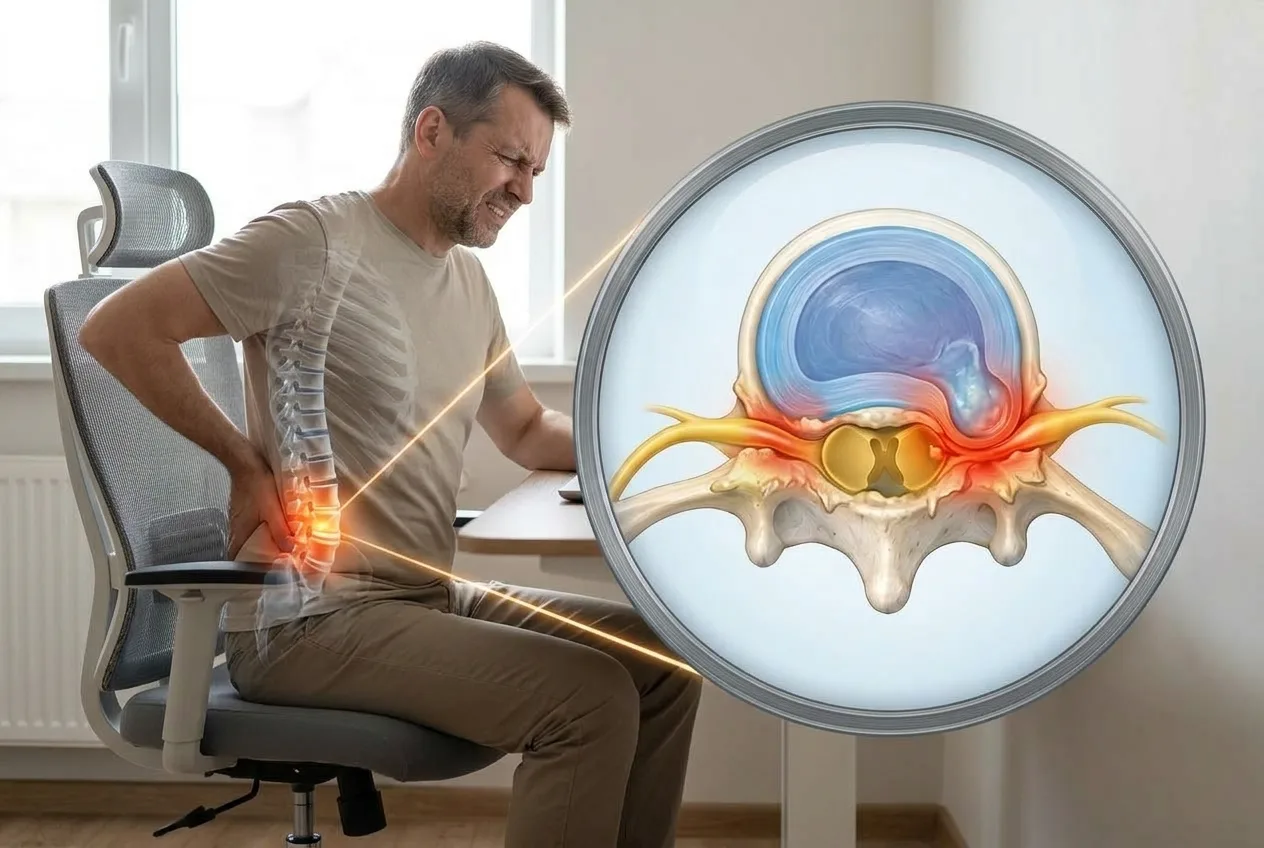
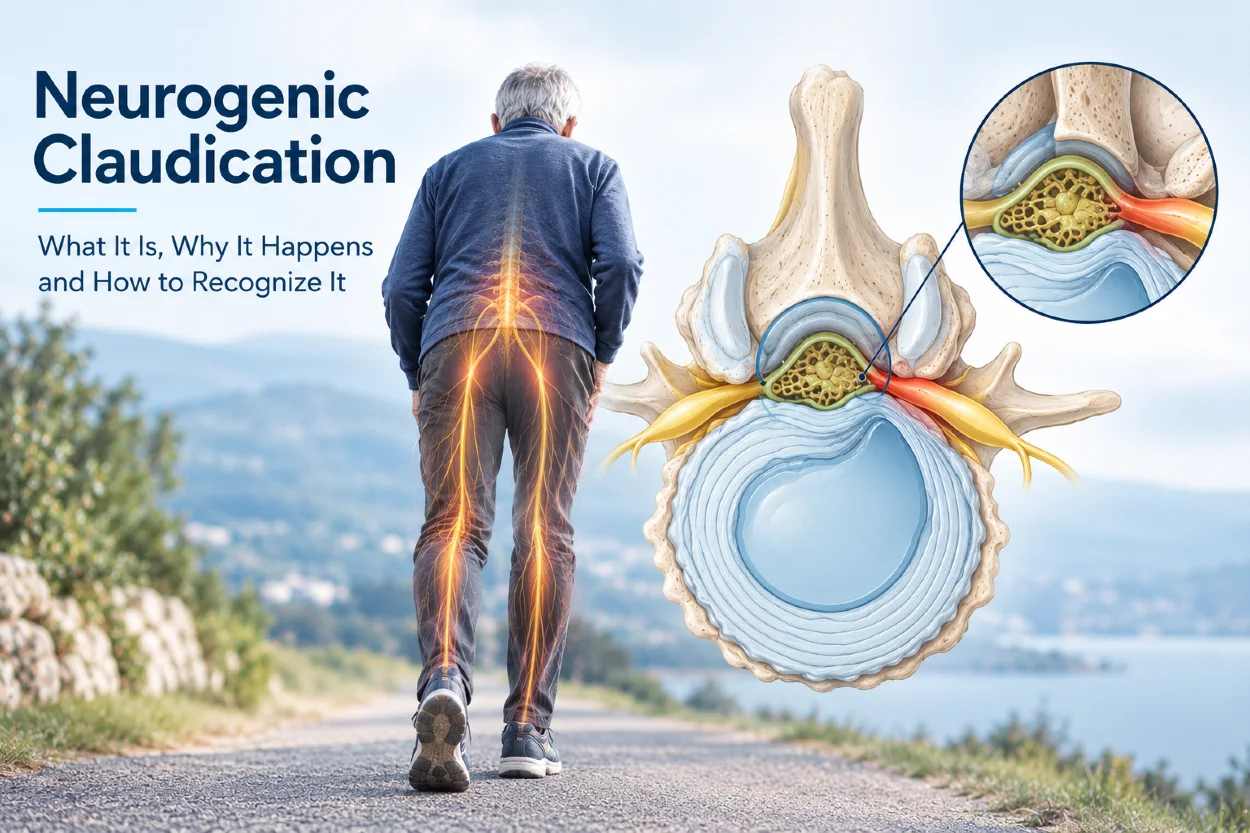
Pain, numbness, tingling, or heaviness in the legs that develops while walking can have many causes. In some people, however, these symptoms are related to irritation or compression of the nerves in the lower spine. This pattern of symptoms is known as neurogenic claudication.
Neurogenic claudication is most commonly associated with lumbar spinal stenosis, a condition in which narrowing of the spinal canal or nerve passageways can affect the nerves supplying the legs. A characteristic feature is that symptoms often worsen with standing or walking and improve when sitting or bending forward.
Understanding this pattern is important because neurogenic claudication can resemble other causes of leg pain, particularly vascular claudication caused by reduced blood flow to the legs. Recognizing the differences can help guide the appropriate evaluation and treatment.
Key Clinical Points – Neurogenic Claudication
- Neurogenic claudication is a pattern of leg pain, numbness, tingling, heaviness, or weakness caused by irritation or compression of spinal nerves, most commonly due to lumbar spinal stenosis.
- Symptoms typically develop or worsen with standing and walking and improve with sitting or bending forward, which increases space for the affected nerves.
- Leg symptoms may be more prominent than back pain, and some people with neurogenic claudication have little or no low back pain.
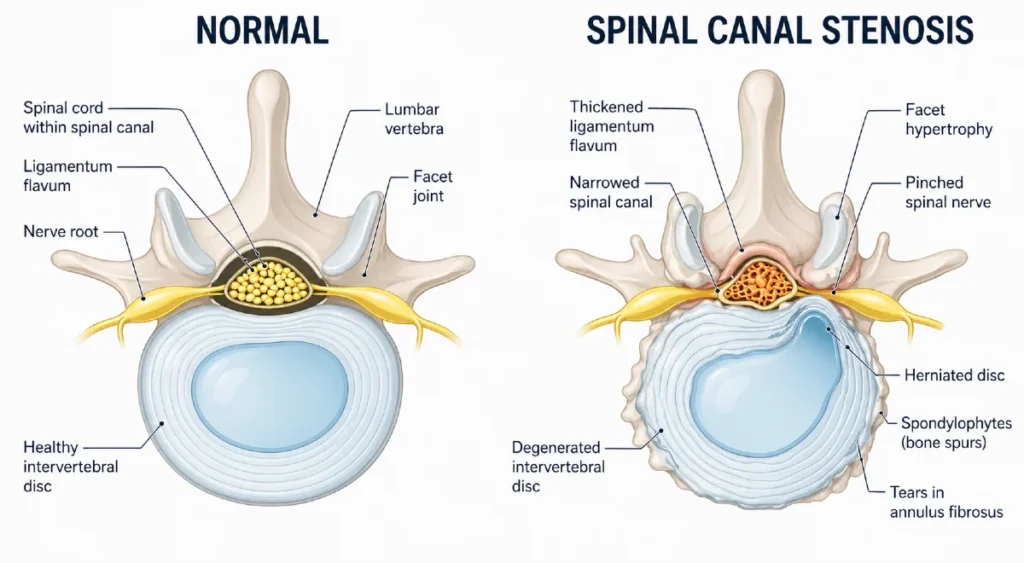
- Lumbar spinal stenosis is the most common underlying cause, often resulting from age-related changes such as facet joint enlargement, disc degeneration, and thickening of the ligamentum flavum.
- Neurogenic claudication can resemble vascular claudication caused by peripheral arterial disease, but the relationship between symptoms, posture, and walking can provide important diagnostic clues.
- Diagnosis is based on the clinical history and physical examination, with MRI of the lumbar spine commonly used to assess spinal canal and nerve compression when imaging is indicated.
- Treatment depends on symptom severity and functional limitations and may include exercise-based rehabilitation, medications, injections, and surgery in selected patients with persistent or severe symptoms.
What Is Neurogenic Claudication?
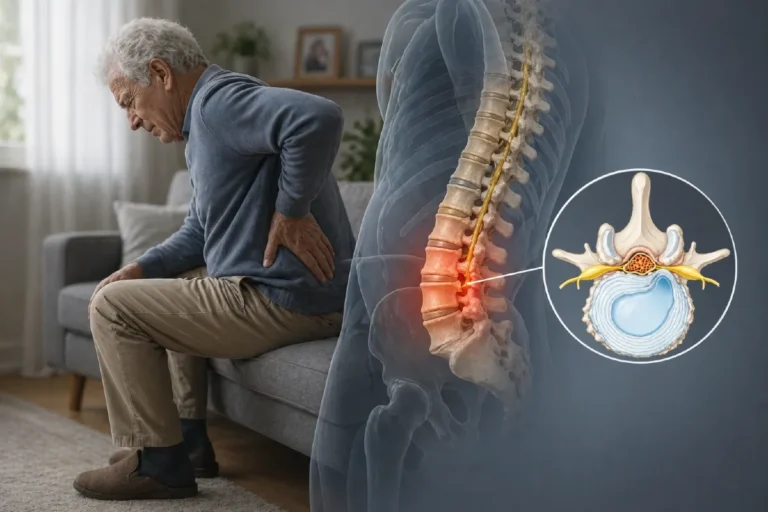
Neurogenic claudication is a clinical syndrome caused by compression or irritation of the nerves in the lumbar spine. It typically produces symptoms in the buttocks, thighs, or legs, particularly during standing or walking.
The symptoms can include pain, numbness, tingling, heaviness, cramping, or weakness. They may affect one or both legs and can vary considerably between individuals.
A characteristic feature is the relationship between symptoms and spinal position. Standing upright and walking, particularly with the lower back extended, can increase pressure on the neural structures. In contrast, sitting or bending forward usually reduces symptoms.
This pattern is most commonly seen in people with lumbar spinal stenosis, in which narrowing of the spinal canal or neural foramina reduces the available space for the spinal nerves. However, the severity of narrowing seen on imaging does not always correspond directly to the severity of symptoms.
Importantly, neurogenic claudication is not simply a finding on an MRI scan. It is a clinical syndrome diagnosed by combining the patient’s symptoms and functional limitations with the findings of the physical examination and, when appropriate, imaging studies.
What Causes Neurogenic Claudication?
The most common cause of neurogenic claudication is lumbar spinal stenosis, a narrowing of the spinal canal or the spaces through which the spinal nerves pass. It is most often related to degenerative changes in the lumbar spine that gradually reduce the space available for the nerves.
Several structural changes can contribute to this narrowing:
- Degenerative disc changes can reduce disc height and contribute to bulging of the disc into the spinal canal or neural foramina.
- Facet joint hypertrophy occurs when the facet joints enlarge as part of degenerative arthritis, reducing the available space within the spinal canal or lateral recesses.
- Thickening of the ligamentum flavum can further encroach on the spinal canal, particularly when combined with other degenerative changes.
- Degenerative spondylolisthesis occurs when one vertebra slips forward relative to another, potentially contributing to central canal or foraminal narrowing.
These changes frequently occur together rather than in isolation. For example, loss of disc height, enlarged facet joints, and thickened ligamentum flavum can progressively narrow the lumbar spinal canal and compress the nerve roots.
How Spinal Stenosis Causes Symptoms
In lumbar spinal stenosis, the space available for the spinal nerves becomes narrowed by degenerative changes in the spine. The narrowing may involve the central spinal canal, lateral recesses, or neural foramina, and can result from a combination of disc degeneration, facet joint enlargement, and thickening of the ligamentum flavum.
The relationship between spinal position and symptoms is particularly important. Lumbar extension, which occurs naturally during standing and walking, can further reduce the available space within the spinal canal and increase compression of the nerve roots. This can explain why symptoms gradually develop or worsen as a person continues to walk.
During walking, the increased demand on the affected nerves may also contribute to symptoms through impaired blood flow within the compressed neural tissues. Together, mechanical compression and changes in neural circulation can produce pain, numbness, tingling, heaviness, or weakness in the legs.
In contrast, sitting or bending forward increases the available space for the nerves. This is why patients with neurogenic claudication often obtain relief by sitting down, leaning forward, or squatting. The same mechanism explains why some patients can tolerate cycling better than walking, as cycling typically keeps the lumbar spine in a more flexed position.
Related Guides

What Does Neurogenic Claudication Feel Like?
Neurogenic claudication can produce a combination of pain, numbness, tingling, heaviness, or weakness in the buttocks, thighs, or legs. The exact pattern varies depending on which nerves are affected and how severe the underlying spinal narrowing is.
A particularly important feature is the relationship between symptoms and activity and posture:
- Standing or walking may trigger or gradually increase symptoms.
- Bending the lower back backward (extension) can make symptoms worse.
- Sitting often provides relief.
- Bending forward (lumbar flexion) may reduce symptoms, sometimes allowing a person to walk farther.
As symptoms progress during walking, the person’s walking distance may become increasingly limited. Some patients can walk several hundred meters before needing to stop, while in more severe cases, symptoms may develop after only 10–20 meters.
Patients often have to stop walking and sit down, lean forward, or squat to obtain relief. Simply standing still may not be enough, particularly when symptoms are already pronounced. After sitting or bending forward for a short period, the symptoms often subside, allowing the person to resume walking.
This can create a characteristic cycle: walking triggers symptoms, the patient stops and changes position to obtain relief, and walking can then be resumed. As the condition becomes more limiting, patients may begin avoiding longer walks, shopping trips, or activities that require prolonged standing.
Bending forward can relieve symptoms because lumbar flexion increases the available space within the spinal canal. This can reduce pressure on the spinal nerves and explain why patients often feel better when sitting, leaning forward, or squatting.
Some patients notice that they can walk farther when leaning forward over a shopping cart. This is commonly known as the shopping cart sign and is a characteristic clinical feature of neurogenic claudication. However, it is not diagnostic on its own, and similar symptoms can occur in other conditions.
The symptoms may affect one or both legs. Bilateral symptoms are common when the central lumbar spinal canal is narrowed, while predominantly one-sided symptoms may occur when narrowing mainly affects a particular nerve root.
Clinical Insight
This characteristic pattern—symptoms brought on by standing or walking and relieved by sitting or bending forward—is an important clinical clue to neurogenic claudication. However, it is not specific enough to establish the diagnosis on its own, and other causes of exertional leg symptoms, particularly vascular claudication, should also be considered.
Neurogenic Claudication vs Intermittent (Vascular) Claudication
Intermittent claudication typically refers to vascular claudication, a symptom of peripheral arterial disease in which leg pain or discomfort develops during walking or exercise because of inadequate blood flow and improves with rest. Neurogenic claudication has a different mechanism and results from compression or irritation of spinal nerves, most commonly due to lumbar spinal stenosis.
| Feature | Neurogenic Claudication | Vascular Claudication |
|---|---|---|
| Main cause | Lumbar spinal stenosis with compression or irritation of spinal nerves | Peripheral arterial disease causing reduced blood flow to the legs |
| Typical trigger | Standing or walking, particularly prolonged walking | Walking or other physical exertion |
| Effect of posture | Symptoms are often worse with lumbar extension and improve with flexion | Symptoms are generally not significantly affected by spinal position |
| Relief | Usually improves with sitting, bending forward, or squatting | Usually improves with rest, regardless of body position |
| Cycling | Often better tolerated because the trunk is typically flexed forward | Symptoms may also occur during cycling or other exertion |
| Peripheral pulses | Usually preserved | May be reduced or absent, depending on the severity and location of arterial disease |
| Typical symptoms | Pain, numbness, tingling, heaviness, or weakness in the buttocks or legs | Aching, cramping, or fatigue in the muscles of the legs, typically with exertion |
If vascular claudication is suspected, a medical evaluation by a cardiologist or vascular specialist is recommended to assess circulation and determine whether peripheral arterial disease may be contributing to the symptoms.
How Is Neurogenic Claudication Diagnosed?
Neurogenic claudication is diagnosed mainly from the pattern of symptoms and a physical examination. Imaging, particularly MRI, can help confirm whether lumbar spinal stenosis is present and whether it could explain the symptoms.
Medical History and Physical Examination
Your doctor will ask about where your symptoms occur, when they start, how far you can walk, and what makes them better or worse.
A typical pattern is pain, numbness, tingling, heaviness, or weakness that develops with standing or walking and improves when sitting or bending forward.
The examination may include checking your muscle strength, sensation, reflexes, walking pattern, and movements of the lower back. Your doctor may also look for signs of nerve involvement.
MRI and Other Imaging
An MRI of the lumbar spine can show whether the spinal canal or the spaces around the nerves have become narrowed. It can also identify changes such as disc degeneration, enlarged facet joints, or thickening of the ligamentum flavum.
However, spinal stenosis on an MRI does not necessarily mean that it is causing your symptoms. Narrowing of the spine becomes increasingly common with age and may be present in people without significant leg symptoms.
For this reason, MRI findings need to be considered together with your symptoms and physical examination.
Vascular Evaluation
Because neurogenic claudication can resemble vascular claudication caused by reduced blood flow to the legs, your doctor may also assess your circulation.
This may include checking the pulses in your legs and, when peripheral arterial disease is suspected, performing an ankle-brachial index (ABI) or other vascular tests.
This distinction is important because the two conditions have different causes and require different treatments.
Clinical Insight
Neurogenic claudication is suspected based on the patient’s symptoms and medical history and supported by the clinical examination. An MRI of the lumbar spine can then help identify spinal stenosis and other structural changes that may explain the symptoms. Because vascular claudication can cause similar walking-related leg pain, vascular disease should also be considered and excluded when appropriate.
Treatment Options
Treatment depends on how severe the symptoms are and how much they limit walking and daily activities. Most people are initially treated without surgery, with the focus on improving mobility, reducing symptoms, and maintaining physical activity.
Exercise and Physical Therapy
Exercise-based physical therapy is an important part of treatment. A rehabilitation program may include exercises for the back and legs, improving strength and mobility, and gradually increasing walking or other activities that are tolerated.
A combination of exercise, education, and manual therapy may improve symptoms and physical function in people with lumbar spinal stenosis and neurogenic claudication.
Medications
Medications may be used to help control pain and allow greater participation in daily activities and exercise. Depending on the individual situation, treatment may include common pain relievers or other medications for nerve-related pain.
However, medications generally do not correct the underlying narrowing of the spinal canal, and evidence for several drug treatments specifically for neurogenic claudication remains limited.
Injections
Epidural injections may sometimes provide short-term symptom relief, particularly when nerve irritation is prominent. However, evidence does not show a consistent or clinically important long-term benefit from epidural steroid injections for neurogenic claudication.
For this reason, injections are generally considered an additional treatment rather than a way to permanently treat spinal stenosis.
When Is Surgery Considered?
Surgery may be considered when leg symptoms and walking limitations remain significant despite appropriate nonsurgical treatment, or when symptoms substantially affect quality of life.
The most common surgical approach is lumbar decompression, which aims to create more space for the compressed nerves. In selected patients, spinal fusion may also be considered when there is associated spinal instability or another structural problem requiring stabilization.
The decision to operate depends on the severity of symptoms, functional limitations, imaging findings, and the patient’s overall health and preferences. Surgery is not necessary for everyone with lumbar spinal stenosis.
When Should You See a Doctor?
You should see a doctor if leg pain, numbness, heaviness, or weakness repeatedly develops when you walk or stand, particularly if it improves when you sit or bend forward.
Medical evaluation is also important if your walking distance is progressively decreasing or symptoms are interfering with everyday activities.
Seek urgent medical attention if you develop new severe weakness in the legs, loss of bladder or bowel control, or numbness around the groin or inner thighs. These symptoms can indicate significant nerve compression requiring prompt assessment.
Frequently Asked Questions
What is neurogenic claudication?
Neurogenic claudication is a pattern of leg pain, numbness, tingling, heaviness, or weakness that develops with standing or walking and improves with sitting or bending forward. It is most commonly caused by lumbar spinal stenosis.
Is neurogenic claudication caused by spinal stenosis?
Yes. Lumbar spinal stenosis is the most common cause of neurogenic claudication. Narrowing of the spinal canal can put pressure on the nerves that supply the legs, particularly during standing and walking.
Can neurogenic claudication cause leg pain?
Yes. Leg pain is a common symptom, although some people experience mainly numbness, tingling, heaviness, or weakness. Symptoms may affect one or both legs.
Why does sitting relieve neurogenic claudication?
Sitting usually places the lower back in a flexed position, which can increase the available space for the spinal nerves. This can reduce nerve compression and relieve symptoms.
Can you have neurogenic claudication without back pain?
Yes. Leg symptoms can occur without significant low back pain. In some people, pain, numbness, or heaviness in the legs is much more noticeable than back pain.
What is the difference between neurogenic and vascular claudication?
Neurogenic claudication is usually caused by spinal nerve compression and tends to improve with sitting or bending forward. Vascular claudication is caused by reduced blood flow to the legs and typically improves simply by resting, regardless of spinal position.
Can neurogenic claudication be treated without surgery?
Yes. Many people are initially treated with exercise-based rehabilitation, physical therapy, symptom management, and other nonsurgical treatments. Surgery may be considered when symptoms remain significantly limiting despite appropriate conservative treatment.
Zileli M et al. Natural Course and Diagnosis of Lumbar Spinal Stenosis: WFNS Spine Committee Recommendations. World Neurosurgery: X. 2020;7:100073. PubMed: Diagnosis and clinical features of lumbar spinal stenosis
Zileli M et al. Lumbar Spinal Stenosis Recommendations of World Federation of Neurosurgical Societies Spine Committee. World Neurosurgery: X. 2020;7:100080. WFNS recommendations: Lumbar spinal stenosis management
Ammendolia C et al. Non-operative treatment for lumbar spinal stenosis with neurogenic claudication: an updated systematic review. BMJ Open. 2022;12(1):e057724. PubMed: Systematic review of non-operative treatment for neurogenic claudication
Fornari M et al. Conservative Treatment and Percutaneous Pain Relief Techniques in Patients with Lumbar Spinal Stenosis: WFNS Spine Committee Recommendations. World Neurosurgery: X. 2020;7:100079. WFNS recommendations: Conservative treatment and percutaneous techniques
Costa F et al. Decompressive Surgery for Lumbar Spinal Stenosis: WFNS Spine Committee Recommendations. World Neurosurgery: X. 2020;7:100076. WFNS recommendations: Decompressive surgery for lumbar spinal stenosis
Nadeau M et al. The reliability of differentiating neurogenic claudication from vascular claudication based on symptomatic presentation. Canadian Medical Association Journal. 2013;185(9):E393-E399. Clinical study: Differentiating neurogenic and vascular claudication
Ammendolia C et al. Non-operative treatment for lumbar spinal stenosis with neurogenic claudication: an updated systematic review. BMJ Open. 2022;12(1):e057724. Full text: Evidence for exercise and other nonsurgical treatments
Zileli M et al. Lumbar Spinal Stenosis: Introduction to the World Federation of Neurosurgical Societies (WFNS) Spine Committee Recommendations. World Neurosurgery: X. 2020;7:100075. WFNS overview: Evidence-based approach to lumbar spinal stenosis