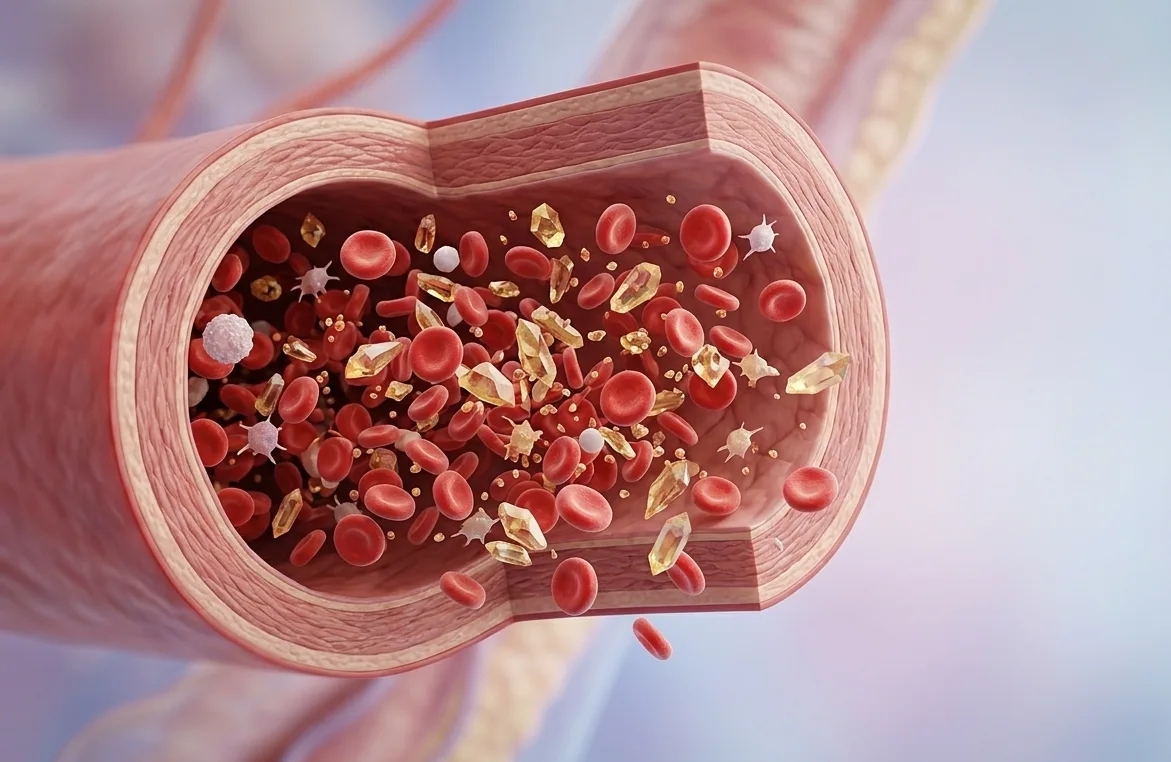
Hyperuricemia (high uric acid) is a common metabolic condition characterized by an elevated level of uric acid in the blood. Most people with hyperuricemia have no symptoms and may not know their uric acid levels are elevated.
High uric acid can increase the risk of gout and kidney stones and is also associated with several other health conditions. Hyperuricemia can result from increased uric acid production, reduced excretion by the kidneys, or a combination of both.
The causes of elevated uric acid are varied and include genetic factors, kidney function, diet, alcohol consumption, certain medications, obesity, and other medical conditions. Understanding why uric acid is elevated is important because treatment depends on the underlying cause and whether hyperuricemia has led to complications such as gout or kidney stones.
What Is Hyperuricemia and Why Does It Occur?
Uric acid is a natural waste product formed when the body breaks down purines. Purines are compounds found in the cells of the body and are also present in many foods, particularly meat, organ meats, seafood, legumes, and some alcoholic beverages. The body also produces purines naturally as part of normal cell metabolism. Most uric acid is removed from the body through the kidneys, while the remainder is eliminated through the intestines.
Hyperuricemia occurs when the level of uric acid in the blood becomes higher than the normal range. It is commonly defined as a serum uric acid level above approximately:
- 357 µmol/L (6.0 mg/dL) in women
- 416 µmol/L (7.0 mg/dL) in men
High uric acid can develop for several reasons:
- Increased uric acid production – This can result from a high intake of purine-rich foods, increased breakdown of cells, or certain inherited disorders of purine metabolism.
- Reduced uric acid excretion by the kidneys – This may occur with kidney disease, dehydration, certain medications, or genetic factors.
- A combination of both mechanisms – In many people, elevated uric acid results from both increased production and reduced excretion.
Important: In most cases of hyperuricemia, the main underlying mechanism is reduced renal excretion of uric acid, rather than excessive production.
| Cause | Examples |
|---|---|
| Increased uric acid production |
Purine-rich diet: red meat, organ meats, seafood, and certain fish such as anchovies, sardines, tuna, cod, and trout. Alcohol: particularly beer. Fructose: soft drinks, sugar-sweetened beverages, and high-fructose corn syrup. Increased cell breakdown: leukemia, lymphoproliferative disorders, psoriasis, tumor lysis syndrome, hemolysis, and intense physical exercise. Genetic disorders: HPRT deficiency and increased activity of PRPP synthetase. |
| Reduced uric acid excretion |
Kidney disease: acute and chronic kidney disease. Metabolic disorders: lactic acidosis and ketoacidosis. Medications and toxins: diuretics, niacin, pyrazinamide, ethambutol, cyclosporine, salicylates, and lead. Endocrine disorders: hyperparathyroidism and hypothyroidism. Other conditions: sarcoidosis, Down syndrome, and Bartter syndrome. |
| Diuretic-induced hyperuricemia |
Diuretics: thiazide and loop diuretics can reduce uric acid excretion by the kidneys and increase the risk of hyperuricemia and gout. Alternative: In patients with gout, some antihypertensive medications such as losartan may be preferred because of their urate-lowering effect. |
How Common Is Hyperuricemia?
Hyperuricemia is common in the general population. Studies suggest that approximately 10–20% of adults have elevated uric acid levels, although the prevalence varies considerably between countries and populations. Most people with hyperuricemia have no symptoms and are unaware that their uric acid levels are elevated.
Hyperuricemia is more common in men than women, while the risk increases with age and becomes more common in women after menopause. Given how common elevated uric acid levels are, it is important to understand the risk factors for hyperuricemia and which factors can be modified to reduce the risk of complications such as gout and kidney stones.
Risk Factors for Hyperuricemia
Elevated uric acid levels (hyperuricemia) are rarely caused by a single factor. In most cases, a combination of genetic predisposition, age, underlying health conditions, diet, body weight, and medications contributes to higher uric acid levels. Some risk factors cannot be changed, while others can be modified to reduce the risk of complications such as gout and kidney stones.
Risk Factors You Cannot Change
- Genetics – Some people inherit a tendency to excrete less uric acid through the kidneys or, less commonly, to produce more uric acid.
- Sex and age – Uric acid levels tend to be higher in men than in women. The risk of hyperuricemia also increases with age, particularly in women after menopause.
- Underlying medical conditions – Chronic kidney disease, hypertension, obesity, and metabolic disorders are commonly associated with elevated uric acid levels.
Modifiable Risk Factors
- Diet – A high intake of red meat, organ meats, certain seafood, and alcohol, particularly beer, can increase uric acid levels.
- Body weight – Obesity and metabolic syndrome are strongly associated with hyperuricemia.
- Sugary foods and beverages – Soft drinks and other foods or drinks high in fructose can increase uric acid production.
- Medications – Some medications, particularly thiazide and loop diuretics, can increase uric acid levels by reducing its excretion through the kidneys.
Clinical Insight
Although genetic predisposition cannot be changed, maintaining a healthy weight, following a balanced diet, limiting alcohol and sugary drinks, and staying physically active can help reduce uric acid levels and the risk of related complications.
What Diseases Can High Uric Acid Cause?
Hyperuricemia does not always cause disease. It is common in the general population, and most people with elevated uric acid levels have no symptoms. However, persistent high uric acid can increase the risk of certain conditions, particularly gout and uric acid kidney stones.
Hyperuricemia is also associated with chronic kidney disease, hypertension, cardiovascular disease, and metabolic disorders, although the relationship is not always directly causal.
Gout
Gout is the best-known condition associated with hyperuricemia. It develops when monosodium urate crystals accumulate in and around joints, triggering intense inflammation. The big toe is the most commonly affected joint (podagra), but gout can also affect the ankle, knee, wrist, elbow, and other joints.
A gout attack typically develops rapidly, often within 24–48 hours, causing severe joint pain, swelling, redness, and warmth. Without appropriate treatment, recurrent attacks can eventually lead to chronic gout and tophi—deposits of urate crystals that can damage joints and surrounding tissues.
Want to learn more about gout? Read our complete guide to gout symptoms, causes, diagnosis, and treatment.
Uric Acid Kidney Stones
Uric acid can crystallize in the urine and form kidney stones. These stones may cause severe flank pain (renal colic), blood in the urine, nausea, and urinary symptoms. They can also increase the risk of urinary tract obstruction and infection.
The risk of uric acid stones is higher in people with persistently elevated uric acid, concentrated urine, low fluid intake, or acidic urine.
Chronic Kidney Disease
Hyperuricemia and chronic kidney disease (CKD) are closely associated. Reduced kidney function can cause uric acid to accumulate because the kidneys are less able to excrete it. At the same time, research suggests that elevated uric acid may contribute to kidney injury in some patients.
However, it is not always possible to determine whether high uric acid is a cause or a consequence of reduced kidney function. This distinction is important when interpreting an elevated uric acid level in someone with CKD.
Cardiovascular Disease
Elevated uric acid levels have been associated with an increased risk of hypertension, cardiovascular disease, heart attack, and stroke. Hyperuricemia is also commonly found in people with other cardiovascular risk factors, including obesity, insulin resistance, and metabolic syndrome.
Although uric acid may contribute to oxidative stress, endothelial dysfunction, and inflammation, it is not yet clear whether hyperuricemia itself directly causes cardiovascular disease or primarily reflects other underlying risk factors.
Metabolic Syndrome and Type 2 Diabetes
High uric acid levels are frequently found in people with obesity, insulin resistance, metabolic syndrome, and type 2 diabetes. Hyperuricemia is therefore considered a useful marker of metabolic health and may also play a role in the development of insulin resistance.
The relationship is complex, however, because factors such as obesity, diet, kidney function, and insulin resistance can all influence uric acid levels.
What Are the Symptoms of High Uric Acid?
High uric acid usually does not cause any symptoms. Most people with hyperuricemia feel completely well and only discover that their uric acid levels are elevated during a routine blood test.
Symptoms may develop when excess uric acid leads to the formation of urate crystals or other complications. The most common symptoms are related to gout, such as sudden joint pain, swelling, redness, and tenderness, while uric acid kidney stones can cause severe pain in the back or side and blood in the urine.
It is therefore important to understand that there are no specific symptoms of high uric acid itself. The symptoms are usually caused by conditions associated with hyperuricemia rather than by the elevated uric acid level alone.
Related Guides


How Is Elevated Uric Acid Diagnosed?
The diagnosis of elevated uric acid (hyperuricemia) is based primarily on a blood test that measures uric acid levels. Because most people with high uric acid have no symptoms, elevated uric acid is often discovered incidentally during routine blood tests.
Blood Test for High Uric Acid
A serum uric acid test is the main test used to detect high uric acid levels. Hyperuricemia is generally defined as a serum urate concentration above approximately 6.8 mg/dL (404 µmol/L), although laboratory reference ranges may vary.
A single elevated result does not necessarily mean that a person has persistent high uric acid. Uric acid levels can fluctuate depending on diet, alcohol intake, hydration, medications, kidney function, and other factors, so the result should be interpreted in the context of the individual patient.
Other Laboratory Tests
Additional blood and urine tests may help identify the cause of elevated uric acid or detect associated health conditions. Depending on the clinical situation, these may include:
- Kidney function tests, such as creatinine and estimated glomerular filtration rate (eGFR)
- Complete blood count (CBC)
- Blood glucose and HbA1c
- Lipid profile
- Electrolytes and other metabolic tests
- Urinalysis, particularly when kidney stones or other urinary problems are suspected
A 24-hour urine uric acid test may occasionally be used when a doctor needs to determine whether high uric acid is primarily related to increased uric acid production or reduced renal excretion. It is not routinely required in everyone with elevated uric acid.
Imaging Tests
Imaging tests do not diagnose high uric acid itself. However, they can help identify complications associated with elevated uric acid, such as gout-related joint changes or kidney stones.
- X-rays may show characteristic changes in advanced or chronic gout, although they are often normal in early disease.
- Ultrasound can detect urate crystal deposits and characteristic findings of gout.
- CT scans, particularly non-contrast CT, are highly useful for detecting kidney stones and can help identify uric acid stones in appropriate clinical settings.
Joint Aspiration
When gout is suspected but the diagnosis is uncertain, joint aspiration (arthrocentesis) can provide a definitive diagnosis. A sample of synovial fluid is examined under polarized light microscopy for needle-shaped monosodium urate crystals with strong negative birefringence.
Importantly, high uric acid alone does not diagnose gout. Likewise, uric acid levels can occasionally be normal during an acute gout attack. The diagnosis should therefore be based on the patient’s symptoms, physical examination, laboratory findings, and, when necessary, analysis of joint fluid.
Treatment of Hyperuricemia
Most people with asymptomatic hyperuricemia do not require medication to lower their uric acid levels. Instead, treatment usually focuses on addressing underlying causes, improving lifestyle factors, and managing associated health conditions.
Urate-lowering medication is generally considered when hyperuricemia is associated with complications such as recurrent gout attacks, tophi, gout-related joint damage, or uric acid kidney stones. Urate-lowering therapy may also be used in specific high-risk situations, such as preventing tumor lysis syndrome in patients receiving treatment for certain cancers.
Treatment of high uric acid therefore depends on the underlying cause, the uric acid level, the presence of gout or other complications, and the patient’s overall health.
Diet and Lifestyle Changes
Lifestyle changes are an important part of managing high uric acid, particularly in people with asymptomatic hyperuricemia or metabolic risk factors.
A healthy dietary pattern can help lower uric acid levels, although the effect is usually modest compared with medication. Rather than completely eliminating purines from the diet, the goal is to reduce excessive intake of purine-rich foods, alcohol, and sugar-sweetened beverages, while maintaining a balanced diet.
Helpful measures include:
- Maintaining a healthy body weight
- Avoiding or limiting sugar-sweetened beverages and foods high in fructose
- Limiting alcohol, particularly beer and spirits
- Reducing excessive intake of red meat, organ meats, and certain seafood
- Choosing low-fat dairy products and a balanced diet rich in vegetables and whole foods
- Maintaining adequate fluid intake, particularly in people at risk of kidney stones
- Exercising regularly
Recommended
- Include cherries and berries as part of a balanced diet.
- Drink coffee in moderate amounts.
- Choose low-fat dairy products.
- Include moderate amounts of plant-based protein such as legumes, nuts, and mushrooms.
- Drink enough fluids and maintain a healthy body weight.
Limit or Avoid
- Large amounts of red meat and organ meats.
- Frequent consumption of certain seafood and fish, such as anchovies, sardines, tuna, and shellfish.
- Alcohol, particularly beer and spirits.
- Sugar-sweetened soft drinks and other beverages high in fructose.
- Large portions of meat or seafood.
Lifestyle measures are important but should not be considered a substitute for urate-lowering medication when medication is clinically indicated.
Medications for High Uric Acid

When medication is indicated, urate-lowering therapy (ULT) is used to reduce serum uric acid and prevent complications of gout and urate crystal deposition.
The main medications include:
Xanthine Oxidase Inhibitors
Allopurinol and febuxostat reduce uric acid production by inhibiting the enzyme xanthine oxidase. Allopurinol is generally the preferred first-line medication for long-term urate-lowering therapy in people with gout.
Treatment is usually started at a low dose and gradually increased, with the dose adjusted according to serum uric acid levels and kidney function. For patients with gout, the usual treatment target is a serum urate level below 6 mg/dL (360 µmol/L). A lower target of 5 mg/dL (300 µmol/L) may be considered in patients with severe gout or tophi.
Importantly, urate-lowering therapy is generally continued long term once indicated. It may also be started during an acute gout attack when appropriate, provided that effective anti-inflammatory treatment is given at the same time.
Uricosuric Medications
Uricosuric drugs lower uric acid by increasing its excretion through the kidneys. They may be considered in selected patients who cannot achieve adequate urate control with a xanthine oxidase inhibitor or who have an underexcretion of uric acid.
Because these medications increase urinary uric acid, they may increase the risk of uric acid kidney stones and are generally avoided in patients with significant kidney disease or a history of uric acid nephrolithiasis.
Recombinant Uricase Enzymes
Uricase-based medications work differently by converting uric acid into allantoin, a more soluble compound that can be readily eliminated from the body.
These medications are highly effective at rapidly lowering uric acid levels but are generally reserved for severe or treatment-resistant gout, particularly in patients with extensive tophi who have not responded adequately to conventional urate-lowering therapy.
Key Clinical Points – Hyperuricemia
- Hyperuricemia means an elevated level of uric acid in the blood and is often found incidentally because most people have no symptoms.
- The most common mechanism is reduced uric acid excretion by the kidneys, although increased uric acid production and a combination of both mechanisms can also occur.
- High uric acid is associated with several risk factors, including genetics, kidney disease, obesity, diet, alcohol consumption, and certain medications.
- Persistent elevated uric acid can increase the risk of gout and uric acid kidney stones and is also associated with chronic kidney disease and metabolic and cardiovascular conditions.
- Lifestyle changes such as maintaining a healthy weight, limiting alcohol and fructose, staying well hydrated, and following a balanced diet can help lower uric acid levels.
- Not everyone with asymptomatic hyperuricemia requires medication. Urate-lowering therapy is mainly considered when hyperuricemia is associated with gout, tophi, uric acid kidney stones, or other specific clinical indications.
Frequently Asked Questions About Hyperuricemia
What is hyperuricemia?
Hyperuricemia is a condition in which the level of uric acid in the blood is higher than normal. It is often asymptomatic and does not necessarily mean that a person has gout.
What are the symptoms of high uric acid?
High uric acid usually causes no symptoms. Symptoms typically occur only when hyperuricemia leads to complications such as gout or uric acid kidney stones.
What causes elevated uric acid?
Elevated uric acid can result from reduced excretion by the kidneys, increased uric acid production, or a combination of both. Genetics, kidney disease, obesity, diet, alcohol, and certain medications can all contribute.
What is a normal uric acid level?
A commonly used upper limit is approximately 6.8 mg/dL (404 µmol/L), although normal ranges may vary between laboratories and according to sex and other factors.
Can you have high uric acid without gout?
Yes. Many people have high uric acid without ever developing gout. Hyperuricemia is a major risk factor for gout but does not by itself mean that gout is present.
Does high uric acid always mean gout?
No. Gout occurs when monosodium urate crystals accumulate in and around joints and cause inflammation. A person can have elevated uric acid without crystal deposition or gout symptoms.
How can I lower my uric acid naturally?
You can help lower uric acid levels by maintaining a healthy weight, limiting alcohol and sugar-sweetened beverages, avoiding excessive intake of purine-rich foods, staying adequately hydrated, and following a balanced diet.
What foods increase uric acid?
Foods that can increase uric acid include organ meats, red meat, some seafood, and foods or drinks high in fructose. Alcohol, particularly beer, can also raise uric acid levels.
When does high uric acid require treatment?
Asymptomatic hyperuricemia usually does not require medication. Urate-lowering treatment is generally considered when elevated uric acid is associated with conditions such as recurrent gout, tophi, uric acid kidney stones, or other specific clinical indications.
Can high uric acid damage the kidneys?
High uric acid is strongly associated with kidney disease, but the relationship is complex. Reduced kidney function can itself cause uric acid to rise, while persistent hyperuricemia may also contribute to kidney problems in some people.
George C, Leslie SW, Minter DA. Hyperuricemia. StatPearls [Internet]. Treasure Island (FL): StatPearls Publishing; 2025 Jan-. Updated 2023 Oct 14. StatPearls: Hyperuricemia – causes, diagnosis, and treatment
Du L, Zong Y, Li H, Wang Q, Xie L, Yang B, Pang Y, Zhang C, Zhong Z, Gao J. Hyperuricemia and its related diseases: mechanisms and advances in therapy. Signal Transduct Target Ther. 2024 Aug 28;9(1):212. doi: 10.1038/s41392-024-01916-y. Review: Hyperuricemia, related diseases, mechanisms, and treatment advances
FitzGerald JD et al. 2020 American College of Rheumatology Guideline for the Management of Gout. Arthritis Care Res (Hoboken). 2020;72(6):744-760. doi: 10.1002/acr.24180. ACR guideline: Urate-lowering therapy and management of gout
Richette P et al. 2016 updated EULAR evidence-based recommendations for the management of gout. Ann Rheum Dis. 2017;76(1):29-42. doi: 10.1136/annrheumdis-2016-209707. EULAR recommendations: Gout and urate-lowering treatment
Chen-Xu M, Yokose C, Rai SK, Pillinger MH, Choi HK. Contemporary prevalence of gout and hyperuricemia in the United States and decadal trends: the National Health and Nutrition Examination Survey, 2007-2016. Arthritis Rheumatol. 2019;71(6):991-999. doi: 10.1002/art.40807. Study: Prevalence and trends of hyperuricemia