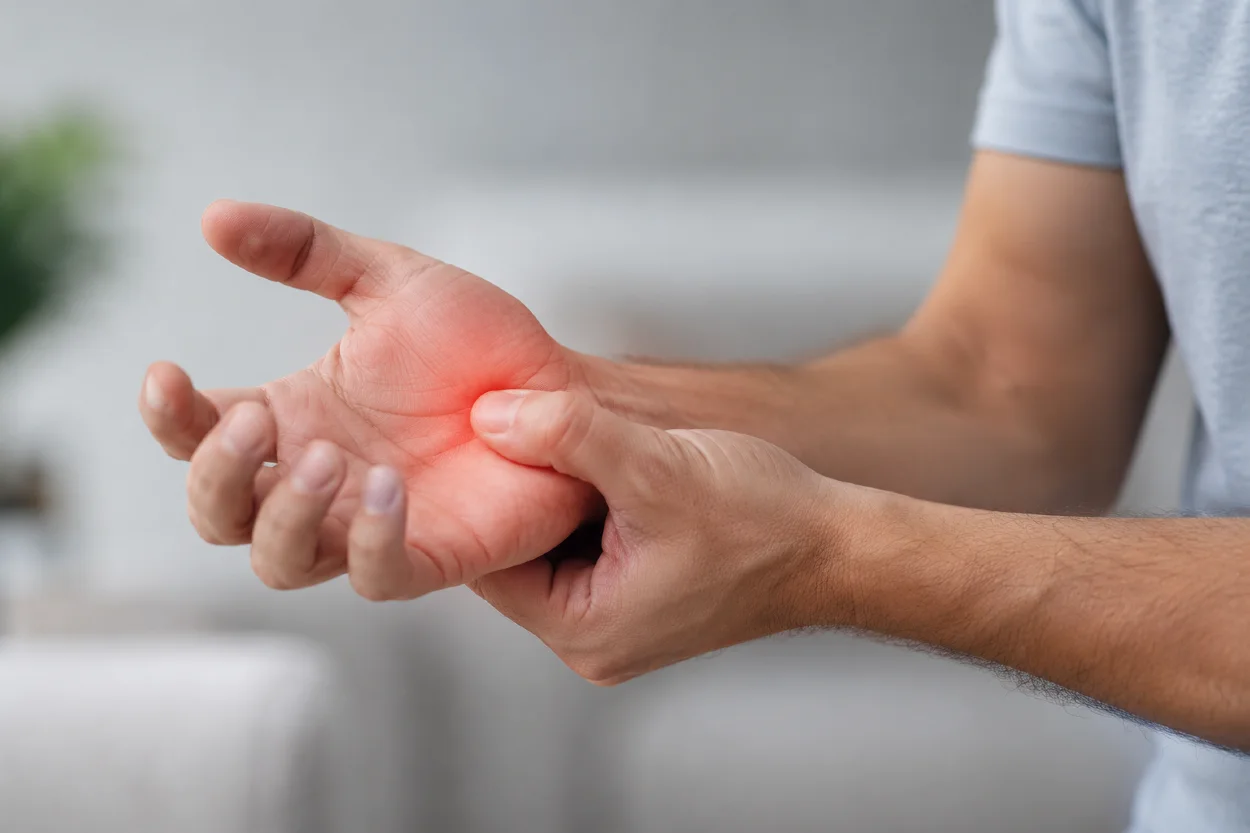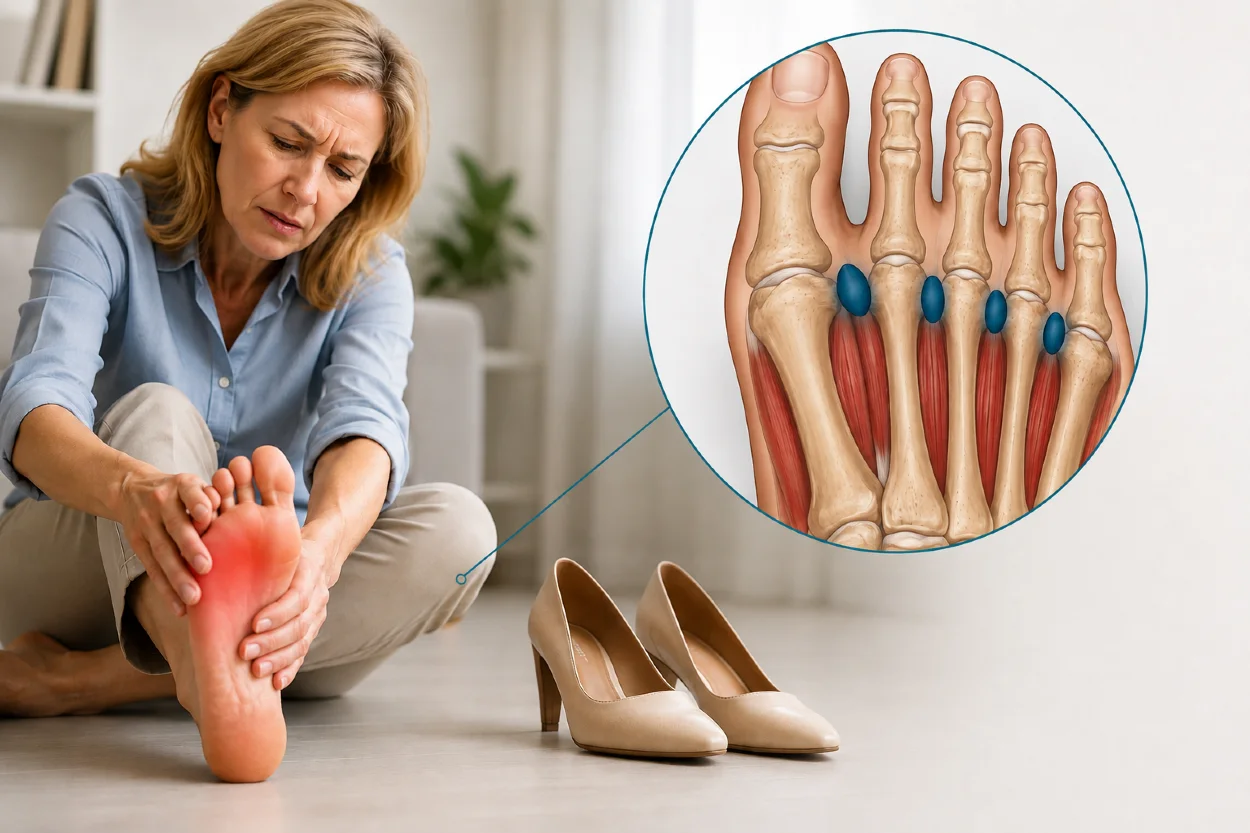

Hand joint pain is a common problem that can make everyday activities such as gripping, typing, opening jars, or buttoning clothes surprisingly difficult. The pain may affect a single finger joint, the thumb, several fingers, or the hand as a whole.
The causes of hand joint pain are diverse. Osteoarthritis is particularly common with age, while rheumatoid arthritis, gout, injuries, and repetitive strain can also affect the small joints of the hand. Pain that feels like it comes from a joint may sometimes originate from nearby tendons, nerves, or other soft tissues.
Identifying the underlying cause is important because different conditions can produce similar symptoms but require different treatments. In this article, we explain the most common causes of hand joint pain, associated symptoms, how it is diagnosed, and the available treatment options.
What Is Hand Joint Pain?
Hand joint pain refers to pain or discomfort that is felt in or around the joints of the hand and fingers. It can affect a single joint or several joints and may develop gradually or appear suddenly.
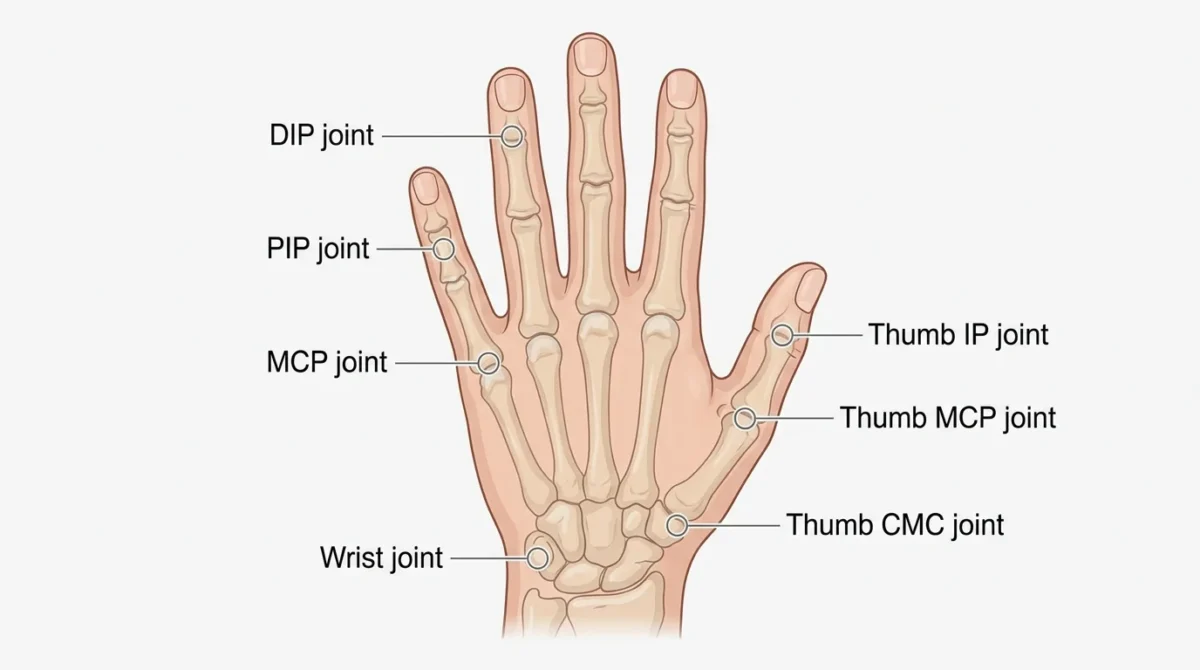
The hand contains many small joints, and the location of pain can provide useful clues about its possible cause:
- Finger joints: Pain may affect the distal interphalangeal (DIP) joints closest to the fingertips, the proximal interphalangeal (PIP) joints in the middle of the fingers, or the knuckle joints (MCP joints).
- Thumb joint: Pain at the base of the thumb is commonly related to thumb carpometacarpal (CMC) osteoarthritis, while pain closer to the thumb tip can have other causes.
- Knuckles: Pain and swelling around the knuckles can occur with osteoarthritis, rheumatoid arthritis, gout, or injuries.
- Wrist: Wrist pain may originate from the wrist joints themselves, but it can also be caused by tendons, ligaments, or nerve compression.
It is also important to distinguish true joint pain from pain arising from surrounding structures. Tendon problems such as trigger finger or De Quervain tenosynovitis can cause pain near a joint, while conditions such as carpal tunnel syndrome can cause hand discomfort, numbness, or tingling without originating in the joint itself.
What Causes Hand Joint Pain?
Hand joint pain can have many causes, ranging from age-related changes and inflammatory arthritis to injuries and problems affecting the tendons or nerves. The location and pattern of pain, as well as associated symptoms such as swelling, stiffness, or numbness, can help identify the underlying problem.
Osteoarthritis
Osteoarthritis is one of the most common causes of hand joint pain, particularly with increasing age. It commonly affects the DIP joints, PIP joints, and the thumb CMC joint at the base of the thumb. Bony enlargements known as Heberden’s nodes can develop at the DIP joints, while similar changes at the PIP joints are called Bouchard’s nodes.
Rheumatoid Arthritis
Rheumatoid arthritis typically affects the MCP and PIP joints of the hands and often involves the same joints on both sides. Pain is commonly accompanied by swelling and prolonged morning stiffness, which may last for an hour or longer. Unlike osteoarthritis, rheumatoid arthritis can cause significant inflammation and progressive joint damage if left untreated.
Thumb Arthritis
Thumb arthritis, particularly osteoarthritis of the CMC joint, is a common cause of pain at the base of the thumb. Pain is often aggravated by activities that require gripping, pinching, or opening jars, and grip strength may gradually decrease. The base of the thumb may also become tender or appear enlarged.
Gout
Gout can occasionally affect the joints of the fingers and cause a sudden attack of severe pain. The affected joint typically becomes swollen, warm, and red, with symptoms developing over hours. Although gout most commonly affects the big toe, it can involve almost any joint.
Hand Injuries
Sprains, fractures, ligament injuries, and repetitive trauma can all cause hand and finger joint pain. An acute injury is usually associated with sudden pain and may cause swelling, bruising, or reduced movement. Repetitive loading can produce more gradual symptoms, particularly in people whose work or sports place high demands on the hands.
Tendon Problems
Pain around the finger or thumb joints may sometimes originate from the tendons rather than the joint itself. Common examples include trigger finger, De Quervain tenosynovitis, and flexor or extensor tendinopathy. Tendon problems often cause pain with specific movements and may be associated with tenderness along the course of the tendon.
Related Guides

Carpal Tunnel Syndrome
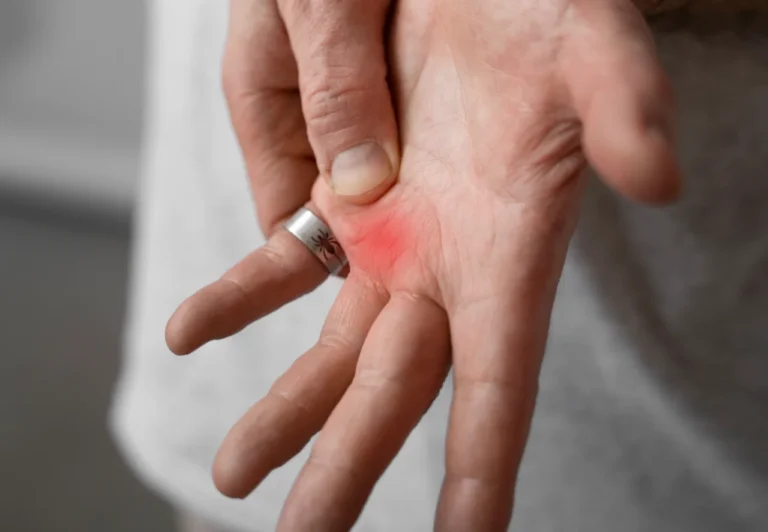
Carpal tunnel syndrome is not a joint disorder, but it can cause pain or discomfort that patients perceive as hand pain. Compression of the median nerve typically produces numbness, tingling, or burning in the thumb, index finger, middle finger, and part of the ring finger, often worse at night. Weakness or difficulty with fine hand movements may develop in more advanced cases.
Experiencing numbness or tingling in your hand? Learn more about carpal tunnel syndrome, its symptoms, causes, and treatment.
Psoriatic Arthritis
Psoriatic arthritis can cause painful and swollen finger joints, often with inflammation affecting an entire finger or toe—a characteristic finding called dactylitis. It may occur together with psoriasis or changes in the fingernails, although joint symptoms can occasionally develop before obvious skin disease.
Other Causes
Less common causes of hand joint pain include joint infections, viral arthritis, lupus, and other autoimmune or systemic diseases. These conditions are more likely to cause multiple affected joints or additional symptoms such as fever, fatigue, skin changes, or pain in other parts of the body.
Symptoms That Can Accompany Hand Joint Pain
The symptoms that occur alongside hand joint pain can provide useful clues about its underlying cause. Common symptoms include:
- Pain: May be constant or occur mainly with gripping, pinching, or finger movement. Activity-related pain is common with osteoarthritis, while sudden severe pain may occur with gout or an acute injury.
- Stiffness: Morning stiffness is common in arthritis. Brief stiffness is more typical of osteoarthritis, while prolonged morning stiffness may suggest an inflammatory condition such as rheumatoid arthritis.
- Swelling: Swollen finger joints can indicate inflammation and are common with rheumatoid arthritis, gout, and other inflammatory conditions. Persistent bony enlargement is more characteristic of hand osteoarthritis.
- Warmth and redness: A warm, red, and painful joint usually indicates active inflammation. Sudden redness and swelling can occur with gout, while a hot joint with fever requires prompt assessment for possible infection.
- Reduced grip strength: Difficulty gripping objects or opening jars may occur with thumb CMC osteoarthritis, painful hand arthritis, or advanced joint disease.
- Numbness or tingling: These symptoms are usually related to nerve compression rather than the joint itself. Numbness in the thumb, index, middle, and part of the ring finger is typical of carpal tunnel syndrome.
- Deformity: Progressive changes in the shape or alignment of the fingers can occur with advanced osteoarthritis or rheumatoid arthritis. Sudden deformity following an injury may indicate a fracture or ligament injury.
Hand Osteoarthritis vs. Rheumatoid Arthritis: What Is the Difference?
Both hand osteoarthritis (OA) and rheumatoid arthritis (RA) can cause pain, stiffness, and swelling, but they tend to affect different joints and have different patterns of symptoms.
| Feature | Hand Osteoarthritis | Rheumatoid Arthritis |
|---|---|---|
| Typical joints | DIP, PIP, and thumb CMC joints | MCP and PIP joints |
| DIP joints | Commonly affected | Usually spared |
| Pattern | May be asymmetric | Often symmetrical, affecting both hands |
| Pain | Often worse with use, gripping, or pinching | Often associated with inflammation and may persist at rest |
| Morning stiffness | Usually brief, often less than 30 minutes | Typically prolonged, often more than 30–60 minutes |
| Swelling | Usually firm or bony enlargement | Usually soft, tender, and inflammatory |
| Characteristic changes | Heberden’s and Bouchard’s nodes may develop | Joint deformities may develop with progressive disease |
| Systemic symptoms | Usually absent | Fatigue and other systemic symptoms may occur |
Clinical Insight
A useful clinical clue is the distribution of affected joints. Osteoarthritis commonly involves the DIP and thumb CMC joints, whereas rheumatoid arthritis typically affects the MCP and PIP joints and tends to involve both hands in a similar pattern.
These conditions can sometimes coexist, particularly in older adults, so the pattern of symptoms alone is not always sufficient to establish a diagnosis.
When Should You See a Doctor for Hand Pain?
Mild hand pain after overuse or a minor injury often improves with time and appropriate self-care. However, certain symptoms may indicate a significant injury, infection, nerve compression, or inflammatory joint disease and should be evaluated by a healthcare professional.
You should seek medical attention if you experience:
- Sudden or severe hand pain, especially without an obvious cause.
- Significant trauma or visible deformity of a finger, thumb, or hand.
- A hot, red, or swollen joint, particularly if the swelling develops suddenly.
- Fever or feeling generally unwell together with hand pain or swelling.
- Persistent or recurrent joint swelling that does not improve.
- Progressive changes or deformity of the fingers or thumb.
- Numbness, tingling, or weakness, particularly if these symptoms are persistent or progressively worsening.
How Is Hand Joint Pain Diagnosed?
Diagnosis begins with a medical history and physical examination. The location and pattern of pain, affected joints, stiffness, swelling, previous injuries, and associated symptoms can help distinguish between arthritis, injury, tendon problems, and nerve disorders.
Depending on the suspected cause, additional tests may include:
- X-ray: Useful for detecting osteoarthritis, fractures, joint-space changes, and other bony abnormalities.
- Ultrasound: Can assess joints, synovium, tendons, and soft tissues and can detect fluid or inflammation.
- MRI: Provides detailed images of cartilage, bone, tendons, ligaments, and other soft tissues when more detailed evaluation is needed.
- Blood tests: May be used when rheumatoid arthritis, gout, infection, or another systemic inflammatory condition is suspected.
- Joint aspiration: Removal and analysis of joint fluid may be recommended when infection or crystal arthritis such as gout is suspected.
How Is Hand Joint Pain Treated?
Treatment for hand joint pain depends largely on what is causing the pain. A treatment that helps osteoarthritis may be very different from the approach used for rheumatoid arthritis, gout, or a tendon problem.
For hand osteoarthritis, treatment usually begins with maintaining hand function through appropriate exercises and activity modification. Hand therapy and strengthening exercises can help preserve mobility and grip strength, while a thumb or finger splint may reduce stress on a painful joint during certain activities. Topical or oral NSAIDs may also provide short-term pain relief when appropriate.
If symptoms remain troublesome despite conservative treatment, a corticosteroid injection may be considered for selected joints. In advanced arthritis causing persistent pain and significant functional limitations, surgery may be an option.
When hand pain is caused by rheumatoid arthritis or another inflammatory disease, treatment focuses on controlling the underlying inflammation. This may require disease-modifying medications prescribed and monitored by a rheumatologist rather than relying solely on pain-relieving medication.
How Can You Relieve Hand Joint Pain at Home?
For mild hand pain, small changes in how you use your hands can make everyday activities more comfortable. Try to reduce repetitive gripping, pinching, or heavy lifting when these movements clearly aggravate your symptoms, while continuing gentle hand movement to avoid stiffness.
Heat can be helpful when the main problem is stiffness, particularly in the morning. If a joint becomes swollen after activity or an acute injury, cold therapy may help reduce discomfort and swelling.
Gentle range-of-motion exercises can help keep the fingers and thumb mobile. As pain settles, gradually introducing strengthening exercises can help restore grip function rather than keeping the hand completely at rest.
If hand pain persists despite these measures, keeps returning, or is accompanied by swelling, deformity, numbness, or weakness, it is worth seeking a professional assessment rather than continuing self-treatment.
Quick Overview – Hand Joint Pain
- Hand joint pain can affect the fingers, knuckles, thumb, or wrist and may originate from the joints, tendons, or nerves.
- Osteoarthritis is a common cause, particularly in the DIP, PIP, and thumb CMC joints, while rheumatoid arthritis typically affects the MCP and PIP joints symmetrically.
- Other causes include gout, injuries, tendon disorders, psoriatic arthritis, and less commonly infections or other systemic diseases.
- Joint swelling, prolonged morning stiffness, warmth, or redness may suggest an inflammatory cause, while numbness or tingling may indicate nerve involvement rather than a joint problem.
- Diagnosis is based on the clinical examination and may include X-rays, ultrasound, MRI, blood tests, or joint aspiration depending on the suspected cause.
- Treatment depends on the underlying condition and may include exercise and hand therapy, activity modification, splints, medications, injections, or surgery in selected cases.
- Sudden severe pain, a hot or swollen joint, significant trauma, progressive deformity, or persistent numbness or weakness should be medically evaluated.
Frequently Asked Questions About Hand Joint Pain
What Is the Most Common Cause of Hand Joint Pain?
Osteoarthritis is one of the most common causes of hand joint pain, particularly in older adults. It frequently affects the DIP, PIP, and thumb CMC joints.
Why Do My Finger Joints Hurt?
Finger joint pain can result from osteoarthritis, rheumatoid arthritis, gout, injury, or overuse. The location of the pain, whether the joint is swollen, and the presence of morning stiffness can help identify the cause.
Why Are My Finger Joints Swollen?
Swollen finger joints may be caused by arthritis, gout, an injury, or inflammation of the surrounding tissues. Persistent swelling, particularly in several joints, should be assessed by a healthcare professional.
Why Does My Thumb Joint Hurt?
Pain at the base of the thumb is commonly caused by thumb CMC osteoarthritis (rhizarthrosis). It often becomes noticeable during gripping, pinching, opening jars, or other activities that load the thumb.
Is Hand Joint Pain Always Caused by Arthritis?
No. Hand pain can also result from injuries, tendon problems, nerve compression, or overuse. For example, carpal tunnel syndrome can cause hand pain and discomfort without affecting the joints themselves.
Can Hand Joint Pain Be Treated Without Surgery?
Yes. Many causes of hand joint pain can initially be managed with exercise, hand therapy, activity modification, splints, and medications. Surgery is generally reserved for selected cases where significant structural problems cause persistent pain or functional limitations.
When Should I Worry About Hand Joint Pain?
Seek medical attention for severe or sudden pain, a hot or swollen joint, significant trauma, visible deformity, fever, or persistent numbness or weakness. Progressive swelling or deformity should also be evaluated.
Kolasinski SL et al. 2019 American College of Rheumatology/Arthritis Foundation Guideline for the Management of Osteoarthritis of the Hand, Hip, and Knee. Arthritis Care & Research. 2020;72(2):149–162. PubMed: Evidence-based guideline for hand osteoarthritis management
Fraenkel L et al. 2021 American College of Rheumatology Guideline for the Treatment of Rheumatoid Arthritis. Arthritis Care & Research. 2021;73(7):924–939. PubMed: ACR guideline for rheumatoid arthritis treatment
FitzGerald JD et al. 2020 American College of Rheumatology Guideline for the Management of Gout. Arthritis Care & Research. 2020;72(6):744–760. PubMed: ACR guideline for gout management
American Academy of Orthopaedic Surgeons. Management of Carpal Tunnel Syndrome: Evidence-Based Clinical Practice Guideline. 2024. AAOS Clinical Practice Guideline: Carpal Tunnel Syndrome
Gossec L et al. EULAR recommendations for the management of psoriatic arthritis with pharmacological therapies: 2023 update. Annals of the Rheumatic Diseases. EULAR recommendations: Psoriatic arthritis management
Kolasinski SL et al. 2019 American College of Rheumatology/Arthritis Foundation Guideline for the Management of Osteoarthritis of the Hand, Hip, and Knee. Arthritis Rheumatology. 2020;72(2):220–233. PubMed: Clinical guideline for osteoarthritis treatment
NICE (National Institute for Health and Care Excellence). Osteoarthritis in Over 16s: Diagnosis and Management (NG226). NICE guideline: Osteoarthritis diagnosis and management
American Academy of Orthopaedic Surgeons. Management of Carpal Tunnel Syndrome: Evidence-Based Clinical Practice Guideline. 2024. AAOS guideline PDF: Diagnosis and treatment of carpal tunnel syndrome