Calcific tendinitis is a painful shoulder condition caused by calcium deposits forming within the rotator cuff tendons of the shoulder. While many cases improve with rest, physical therapy, or medication, some deposits continue to cause persistent pain and limit shoulder function.
Barbotage is a minimally invasive, ultrasound-guided procedure designed to remove or break up these calcium deposits. By targeting the deposit with a needle under real-time ultrasound guidance, barbotage can relieve pain, improve shoulder movement, and help many patients avoid surgery.
In this article, you’ll learn what barbotage is, when it is recommended, how the procedure is performed, its success rate, possible risks, and what to expect during recovery.
Key Clinical Points – Barbotage for Calcific Tendonitis
- Barbotage is a minimally invasive, ultrasound-guided procedure used to treat symptomatic calcific tendonitis by breaking up and removing calcium deposits from the rotator cuff tendons.
- Not every calcium deposit requires treatment — barbotage is mainly considered for patients with persistent shoulder pain, reduced function, and failure of conservative treatments.
- The procedure is performed under local anesthesia and involves needle lavage to fragment and aspirate the calcium deposit while avoiding damage to surrounding tissues.
- The success of barbotage depends on the size, location, and consistency of the calcium deposit, with softer deposits in the resorptive phase often responding best.
- Early movement and progressive rehabilitation are important after the procedure to restore shoulder mobility, strength, and function.
- Most patients experience significant improvement in pain and shoulder function, and barbotage may help many individuals avoid more invasive treatments such as arthroscopic surgery.
What Is Calcific Tendonitis?
Calcific tendonitis is a condition in which calcium deposits form within the rotator cuff tendons of the shoulder. These deposits can irritate the tendon and surrounding tissues, causing inflammation, shoulder pain, and restricted arm movement.
The condition most commonly affects the rotator cuff, especially the supraspinatus tendon. Although some calcium deposits gradually disappear on their own, others persist and continue to cause symptoms, particularly during the painful resorption phase when the body attempts to break down the deposit.
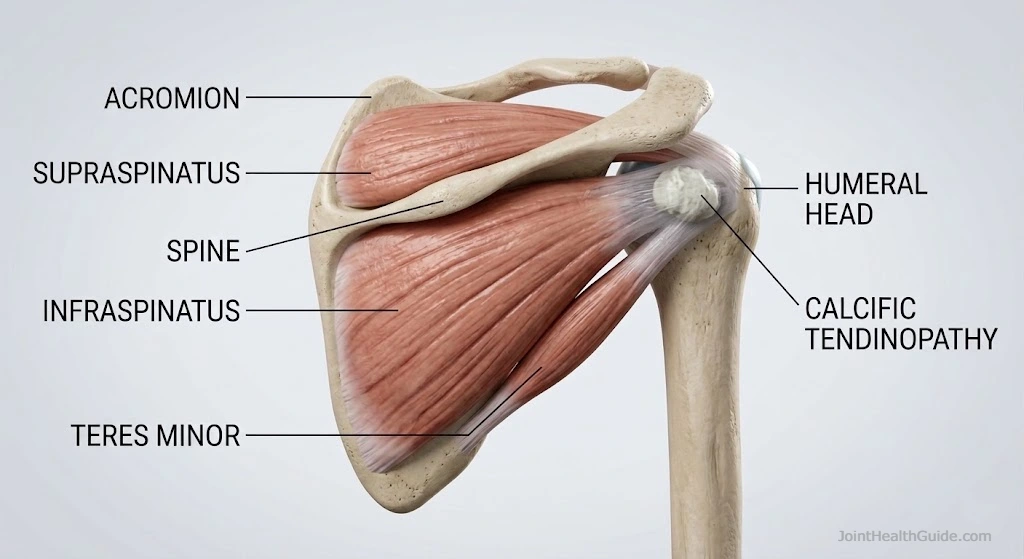
When symptoms do not improve with conservative treatments, procedures aimed at removing or reducing the calcium deposit may be considered. Barbotage is one of the minimally invasive treatment options used for persistent, symptomatic calcific tendonitis.
Before considering treatments such as barbotage, it is important to understand why calcium deposits develop in the shoulder and how calcific tendonitis progresses. Learn more about the causes, symptoms, diagnosis, and treatment options in our complete guide to calcific tendonitis of the shoulder.
What Is Barbotage?
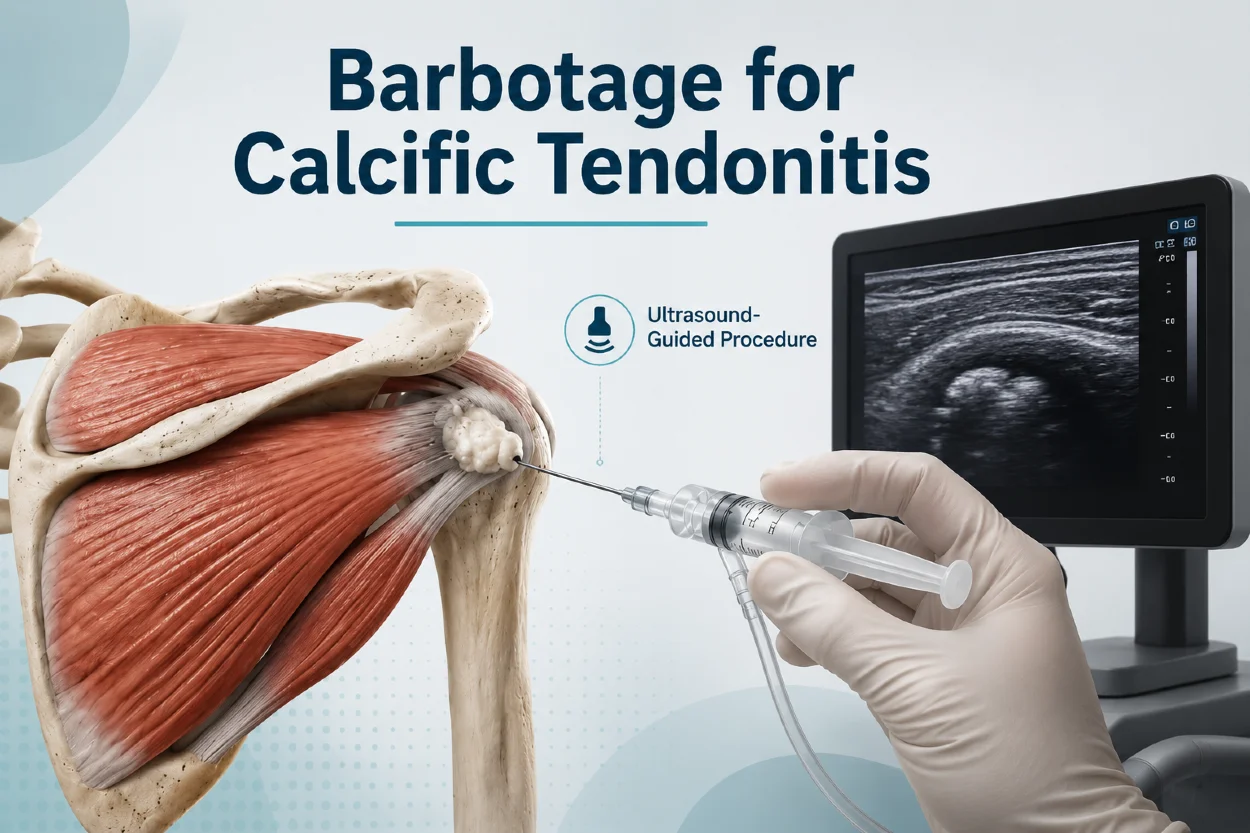
Barbotage is a minimally invasive, ultrasound-guided procedure used to treat calcific tendonitis by removing calcium deposits from the rotator cuff tendons. The technique involves inserting one or two needles into the calcium deposit and using saline solution to break it apart and wash out the calcified material.
Also known as ultrasound-guided needle lavage, percutaneous lavage, or needle aspiration, barbotage allows the physician to precisely target the calcium deposit while avoiding damage to surrounding healthy tendon tissue. Real-time ultrasound imaging is essential because it helps identify the exact location, size, and consistency of the deposit and guides the needle placement throughout the procedure.
Unlike surgery, barbotage does not require large incisions or general anesthesia. It is usually performed as an outpatient procedure and is considered a treatment option for patients with persistent symptoms caused by calcific tendonitis despite conservative treatment.
The main goal of barbotage is to reduce pain, improve shoulder function, and help the body clear the remaining calcium deposits more effectively.
Barbotage Procedure for Calcific Tendonitis: Step-by-Step Guide
Barbotage is performed as an outpatient procedure under local anesthesia, meaning that hospitalization is not required. The procedure usually takes around 30 to 45 minutes, depending on the size and consistency of the calcium deposit.
1. Preparation and Local Anesthesia
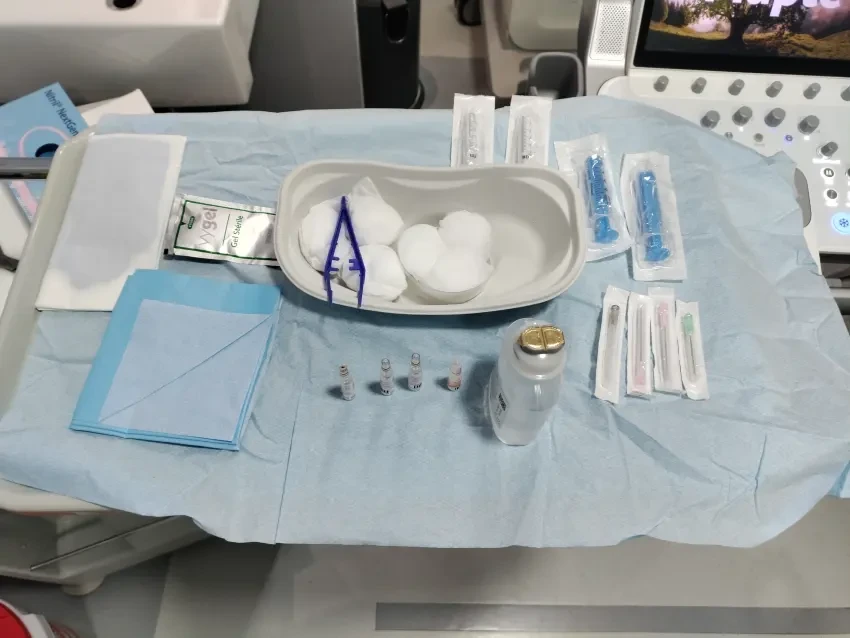
During the procedure, the patient lies comfortably on their back with the affected arm relaxed alongside the body. The physician first uses ultrasound imaging to precisely locate the calcium deposit and determine the safest needle entry point.
After cleaning and disinfecting the skin, sterile ultrasound gel is applied, and a thin needle is carefully inserted under continuous ultrasound guidance. Local anesthetic is then injected around the deposit to numb the area and make the procedure as comfortable as possible.
2. Breaking Up and Washing Out the Calcium Deposit
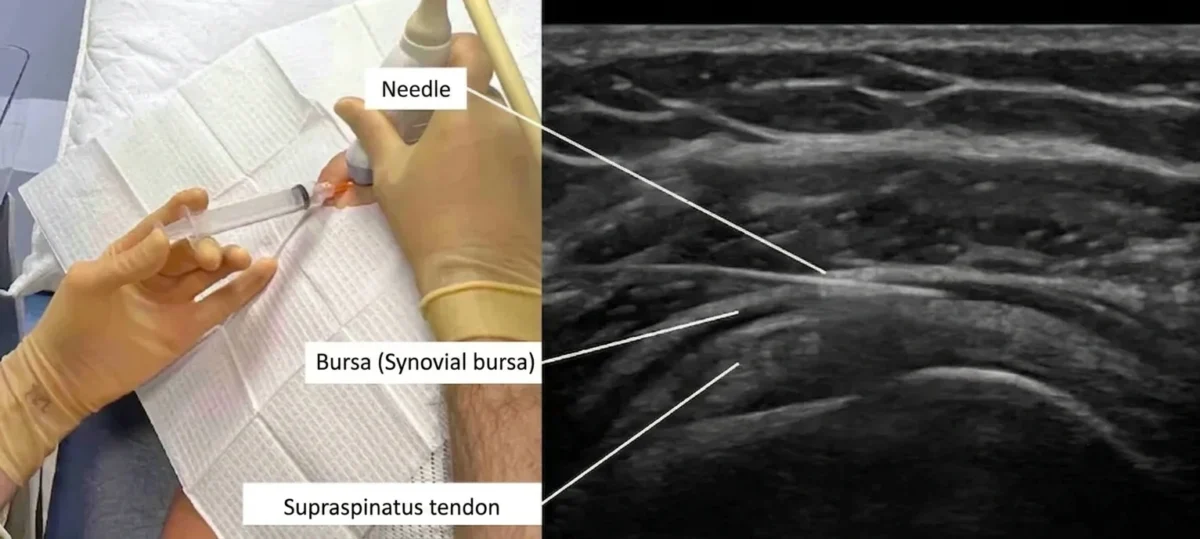
Once the anesthesia takes effect, a larger needle is guided directly into the calcium deposit using ultrasound. A syringe containing sterile saline solution is attached to the needle.
The physician repeatedly injects and withdraws the saline solution. The pressure created inside the deposit helps break up the calcified material, which is then drawn back into the syringe as small calcium particles. With each cycle of injection and aspiration, more of the calcium deposit is removed.
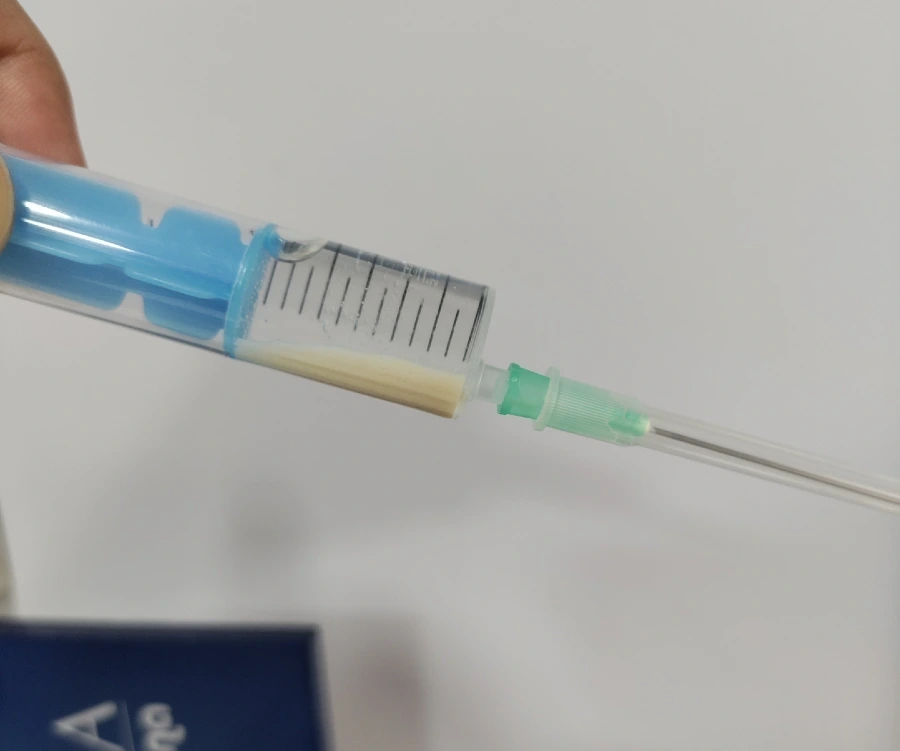
The syringe is replaced several times during the procedure without the need for additional needle insertion. The process continues until the returned fluid becomes clear, indicating that most of the calcium material has been removed.
3. Final Step of the Procedure
After the majority of the calcium deposit has been removed, only a thin residual shell of the deposit usually remains. At the end of the procedure, a mixture of local anesthetic and corticosteroid may be injected into the subacromial bursa, a small fluid-filled sac located above the rotator cuff tendons.
The corticosteroid helps reduce inflammation that may occur after the procedure, decreases post-procedure pain, and may improve recovery.
Who Is a Good Candidate for Barbotage?
Barbotage is not recommended for everyone with calcific tendonitis. Many calcium deposits cause few or no symptoms and may gradually resolve without invasive treatment. Instead, barbotage is typically reserved for patients with persistent pain and functional limitations that do not improve with conservative management.
You may be a good candidate for barbotage if you have:
- Persistent shoulder pain despite several weeks or months of conservative treatment, including physical therapy, activity modification, and anti-inflammatory medication.
- A symptomatic calcium deposit confirmed by ultrasound or X-ray that correlates with your symptoms.
- Significant pain that interferes with daily activities, work, sleep, or sports.
- Limited shoulder movement caused by pain or inflammation.
- A medium or large calcium deposit, particularly if it is in the painful resorptive phase.
- A desire to relieve symptoms and avoid arthroscopic surgery whenever possible.
Barbotage is often considered after conservative treatments have failed but before surgery becomes necessary. For many patients, it provides effective pain relief with a shorter recovery time and lower risk than surgical removal of the calcium deposit.
Clinical Insight
The decision to perform barbotage should be based on the patient’s symptoms, physical examination, and imaging findings—not simply on the size of the calcium deposit. Even relatively small deposits can cause severe pain during the resorptive phase, while some larger deposits remain completely asymptomatic and do not require treatment.Do All Calcium Deposits in the Shoulder Cause Pain?
No, not every calcium deposit in the shoulder causes pain. Studies have shown that calcium deposits can be found in people without any shoulder symptoms, meaning that the presence of a deposit does not always mean it is the cause of pain.
However, people with calcific deposits are more likely to experience shoulder pain compared with those without deposits. Calcium deposits are found in a significant proportion of patients evaluated for shoulder pain, suggesting that they can be an important cause of symptoms, especially when inflammation develops around the deposit.
The size of the calcium deposit also appears to influence symptoms. Deposits can range from a few millimeters to several centimeters in size, and larger deposits are more commonly associated with pain and restricted shoulder movement.
In general, calcium deposits measuring more than 6 mm are more likely to cause symptoms, while larger deposits of 1.5 cm or more are frequently associated with persistent shoulder pain and functional limitations.
Because not every calcium deposit causes problems, treatment decisions are based on symptoms, clinical examination, ultrasound findings, and the patient’s response to conservative treatment—not simply on the presence of a calcium deposit.
How Effective Is Barbotage?
Ultrasound-guided barbotage is considered an effective minimally invasive treatment option for patients with symptomatic calcific tendonitis who do not improve with conservative treatments. Clinical studies have shown that barbotage can significantly reduce shoulder pain, improve movement, and increase shoulder function in many patients.
The effectiveness of the procedure depends on several factors, including the size, location, and especially the consistency of the calcium deposit. Not all calcium deposits behave the same way, and their characteristics change during the natural course of the disease.
During the resorptive phase, the body starts breaking down the calcium deposit. At this stage, the deposit often becomes softer and has a toothpaste-like or semi-liquid consistency, making it easier to penetrate and remove with barbotage. Patients with these softer deposits often experience significant pain relief because the inflammatory material causing symptoms can be removed.
In contrast, calcium deposits in the formative phase are usually harder and more compact. These deposits may be more difficult to break apart and aspirate completely. Although patients with harder deposits can still benefit from barbotage, the procedure may be technically more challenging, and symptom improvement may take longer.
Overall, research suggests that ultrasound-guided barbotage provides good clinical outcomes, with improvements in pain, shoulder function, and quality of life reported in the majority of appropriately selected patients.
However, the goal of the procedure is not necessarily to remove every small fragment of calcium but to reduce the symptomatic deposit and decrease inflammation within the shoulder.
Clinical Insight
The type and consistency of the calcium deposit can influence how well barbotage works. Softer deposits that are in the resorptive phase are usually easier to break up and remove, which often leads to better results. In contrast, hard, dense deposits that have been present for a longer time may be more difficult to treat and sometimes require additional treatment options.Benefits of Barbotage
Barbotage offers several advantages compared with more invasive treatment options for calcific tendonitis. The main benefits include:
- Minimally invasive procedure – barbotage is performed through small needle punctures rather than surgical incisions.
- Ultrasound-guided accuracy – real-time imaging allows precise targeting of the calcium deposit while protecting surrounding tissues.
- No general anesthesia or hospitalization – the procedure is usually performed as an outpatient treatment under local anesthesia.
- Faster recovery compared with surgery – most patients can gradually return to daily activities soon after the procedure.
- Can reduce pain and improve shoulder function – removing or reducing the symptomatic calcium deposit may improve movement and quality of life.
- May help avoid surgery – for many patients, successful barbotage can eliminate the need for arthroscopic removal of the deposit.
Recovery After Barbotage
Recovery after barbotage is usually relatively quick, and most patients can return to their normal daily activities shortly after the procedure. However, it is common to experience increased shoulder pain or discomfort during the first 24–48 hours after treatment as the body responds to the procedure and the remaining calcium fragments are gradually cleared.
Pain can usually be managed with commonly used pain medications recommended by your physician. Applying a cold pack to the treated shoulder several times a day may also help reduce discomfort and inflammation. Ice should always be wrapped in a towel or cloth and should not be applied directly to the skin.
Can I Use My Arm Normally After Barbotage?
Yes. In most cases, gentle movement of the arm is encouraged immediately after the procedure. Immobilization is usually not necessary, and early movement helps prevent stiffness and maintain shoulder mobility.
However, strenuous activities should be avoided during the early recovery period. Heavy lifting, repetitive overhead movements, and sports that place stress on the shoulder are usually restricted for approximately 2–3 weeks, depending on symptoms and recovery progress.
Physical Therapy After Barbotage
Once the initial pain and inflammation have improved, a structured exercise program may be recommended to restore shoulder mobility, strength, and function. Physical therapy usually focuses on:
- improving range of motion,
- restoring rotator cuff strength,
- improving shoulder stability,
- gradually returning to normal activities.
Exercises should begin with gentle, controlled movements and progress gradually based on pain levels and functional improvement. The goal of rehabilitation is not only to recover shoulder function but also to reduce the risk of persistent symptoms.
Risks and Possible Complications
Barbotage is considered a safe and minimally invasive procedure, and serious complications are uncommon. Because the procedure is performed under ultrasound guidance, the risk of damage to surrounding structures is minimized. However, as with any medical procedure, some risks are possible.
Common side effects after barbotage include:
- Temporary increase in shoulder pain – mild to moderate pain during the first few days is common and usually improves as inflammation settles.
- Post-procedure inflammation – irritation of the treated tendon or surrounding tissues may cause temporary discomfort.
- Bleeding or bruising – a small amount of bleeding or bruising at the needle insertion site can occur.
- Incomplete removal of the calcium deposit – some deposits, especially hard and dense ones, may not be completely removed during a single procedure.
Rare complications include:
- Infection – although uncommon, any procedure involving needle insertion carries a small risk of infection.
- Tendon injury – rare, especially when the procedure is performed under ultrasound guidance by an experienced physician.
- Persistent symptoms – some patients may continue to experience pain if the calcium deposit remains, if another shoulder problem is present, or if the tendon requires additional recovery time.
Overall, ultrasound-guided barbotage has a favorable safety profile, with most patients experiencing improvement in pain and shoulder function without major complications. Proper patient selection, sterile technique, and accurate ultrasound guidance are key factors in minimizing risks.
Barbotage vs Shockwave Therapy
Both barbotage and extracorporeal shockwave therapy (ESWT) are commonly used non-surgical treatments for symptomatic calcific tendonitis, but they work in different ways.
Barbotage directly targets the calcium deposit using ultrasound guidance, allowing the physician to break it up and remove part of the calcified material through needle lavage. It is usually performed as a single outpatient procedure.
Shockwave therapy (ESWT) is a non-invasive treatment that uses acoustic waves to stimulate changes within the calcium deposit and promote the body’s natural healing response. It usually requires several treatment sessions and does not physically remove the deposit.
In general, barbotage may provide faster relief when a suitable calcium deposit can be accessed and removed, while shockwave therapy is a non-invasive option that may be preferred by patients who want to avoid needle-based procedures.
The choice between these treatments depends on factors such as the size, location, and consistency of the calcium deposit, the severity of symptoms, and the patient’s preferences.
Barbotage vs Surgery
Both barbotage and surgery aim to treat persistent symptoms caused by calcific tendonitis, but they differ significantly in invasiveness, recovery time, and how the calcium deposit is removed.
Barbotage is a minimally invasive, ultrasound-guided procedure performed through needle punctures under local anesthesia. It allows the physician to break up and aspirate calcium deposits without surgical incisions. Recovery is usually faster, and many patients can avoid the need for surgery.
Arthroscopic surgery involves inserting a camera and surgical instruments through small incisions to directly remove the calcium deposit from the tendon. Surgery may be considered when symptoms persist despite less invasive treatments, when the deposit cannot be adequately treated with barbotage, or when other shoulder problems (such as significant tendon damage) are present.
In general, barbotage is often considered before surgery because it has a lower burden of treatment and a shorter recovery period. However, surgery remains an effective option for carefully selected patients who do not respond to conservative and minimally invasive treatments.
The choice between barbotage and surgery depends on the characteristics of the calcium deposit, severity and duration of symptoms, ultrasound findings, and the patient’s overall shoulder condition.
Frequently Asked Questions
Is barbotage painful?
Most patients tolerate barbotage well because the procedure is performed under local anesthesia. You may feel pressure or mild discomfort during the procedure, and temporary soreness or increased pain during the first 24–48 hours afterward is common.
How long does the barbotage procedure take?
Barbotage usually takes around 30 to 45 minutes, depending on the size, location, and consistency of the calcium deposit. It is performed as an outpatient procedure, so you can usually go home the same day.
How successful is barbotage for calcific tendonitis?
Ultrasound-guided barbotage has been shown to improve pain and shoulder function in many patients with symptomatic calcific tendonitis. Results are generally best when the calcium deposit is soft and suitable for aspiration.
Can calcium deposits come back after barbotage?
Recurrence of symptoms after successful barbotage is uncommon, although small residual calcium fragments may remain. Persistent symptoms may occur if the deposit was not completely removed or if another shoulder problem is contributing to pain.
How soon can I use my arm after barbotage?
Gentle movement of the shoulder is usually encouraged immediately after the procedure. However, heavy lifting, strenuous exercise, and activities that place stress on the shoulder should typically be avoided for about 2–3 weeks.
Do I need physical therapy after barbotage?
Physical therapy is often recommended after the initial healing period to restore shoulder mobility, strengthen the rotator cuff muscles, and help patients return to normal activities.
Is barbotage better than surgery?
Barbotage is less invasive than surgery and usually has a faster recovery. However, surgery may be necessary for patients who do not improve after conservative and minimally invasive treatments or who have additional shoulder problems requiring surgical treatment.
Can barbotage remove all calcium deposits?
The goal of barbotage is to remove as much of the symptomatic calcium deposit as possible and reduce inflammation. Complete removal is not always necessary for symptom improvement, and the remaining calcium may gradually be cleared by the body.
How long does it take to recover after barbotage?
Recovery varies between patients, but many people notice improvement within the first few weeks. Full recovery may take several weeks to a few months, depending on the severity of symptoms and the condition of the tendon.
Moosmayer S et al. Ultrasound guided lavage with corticosteroid injection versus sham lavage with and without corticosteroid injection for calcific tendinopathy of shoulder: randomised double blinded multi-arm study. BMJ. 2023;383:e076447. BMJ randomized controlled trial: Effectiveness of ultrasound-guided lavage for calcific tendinopathy
Louwerens JK et al. Prevalence of calcific deposits within the rotator cuff tendons in adults with and without subacromial pain syndrome: clinical and radiologic analysis of 1219 patients. Journal of Shoulder and Elbow Surgery. 2015;24(10):1588-1593. Clinical study: Prevalence of rotator cuff calcium deposits and association with shoulder pain
Sansone V et al. Calcific tendinopathy of the shoulder: clinical perspectives into the mechanisms, pathogenesis, and treatment. Orthopedic Research and Reviews. Review article: Pathogenesis, clinical features, and treatment options for calcific tendinopathy
Gatt DL, Charalambous CP. Ultrasound-guided barbotage for calcific tendonitis of the shoulder: A systematic review including 908 patients. Arthroscopy. 2014;30(9):1166-1172. PubMed: Systematic review of ultrasound-guided barbotage outcomes and complications