

Fibromyalgia is a chronic condition that changes how the nervous system processes pain. Because of this altered sensitivity, everyday sensations can feel stronger, deeper, or more widespread than they should. Many people describe it as a mix of muscle aching, burning pain, and flu‑like discomfort that moves from one area to another.
Understanding what fibromyalgia feels like is not simple. Symptoms vary from person to person and often change from day to day. Some mornings start with stiffness and heavy fatigue. Other days bring sharp, shifting pain or overwhelming sensitivity to touch, noise, or temperature.
These fluctuating symptoms make fibromyalgia difficult to recognize and diagnose. In the sections below, we break down the most common symptoms of fibromyalgia and explain how they typically feel in real life.
Summary – Symptoms of Fibromyalgia
- Fibromyalgia is characterized by a combination of widespread pain, fatigue, sleep disturbances, and cognitive symptoms (“fibro fog”).
- Widespread musculoskeletal pain is the hallmark symptom, typically affecting both sides of the body and multiple regions.
- Fatigue is persistent, non‑restorative, and often worsens after minimal physical or mental effort.
- Sleep disturbances include difficulty falling asleep, frequent awakenings, and unrefreshing sleep that amplifies next‑day symptoms.
- Cognitive difficulties (“fibro fog”) affect memory, concentration, and mental processing speed.
- Sensory hypersensitivity increases sensitivity to touch, noise, light, temperature, and smells.
- Associated symptoms may include headaches, tingling, digestive issues, mood symptoms, dry eyes, palpitations, and shortness of breath.
- Symptom variability is typical, with good days and flare‑ups triggered by stress, poor sleep, weather changes, or overexertion.
- Daily life impact can be significant, affecting work, physical activity, social interactions, and emotional well‑being.
- Red flags such as fever, joint swelling, or neurological deficits suggest alternative diagnoses and require medical evaluation.
What Is Fibromyalgia?
Fibromyalgia is a chronic pain‑processing disorder that affects how the brain and spinal cord interpret pain signals. It is not an autoimmune disease and not an inflammatory disease. Standard blood tests and imaging are usually normal because fibromyalgia does not cause tissue damage, joint inflammation, or immune system attacks.
Instead, the problem lies in the central nervous system, which becomes more sensitive to pain and sensory input. This increased sensitivity leads to widespread pain, fatigue, sleep problems, and cognitive difficulties. Symptoms often fluctuate, and their intensity can change from day to day.
Not everyone with fibromyalgia experiences the same symptoms or the same severity. There are several core symptoms that appear most often, along with a wide range of associated symptoms that vary from person to person. Some people have only a few symptoms, while others experience many of them at once.
If you want a deeper overview of fibromyalgia, including causes, diagnosis, and treatment options, read our full guide here: Fibromyalgia (FMS) — Complete Guide.
Core Symptoms Of Fibromyalgia
These are the symptoms seen in most people with fibromyalgia, and they form the core clinical picture of the condition. They include the following:
- Widespread Pain
- Fatigue
- Sleep Disturbances
- Cognitive Difficulties (“Fibro Fog”)
- Sensory Hypersensitivity
1. Widespread Pain
Widespread pain is the most common and most recognizable symptom of fibromyalgia. Many people describe it as a mix of:
- “pain all over the body”
- “deep, aching muscle pain”
- “bone‑like heaviness or soreness”
- “pain that moves from place to place”
The pain usually affects several body regions at the same time, often on both sides of the body, and in both the upper and lower body. When asked “What hurts?”, many patients say the only honest answer is: “Everything hurts.”
Although pain can appear anywhere, it most often involves the back, shoulders, upper arms, hips, and legs. A typical feature is shifting pain — discomfort that changes location from day to day or even within the same day.
People with fibromyalgia often notice tender areas that hurt even with light pressure. Morning stiffness is also common, especially after waking or after sitting still for a longer time.
Pain intensity can vary widely. Some days it feels like a dull background ache. Other days it becomes sharp, burning, or disabling, making even simple daily activities difficult.
2. Fatigue
Fatigue is the second major symptom of fibromyalgia and often one of the most disabling. It goes far beyond normal tiredness. People describe it as a deep, heavy exhaustion that affects both the body and the mind.
Fatigue is often:
- worst in the morning
- present even after 8–10 hours of sleep
- worsened by physical activity
- worsened by long periods of inactivity
Many people say their sleep feels light, unrefreshing, and easily interrupted. They wake up tired even after spending the whole night in bed. Morning stiffness is common, and simple tasks — like showering, preparing breakfast, or climbing stairs — can quickly increase both pain and fatigue.
This type of exhaustion can make daily activities feel overwhelming. Some days, it limits physical endurance. Other days, it affects concentration, motivation, and emotional resilience. The combination of pain, poor sleep, and fatigue often creates a cycle that is difficult to break.
3. Cognitive Difficulties (“Fibro Fog”)
Fibro fog refers to the cognitive symptoms that often accompany fibromyalgia. These changes do not mean that something is wrong with the brain. They are usually the result of chronic pain, poor sleep, and ongoing fatigue. Symptoms can come and go or remain present throughout the day.
They often include:
- difficulty concentrating
- short‑term memory problems
- slower thinking or processing
- feeling mentally “foggy,” detached, or confused
- trouble switching between tasks or multitasking
Many people say their thoughts feel slower or less clear than usual. They may lose track of conversations, forget simple things, or need more time to organize their thoughts. Fibro fog can affect work, learning, decision‑making, and everyday tasks. It often becomes worse when pain or fatigue increases, or after a night of poor sleep.
4. Sleep Disturbances
Sleep disturbances are extremely common in fibromyalgia and play a major role in worsening pain, fatigue, and cognitive symptoms. Many people describe their sleep as light, easily disrupted, and unrefreshing, even after spending a full night in bed.
Typical sleep problems include:
- Difficulty falling asleep
- Frequent nighttime awakenings
- Light, non‑restorative sleep
- Waking up tired despite 7–10 hours of sleep
- Morning stiffness after sleep
Many people say they feel as if they “never reach deep sleep.” Even small noises can wake them, and they often toss and turn throughout the night. This lack of restorative sleep increases pain sensitivity the next day and contributes to the cycle of fatigue and fibro fog.
Sleep disorders are also more common in fibromyalgia, especially:
- Restless legs syndrome
- Sleep apnea
These conditions can further fragment sleep and make symptoms worse if left untreated.
5. Sensory Hypersensitivity
Sensory hypersensitivity is another core feature of fibromyalgia. The nervous system becomes more reactive, so everyday sensations can feel stronger, sharper, or more overwhelming than they should. This heightened sensitivity can affect multiple senses and often fluctuates from day to day.
People commonly report increased sensitivity to:
- touch — even light pressure or gentle contact may feel painful
- temperature changes — cold or heat can feel extreme or uncomfortable
- noise — loud or sudden sounds may feel startling or draining
- bright lights — screens, sunlight, or fluorescent lighting can feel harsh
- strong smells — perfumes, cleaning products, or smoke may trigger discomfort
Many people describe this as feeling “overstimulated” or “on edge,” as if their senses are turned up too high. This hypersensitivity can make busy environments, crowded places, or noisy rooms difficult to tolerate. It also contributes to fatigue, headaches, and increased pain levels.
Sensory hypersensitivity is not dangerous, but it can significantly affect daily comfort and quality of life. Understanding these triggers helps people adjust their environment and reduce symptom flare‑ups.
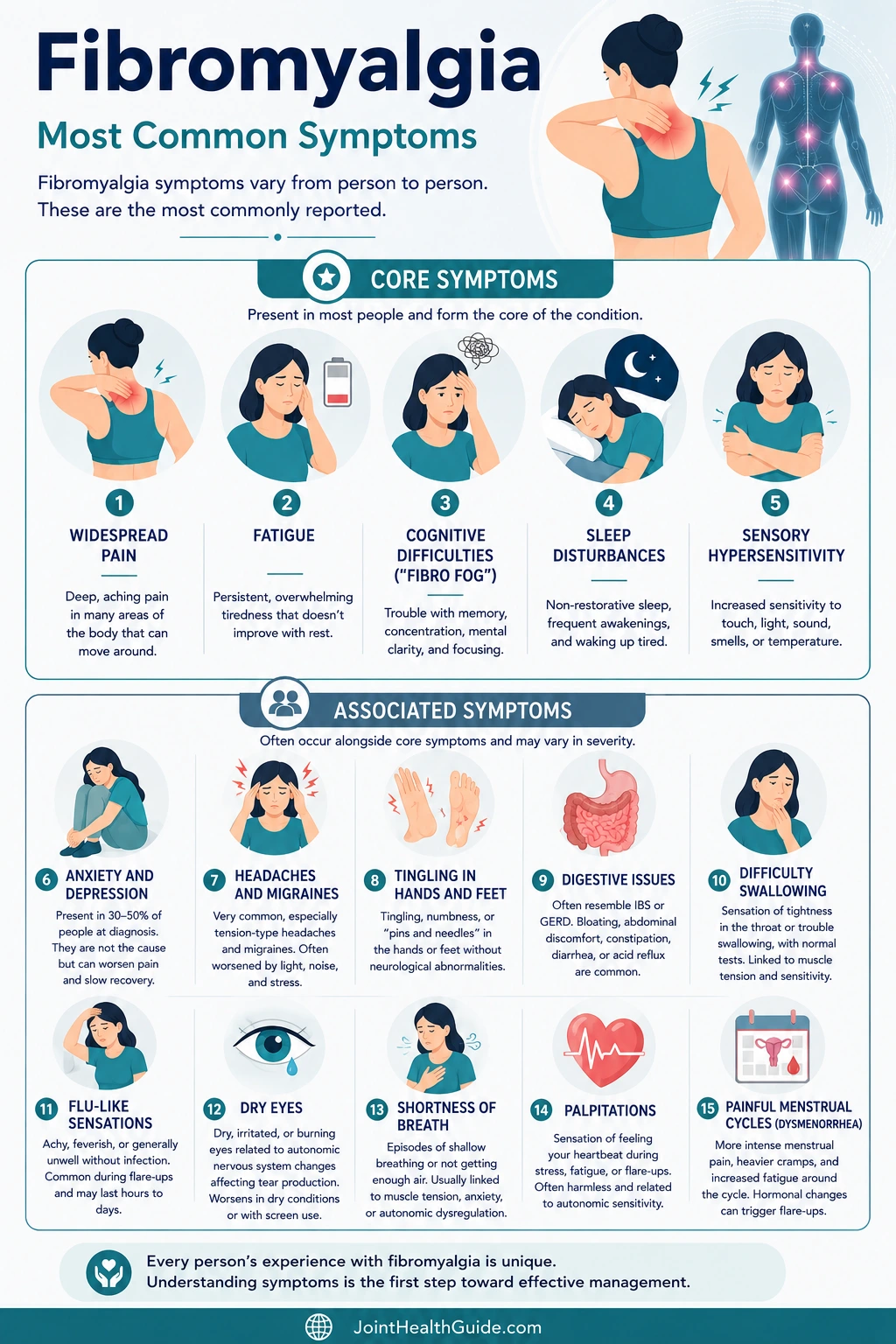
Associated Symptoms Of Fibromyalgia
Not everyone with fibromyalgia experiences the same set of symptoms. Beyond the core features, many people develop associated symptoms that vary in type, intensity, and frequency. These symptoms are common, but not universal, and they often fluctuate from day to day. They can affect multiple body systems and contribute to the overall impact of the condition.
6. Anxiety And Depression
Anxiety and depression are present in 30–50% of people at the time of diagnosis. They are not the cause of fibromyalgia, but they often develop alongside chronic pain, poor sleep, and long‑term fatigue. These mood symptoms can make pain feel stronger and recovery slower, creating a cycle that is difficult to break.
7. Headaches And Migraines
Headaches are very common in fibromyalgia, especially tension‑type headaches and migraines. They may appear a few times per week or become chronic. Increased sensitivity to light, noise, and stress often makes these headaches worse.
8. Tingling In Hands And Feet
Many people experience tingling, numbness, or “pins and needles” in the hands or feet. These sensations usually occur without neurological abnormalities on examination. They are thought to be related to altered nerve sensitivity rather than nerve damage.
9. Digestive Issues
Digestive symptoms are very common and often resemble irritable bowel syndrome (IBS) or gastroesophageal reflux (GERD). People may experience bloating, abdominal discomfort, constipation, diarrhea, or acid reflux. These symptoms tend to fluctuate and may worsen during flare‑ups.
10. Difficulty Swallowing
Some people report a sensation of tightness in the throat or difficulty swallowing, even though medical tests are usually normal. This symptom is linked to muscle tension and heightened sensory sensitivity rather than structural problems.
11. Flu‑Like Sensations
People with fibromyalgia sometimes feel achy, feverish, or generally unwell, even without an infection. These “flu‑like” sensations often appear during flare‑ups and may last from a few hours to several days.
12. Dry Eyes
Dry, irritated, or burning eyes are common. This may be related to autonomic nervous system changes that affect tear production. Symptoms often worsen in dry environments or during prolonged screen use.
13. Shortness Of Breath
Some people experience episodes of shallow breathing or a feeling of not getting enough air. This is usually linked to muscle tension, anxiety, or autonomic dysregulation rather than lung disease.
14. Palpitations
Palpitations — the sensation of feeling your heartbeat — can occur during stress, fatigue, or flare‑ups. They are often harmless and related to autonomic nervous system sensitivity, but they can feel alarming when they happen.
15. Painful Menstrual Cycles (Dysmenorrhea)
Many women with fibromyalgia report more intense menstrual pain, heavier cramps, and increased fatigue around their cycle. Hormonal fluctuations can amplify pain sensitivity and trigger flare‑ups.
Symptom Patterns And Flare‑Ups
Fibromyalgia symptoms rarely stay the same from day to day. Most people experience a pattern of good days and bad days, with symptoms that rise and fall depending on stress, sleep quality, physical activity, and environmental factors. This variability is one of the most characteristic features of the condition.
A flare‑up (or “flare”) is a period when symptoms suddenly become more intense. Flares can last from a few hours to several days, and sometimes even weeks. During a flare, pain may spread to new areas, fatigue may become overwhelming, and cognitive symptoms like fibro fog often worsen.
Common triggers for flare‑ups include:
- poor sleep
- stress or emotional overload
- weather changes
- overexertion
- illness or infection
- hormonal fluctuations
Many people learn to recognize early signs of a flare — such as rising tension, increased sensitivity, or worsening sleep — and adjust their activity level to prevent symptoms from escalating. Understanding these patterns helps patients manage daily life more effectively and reduces the impact of flare‑ups.
How Fibromyalgia Symptoms Affect Daily Life
Fibromyalgia symptoms don’t just cause discomfort — they shape how a person moves, thinks, works, and interacts with the world. Because symptoms fluctuate, daily life often becomes unpredictable. A day that starts well can quickly become difficult if pain, fatigue, or sensory overload intensify.
Key ways symptoms affect everyday functioning:
- Physical activity — simple tasks like climbing stairs, carrying groceries, or standing for long periods may feel exhausting or painful.
- Work and productivity — fibro fog, fatigue, and pain can slow thinking, reduce focus, and make multitasking harder.
- Social life — unpredictable flares may lead to canceled plans, reduced energy for socializing, or difficulty tolerating noisy or busy environments.
- Sleep quality — poor sleep worsens symptoms the next day, creating a cycle that affects mood, motivation, and physical endurance.
- Emotional well‑being — living with chronic symptoms can lead to frustration, stress, or feeling overwhelmed, especially during flare‑ups.
- Household tasks — chores like cleaning, cooking, or laundry may require pacing, breaks, or help from others.
Many people learn to adapt by planning their day around energy levels, using pacing strategies, and recognizing early signs of symptom worsening. Understanding how symptoms affect daily life helps patients feel validated — and helps family members better understand what fibromyalgia truly feels like.
When Symptoms Suggest Something Else
Fibromyalgia has a wide range of symptoms, but certain signs are not typical and may point to another condition. These “red flags” don’t mean something serious is definitely present — but they do mean a person should speak with a healthcare professional for proper evaluation.
Red flags that are not typical for fibromyalgia:
- Progressive muscle weakness — true loss of strength, not just fatigue or heaviness
- Joint swelling or redness — visible inflammation suggests arthritis or autoimmune disease
- High fever — fibromyalgia does not cause sustained fever
- Unexplained weight loss — requires evaluation for metabolic or systemic illness
- Neurological deficits — such as loss of sensation, foot drop, or changes in bladder/bowel control
- Severe chest pain — should always be assessed promptly
- Shortness of breath that worsens rapidly — especially if unrelated to anxiety or muscle tension
These symptoms are not part of fibromyalgia’s usual pattern. If they appear, they may indicate another condition such as autoimmune disease, thyroid dysfunction, neurological disorders, or infection. A healthcare professional can help determine the cause and guide appropriate testing.
Conclusion
Fibromyalgia symptoms can be wide‑ranging, unpredictable, and deeply disruptive — but they also follow recognizable patterns that help patients and clinicians understand the condition more clearly.
By learning how symptoms behave, what triggers flare‑ups, and how they affect daily life, people with fibromyalgia can take meaningful steps toward better symptom control and improved quality of life. Recognizing these patterns is the first step toward effective management and feeling more in control of the condition.
To learn how fibromyalgia symptoms can be managed effectively, explore our full treatment guide here: Fibromyalgia Treatment – Evidence‑Based Options.
Dizner-Golab A, Lisowska B, Kosson D. Fibromyalgia – etiology, diagnosis and treatment including perioperative management in patients with fibromyalgia. Reumatologia. Full-text review: Fibromyalgia etiology, diagnosis, treatment and perioperative management
Siracusa R, Paola RD, Cuzzocrea S, Impellizzeri D. Fibromyalgia: Pathogenesis, Mechanisms, Diagnosis and Treatment Options Update. International Journal of Molecular Sciences. Comprehensive review: Fibromyalgia pathogenesis, diagnosis and treatment options
Bhargava J, Goldin J. Fibromyalgia. StatPearls Publishing. StatPearls review: Fibromyalgia diagnosis, pathophysiology and treatment
Harvard Health Publishing. Fibromyalgia. Patient guide: Fibromyalgia symptoms, diagnosis and treatment overview
National Institute of Arthritis and Musculoskeletal and Skin Diseases (NIAMS). Fibromyalgia. NIH patient resource: Fibromyalgia causes, symptoms and treatment options