

Fibromyalgia is a chronic condition that causes widespread muscle pain, tenderness, and discomfort across multiple areas of the body — sometimes the entire body. Along with pain, people often experience extreme fatigue, sleep disturbances, mood changes such as anxiety or depression, headaches, and memory or concentration problems commonly described as brain fog.
The exact cause is still not fully understood, but research suggests that fibromyalgia develops due to altered processing within the nervous system, making the body more sensitive to pain signals.
Fibromyalgia is more common in women in midlife, but it can occur at any age. There is no single test that confirms the diagnosis. Instead, doctors often perform blood tests and imaging to rule out other conditions that can mimic fibromyalgia symptoms.
Although there is no cure for fibromyalgia, many people achieve meaningful improvement. Education, targeted medications, regular physical activity, physiotherapy, and psychological support can significantly reduce symptoms and improve daily functioning.
In this article, we will explore fibromyalgia in detail — a condition that remains under‑recognized yet can profoundly affect quality of life. If you recognize your symptoms while reading, a physiatrist or rheumatologist can help guide you toward an accurate diagnosis.
Quick Summary – Fibromyalgia
- Fibromyalgia is a chronic condition characterized by widespread pain, fatigue, and cognitive difficulties without detectable inflammation or tissue damage.
- The exact cause is unknown, but factors such as stress, sleep disturbances, hormonal influences, and genetic predisposition play important roles.
- Diagnosis is clinical and based on symptom patterns; imaging and laboratory tests are typically normal.
- Symptoms often include widespread pain, chronic fatigue, sleep problems, and “fibro fog” (cognitive difficulties).
- Triggers such as stress, weather changes, poor sleep, and physical overexertion commonly worsen symptoms.
- Treatment focuses on symptom relief and improving quality of life through education, exercise, physical therapy, medications, psychotherapy, and lifestyle changes.
- Fibromyalgia is a long-term condition, but many patients achieve better function and reduced symptoms with a multidisciplinary approach.
What Is Fibromyalgia?
Fibromyalgia is a chronic condition that causes widespread pain, muscle tenderness, and a range of other symptoms that affect daily life. People who live with fibromyalgia know the feeling well — yet for those who have never experienced it, including many clinicians, the condition can be difficult to fully understand. Fibromyalgia is also known as FMS (Fibromyalgia Syndrome), a term often used in clinical practice to describe the same condition.
It is often described as an “invisible” illness because no blood test or imaging study can confirm it, even though symptoms are very real and often disabling.
Pain is not the only problem. Many people experience muscle and joint stiffness, generalized discomfort, severe fatigue, headaches, anxiety or depression, and problems with concentration and memory (often called brain fog). Symptoms tend to fluctuate. Pain may shift from one region of the body to another, and flare‑ups can appear without a clear trigger.
The exact cause of fibromyalgia is still unknown. Most tests come back normal, and doctors often cannot identify a specific physical source of pain. Current research suggests that fibromyalgia is a disorder of pain processing within the central nervous system, where the brain becomes more sensitive to pain signals.
Symptoms are usually long‑lasting and present to some degree every day. Although fibromyalgia is not life‑threatening, it can significantly affect emotional well‑being, work performance, and overall quality of life.
What Causes Fibromyalgia?
The exact fibromyalgia causes are still not fully understood. Current research suggests that the condition develops due to disrupted processing and regulation of pain signals in the brain and spinal cord.
People with fibromyalgia often have an increased sensitivity to pain, meaning they may feel pain from stimuli that would not be painful to others. Because pain is constant, many individuals begin to closely monitor every uncomfortable sensation, which can further amplify symptoms.
Brain imaging studies show changes in the neural pathways that send and receive pain signals. These alterations may also contribute to fatigue, sleep problems, and the “fibro fog” many people experience.
Depression and anxiety frequently occur alongside fibromyalgia. These conditions can intensify the perception of pain and reduce the ability to cope with symptoms. It is still unclear whether depression and anxiety contribute to the development of fibromyalgia or arise as a consequence of living with chronic pain.
Clinical Insight
Although the exact cause of fibromyalgia remain unclear, most experts agree that the condition develops from a combination of altered pain processing, stress‑related factors, and individual vulnerability. In simple terms, fibromyalgia is a real neurological condition that changes how the body interprets pain — not a sign of weakness or imagination. Understanding this helps people make sense of their symptoms and take the first steps toward effective management.
Fibromyalgia Epidemiology: Who Gets FMS and How Common Is It?
- Fibromyalgia is more common in women — women are affected significantly more often than men.
- Prevalence ranges from 3% to 8% in the United States and Europe, depending on diagnostic criteria.
- Occurs across all age groups — but is most common in middle adulthood.
- Prevalence increases with age — symptoms and diagnosis rates rise after age 40–50.
- Leading cause of chronic widespread musculoskeletal pain in women aged 20–55 — FMS is the most common explanation for widespread pain in this age group.
- Equally common in adolescents and adults — teenagers can develop fibromyalgia at similar rates to adults.
- Strong genetic component — the risk is much higher if a first‑degree relative (parent or sibling) also has fibromyalgia.
- Higher risk in people with rheumatologic diseases — including rheumatoid arthritis, lupus, and ankylosing spondylitis.
Symptoms of Fibromyalgia
Not everyone with fibromyalgia experiences the same symptoms or the same severity. There are several core symptoms that appear most often, along with a wide range of associated symptoms that vary from person to person.
Many patients also ask what does fibromyalgia feel like, and the answer is complex — because symptoms can shift, fluctuate, and affect multiple systems in the body.
1. Widespread Pain
Pain is the primary symptom of fibromyalgia. People often describe it as:
- “pain all over the body”
- “migrating pain”
- “deep muscle aching”
- “bone‑like pain throughout the body”
The pain usually affects multiple regions, often on both sides of the body, and in both the upper and lower body. Many patients say that when asked “What hurts?”, the only honest answer is: “Everything hurts.”
Common pain locations include the back, shoulders, upper arms, hips, and legs, but pain can appear anywhere. A typical feature is shifting pain — discomfort that moves from one area to another.
People with fibromyalgia often have tender points or areas that are painful to touch, along with morning stiffness, especially after waking.
Pain intensity varies from mild discomfort to severe, disabling pain that affects daily activities.
2. Fatigue
Fatigue is the second major symptom of fibromyalgia. It is often:
- worst in the morning
- present even after 8–10 hours of sleep
- worsened by physical activity
- worsened by long periods of inactivity
Many people describe their sleep as light, unrefreshing, and interrupted, often waking up tired despite a full night in bed. Morning stiffness is common, and even small tasks can worsen both pain and fatigue.
3. Cognitive Difficulties (“Fibro Fog”)
Fibro fog refers to the cognitive symptoms that frequently accompany fibromyalgia. These may include:
- difficulty concentrating
- short‑term memory problems
- slower thinking
- feeling mentally “foggy” or confused
- trouble switching between tasks or multitasking
Fibro fog can significantly affect daily functioning, work performance, and overall quality of life.
4. Other Common Symptoms of Fibromyalgia
People with fibromyalgia may also experience a wide range of additional symptoms, including:
- Anxiety and depression — present in 30–50% of patients at diagnosis
- Headaches — including migraines and tension‑type headaches
- Tingling in hands and/or feet — often without neurological abnormalities on examination
- Digestive issues — irritable bowel syndrome (IBS) and gastroesophageal reflux (GERD) are more common
- Flu‑like sensations — feeling unwell, achy, or feverish without infection
- Dry eyes
- Shortness of breath
- Difficulty swallowing
- Palpitations (awareness of heartbeat)
- Dysmenorrhea (painful menstrual cycles)
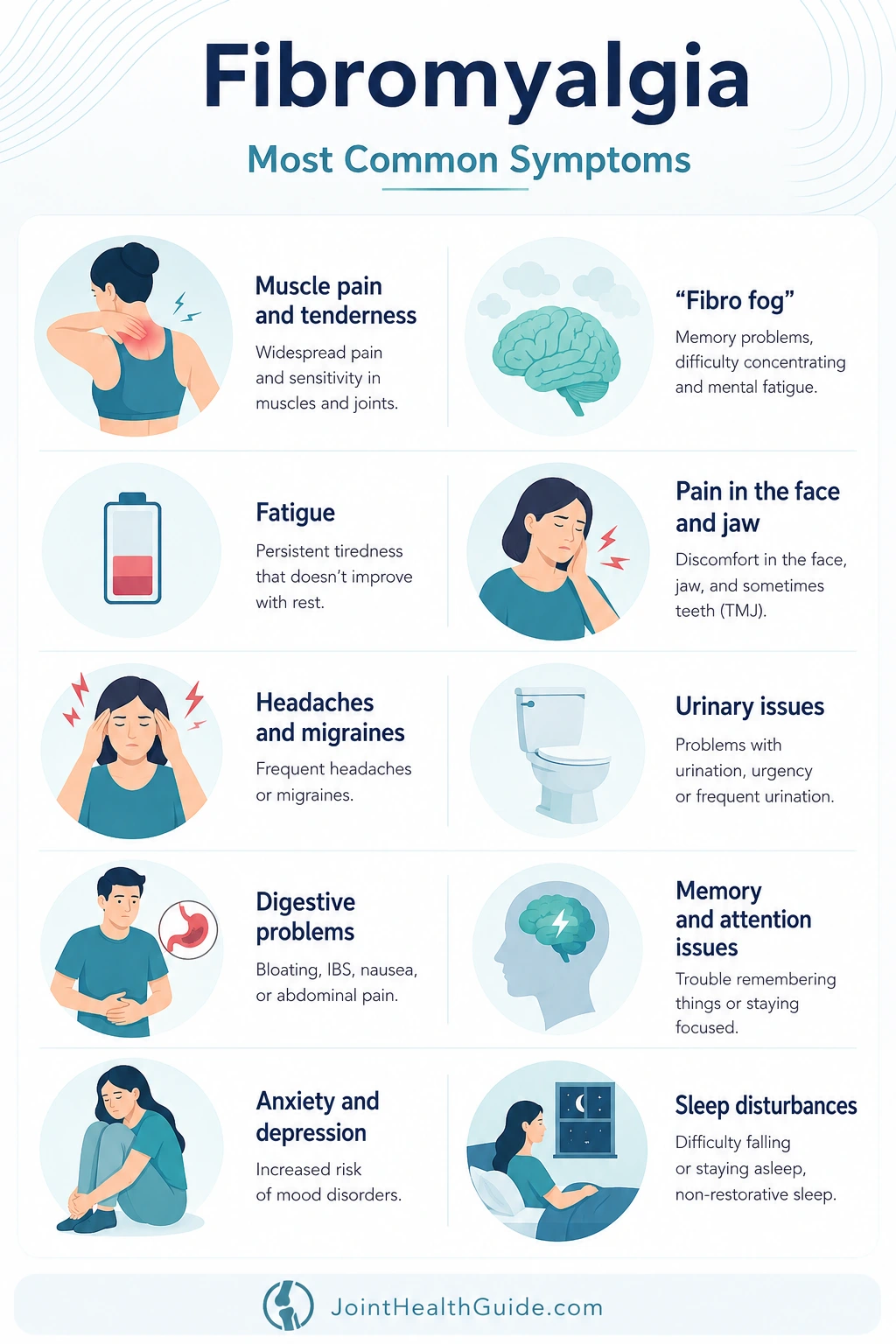
For a detailed breakdown of all core and associated symptoms, read our full guide here: Symptoms of Fibromyalgia – What Does Fibromyalgia Feel Like?.
Fibromyalgia Triggers – What worsens or provokes symptoms
Many people with fibromyalgia notice that their symptoms fluctuate. Pain, fatigue, and cognitive difficulties can worsen in response to everyday situations that most people tolerate without difficulty. Identifying personal triggers is an important step in understanding what makes fibromyalgia symptoms worse.
Common Triggers That Worsen Fibromyalgia Symptoms
- Stress and Emotional Pressure — Psychological or emotional stress at work or home can increase pain sensitivity and intensify symptoms.
- Physical Overexertion — Excessive exercise or activity beyond usual limits can trigger pain. However, too little activity can also worsen stiffness and discomfort.
- Poor Sleep — Lack of sleep or unrefreshing sleep often leads to increased pain, fatigue, and cognitive issues.
- Weather Changes — Cold temperatures, humidity, and sudden shifts in barometric pressure are frequently associated with symptom flare‑ups.
- Hormonal Fluctuations — Menstrual cycles, pregnancy, and menopause can influence pain levels and overall symptom severity.
- Infections or Illness — Viral infections, colds, or other illnesses can worsen fibromyalgia symptoms.
- Prolonged Sitting or Standing — Static postures and poor ergonomics can increase muscle tension and pain.
- Dietary Factors — Some people report worsening symptoms after consuming foods high in sugar, caffeine, or artificial additives.
How to Identify Your Personal Triggers
Tracking symptoms and daily activities can help identify patterns. Many people benefit from noting:
- what they ate
- how they slept
- stress levels
- physical activity
- weather conditions
Recognizing these patterns helps individuals understand which factors provoke flare‑ups and how to adjust daily habits to reduce symptom intensity.
How Is Fibromyalgia Diagnosed
Fibromyalgia can be challenging to diagnose because its symptoms resemble many other conditions. If you recognize yourself in the symptoms described earlier, a physiatrist or rheumatologist can help guide you toward an accurate diagnosis.
There is no single test that confirms fibromyalgia.
Blood tests, X‑rays, and MRI scans are usually normal. Despite significant pain in muscles and joints, there are no signs of inflammation on laboratory testing. Because of this, diagnosis often takes time, and many patients report feeling dismissed or misunderstood before receiving the correct diagnosis.
Doctors must first exclude other conditions that can mimic fibromyalgia, such as thyroid disorders, inflammatory rheumatic diseases, or neurological conditions. Once these are ruled out, the diagnosis is based on clinical criteria.
Fibromyalgia Diagnostic Criteria (ACR 2016)
The American College of Rheumatology (ACR) updated its diagnostic criteria in 2016. These criteria are widely used today and are designed to be simple and practical for both clinicians and patients.
To meet the diagnostic criteria, the following must be present:
- Widespread pain for at least 3 months — Pain must be present in at least 4 of 5 body regions:
- left upper region (shoulder, arm, or jaw)
- right upper region (shoulder, arm, or jaw)
- left lower region (hip, buttock, or leg)
- right lower region (hip, buttock, or leg)
- axial region (neck, upper back, lower back, chest, or abdomen)
- Persistent symptoms — Pain plus other symptoms such as fatigue, sleep problems, or cognitive difficulties must be present for at least 3 months and affect daily functioning.
- Diagnosis remains valid even with other conditions — Fibromyalgia can be diagnosed even if other medical conditions are present. Having fibromyalgia does not exclude the possibility of another disease, and vice versa.
These criteria emphasize symptom patterns, not laboratory findings. This helps ensure that fibromyalgia is recognized as a real, neurological pain‑processing disorder, not a psychological or imagined condition.
Why Is Fibromyalgia More Common in Women?
Fibromyalgia affects women far more often than men. Several biological, hormonal, and psychological factors may contribute to this difference. While the exact reason is not fully understood, research suggests that women may have a combination of vulnerabilities that increase the likelihood of developing fibromyalgia.
- Higher Stress and Anxiety Levels — Women are statistically more prone to stress and anxiety, which can heighten pain sensitivity and worsen fibromyalgia symptoms.
- Less Effective Pain‑Coping Strategies — Some studies suggest that women may unconsciously use coping strategies that amplify pain perception rather than reduce it.
- Behavioral Changes Due to Pain — Women often modify their daily activities more dramatically in response to pain, which can lead to increased stiffness, fatigue, and symptom worsening.
- Higher Rates of Depression — Depression is more common in women and can intensify the experience of pain and fatigue.
- Hormonal Fluctuations — Changes in estrogen and progesterone during the menstrual cycle, pregnancy, or menopause can influence pain thresholds and symptom severity.
Although these factors may help explain why fibromyalgia is more common in women, the condition is not caused by psychological weakness. It is a real, complex disorder involving the nervous system and pain‑processing pathways.
Fibromyalgia Treatment
There is currently no cure for fibromyalgia, but symptoms can be significantly reduced with a combination of medical care, lifestyle changes, and self‑management strategies. Because each person experiences fibromyalgia differently, treatment must be individualized and often involves several healthcare professionals, including a physiatrist, rheumatologist, physiotherapist, psychologist, and occupational therapist.
Before starting any treatment, it is important for patients to understand and accept the diagnosis. Since fibromyalgia cannot be confirmed through imaging or laboratory tests, many people spend years searching for a hidden cause. Accepting the condition helps shift the focus toward effective symptom management.
Treatment usually combines several approaches, each targeting a specific symptom such as pain, fatigue, sleep problems, or anxiety.
Main Components of Fibromyalgia Treatment
- Patient Education — Understanding the condition helps reduce fear, improves coping, and encourages active participation in treatment. Stress, mood disorders, and sleep problems often play a major role and should be addressed early.
- Exercise — Gentle, regular physical activity such as walking, swimming, yoga, or tai chi helps reduce pain, stiffness, and fatigue. Both too little and too much exercise can worsen symptoms, so pacing is essential.
- Physical Therapy — Stretching, strengthening, hydrotherapy, and manual techniques can reduce pain and improve mobility. Consistency is key; benefits fade without ongoing self‑management.
- Medications — Some patients improve without medication, but others benefit from antidepressants or antiepileptic drugs that reduce pain sensitivity and improve sleep. Traditional painkillers are usually ineffective.
- Psychotherapy — Cognitive‑behavioral therapy (CBT), relaxation techniques, and stress‑management programs can reduce pain intensity and improve emotional well‑being.
- Nutrition and Lifestyle — A balanced diet, reduced sugar and caffeine intake, and avoidance of highly processed foods may help reduce fatigue, digestive symptoms, and pain flares.
Takeaway Message
Fibromyalgia treatment focuses on symptom relief and improving quality of life, not on curing the condition. The best results come from a multidisciplinary approach that addresses pain, sleep, stress, physical conditioning, and emotional health.
For evidence‑based strategies to reduce symptoms and improve daily functioning, explore our full treatment guide here: Fibromyalgia Treatment – Effective, Science‑Backed Options.
What to Expect: Prognosis of Fibromyalgia
Fibromyalgia is not a life‑threatening condition, but it can significantly affect daily life and long‑term well‑being. It is a chronic disorder, which means symptoms often persist for many years and may last a lifetime. For many people, fibromyalgia shapes how they plan their days, manage their energy, and function at work and at home.
Even with all available treatment options, most individuals will continue to experience some level of symptoms. This can be difficult to accept, especially after years of searching for answers. The goal of treatment is not to eliminate pain completely, but to help people function better, reduce symptom intensity, and improve overall quality of life.
People generally do better when they understand the condition, learn effective coping strategies, and use a combination of treatments tailored to their needs. With the right support, many individuals achieve meaningful improvements in daily functioning, emotional well‑being, and symptom control.
- Long‑term symptom management — Symptoms tend to fluctuate, with periods of improvement and flare‑ups.
- Better outcomes with lifestyle changes — Regular exercise, good sleep habits, and stress reduction often lead to long‑term benefits.
- Importance of acceptance — Accepting the diagnosis helps shift focus from searching for a hidden cause to building effective management strategies.
FAQ: Common Questions About Fibromyalgia
1. Is Fibromyalgia an Autoimmune Disease?
Fibromyalgia is not an autoimmune disease — It does not cause inflammation, tissue damage, or abnormal immune markers. Fibromyalgia is considered a central pain processing disorder, meaning the nervous system becomes more sensitive to pain signals. However, autoimmune diseases (like rheumatoid arthritis or lupus) can co‑exist with fibromyalgia and increase the risk of developing it.
2. Is Fibromyalgia a Disability?
Fibromyalgia can be considered a disability — but this depends on the country, legal system, and the severity of symptoms. Some people are able to work with adjustments, while others experience severe pain, fatigue, and cognitive problems that limit daily functioning. Disability approval usually requires documented functional impairment, not just a diagnosis.
3. Is Fibromyalgia Real?
Fibromyalgia is a real medical condition — recognized by the American College of Rheumatology, the World Health Organization, and all major medical institutions. It is not “imagined,” “psychosomatic,” or a sign of weakness. Fibromyalgia involves measurable changes in how the brain and spinal cord process pain, supported by decades of research in neurophysiology and pain science.
4. Is Fibromyalgia a Neurological Disorder?
Fibromyalgia is considered a neurological pain‑processing disorder — not a disease of the nerves themselves, but of how the central nervous system interprets pain. This is why symptoms include widespread pain, fatigue, sleep problems, and cognitive difficulties (“fibro fog”). Many experts classify fibromyalgia under central sensitization syndromes.
5. Can Fibromyalgia Go Away?
Fibromyalgia does not usually go away completely — but symptoms can improve significantly with the right combination of treatment, lifestyle changes, and stress management. Fibromyalgia is a chronic condition, meaning symptoms tend to persist long‑term. Many people experience better control, fewer flare‑ups, and improved quality of life when they follow a consistent management plan.
6. Is Fibromyalgia Genetic?
Fibromyalgia has a genetic component — it tends to run in families, and first‑degree relatives have a higher risk. However, genes alone do not cause fibromyalgia. Environmental factors, stress, trauma, infections, and sleep problems also play important roles. Most experts describe fibromyalgia as the result of genetic susceptibility plus life triggers.
7. Can Exercise Help Fibromyalgia?
Exercise is one of the most effective treatments for fibromyalgia — when done gently and consistently. Activities like walking, swimming, yoga, tai chi, and light strengthening can reduce pain, stiffness, and fatigue. The key is pacing: too little activity can worsen symptoms, but overexertion can trigger flare‑ups. Gradual, steady movement works best.
Dizner-Golab A, Lisowska B, Kosson D. Fibromyalgia – etiology, diagnosis and treatment including perioperative management in patients with fibromyalgia. Reumatologia. Full-text review: Fibromyalgia etiology, diagnosis, treatment and perioperative management
Siracusa R, Paola RD, Cuzzocrea S, Impellizzeri D. Fibromyalgia: Pathogenesis, Mechanisms, Diagnosis and Treatment Options Update. International Journal of Molecular Sciences. Comprehensive review: Fibromyalgia pathogenesis, diagnosis and treatment options
Wolfe F, Clauw DJ, Fitzcharles MA, et al. 2016 Revisions to the 2010/2011 Fibromyalgia Diagnostic Criteria. Seminars in Arthritis and Rheumatism. Diagnostic criteria update: 2016 fibromyalgia classification and diagnosis revisions
Giorgi V, Sarzi-Puttini P, Pellegrino G, et al. Pharmacological Treatment of Fibromyalgia Syndrome: A Practice-Based Review. Current Pain and Headache Reports. Practice-based review: Current pharmacological management of fibromyalgia
Jones EA, Asaad F, Patel N, Jain E, Abd-Elsayed A. Management of Fibromyalgia: An Update. Biomedicines. Evidence-based update: Contemporary fibromyalgia management strategies
Derry S, Wiffen PJ, Häuser W, et al. Oral Nonsteroidal Anti-inflammatory Drugs for Fibromyalgia in Adults. Cochrane Database of Systematic Reviews. Cochrane review: Effectiveness of NSAIDs for fibromyalgia pain management
Wiffen PJ, Derry S, Moore RA, et al. Antiepileptic Drugs for Neuropathic Pain and Fibromyalgia – An Overview of Cochrane Reviews. Cochrane Database of Systematic Reviews. Cochrane overview: Antiepileptic medications for neuropathic pain and fibromyalgia
Bhargava J, Goldin J. Fibromyalgia. StatPearls Publishing. StatPearls review: Fibromyalgia diagnosis, pathophysiology and treatment
Harvard Health Publishing. Fibromyalgia. Patient guide: Fibromyalgia symptoms, diagnosis and treatment overview
National Institute of Arthritis and Musculoskeletal and Skin Diseases (NIAMS). Fibromyalgia. NIH patient resource: Fibromyalgia causes, symptoms and treatment options