
Fibromyalgia cannot be cured, but it can be managed. With the right combination of therapies, many people achieve a level of functioning that feels stable, predictable, and satisfying. Treatment focuses on reducing symptoms, improving daily activity, and helping patients regain control over their lives.
Because fibromyalgia affects each person differently, there is no single treatment that works for everyone. Instead, the best results come from a multidisciplinary approach that addresses pain, sleep, stress, physical conditioning, and emotional well‑being.
Over time, this combination can significantly reduce symptom intensity and improve quality of life, even though the condition itself remains chronic.
Key Clinical Points – Fibromyalgia Treatment
- Fibromyalgia treatment is most effective when it targets central sensitization through a combination of exercise, sleep optimization, psychotherapy, and selected medications.
- Non‑pharmacological therapies such as aerobic exercise, strength training, stretching, and cognitive‑behavioral therapy provide the strongest long‑term improvements.
- Medications (duloxetine, milnacipran, amitriptyline, pregabalin, gabapentin) can reduce pain, improve sleep, and lower fatigue, but effects appear gradually over 3–4 weeks.
- Opioids and NSAIDs are generally ineffective for fibromyalgia and may worsen symptoms or cause harm; they are not recommended as routine therapy.
- Sleep optimization is essential, as poor sleep increases pain sensitivity and triggers flare‑ups. Treating insomnia, restless legs, or sleep apnea improves outcomes.
- Psychotherapy (CBT, mindfulness, ACT) helps reduce stress reactivity, improve coping, and break the pain–tension–fatigue cycle.
- Complementary therapies such as acupuncture, dry needling, and selected supplements may offer additional relief for some patients.
- Successful management requires consistent long‑term habits rather than short bursts of effort. Most patients achieve better stability and quality of life with a personalized, multidisciplinary plan.
Understanding the Purpose of Treatment
Fibromyalgia is a long‑lasting condition, and symptoms often persist for many years. Because of this, treatment focuses on long‑term management rather than complete resolution of symptoms. The goal is not to cure fibromyalgia or fully eliminate pain, but to improve daily function and help patients participate in everyday activities as fully as possible. When patients understand this therapeutic goal, they are better prepared to engage in the strategies that provide the greatest benefit.
Symptoms in fibromyalgia tend to fluctuate, with periods of improvement and flare‑ups. This makes consistent, structured management more effective than short‑term or isolated interventions. People who understand the nature of the condition, accept the diagnosis, and actively participate in their treatment plan generally achieve better outcomes and greater stability over time.
Why Treatment Works
- No cure for fibromyalgia — Fibromyalgia is a chronic condition. Treatment aims to reduce symptom intensity, improve function, and enhance quality of life rather than completely removing pain.
- Central sensitization concept — Fibromyalgia involves increased sensitivity of the central nervous system. This is why treatment targets multiple systems: sleep regulation, stress response, physical conditioning, and emotional health. Improving these areas helps reduce the nervous system’s over‑reactivity to pain signals.
- Importance of acceptance — Many patients spend years searching for a hidden cause or a missing diagnosis. Acceptance allows them to shift from endless testing to effective symptom management. Acceptance is not resignation—it is the foundation for progress and better long‑term outcomes.
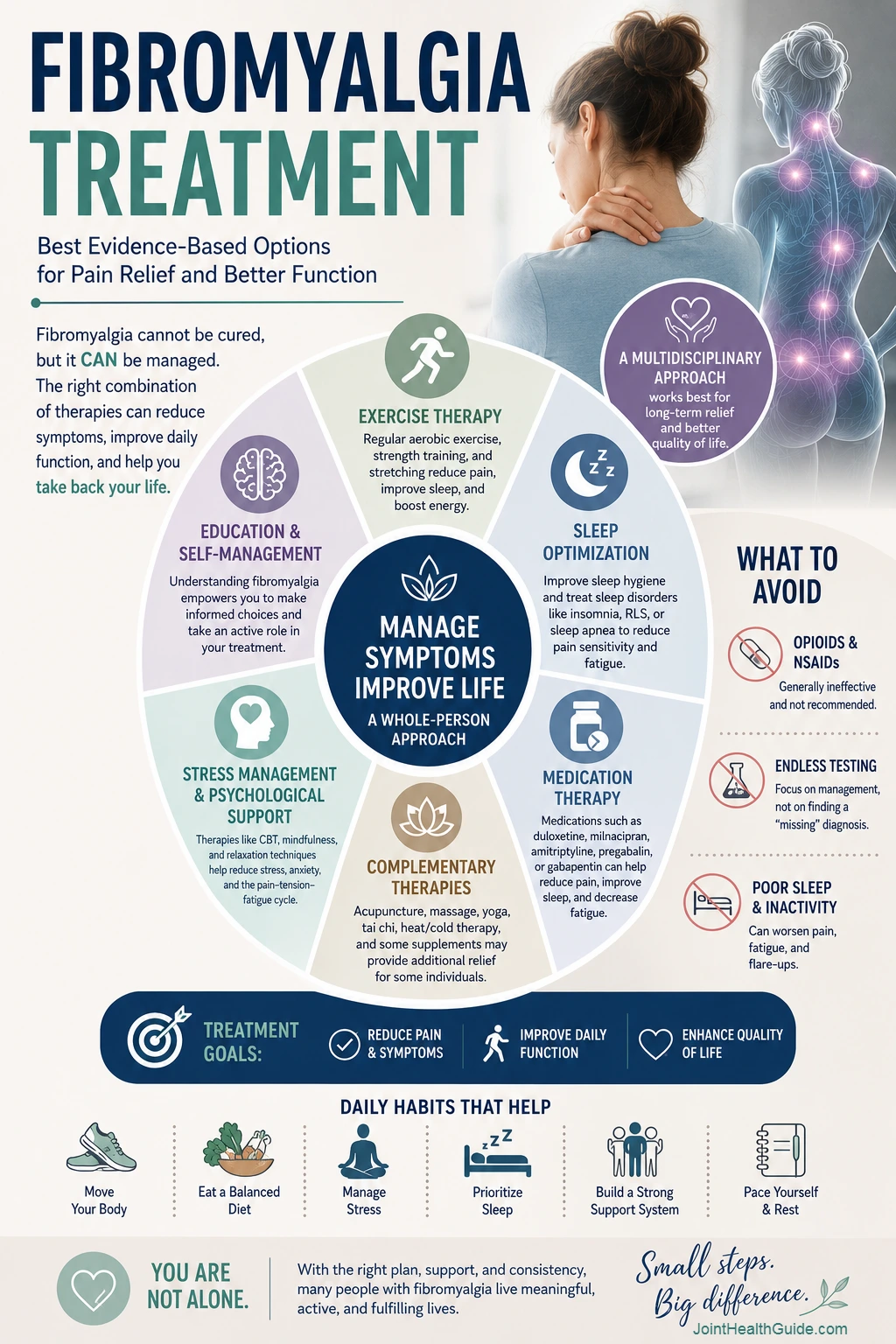
In the following sections, we will look more closely at each treatment method, explaining its purpose, effectiveness, and how it contributes to better long‑term symptom control and improved daily function.
1. Patient Education
Patient education plays a central role in the treatment of fibromyalgia. When people understand the condition, recognize their symptoms, and learn how different factors influence their well‑being, they become more active and effective participants in their own care. Education reduces fear, improves coping, and lays the foundation for all other treatment strategies.
The most important messages patients should understand include the reality of the condition, the influence of stress and mood, and the critical role of sleep. These elements shape symptom intensity and often determine how well a person responds to treatment.
Key Messages for Patients:
- Fibromyalgia is a real medical condition — It is not imagined, exaggerated, or psychological in origin. The symptoms arise from changes in how the nervous system processes pain. Understanding this helps reduce stigma and encourages patients to take an active role in management.
- Stress and mood disorders influence symptoms — Stress, anxiety, and depression can significantly worsen pain, fatigue, and sleep problems. Up to one‑third to one‑half of people with fibromyalgia experience mood disorders. These patients should be encouraged to seek support from a psychologist or psychiatrist. Psychological therapy is often an essential part of treatment. All patients benefit from learning relaxation techniques and participating in stress‑reduction programs.
- Sleep plays a major role — Poor sleep increases pain sensitivity and fatigue. Good sleep hygiene is a key component of treatment. It is important to identify and treat sleep disorders—such as insomnia, restless legs syndrome, or sleep apnea—that may contribute to fibromyalgia symptoms.
2. Exercise Therapy
Exercise is one of the most effective long‑term treatments for fibromyalgia. Regular, gentle movement reduces pain sensitivity, improves sleep, increases energy levels, and enhances overall function. Unlike medications, which often provide only partial relief, exercise helps retrain the nervous system and gradually reduces central sensitization.
The key is to start slowly, avoid overexertion, and build consistency over time. Many patients initially fear that movement will worsen their symptoms, but with proper pacing and gradual progression, exercise becomes a central tool for long‑term symptom control.
Why Exercise Matters
- Exercise reduces pain sensitivity — Regular movement helps calm the overactive nervous system and lowers central sensitization, which is a core mechanism of fibromyalgia.
- Improves sleep and energy — Physical activity supports deeper sleep and reduces daytime fatigue, two major contributors to symptom severity.
- Enhances physical function — Strength, flexibility, and endurance gradually improve, making daily activities easier and reducing flare‑up frequency.
Best Types of Exercise
- Low‑impact aerobic exercise — Walking, cycling, and swimming are first‑line options. They improve cardiovascular fitness without stressing the joints.
- Aquatic exercise — Warm‑water therapy reduces pain and stiffness, making movement easier for beginners.
- Yoga and tai chi — Combine gentle movement, stretching, balance, and relaxation. Strong evidence supports their effectiveness.
- Light strengthening — Improves muscle endurance and posture. Should start with very low resistance and progress slowly.
How to Start Safely
Starting exercise with fibromyalgia requires patience and a gradual approach. The body needs time to adapt, and pushing too hard too soon often leads to flare‑ups. The safest strategy is to begin with very short sessions — usually 5 to 10 minutes — and slowly increase duration as the body tolerates it. This pacing approach helps prevent symptom spikes and builds confidence.
Consistency is far more important than intensity. Gentle, regular movement several times per week provides better results than occasional, strenuous workouts that overwhelm the system. Patients should expect mild discomfort at the beginning, which is normal, but sharp or escalating pain is a sign to reduce intensity or shorten the session.
How Often to Exercise
- 3–5 days per week — Aerobic activity on most days provides the best results.
- 2–3 days per week of strengthening — Very light resistance, slow progression.
- Daily stretching — Helps reduce stiffness and maintain mobility.
3. Physical Therapy
Physical therapy is another valuable component of fibromyalgia management. It helps reduce pain, improve mobility, correct posture, and gradually increase physical capacity.
Physiotherapy focuses on gentle, controlled movements that calm the nervous system and prevent flare‑ups. Many patients feel safer starting with a physiotherapist, who can tailor exercises to their sensitivity level and guide them through a structured, gradual progression.
A well‑designed physiotherapy program typically includes stretching, mobility work, light strengthening, manual techniques, and selected physical modalities. The goal is not to eliminate pain completely, but to improve function and help patients move with greater confidence and less discomfort.
Physiotherapy Methods
- Stretching and mobility work — Gentle stretching reduces stiffness, improves range of motion, and decreases muscle tension. It is especially helpful in the morning or after prolonged inactivity.
- Posture correction — Many patients develop protective or inefficient postures due to chronic pain. Physiotherapy helps restore more natural movement patterns and reduces strain on the neck, shoulders, and back.
- Light strengthening — Very low‑load strengthening improves muscle endurance and supports better daily function. Progression must be slow to avoid symptom spikes.
- Hydrotherapy — Warm‑water exercise reduces joint stress, relaxes muscles, and makes movement easier. Ideal for patients who struggle with land‑based exercise.
- Myofascial release — Helps reduce muscle tightness and improves tissue mobility.
- Massage therapy — Promotes relaxation, reduces stress, and provides short‑term pain relief.
- Trigger point techniques — Useful for localized areas of increased tension.
- TENS — May reduce pain perception by modulating nerve signals.
- Therapeutic ultrasound — Can help with localized muscle tension.
- LASER therapy — Some patients report reduced pain and improved soft‑tissue comfort.
Long‑term progress in fibromyalgia depends on consistency. A home exercise program is essential because the benefits of physiotherapy fade quickly without regular practice. Short, gentle mobility sessions performed every day help maintain flexibility, reduce morning stiffness, and keep symptoms more stable.
Over time, these routines become part of a broader self‑management strategy in which patients stay active, pace their activities, and adjust movement intensity based on how they feel. People who remain consistent—rather than perfect—achieve the best long‑term outcomes.
4. Fibromyalgia Medications
Some patients achieve satisfactory improvement without medication. When this is not enough, combining non‑pharmacological strategies with medication can provide better symptom control.
Medications used in fibromyalgia come from several therapeutic groups, each targeting different aspects of the condition. The goal is not to eliminate pain completely, but to reduce symptom intensity, improve sleep, and support daily functioning.
Classic Analgesics (NSAIDs and Paracetamol)
Traditional painkillers are widely used, but they are generally not effective fibromyalgia medications 1. NSAIDs such as ibuprofen or diclofenac do not significantly reduce fibromyalgia pain because the condition is not driven by inflammation. Paracetamol has also not shown meaningful benefit.
These drugs may still be used for other coexisting conditions (e.g., headaches, menstrual pain, osteoarthritis), but they do not treat fibromyalgia itself.
Opioid Analgesics
Opioids such as codeine, oxycodone, or fentanyl are not recommended for fibromyalgia. They do not improve central sensitization, have a high risk of side effects, and may lead to dependence. Long‑term use can even worsen pain sensitivity.
Tramadol, a weak opioid, may provide short‑term relief for some patients, but prolonged use can increase pain sensitivity and is generally discouraged.
Antidepressants
Antidepressants are among the most effective fibromyalgia medications for reducing pain, fatigue, and sleep problems — even in patients who do not have depression. They modulate neurotransmitters involved in pain processing.
Most commonly used:
- Duloxetine — Strong effect on pain and helpful when depression is also present.
- Milnacipran — Improves pain, fatigue, and cognitive symptoms.
- Amitriptyline — Particularly effective for sleep disturbances and nighttime pain.
Choice of antidepressant depends on the patient’s dominant symptoms and comorbidities. These medications typically require 3–4 weeks of regular use before noticeable improvement appears.
Antiepileptic Drugs (Gabapentinoids)
Antiepileptics such as gabapentin and pregabalin are well‑established fibromyalgia medications 2. They reduce pain intensity, improve sleep quality, and help with anxiety symptoms. Their effect is based on reducing neuronal hyperexcitability — a key mechanism in central sensitization.
5. Psychotherapy
Psychotherapy plays an important role in fibromyalgia management 3 because it helps regulate the nervous system, reduce stress, improve coping, and break the cycle of pain, fear, and avoidance.
Fibromyalgia is not a psychological disorder, but psychological factors strongly influence symptom intensity. Stress, anxiety, and unhelpful thought patterns can amplify central sensitization and worsen pain.
Therapy provides patients with tools to manage symptoms more effectively, improve daily functioning, and regain a sense of control. It is often most effective when combined with exercise, sleep optimization, and medication when needed.
Cognitive‑Behavioral Therapy (CBT)
CBT is one of the most studied psychological treatments for fibromyalgia. It helps patients identify unhelpful thoughts, reduce fear‑avoidance behaviors, and build healthier activity patterns. CBT does not eliminate pain, but it reduces its impact and improves quality of life.
Common CBT goals include:
- Reducing catastrophizing — Lowering the emotional amplification of pain.
- Activity pacing — Avoiding the “boom‑and‑bust” cycle.
- Improving sleep habits — CBT‑I is highly effective for sleep disturbances.
Mindfulness‑Based Therapies
Mindfulness‑based stress reduction (MBSR) and mindfulness‑based cognitive therapy (MBCT) help patients develop awareness of bodily sensations without reacting with fear or tension. This reduces sympathetic overactivation and improves pain tolerance.
Benefits include:
- Lower stress reactivity
- Improved emotional balance
- Better sleep and reduced fatigue
Acceptance and Commitment Therapy (ACT)
ACT focuses on accepting chronic symptoms while committing to meaningful activities. It helps patients shift from fighting the pain to living well despite it.
Key elements:
- Acceptance of chronic symptoms
- Values‑based action
- Psychological flexibility
Patients often report less emotional suffering and greater engagement in daily life.
When to Consider Psychotherapy?
Psychotherapy is especially helpful for patients who experience:
- Anxiety or depression
- High stress levels
- Sleep disturbances
- Fear of movement
- Difficulty coping with chronic symptoms
Even patients without mood disorders benefit from therapy because it directly targets central sensitization and improves self‑management.
6. Sleep Optimization
Sleep problems are one of the most important drivers of fibromyalgia symptoms. Poor sleep increases pain sensitivity, worsens fatigue, and amplifies central sensitization. Many patients notice that their symptoms fluctuate directly with the quality of their sleep.
When sleep is shallow, fragmented, or too short, the nervous system becomes more reactive, making everyday sensations feel more intense. Improving sleep quality often leads to a clear reduction in pain, better energy levels, and more stable daily functioning.
Sleep optimization combines good sleep habits with targeted treatment of underlying sleep disorders. For many patients, this becomes one of the most effective long‑term strategies for reducing symptom severity and preventing flare‑ups.
Sleep Hygiene Strategies
- Regular sleep schedule — Going to bed and waking up at the same time stabilizes the circadian rhythm.
- Limit screens before bed — Blue light delays melatonin release and disrupts sleep onset.
- Create a calming routine — Light stretching, warm shower, breathing exercises.
- Avoid heavy meals and caffeine late in the day — Both interfere with deep sleep.
- Keep the bedroom cool and dark — Ideal temperature improves sleep depth.
These strategies help most patients, but many still struggle due to underlying sleep disorders.
Treating Sleep Disorders
- Insomnia — CBT‑I is the most effective treatment. It improves sleep quality and reduces nighttime awakenings.
- Restless legs syndrome — Common in fibromyalgia. Treatment includes iron correction (if low), lifestyle changes, and specific medications when needed.
- Sleep apnea — Often underdiagnosed. CPAP therapy can significantly improve fatigue and reduce pain sensitivity.
Identifying and treating these disorders is essential because no amount of sleep hygiene can compensate for untreated insomnia, RLS, or sleep apnea.
7. Nutrition and Lifestyle
Healthy nutrition and balanced lifestyle habits can help stabilize fibromyalgia symptoms. While no single diet cures the condition, many patients feel better when they focus on whole foods, reduce inflammatory triggers, and support stable energy levels throughout the day.
Dietary Guidance
A whole‑food approach works best for most patients. Vegetables, fruits, lean proteins, legumes, nuts, and whole grains provide steady energy and reduce symptom fluctuations. Limiting added sugar helps prevent fatigue swings, while moderate caffeine intake supports alertness without disrupting sleep or increasing nervous system reactivity.
Foods That May Worsen Symptoms
Some foods tend to aggravate symptoms. Processed meals, additives, and highly refined carbohydrates can trigger bloating, fatigue, or sudden symptom spikes. Alcohol often disrupts sleep quality, which then increases next‑day pain and sensitivity.
Weight Management
Maintaining a healthy weight can ease mechanical stress on joints and muscles. Even small reductions in excess weight may improve mobility and reduce overall pain intensity, especially during daily activities.
Lifestyle and Stress Reduction
Simple lifestyle strategies can noticeably reduce symptom intensity. Slow, diaphragmatic breathing helps calm the nervous system, while pacing prevents the “boom‑and‑bust” cycle that leads to flare‑ups. Setting healthy boundaries at work and home reduces overload and helps keep symptoms more stable over time.
8. Complementary and Emerging Therapies
- Acupuncture — Research shows modest reductions in pain and improved quality of life for some patients. Effects are usually short‑term but can be useful as an add‑on therapy.
- Dry needling — Helpful for muscle tension and localized trigger points, especially in patients with a strong myofascial pain component.
- Supplements — Magnesium, vitamin D, and CoQ10 have some evidence for reducing fatigue and improving muscle function, though effects vary and are generally mild.
- Emerging therapies — Neuromodulation techniques (tDCS, TMS) and treatments targeting central sensitization are being studied. Early results are promising, but these approaches are not yet standard care.
Creating a Personalized Treatment Plan
- Multidisciplinary coordination — The best results come from combining therapies such as exercise, physiotherapy, psychotherapy, sleep optimization, and medication when needed. Each component targets a different part of central sensitization.
- Setting realistic goals — The aim is improved function, better energy, and fewer flare‑ups, not complete elimination of pain. Clear expectations help patients stay motivated and avoid frustration.
- Tracking symptoms — Monitoring sleep, stress, activity levels, and flare‑up triggers helps identify patterns and adjust the treatment plan over time.
Prognosis and Long‑Term Outlook
Fibromyalgia is a chronic condition, but it is manageable. Symptoms usually persist over time, yet many patients achieve a stable and functional life when they follow consistent self‑management strategies.
The condition often fluctuates, with periods of improvement followed by flare‑ups triggered by stress, poor sleep, illness, or overexertion. These ups and downs are a normal part of the disorder and do not indicate treatment failure.
Long‑term progress depends on steady habits rather than short bursts of effort. Regular exercise, good sleep routines, pacing, and stress‑reduction techniques provide the most durable improvements and help keep symptoms under better control.
Dizner-Golab A, Lisowska B, Kosson D. Fibromyalgia – etiology, diagnosis and treatment including perioperative management in patients with fibromyalgia. Reumatologia. Full-text review: Fibromyalgia etiology, diagnosis, treatment and perioperative management
Siracusa R, Paola RD, Cuzzocrea S, Impellizzeri D. Fibromyalgia: Pathogenesis, Mechanisms, Diagnosis and Treatment Options Update. International Journal of Molecular Sciences. Comprehensive review: Fibromyalgia pathogenesis, diagnosis and treatment options
Giorgi V, Sarzi-Puttini P, Pellegrino G, et al. Pharmacological Treatment of Fibromyalgia Syndrome: A Practice-Based Review. Current Pain and Headache Reports. Practice-based review: Current pharmacological management of fibromyalgia
Jones EA, Asaad F, Patel N, Jain E, Abd-Elsayed A. Management of Fibromyalgia: An Update. Biomedicines. Evidence-based update: Contemporary fibromyalgia management strategies
Derry S, Wiffen PJ, Häuser W, et al. Oral Nonsteroidal Anti-inflammatory Drugs for Fibromyalgia in Adults. Cochrane Database of Systematic Reviews. Cochrane review: Effectiveness of NSAIDs for fibromyalgia pain management
Wiffen PJ, Derry S, Moore RA, et al. Antiepileptic Drugs for Neuropathic Pain and Fibromyalgia – An Overview of Cochrane Reviews. Cochrane Database of Systematic Reviews. Cochrane overview: Antiepileptic medications for neuropathic pain and fibromyalgia
National Institute of Arthritis and Musculoskeletal and Skin Diseases (NIAMS). Fibromyalgia. NIH patient resource: Fibromyalgia causes, symptoms and treatment options