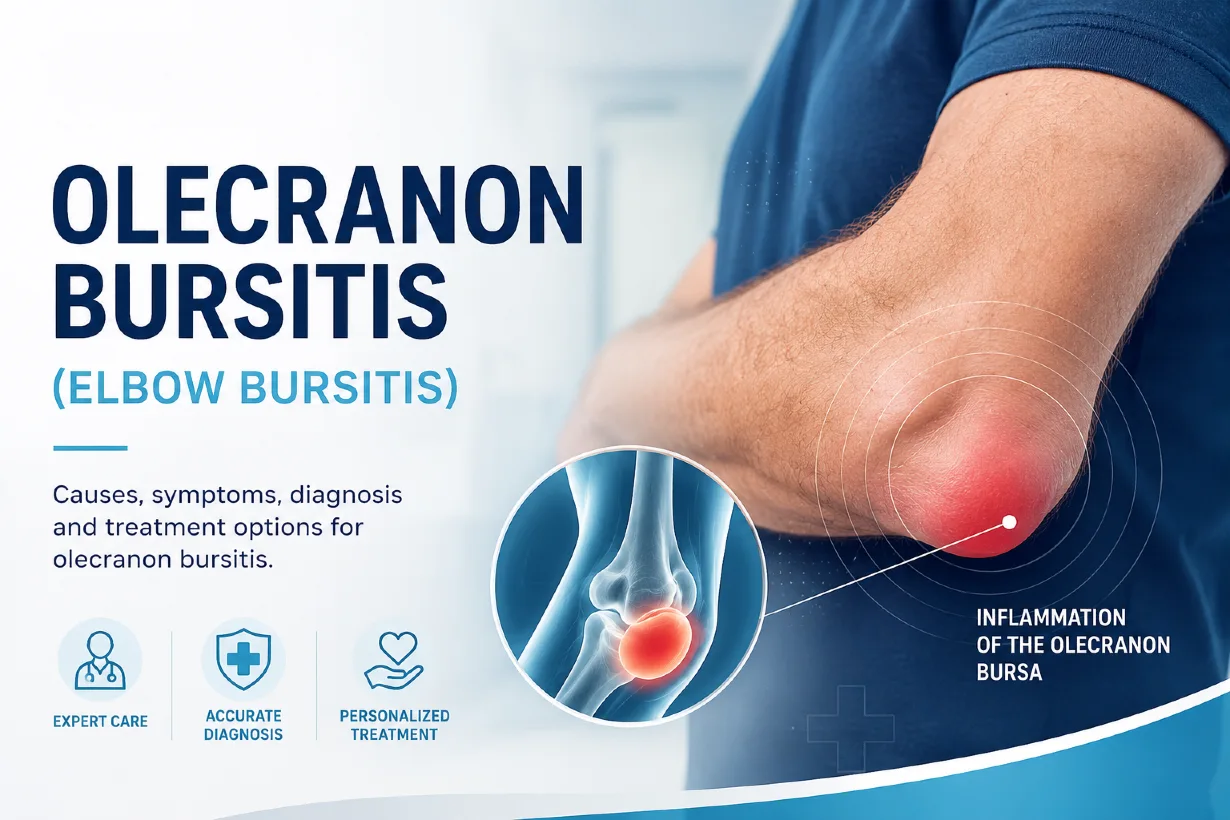
Olecranon bursitis — often referred to as elbow bursitis — is a condition in which the back of the elbow becomes swollen, irritated, or painful due to inflammation of the olecranon bursa. The swelling may appear suddenly after a direct impact or develop gradually from repeated pressure on the elbow. In some cases, the enlarged bursa is completely painless, while in others it causes significant discomfort and limits daily activities.
This condition is common in people who lean on their elbows frequently, perform repetitive arm movements, or experience minor trauma during work or sports. Infection, gout, and inflammatory diseases can also contribute to the development of olecranon bursitis.
In this article, we will explore the most frequent causes of elbow bursitis, outline effective treatment options, and provide practical advice on how to prevent recurrence.
Quick Summary – Olecranon Bursitis
- The olecranon bursa is a thin, fluid‑filled sac that reduces friction between the skin and the bony tip of the elbow.
- Olecranon bursitis is inflammation of this bursa, causing swelling at the back of the elbow that may be painless or tender depending on the cause.
- The most common triggers include direct impact, prolonged pressure on the elbow, infection, and inflammatory joint diseases such as gout or rheumatoid arthritis.
- Typical symptoms include visible swelling, mild discomfort with pressure, and occasionally redness and warmth if infection is present.
- Diagnosis is usually clinical, but ultrasound, blood tests, or bursal fluid analysis may be required to rule out infection or gout.
- Most cases improve with conservative treatment such as rest, ice, compression, and NSAIDs, while aspiration or corticosteroid injection is reserved for persistent cases.
- Septic bursitis requires urgent evaluation and antibiotic therapy; corticosteroids must not be used when infection is suspected.
- Surgery is rarely needed and is considered only for recurrent or non‑resolving bursitis or when infection does not respond to antibiotics.
What Is the Olecranon Bursa
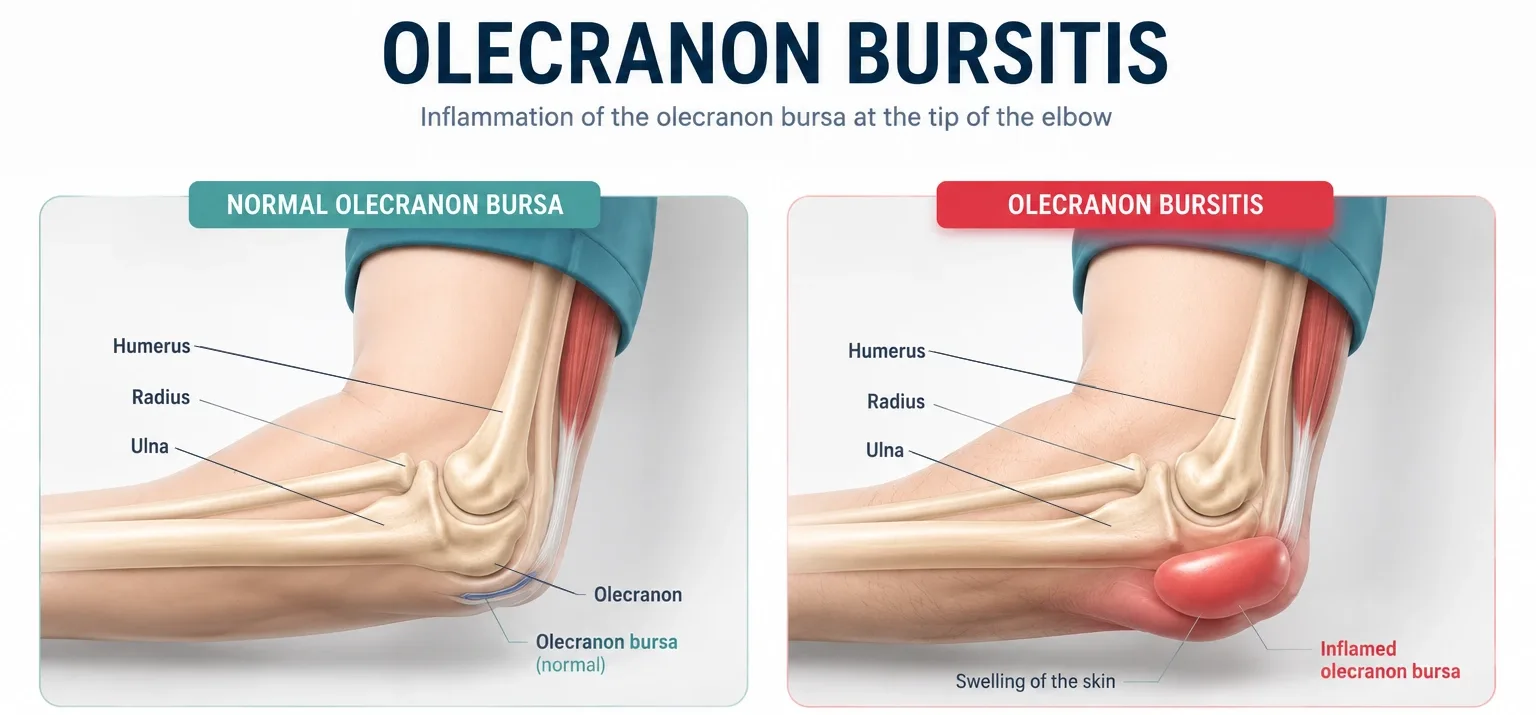
The olecranon bursa is a thin, fluid‑filled sac located at the back of the elbow, positioned between the skin and the bony tip of the ulna (olecranon). Its primary role is to reduce friction and allow the skin to glide smoothly over the bone during elbow movement. Under normal conditions, the bursa contains only a minimal amount of fluid and remains flat, making it barely noticeable.
When irritated, inflamed, or injured, the bursa can fill with excess fluid and become visibly swollen. This condition is known as olecranon bursitis, commonly referred to as elbow bursitis.
Causes of Olecranon Bursitis
Olecranon bursitis can develop for several different reasons. The most common triggers include direct trauma, prolonged pressure on the elbow, infection, and inflammatory joint diseases. Each mechanism irritates the bursa and leads to fluid accumulation, resulting in swelling at the back of the elbow — the hallmark of elbow bursitis.
1. Direct Impact to the Elbow
A sudden blow to the tip of the elbow — such as hitting a hard surface — can irritate the bursa and cause immediate swelling. This type of olecranon bursitis often appears quickly and may be painful, especially when bending the elbow or leaning on it.
2. Prolonged Pressure or Repetitive Irritation
This is a more common cause than direct trauma. Leaning on the elbow for long periods, especially on hard surfaces (desks, workbenches, vehicle armrests), creates friction and irritation of the bursa. The swelling usually develops gradually over weeks or months.
Occupations with frequent crawling or working in tight spaces — such as plumbers, HVAC technicians, or mechanics — are particularly prone to this condition. This type of bursitis is sometimes called:
- “student’s elbow”
- “miner’s elbow”
- “plumber’s elbow”
Certain exercises, such as holding a plank on hard flooring, can also provoke irritation.
3. Infection (Septic Bursitis)
If the skin over the elbow is cut, scraped, punctured, or irritated by an insect bite, bacteria can enter the bursa and cause infection. Signs of septic bursitis include:
- redness
- warmth
- swelling
- increasing pain
If untreated, the fluid may become purulent (pus‑filled). In some cases, infection can occur even without a visible skin injury.
Septic bursitis requires prompt medical evaluation.
4. Inflammatory Joint Diseases
Certain systemic inflammatory conditions can cause recurrent or chronic elbow bursitis. These include:
- rheumatoid arthritis
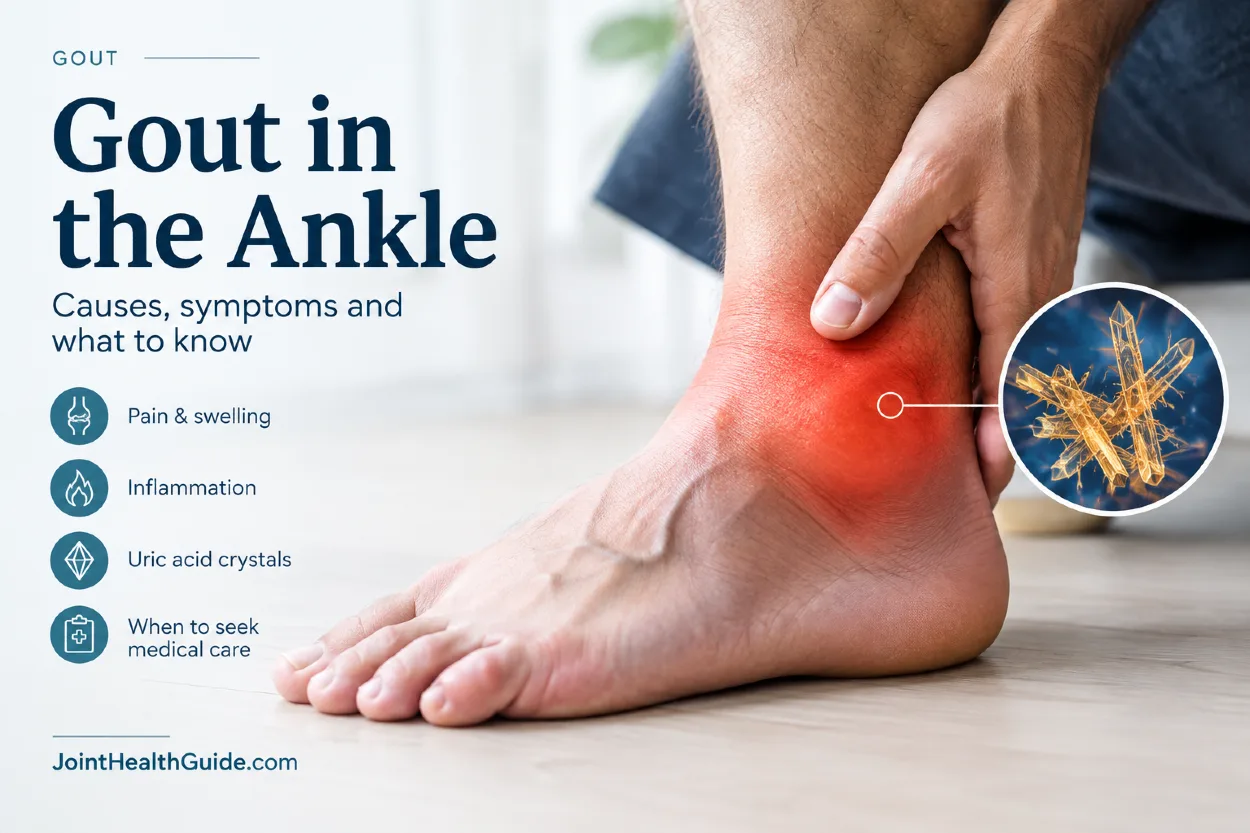
- gout
- ankylosing spondylitis
In these disorders, inflammation can affect multiple bursae throughout the body, including the olecranon bursa.
Symptoms of Olecranon Bursitis
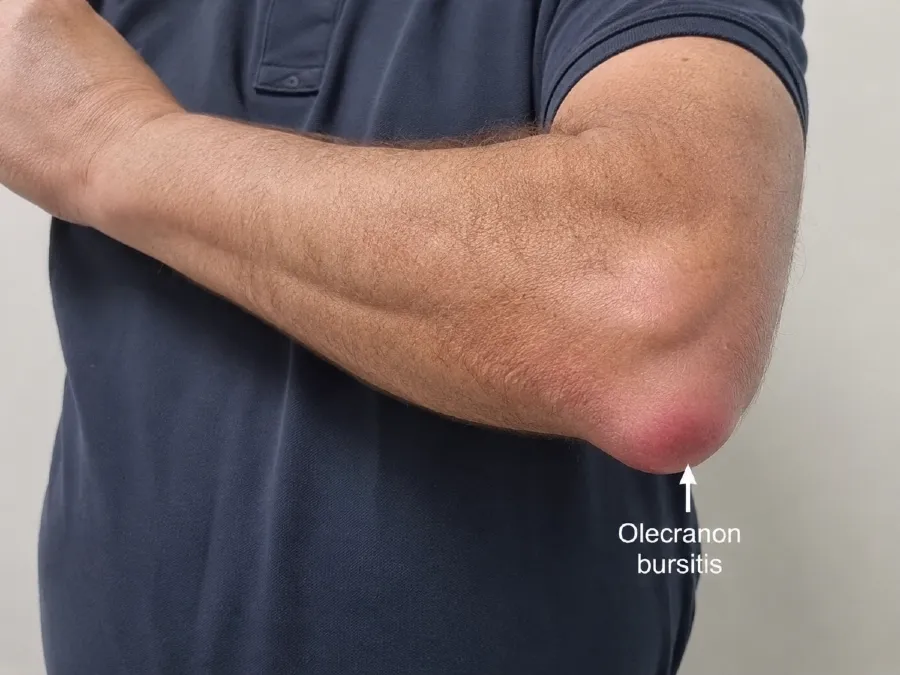
Swelling at the back of the elbow is usually the first and most noticeable sign of olecranon bursitis. Because the skin in this area is loose, the swelling may take time to become visible. It can appear suddenly or develop gradually, and its size can vary widely. The bursa may remain small or enlarge into a soft, golf‑ball‑sized mass. Most people seek medical attention because they are concerned about the swelling.
Pain
In many cases, elbow bursitis is painless or causes only mild discomfort. Elbow mobility is usually preserved. Pain may occur when direct pressure is applied to the elbow — for example, when leaning on a hard surface. Mild discomfort may also be present when bending the elbow.
Redness and Warmth
The swollen area typically has the same color as the surrounding skin or may appear slightly pink. The temperature may be normal or slightly warmer.
Signs of Infection (Septic Bursitis)
If the bursa becomes infected, the skin becomes clearly red, warm to the touch, and increasingly painful.
If infection is not treated promptly, it can spread to other parts of the arm or enter the bloodstream, potentially leading to serious complications.
Occasionally, an infected bursa may spontaneously open through the skin, allowing purulent (pus‑filled) fluid to drain out.
Diagnosis
In most cases, the diagnosis of elbow bursitis can be made without any additional tests. The swelling at the back of the elbow is very characteristic, and because the area lies just beneath the skin, it is usually easy to see and feel on examination.
Sometimes, further testing is needed to rule out other causes of elbow swelling, such as infection (septic arthritis), gout, or rheumatoid arthritis.
Blood Tests and Imaging
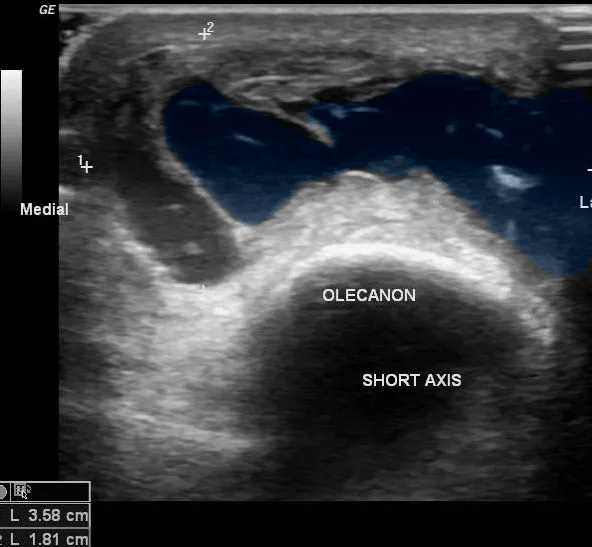
Tests that may be required include blood work and an ultrasound examination. Ultrasound can easily show whether fluid is accumulating in the bursa or inside the elbow joint.
If there has been an elbow injury, an X‑ray may be needed to check for fractures. In some people, an X‑ray may also reveal a small bone spur on the olecranon.
Aspiration of Bursa Fluid
If infection is suspected — known as septic olecranon bursitis — a sample of fluid from the bursa must be taken and sent to the laboratory to identify the bacteria causing the infection.
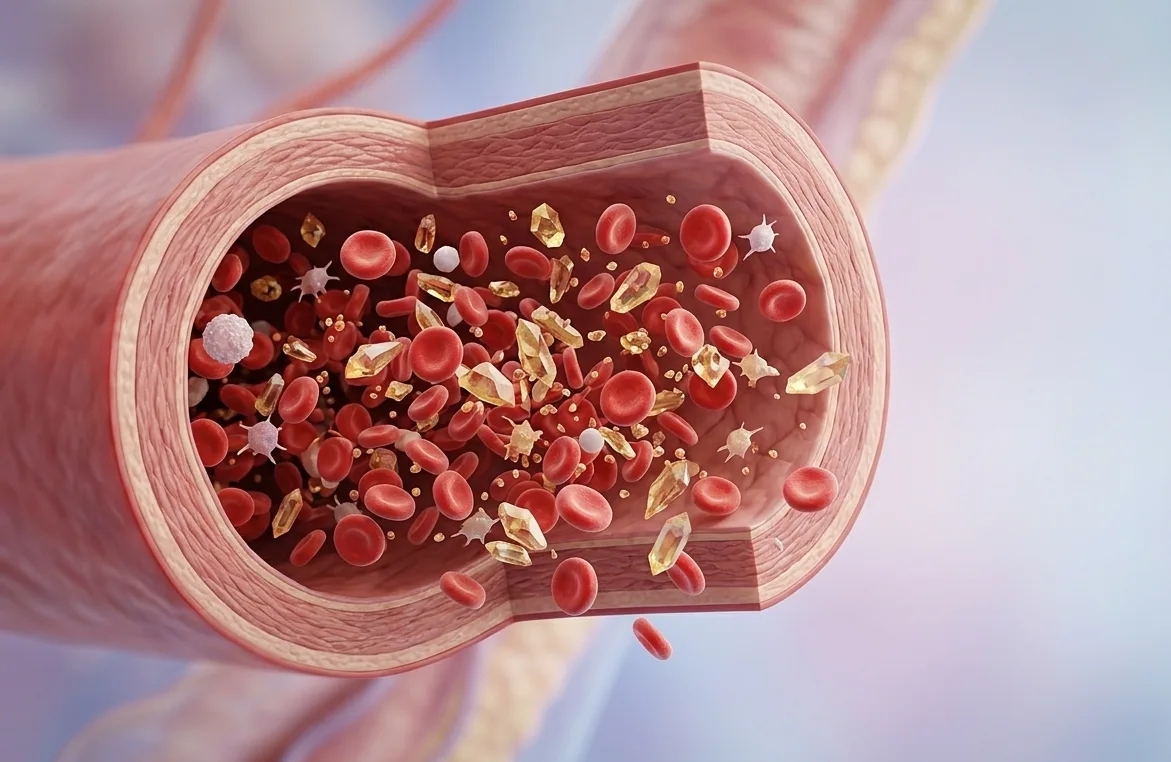
The same fluid sample can also be used to diagnose gout, as urate crystals can be detected under microscopic analysis.
Olecranon Bursitis Treatment
In the vast majority of patients, olecranon bursitis treatment is conservative and leads to good outcomes. Surgical treatment is rarely required.
Conservative Treatment
In many cases, elbow bursitis treatment is simple and effective as long as there is no infection. The condition often improves on its own with basic measures such as:
- resting the elbow
- avoiding pressure on the back of the elbow
- applying ice packs
- using a compression bandage or elbow sleeve to help the fluid resolve more quickly
With these measures, symptoms typically improve within 3–4 weeks.
If pain is more pronounced, non‑steroidal anti‑inflammatory drugs (NSAIDs) such as ibuprofen, diclofenac, or naproxen may be used to reduce discomfort and inflammation.
If symptoms do not improve after 3–6 weeks, aspiration of the bursa and corticosteroid injection are commonly recommended.
Aspiration and Corticosteroid Injection
- Aspiration (removal of bursal fluid): This procedure uses a needle and syringe to withdraw fluid from the bursa, either “blindly” or under ultrasound guidance. Aspiration is essential when infection or gout is suspected, as the fluid must be sent to the laboratory for analysis. The procedure carries a small risk of introducing bacteria into the bursa.
- Corticosteroid injection: Injecting corticosteroids into the bursa can effectively reduce inflammation and provide rapid relief of pain and swelling. Corticosteroids must not be used if the bursa is infected, as they can worsen the infection. In such cases, antibiotic therapy is required.
Surgical Treatment
Surgery is considered only in specific situations:
- when an infected bursa does not respond to antibiotics
- when non‑infected bursitis repeatedly returns despite proper treatment
- when chronic fluid accumulation significantly affects function or comfort
Surgical treatment involves removing the bursa. After removal of an infected bursa, additional intravenous or oral antibiotics are usually required.
Prevention Tips
The goal of preventing olecranon bursitis is to reduce irritation or injury to the olecranon bursa at the back of the elbow. Several practical steps can significantly lower the risk of developing elbow bursitis.
1. Avoid Prolonged Pressure on the Elbow
Long‑term leaning on hard surfaces can irritate the bursa. These activities should be limited whenever possible. If your work requires resting on your elbows for extended periods, use soft padding or cushioned surfaces. People who frequently crawl or work on their elbows — such as tradespeople — should use protective elbow pads.
2. Protect the Elbow From Injury
During sports or activities with a higher risk of falls (cycling, skating, contact sports), wear appropriate elbow protection. Avoid direct blows or trauma to the elbow whenever possible.
3. Maintain Good Wound Care
If you develop cuts, scrapes, or abrasions around the elbow, clean and disinfect them promptly to prevent infection that could spread to the bursa. Use antiseptic solutions and cover the wound with a sterile dressing when needed.
4. Treat Irritation or Symptoms Early
If you notice pain, swelling, or redness around the elbow, seek medical evaluation early to prevent chronic bursitis or infection. Do not ignore mild symptoms — early intervention can prevent more serious problems.
5. Manage Chronic Medical Conditions Properly
People with gout, rheumatoid arthritis, or other inflammatory conditions that increase the risk of bursitis should follow their prescribed treatment plans and attend regular medical check‑ups.
When to See a Doctor
Early medical evaluation is important whenever symptoms of olecranon bursitis worsen, fail to improve, or suggest possible infection. Although most cases are mild, certain warning signs require prompt attention to prevent complications.
- Rapidly increasing swelling or swelling that becomes tense, painful, or unusually large.
- Redness, warmth, or fever, which may indicate septic bursitis.
- Severe pain or difficulty leaning on or bending the elbow.
- Drainage of fluid or pus from the elbow, suggesting a ruptured infected bursa.
- Symptoms lasting longer than 3–6 weeks despite rest, ice, and compression.
- Recurrent swelling, especially in people who frequently lean on their elbows.
- History of gout or rheumatoid arthritis with new elbow swelling, as these conditions can mimic or trigger bursitis.
If infection is suspected, timely evaluation is essential because untreated septic bursitis can spread to surrounding tissues or enter the bloodstream.
Prognosis
The prognosis for olecranon bursitis is generally excellent. Most non‑infected cases resolve within a few weeks with rest, ice, compression, and avoidance of pressure on the elbow. Long‑term problems are uncommon, although recurrence can occur if mechanical irritation continues.
Septic bursitis has a more variable course but typically responds well to timely antibiotic therapy. Chronic or recurrent cases may require aspiration or, in rare situations, surgical removal of the bursa. After surgery, most patients regain full elbow function without lasting limitations.
FAQ – Olecranon Bursitis
What is olecranon bursitis?
Olecranon bursitis is inflammation of the bursa located at the back of the elbow, leading to visible swelling that may be painless or tender depending on the cause.
How long does elbow bursitis take to heal?
Most cases of elbow bursitis improve within three to four weeks with rest, ice, compression, and avoiding pressure on the elbow.
Is elbow bursitis serious?
Non‑infected bursitis is usually mild, but septic bursitis can be serious and requires prompt medical evaluation due to the risk of spreading infection.
Can olecranon bursitis come back?
Yes. Recurrence is common if repetitive pressure on the elbow continues or if underlying conditions such as gout are not well controlled.
Is elbow bursitis the same as tennis elbow?
No. Tennis elbow affects the tendons on the outside of the elbow, while olecranon bursitis affects the bursa at the back of the elbow.
Can I drain elbow bursitis at home?
No. Aspiration must be performed by a healthcare professional due to the risk of introducing bacteria into the bursa.
Does olecranon bursitis limit elbow movement?
Range of motion is usually preserved unless pain or infection is present.
Can exercise cause elbow bursitis?
Yes. Exercises performed on hard surfaces, such as planks, can irritate the bursa and trigger swelling.
Nchinda NN, Wolf JM. Clinical Management of Olecranon Bursitis: A Review. Journal of Hand Surgery (American). 2021;46(6):501-506. Clinical review: Diagnosis and management of olecranon bursitis
Pangia J, Taqi M, Rizvi TJ. Olecranon Bursitis. StatPearls [Internet]. Treasure Island (FL): StatPearls Publishing; Updated 2025 Dec 13. Evidence-based review: Olecranon bursitis evaluation and treatment
AAOS (American Academy of Orthopaedic Surgeons). Elbow Olecranon Bursitis Overview. AAOS clinical guide: Symptoms, diagnosis and treatment of olecranon bursitis
Lockman L. Treating nonseptic olecranon bursitis: A 3-step technique. Canadian Family Physician. 2010;56(11):1157. Clinical technique: Conservative management of nonseptic olecranon bursitis
StatPearls. Bursitis. NCBI Bookshelf. Evidence-based medical reference: Bursitis diagnosis and management principles
Physiopedia. Olecranon Bursitis. Clinical guide: Assessment, causes and rehabilitation approaches for olecranon bursitis