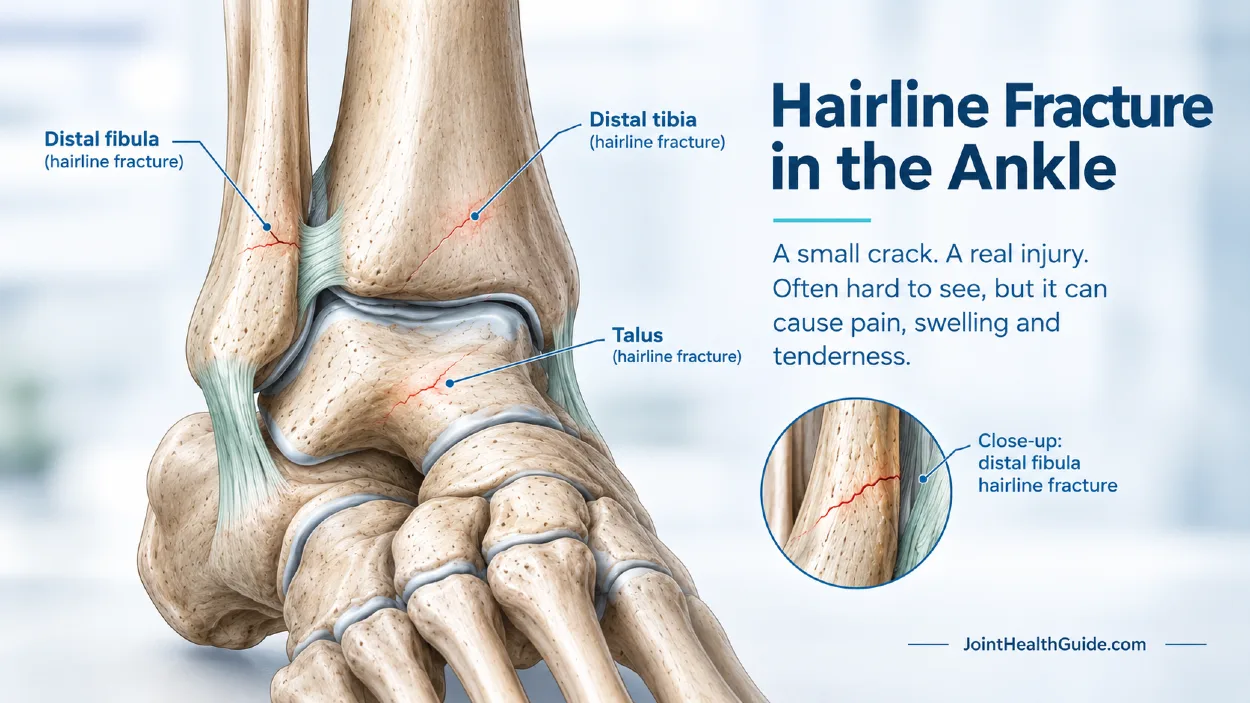
A hair fracture in the ankle is a small crack or incomplete break in one of the bones around the ankle joint. Patients may also describe this injury as a “hairline crack in the ankle,” while doctors may use terms such as stress fracture, nondisplaced fracture, or another type of small bone fracture depending on its cause and location.
Ankle hair fractures can develop after an injury, repetitive stress, or a sudden increase in physical activity. Symptoms may include localized pain, swelling, tenderness over the bone, and discomfort when walking or bearing weight. Because these symptoms can resemble an ankle sprain, a hair fracture may sometimes go unrecognized.
This article explains the symptoms, causes, diagnosis, treatment, and recovery of a hair fracture in the ankle, including when medical evaluation is necessary.
What Is a Hair Fracture in the Ankle?
A hair fracture in the ankle refers to a small crack or incomplete break in one of the bones that form or support the ankle joint. The term is commonly used in everyday language to describe a minor fracture, although it is not a formal medical diagnosis. Depending on the cause and appearance of the injury, doctors may classify it as a stress fracture, hairline fracture, or nondisplaced fracture.
A hairline crack in the ankle can affect the lower end of the tibia, fibula, or talus. The fibula, the smaller bone on the outer side of the lower leg, is particularly vulnerable to fractures following an ankle injury. Stress fractures may also develop gradually when repetitive loading exceeds the bone’s ability to repair itself.
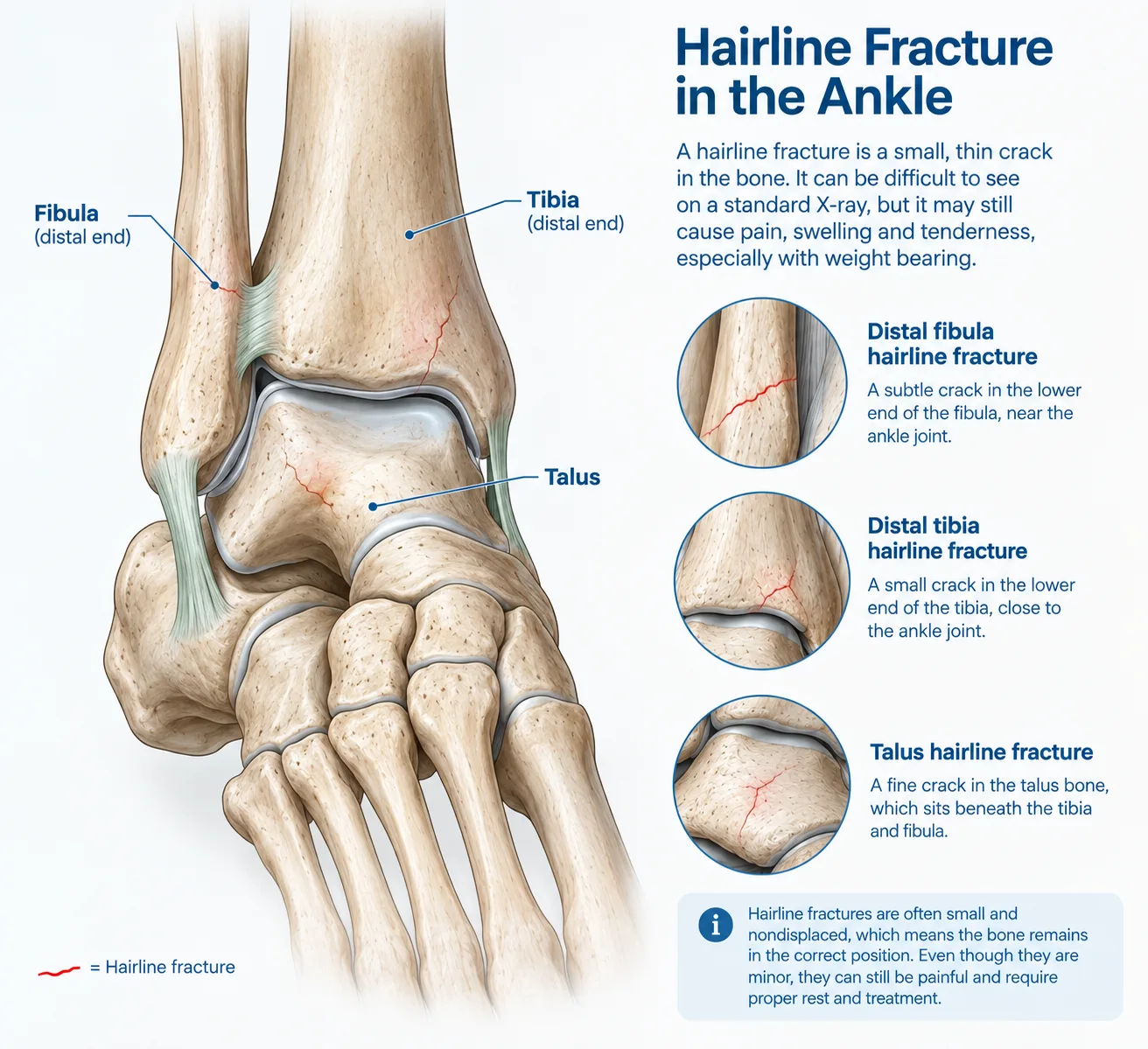
Unlike a displaced fracture, a hair fracture does not usually cause the bone fragments to move out of alignment. However, even a small crack can cause significant pain and may worsen if the ankle continues to bear excessive stress.
Hair fractures can result from a single traumatic event, such as twisting or landing awkwardly, or from repetitive activities such as running and jumping. Because symptoms may initially resemble those of an ankle sprain, proper medical evaluation is important when pain persists or worsens.
What Causes a Hair Fracture in the Ankle?
A hair fracture in the ankle can develop after a sudden injury or gradually from repeated stress on the bone. The underlying cause often determines the type and location of the fracture.
A traumatic fracture may occur when the ankle is twisted, rolled, or subjected to a strong impact. Common situations include falling, landing awkwardly after a jump, or sustaining a direct blow during sports or other activities. In some cases, the force may produce a small, nondisplaced crack rather than a more severe fracture.
A stress fracture develops differently. Repeated loading from activities such as running, jumping, or prolonged walking can gradually create tiny cracks in the bone. A sudden increase in training intensity or distance can increase this risk, particularly when the body has not had enough time to adapt.
Several factors can also make the bone more vulnerable. Low bone density, osteoporosis, inadequate nutrition, previous fractures, and certain medications may increase fracture risk. Poor footwear or changes in training surfaces may contribute to repetitive stress, although they are rarely the sole cause.
Identifying the cause is important because treatment and recovery may differ between a traumatic fracture and a stress fracture.
Symptoms of a Hair Fracture in the Ankle
The symptoms of a hair fracture in the ankle can vary depending on the affected bone, the cause of the fracture, and how much stress is placed on the ankle. Because the symptoms can resemble an ankle sprain, a small fracture may initially be difficult to recognize.
Common symptoms include:
- Localized pain over or around the affected bone
- Tenderness when pressing directly over the injured area
- Pain with weight-bearing, walking, running, or jumping
- Swelling around the ankle
- Bruising, although this is not always present
With a stress fracture, discomfort may initially appear only during activity and improve with rest. As the injury progresses, however, pain may become more persistent and can eventually occur even at rest.
A hairline crack in the ankle does not necessarily cause severe pain or make walking impossible. Being able to walk does not rule out a fracture. However, increasing pain with weight-bearing or persistent pain several days after an injury should prompt medical assessment.
Clinical Insight
If ankle pain continues despite rest, worsens over time, or is associated with significant swelling, difficulty bearing weight, or marked tenderness over a bone, a healthcare professional should evaluate the injury. X-rays or other imaging may be needed to confirm or exclude a fracture.
Hair Fracture in Ankle vs. Ankle Sprain
A hair fracture in the ankle and an ankle sprain can cause similar symptoms, making them difficult to distinguish without a medical examination. The main difference is that a fracture affects the bone, while a sprain involves damage to the ligaments supporting the ankle joint.
| Feature | Hair Fracture | Ankle Sprain |
|---|---|---|
| Affected structure | Bone | Ligament |
| Pain location | Directly over a bone | Around the ankle ligaments |
| Typical cause | Trauma or repetitive stress | Twisting or rolling the ankle |
| Walking | May be painful; severity varies | May be painful; depends on sprain severity |
| Diagnosis | X-ray, MRI, or other imaging when needed | Usually clinical examination; imaging may be needed |
A hairline crack in the ankle may cause mild symptoms initially, especially when it develops gradually as a stress fracture. Since both conditions can cause swelling, bruising, and difficulty bearing weight, symptoms alone cannot reliably confirm the diagnosis. Persistent pain or tenderness directly over a bone should be medically evaluated.
How Is a Hairline Crack in the Ankle Diagnosed?
Diagnosing a hairline crack in the ankle begins with a physical examination and a review of how the injury occurred. Your doctor will assess the location of pain, swelling, tenderness, ankle movement, and your ability to bear weight. Particular tenderness directly over a bone may raise suspicion of a fracture rather than an isolated ligament injury.
X-rays are usually the first imaging test used to evaluate a suspected ankle fracture. However, a small crack may not always be visible on initial radiographs, particularly during the early stages of a stress fracture. If symptoms persist despite normal X-rays, additional imaging may be necessary.
Magnetic resonance imaging (MRI) is highly sensitive for detecting early stress fractures and bone marrow edema. It can identify changes in the bone before a fracture line becomes visible on an X-ray. MRI may be particularly useful when pain persists without a clear explanation.
Computed tomography (CT) provides detailed images of the bone and may be used when a fracture is suspected but not clearly seen on standard X-rays, or when more precise assessment of the fracture is required.
The choice of imaging depends on the mechanism of injury, clinical findings, and duration of symptoms. A healthcare professional can determine which examination is most appropriate.
If ankle pain continues despite rest or progressively worsens, it is important not to rely solely on a normal initial X-ray to exclude a small fracture.
Treatment
Treatment for a hair fracture in the ankle depends on the location and severity of the fracture, whether it resulted from an acute injury or repetitive stress, and whether the bone remains properly aligned. Most small, stable fractures can be treated without surgery.
The main goals are to protect the bone, reduce pain, and allow the fracture to heal. Depending on the injury, treatment may include:
- Activity modification: Running, jumping, and other high-impact activities should be avoided while the bone heals.
- Immobilization: A walking boot or other form of support may be recommended to protect the ankle and reduce pain during weight-bearing.
- Weight-bearing restrictions: Some fractures allow weight-bearing as tolerated, while others require partial or complete avoidance of weight-bearing for a period of time.
- Pain relief: Ice, elevation, and appropriate pain medication can help control symptoms during the early phase of recovery.
- Gradual rehabilitation: Once pain has settled and the fracture has sufficiently healed, range-of-motion, strengthening, balance, and functional exercises can be gradually introduced.
For a stress fracture, treatment usually focuses on reducing the repetitive load that caused the injury. Returning to running or sport too quickly can delay healing or cause the fracture to progress.
Surgery is not usually necessary for a stable, nondisplaced fracture, but it may be considered when the fracture is displaced, unstable, involves an important part of the joint, or fails to heal appropriately.
It is important to follow the recommended weight-bearing and activity restrictions even if symptoms improve quickly. Pain relief does not necessarily mean that the bone has fully healed, and premature return to high-impact activity can increase the risk of delayed healing or further injury.
How Long Does a Hairline Crack in the Ankle Take to Heal?
A hair fracture in the ankle typically takes about 6 to 8 weeks to heal, although recovery varies depending on the location and severity of the fracture and the individual’s overall health.
Pain and swelling often improve before the bone is fully healed. For this reason, returning to running, jumping, or sports too soon can delay recovery or worsen the injury.
Healing may take longer with stress fractures, low bone density, smoking, poor nutrition, or continued excessive stress on the injured ankle.
Most people can gradually return to normal activities as the fracture heals. High-impact exercise should be resumed gradually and only when pain has resolved and the bone has adequately healed.
Can You Walk With a Hair Fracture in Your Ankle?
Yes, it may be possible to walk with a hairline crack in the ankle, particularly if the fracture is small and stable. However, the ability to walk does not mean that the bone is not fractured.
Walking may cause pain or discomfort, especially with a stress fracture or when the ankle is repeatedly loaded. Continuing to walk normally despite significant pain can place additional stress on the injured bone and potentially delay healing.
Depending on the type and location of the fracture, your doctor may recommend weight-bearing as tolerated, reduced weight-bearing, or temporary use of crutches or a walking boot.
If you can walk but have persistent pain or tenderness directly over an ankle bone, it is important to have the injury properly assessed rather than assuming it is only a sprain.
When Should You See a Doctor?
You should seek medical evaluation if ankle pain persists after an injury, worsens despite rest, or is associated with significant swelling, difficulty bearing weight, or tenderness directly over a bone.
Medical assessment is particularly important if pain continues despite a normal initial X-ray, as some small or stress fractures may not be visible during the early stages.
Seek urgent medical attention if the ankle appears deformed, there is severe swelling or pain, or you are unable to bear weight at all.
Quick Overview – Hair Fracture in the Ankle
- A hair fracture in the ankle is a small crack or incomplete break in one of the bones around the ankle and may result from trauma or repetitive stress.
- Common symptoms include localized pain, bone tenderness, swelling, and pain with weight-bearing. Symptoms may initially be mild, particularly with a stress fracture.
- A hair fracture can resemble an ankle sprain, but persistent tenderness directly over a bone may raise suspicion of a fracture.
- X-rays are usually the first imaging test, but small or early stress fractures may not be visible initially. MRI may be needed when clinical suspicion remains high.
- Treatment usually involves protecting the ankle, reducing activity, and gradually returning to weight-bearing and exercise as the fracture heals.
- Most uncomplicated fractures heal within approximately 6–8 weeks, although stress fractures and some injuries may require a longer recovery period.
American Academy of Orthopaedic Surgeons (AAOS). Stress Fractures of the Foot and Ankle. OrthoInfo. AAOS: Stress fractures of the foot and ankle — symptoms, diagnosis, treatment and recovery
American College of Radiology (ACR). ACR Appropriateness Criteria® Stress (Fatigue/Insufficiency) Fracture. ACR: Evidence-based imaging recommendations for suspected stress fractures
Schroeder JD, Trigg SD, Capo Dosal GE. Bone Stress Injuries: Diagnosis and Management. American Family Physician. 2024;110(6):592-600. AAFP: Bone stress injury diagnosis, imaging, treatment and return to activity
Patel DS, Roth M, Kapil N. Stress Fractures: Diagnosis, Treatment, and Prevention. American Family Physician. 2011;83(1):39-46. PubMed: Stress fracture diagnosis, treatment and prevention review
American Academy of Orthopaedic Surgeons (AAOS). Stress Fractures. OrthoInfo. AAOS: Stress fracture causes, symptoms, imaging, treatment and recovery