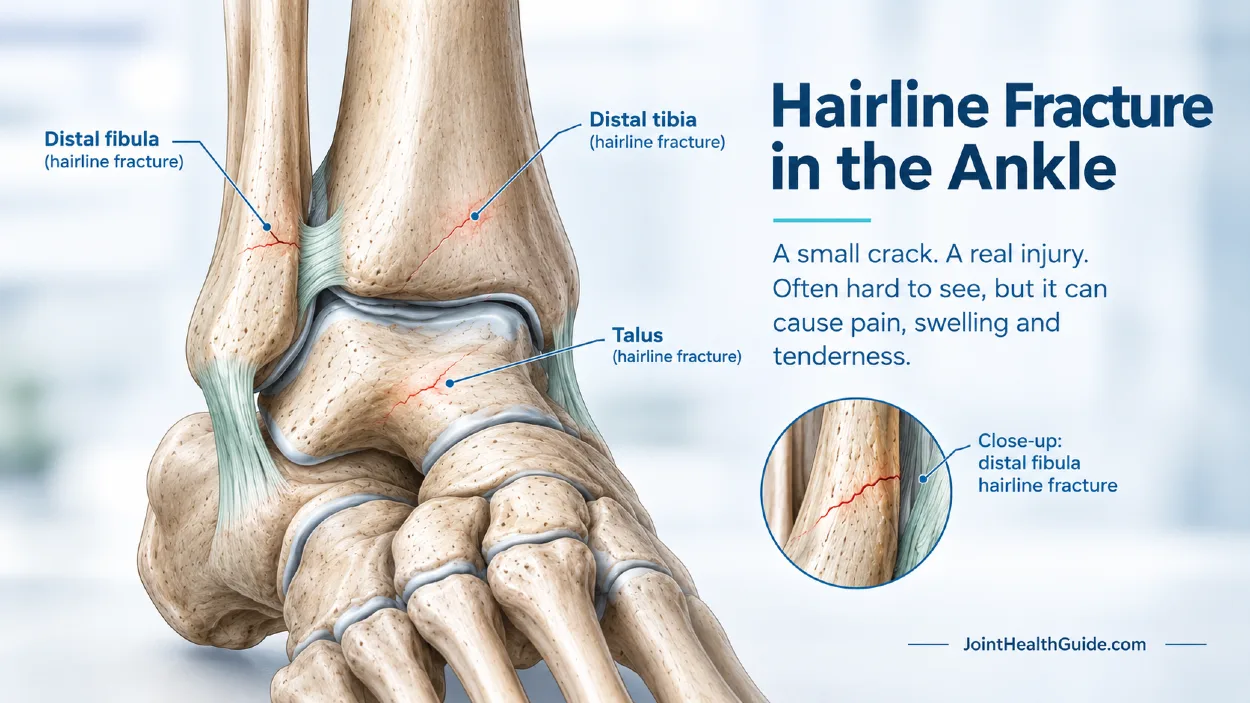

A sprained ankle (ankle sprain) is one of the most common musculoskeletal injuries and can happen to anyone, from professional athletes to people going about their everyday activities. It occurs when the ankle is suddenly twisted, rolled, or turned beyond its normal range of motion, causing the ligaments that stabilize the joint to stretch or tear. The ligaments on the outside of the ankle are affected most often, and the severity of the injury depends on how many ligaments are involved and how severely they are damaged.
Mild ankle sprains usually improve with appropriate protection, activity modification, ice, compression, and progressive exercises. More severe injuries may require a medical evaluation and additional imaging to rule out a fracture or other significant damage.
Recovery from a sprained ankle can take around two weeks for a mild injury, while more severe sprains may take several weeks or even months to fully recover. Without appropriate treatment and rehabilitation, an ankle sprain can lead to persistent pain, chronic ankle instability, and an increased risk of recurrent injuries.
In this article, we explain what causes a sprained ankle, the most common symptoms and signs, how ankle sprains are diagnosed, and the most effective approaches to treatment, rehabilitation, and recovery.
What Is a Sprained Ankle and How Does It Happen?
The ankle ligaments are strong bands of connective tissue that connect the bones around the ankle and help keep the joint stable during standing, walking, running, and other movements. A sprained ankle occurs when one or more of these ligaments are stretched beyond their normal range or partially or completely torn.
Most ankle sprains occur when the foot suddenly rolls inward, forcing the ankle beyond its normal range of motion. This is called an inversion injury and commonly happens when you step on an uneven surface, land awkwardly after a jump, or suddenly change direction while running or playing sports.
An inversion injury most often affects the lateral ankle ligaments on the outside of the joint. The anterior talofibular ligament (ATFL) is injured most frequently, followed by the calcaneofibular ligament (CFL). More severe injuries may involve additional ligaments and result in greater ankle instability.
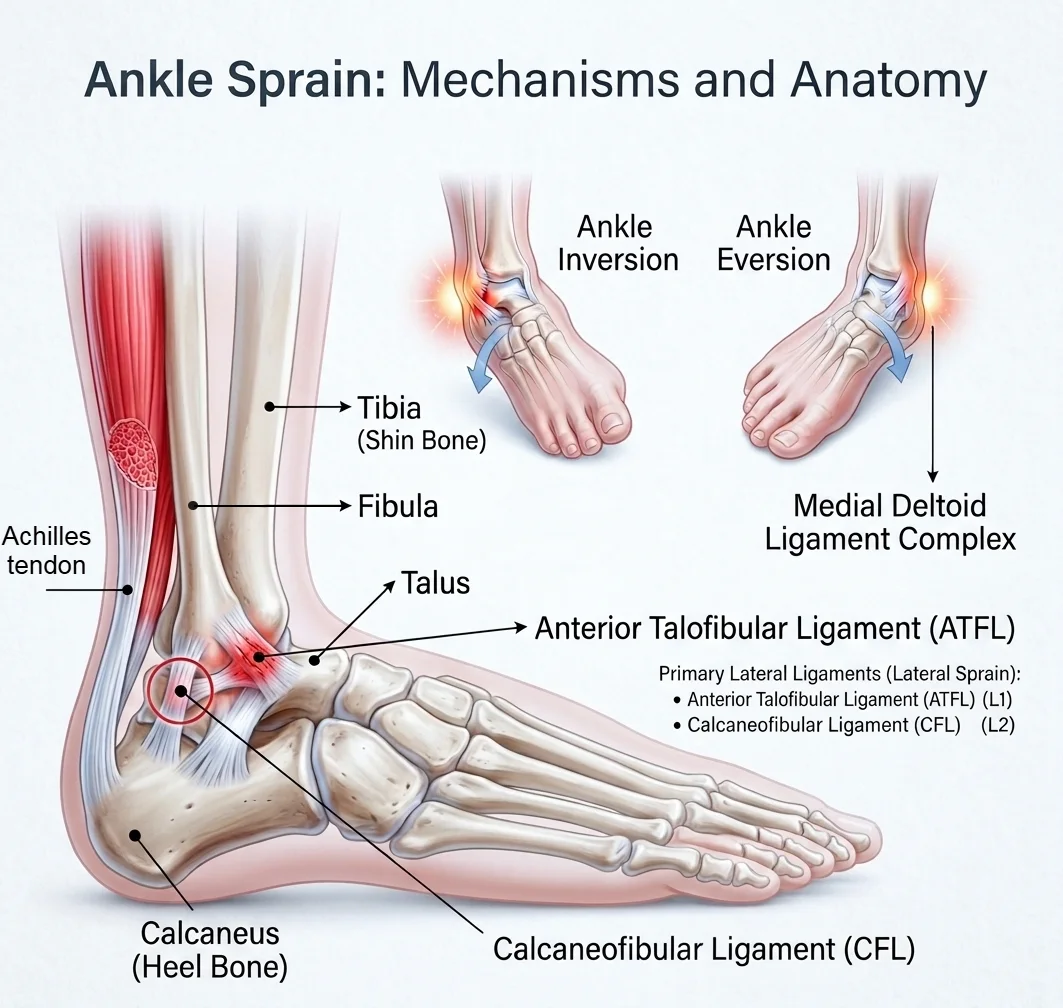
Less commonly, the foot may be forced outward, causing an eversion ankle sprain. This mechanism can injure the deltoid ligament, a strong ligament complex located on the inner side of the ankle. Because the deltoid ligament is thicker and stronger than the lateral ankle ligaments, isolated injuries are relatively uncommon.
A high ankle sprain, also known as a syndesmotic sprain, is a third, different, type of ankle injury. It affects the ligaments that connect the lower ends of the tibia and fibula above the ankle joint. High ankle sprains usually result from a more significant twisting or rotational force and are particularly common in contact sports. They may also occur together with ankle or lower-leg fractures.
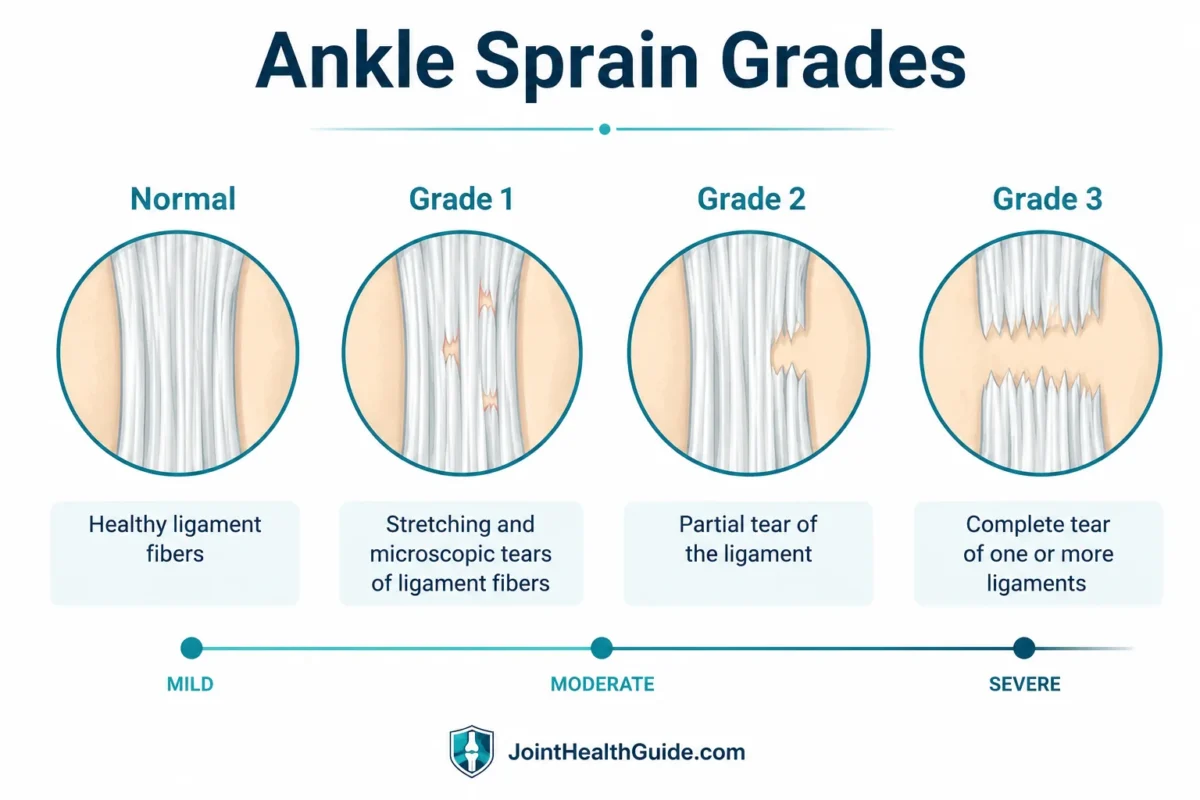
The severity of an ankle sprain can range from mild stretching and microscopic damage to a complete ligament tear. These injuries are classified into three grades according to the extent of ligament damage, which are described below.
Ankle Sprain Grades: Grade 1, 2 and 3
Ankle sprains are classified into three grades according to the extent of ligament damage. This classification helps healthcare professionals estimate the severity of the injury, guide treatment, and determine the expected recovery time. The grading is based primarily on the degree of ligament injury, along with pain, swelling, bruising, and ankle stability during the physical examination.
| Grade | Ligament Damage | Typical Symptoms | Stability & Weight Bearing |
|---|---|---|---|
| Grade 1 | Mild stretching and microscopic tearing of ligament fibers | Mild tenderness, little swelling, and sometimes minor bruising | The ankle is usually stable. Walking is generally possible, although mild pain may occur with weight bearing. |
| Grade 2 | Partial tear of a ligament | Moderate tenderness, swelling, and bruising around the ankle | Weight bearing is usually painful. Mild to moderate instability may be present. |
| Grade 3 | Complete ligament tear | Severe tenderness, significant swelling, and extensive bruising | Weight bearing is often very painful or difficult, with marked ankle instability. |
The grade of an ankle sprain does not always perfectly predict how long recovery will take. Symptoms and functional limitations can vary between individuals, and the presence of associated injuries—such as fractures, tendon injuries, or a syndesmotic sprain—can significantly affect recovery.
Causes and Risk Factors for a Sprained Ankle
A sprained ankle usually happens suddenly and unexpectedly, most often when the foot rolls or twists beyond its normal range of motion. This can occur while walking, running, or participating in sports, particularly when the foot lands awkwardly or encounters an uneven surface, curb, or obstacle.
Common situations that can lead to an ankle sprain include:
- Sudden changes in direction or speed, particularly during running and sports.
- Awkward landings after jumping or stepping onto an uneven surface.
- Contact with another player or an obstacle during sports such as soccer, basketball, handball, or hockey.
- Muscle fatigue or weakness in the lower leg and foot, which can reduce ankle stability and coordination.
- Inappropriate or worn-out footwear, which may provide inadequate support or stability.
Who Is at Higher Risk of an Ankle Sprain?
Certain people have a higher risk of spraining their ankle. This includes athletes involved in sports that require jumping, rapid changes of direction, or physical contact, such as soccer, basketball, handball, hockey, tennis, and skiing.
A previous ankle sprain is one of the most important risk factors for another injury. Inadequate rehabilitation after an initial sprain can leave the ankle with reduced strength, balance, or proprioception, increasing the risk of recurrent sprains.
Other factors that may contribute to ankle sprains include inadequate warm-up, poor balance and coordination, muscle weakness, and exercising when fatigued.
Sprained Ankle Symptoms
Sprained ankle symptoms can vary depending on the severity of the injury and how many ligaments are affected. Some people experience only mild discomfort and swelling, while more severe sprains can cause significant pain, bruising, and difficulty walking.
The most common symptoms and signs of a sprained ankle include:
- Pain and tenderness: Pain may range from mild discomfort to sharp or severe pain, particularly when touching the injured area or putting weight on the ankle.
- Swelling: Swelling commonly develops within the first few hours after the injury and may be caused by bleeding and inflammation in the injured tissues.
- Bruising: Bruising can occur when small blood vessels are damaged during the injury. It may become more noticeable over the following days and can sometimes extend toward the foot.
- Limited range of motion: Pain and swelling may make it difficult to move the ankle normally, particularly when turning the foot or moving it up and down.
- Difficulty bearing weight: Moderate or severe ankle sprains may make standing or walking painful or difficult.
- Ankle instability: A feeling that the ankle is weak or may “give way” is more common with significant ligament damage and can persist after the initial injury.
Mild ankle sprains typically cause mild pain, limited swelling, and little or no instability. More severe sprains can result in substantial pain, swelling, bruising, difficulty bearing weight, and marked ankle instability.
Clinical Insight
The severity of symptoms does not always indicate the exact extent of ligament damage. A clinical examination is important when symptoms are severe, the person cannot bear weight, or a fracture or more significant injury is suspected.
How Is a Sprained Ankle Diagnosed?
A sprained ankle is usually diagnosed through a clinical examination. The evaluation begins with a discussion about how the injury occurred, followed by a careful examination of the ankle and foot. The doctor will ask about the mechanism of injury, the location and severity of pain, and whether you are able to bear weight on the affected leg.
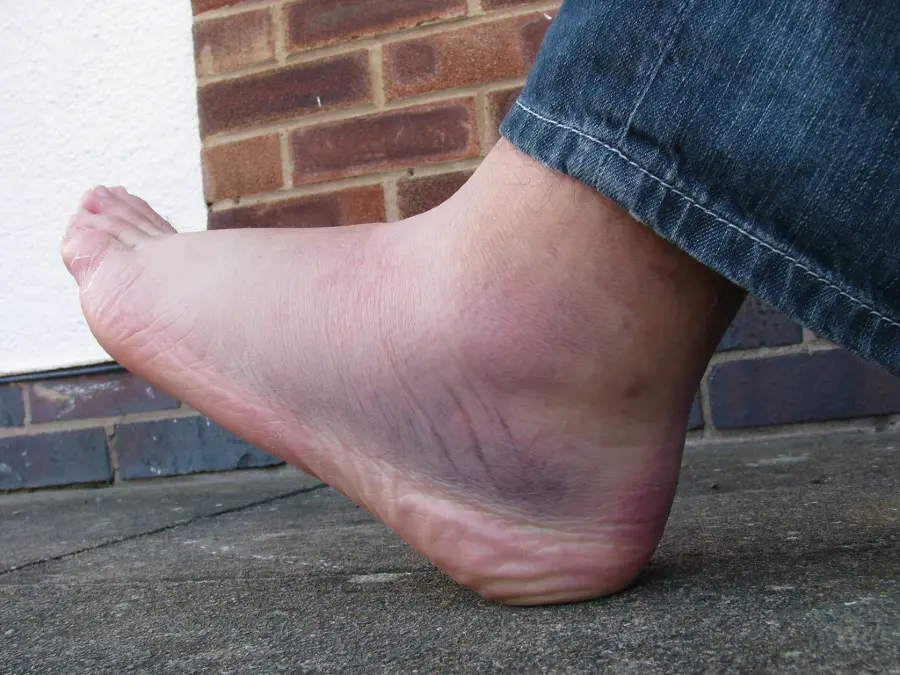
The ankle is often swollen, and bruising (ecchymosis) may develop, particularly with moderate or severe sprains. Bruising is usually most noticeable around the area of the injured ligaments, commonly on the outside of the ankle.
During the physical examination, the doctor will palpate the ankle and surrounding structures to identify areas of tenderness and determine which tissues may be injured. The stability of the ankle is also assessed using specific clinical tests.
One of the most commonly used tests is the anterior drawer test, which assesses the integrity of the anterior talofibular ligament (ATFL). Excessive forward movement of the foot relative to the tibia may indicate partial or complete injury to the lateral ankle ligaments. Other tests may be used depending on the suspected location and severity of the injury.
Imaging Tests for an Ankle Sprain
In most cases, a clinical examination is sufficient to diagnose an ankle sprain and estimate its severity. However, imaging tests may be recommended when a fracture or high ankle sprain is suspected, or when symptoms persist despite appropriate treatment.
X-rays are primarily used to visualize the bones and rule out an ankle or foot fracture. They may also be performed when specific clinical findings suggest that a fracture is possible. In selected cases, weight-bearing or stress radiographs may help assess ankle stability, particularly when a syndesmotic injury or significant ligament instability is suspected.
Magnetic resonance imaging (MRI) is not routinely required for an uncomplicated ankle sprain. However, MRI can provide detailed information about the ankle ligaments, cartilage, tendons, and other soft tissues. It may be useful when a high ankle sprain or another associated injury is suspected, or when pain and other symptoms persist despite appropriate treatment.
Ultrasound is a quick and accessible imaging method that can provide dynamic assessment of the ankle ligaments. It can be particularly useful for evaluating injuries of the anterior talofibular ligament (ATFL) and calcaneofibular ligament (CFL), as well as certain tendon injuries and soft-tissue abnormalities around the ankle.
Accurate diagnosis is essential for determining the appropriate treatment, estimating recovery time, and preventing recurrent injuries. An unrecognized or inadequately treated ankle sprain may lead to chronic instability, cartilage damage, and persistent pain.
Sprained Ankle Treatment: How to Treat a Sprained Ankle
Most ankle sprains can be successfully treated without surgery. Even a complete ligament tear (Grade 3 sprain) can often heal with conservative treatment when the ankle is appropriately protected and followed by progressive rehabilitation.
The main goals of ankle sprain treatment are to control pain and swelling, protect the injured ligaments, restore normal ankle movement and strength, improve balance and stability, and allow a safe return to everyday activities and sports.
Treatment depends on the severity of the sprain and any associated injuries. It can generally be divided into an acute phase and a rehabilitation phase.
Acute Treatment: The First Few Days
During the first days after an ankle sprain, pain, swelling, and sometimes bruising are common. These symptoms are part of the body’s response to tissue injury.
The initial goal is to protect the ankle, reduce pain and swelling, and maintain as much comfortable movement as possible. Complete rest is usually unnecessary. Instead, activities that significantly increase pain should be temporarily reduced while gentle movement and progressive weight bearing are introduced as tolerated.
The following measures can help during the early stage of a sprained ankle:
- Relative rest: Reduce activities that significantly increase pain, such as prolonged walking, running, jumping, or standing. However, prolonged complete immobilization should generally be avoided.
- Ice: Cold therapy can provide short-term pain relief and may help reduce discomfort during the first few days. Apply a cold pack wrapped in a cloth for approximately 10–20 minutes at a time. Never place ice directly on the skin.
- Compression: An elastic bandage or ankle brace can provide support and may help control swelling. It should not be tight enough to cause numbness, tingling, discoloration, or increased pain.
- Elevation: Keeping the injured leg elevated, particularly during the first 24–72 hours, can help reduce swelling.
- Early weight bearing: Walking is generally encouraged as tolerated. If putting weight on the ankle is painful, crutches can temporarily reduce the load while allowing gradual progression toward normal walking.
- Pain medication: Over-the-counter pain relievers can be used when appropriate. Nonsteroidal anti-inflammatory drugs (NSAIDs), such as ibuprofen or naproxen, may help reduce pain and inflammation. Acetaminophen (paracetamol) is another option for pain relief when NSAIDs are not appropriate.
Should You Completely Rest After an Ankle Sprain?
Complete immobilization and prolonged rest are usually not recommended for an uncomplicated ankle sprain. Once a fracture or another injury requiring strict immobilization has been excluded, gentle ankle movement and progressive weight bearing can usually begin early, within the limits of pain.
Simple range-of-motion exercises can help prevent stiffness and restore normal ankle movement. Examples include:
- Slowly point the foot downward and then pull it upward within a comfortable range of motion.
- Move the ankle gently from side to side.
- Make slow circles with the foot in both directions.
These exercises should be comfortable or cause only mild discomfort. They can be performed several times throughout the day, gradually increasing the range of motion as symptoms improve.
Ankle Braces and Immobilization
An ankle brace can provide additional support during walking and physical activity, particularly in moderate ankle sprains. Functional braces that limit excessive ankle movement while allowing some mobility are often preferred over prolonged rigid immobilization.
For a more severe Grade 3 sprain, a short period of immobilization may sometimes be recommended. A walking boot or similar immobilization device may be used for a limited period to protect the injured ligaments and allow pain and swelling to settle. The ankle should then transition to progressive movement and rehabilitation rather than remaining immobilized for an extended period.
Ankle Sprain Rehabilitation and Exercises
Rehabilitation is an important part of sprained ankle treatment, particularly after moderate and severe injuries. The goal is not only to relieve pain but also to restore the ankle’s range of motion, strength, balance, proprioception, and functional stability.
A progressive rehabilitation program usually includes several stages.
Range-of-Motion Exercises
Gentle ankle movements are introduced early to prevent stiffness and restore normal mobility. Exercises may include ankle pumps, controlled circles, and movements of the foot in different directions.
Strengthening Exercises
As pain and swelling decrease, strengthening exercises are gradually introduced. They target the muscles of the lower leg and foot that help stabilize the ankle.
Examples include:
- resisted ankle movements using an elastic resistance band
- heel raises
- controlled squats and step-ups
- progressive exercises performed with body weight or additional resistance
Exercises should be progressed gradually according to pain, strength, and functional ability.
Balance and Proprioception Exercises
Ankle sprains can impair balance and proprioception, increasing the risk of recurrent injury. Balance training is therefore an important part of rehabilitation.
Exercises may begin with standing on the injured leg and can gradually progress to more challenging tasks, such as balancing with the eyes closed, standing on an unstable surface, or performing controlled movements while maintaining balance.
Agility and Return-to-Sport Exercises
Athletes should gradually progress from basic strengthening to more demanding functional activities. Depending on the sport, this may include jogging, hopping, jumping, changes of direction, figure-of-eight running, and sport-specific drills.
The intensity should be increased progressively, with the goal of restoring strength, coordination, balance, and confidence before returning to unrestricted sports participation.
When Is Surgery Needed for an Ankle Sprain?
Surgery is rarely necessary for an isolated ankle sprain. Most ligament injuries, including many complete tears, can be successfully managed with appropriate protection and rehabilitation.
Surgical treatment may be considered when there is:
- persistent ankle instability despite adequate conservative treatment and rehabilitation
- a significant associated fracture
- certain severe syndesmotic (high ankle) injuries
- an osteochondral injury or other significant damage inside the ankle joint
- another associated injury that requires surgical treatment
The decision to operate depends on the type and severity of the injury, associated damage, the patient’s symptoms and functional demands, and the response to conservative treatment.
How Long Does a Sprained Ankle Take to Heal?
Recovery time depends on the severity of the sprain, the injured structures, and the individual’s response to rehabilitation.
Mild Grade 1 sprains may improve substantially within 1–2 weeks, although some symptoms can persist longer. Grade 2 sprains commonly require several weeks, while more severe Grade 3 injuries may take 6–12 weeks or longer before full recovery.
Importantly, being able to walk without significant pain does not necessarily mean that the ankle has completely recovered. Strength, balance, and proprioception may remain impaired after the pain and swelling have improved.
A gradual return to normal activities and sport is therefore preferable to returning based solely on the absence of pain.
Proper rehabilitation is one of the most important parts of ankle sprain treatment. Even when pain improves quickly, completing a progressive program of strengthening and balance exercises can help restore ankle stability and reduce the risk of recurrent sprains and chronic ankle instability.
Complications of a Sprained Ankle
Most people recover fully after an ankle sprain, especially when the injury is appropriately treated and followed by rehabilitation. However, some patients may develop persistent symptoms or long-term complications, particularly after severe or recurrent ankle sprains.
The most common complications include:
- Chronic ankle instability: A previous ankle sprain, particularly one involving significant ligament damage, increases the risk of recurrent sprains. If the ligaments do not heal adequately or balance, proprioception, and muscle control remain impaired, the ankle may repeatedly give way during walking or physical activity. Recurrent sprains can further damage the joint and contribute to long-term instability.
- Persistent pain and swelling: Pain or swelling that continues beyond the expected recovery period may indicate an unrecognized associated injury. Possible causes include tendon injuries, cartilage or osteochondral lesions, persistent ligament injury, or a syndesmotic injury.
- Post-traumatic osteoarthritis: Repeated ankle injuries and chronic instability may increase the long-term risk of developing osteoarthritis. The risk is higher when there has been significant joint damage or recurrent trauma.
The risk of complications depends on several factors, including the severity and location of the original injury, previous ankle sprains, the presence of associated injuries, and the quality of rehabilitation. High ankle sprains (syndesmotic injuries) often require a longer recovery period than uncomplicated lateral ankle sprains.
Previous ankle sprains are one of the strongest risk factors for future injury. A structured rehabilitation program that includes strengthening, balance, proprioception, and progressive functional exercises can help restore ankle stability and reduce the risk of recurrent sprains and chronic instability.
In patients who continue to experience significant pain, swelling, or instability despite appropriate conservative treatment, further evaluation may be necessary to identify an associated injury or determine whether additional treatment is required. In a small number of patients with persistent mechanical instability despite adequate rehabilitation, surgical stabilization may be considered.
When to See a Doctor for a Sprained Ankle
Most mild ankle sprains can be managed at home with appropriate protection, pain control, and gradual return to activity. However, medical evaluation is recommended when symptoms are severe, do not improve as expected, or there is a possibility of a fracture or more significant injury.
You should see a doctor if:
- You cannot bear weight on the injured leg or are unable to walk more than a few steps because of pain.
- Pain is severe or continues to worsen despite rest and initial treatment.
- There is significant swelling or extensive bruising, particularly if it develops rapidly after the injury.
- The ankle appears deformed or out of alignment.
- You have marked tenderness directly over the ankle bones or other areas where a fracture may be present.
- You experience persistent pain, swelling, or instability that does not improve over the expected recovery period.
- The ankle repeatedly gives way during walking or physical activity.
- You develop symptoms suggesting a more complex injury, such as significant pain higher above the ankle or difficulty pushing off with the foot.
Seek urgent medical attention if the ankle is visibly deformed, the foot becomes cold or numb, or there is severe pain associated with loss of circulation or sensation.
A medical evaluation may be particularly important after a high-energy injury, contact sports injury, or suspected high ankle sprain, as these injuries can involve fractures or more extensive ligament damage and may require additional imaging.
Key Clinical Points – Sprained Ankle
- Sprained ankle is one of the most common musculoskeletal injuries and usually results from an inversion injury affecting the lateral ankle ligaments.
- Common symptoms include pain, swelling, bruising, tenderness, limited range of motion, difficulty bearing weight, and, in more severe injuries, ankle instability.
- Ankle sprains are classified into Grade 1, Grade 2, and Grade 3 according to the extent of ligament damage, ranging from mild stretching to a complete ligament tear.
- Most ankle sprains can be treated without surgery using appropriate protection, pain control, early progressive weight bearing, and a structured rehabilitation program.
- Rehabilitation is essential for restoring ankle range of motion, strength, balance, and proprioception and for reducing the risk of recurrent sprains and chronic ankle instability.
- Recovery time varies with injury severity: mild sprains may improve within 1–2 weeks, while more severe injuries can require 6–12 weeks or longer.
- Medical evaluation is recommended when there is severe pain, inability to bear weight, significant swelling, suspected fracture, persistent symptoms, or recurrent ankle instability.
Frequently Asked Questions About Sprained Ankle
How to treat a sprained ankle at home?
Most mild ankle sprains can initially be treated at home with relative rest, ice for pain relief, compression, elevation, and gradual weight bearing as tolerated. Gentle range-of-motion exercises can usually begin early, followed by progressive strengthening and balance exercises as symptoms improve. More severe injuries may require medical assessment, an ankle brace, or a short period of immobilization.
What to do for a sprained ankle immediately after the injury?
After an ankle sprain, protect the ankle and avoid activities that significantly increase pain. Use ice for short-term pain relief, apply comfortable compression, and elevate the leg to help control swelling. Walking is generally encouraged as tolerated once a fracture has been excluded, although crutches may be useful temporarily if weight bearing is painful.
How long is the sprained ankle recovery time?
Sprained ankle recovery time depends on the severity of the injury. A mild Grade 1 sprain may improve substantially within 1–2 weeks, while Grade 2 injuries often require several weeks. Severe Grade 3 sprains may take 6–12 weeks or longer to fully recover. Even after pain subsides, strength, balance, and ankle stability may take longer to return to normal.
What is a lateral ankle sprain?
A lateral ankle sprain is the most common type of ankle sprain. It occurs when the foot rolls inward, placing excessive stress on the ligaments on the outside of the ankle. The anterior talofibular ligament (ATFL) is most frequently injured, followed by the calcaneofibular ligament (CFL).
Can you walk on a sprained ankle?
Yes, in most uncomplicated ankle sprains, weight bearing as tolerated is encouraged rather than prolonged complete rest. However, walking may be difficult or painful during the first few days. Crutches or an ankle brace can temporarily reduce the load while allowing gradual progression toward normal walking. Inability to bear weight may indicate a more severe injury or possible fracture and warrants medical evaluation.
Can a sprained ankle heal on its own?
Yes. Most ankle sprains heal without surgery, including many complete ligament tears. Appropriate protection followed by progressive weight bearing, mobility exercises, strengthening, and balance training usually allows the ligaments and surrounding tissues to recover. Persistent pain, swelling, or instability should be evaluated by a healthcare professional.
Ruiz-Sánchez FJ, Ruiz-Muñoz M, Martín-Martín J, et al. Management and treatment of ankle sprain according to clinical practice guidelines: A PRISMA systematic review. Medicine (Baltimore). 2022;101(42):e31087. Systematic review: Ankle sprain treatment recommendations and clinical practice guidelines
Vuurberg G, Hoorntje A, Wink LM, et al. Diagnosis, treatment and prevention of ankle sprains: Update of an evidence-based clinical guideline. Br J Sports Med. 2018;52(15):956. Evidence-based guideline: Diagnosis, treatment and prevention of ankle sprains
Bergman R, Shuman VL. Acute Ankle Sprain. StatPearls. Updated 2025 Aug 2. Clinical review: Acute ankle sprain diagnosis and management
InformedHealth.org. Overview: Ankle sprains. Institute for Quality and Efficiency in Health Care (IQWiG). Updated 2022 Jun 24. Patient information: Ankle sprain symptoms, treatment and recovery
King’s College Hospital NHS Foundation Trust. Ankle Sprain Patient Leaflet. 2023. NHS patient guide: Ankle sprain treatment, rehabilitation and recovery