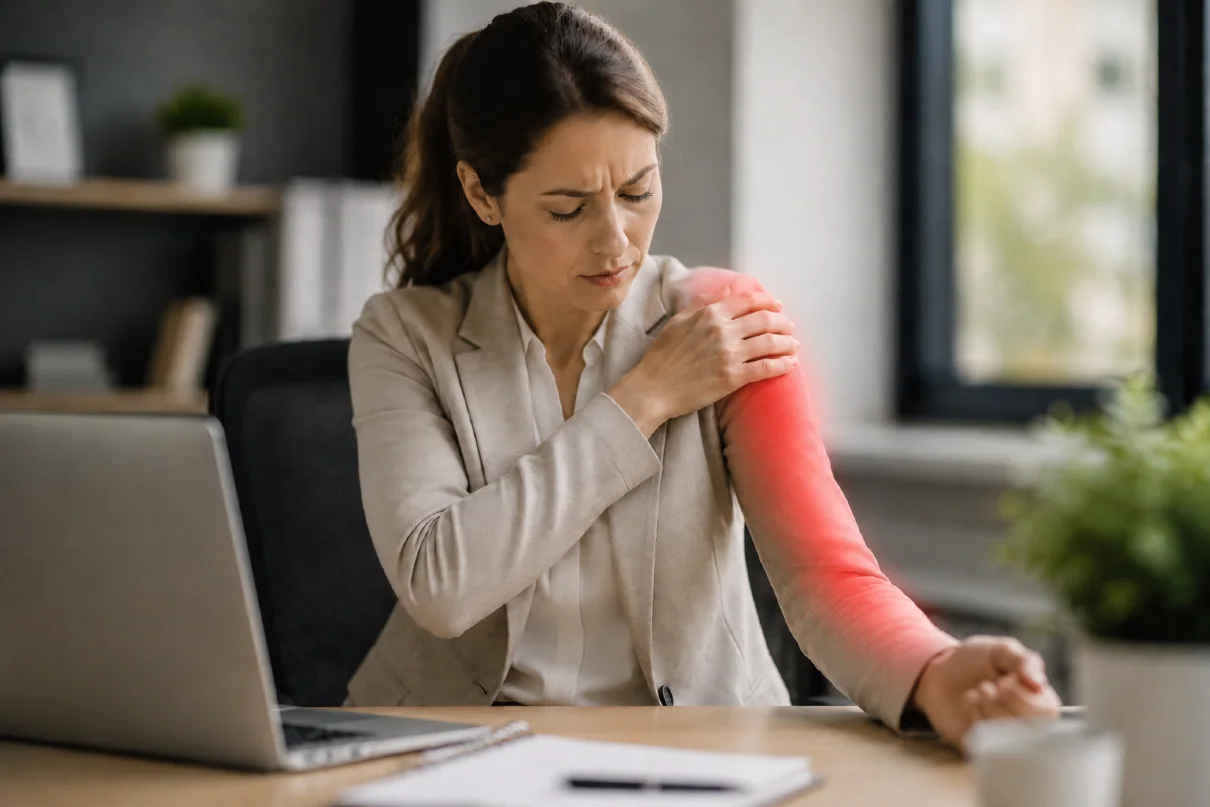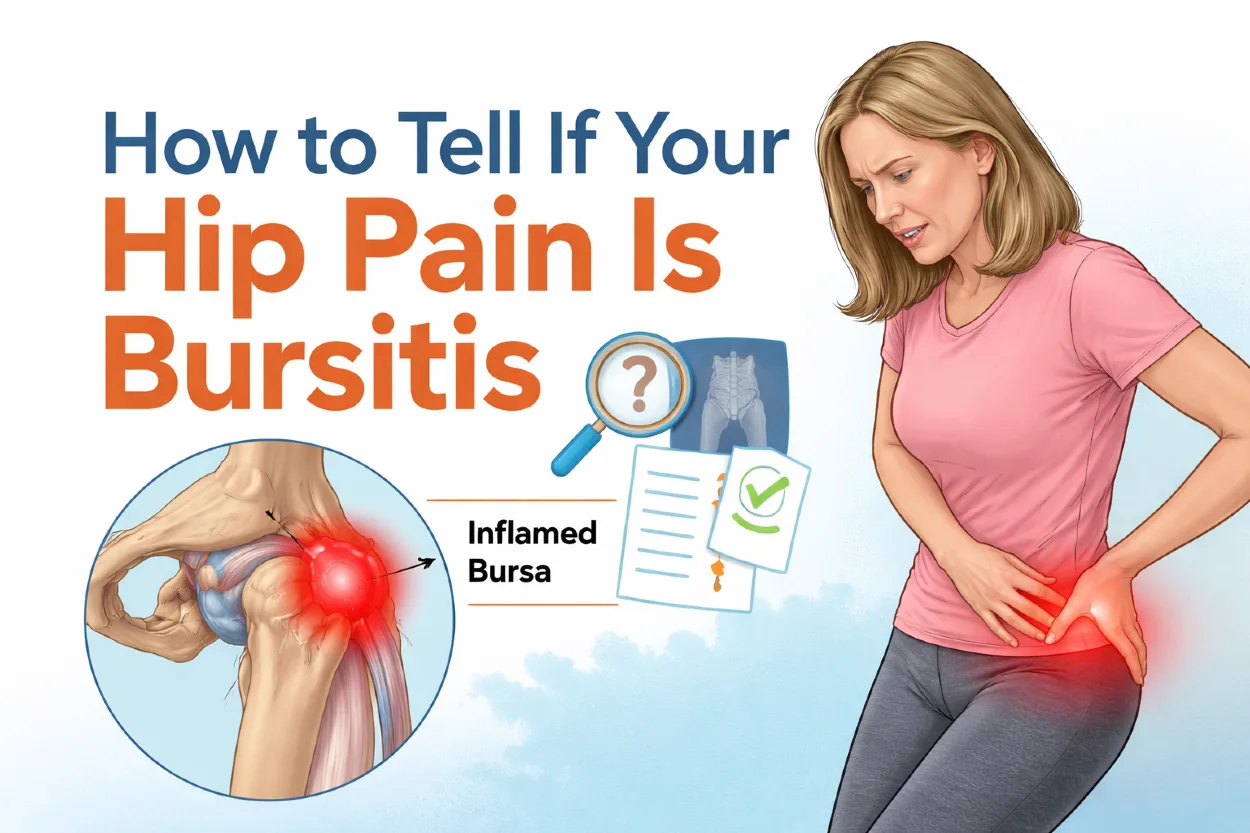
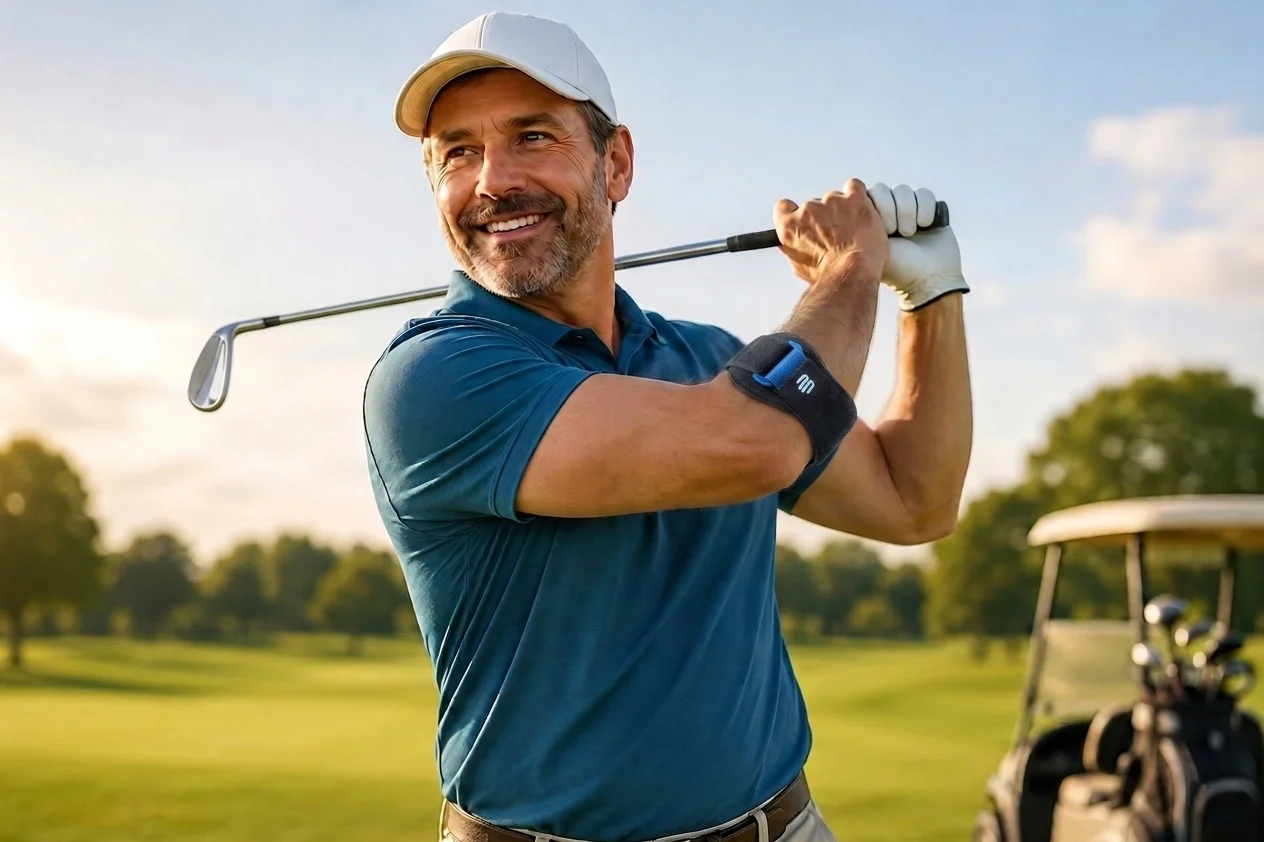
Golfer’s elbow, also known as medial epicondylitis or medial elbow tendinopathy, causes pain on the inner side of the elbow and is usually related to overloading of the common flexor tendon. Despite its name, it is not limited to golfers and can affect anyone who repeatedly uses the muscles that flex the wrist and fingers.
A golfer’s elbow brace may help reduce stress on the affected tendon and relieve pain during activities that aggravate symptoms. However, different types of braces work in different ways, and choosing the right type depends on whether the goal is to reduce load around the elbow or limit movements of the wrist that place tension on the forearm flexor tendons.
In this guide, we look at two different approaches: an elbow support, which is worn around the forearm near the affected tendon, and a wrist orthosis, which limits wrist movement and can provide greater rest for the flexor tendons. We will explain how each approach works, when it may be useful, and what to consider when choosing a brace for golfer’s elbow.
Key Clinical Points – Golfer’s Elbow Brace
- A golfer’s elbow brace may help reduce pain and discomfort by modifying mechanical stress on the common flexor tendon during aggravating activities.
- An elbow support such as Bauerfeind EpiPoint provides targeted support around the forearm while allowing the elbow and wrist to remain relatively mobile.
- A wrist orthosis such as Bauerfeind ManuLoc limits wrist movement and may be useful when repeated wrist activity contributes to irritation of the forearm flexor tendons.
- Brace selection depends on the individual’s symptoms and goals: elbow supports are generally better suited for activity, while wrist orthoses may be useful when reducing wrist movement is a priority.
- A brace is primarily a symptom-management tool and should complement activity modification and progressive tendon rehabilitation rather than replace them.
- Brace use is generally most useful during activities that aggravate symptoms and can be gradually reduced as pain improves and the tendon becomes better able to tolerate normal loading.
Can a Brace Help Golfer’s Elbow?
A brace can help some people with golfer’s elbow by reducing mechanical stress on the common flexor tendon and decreasing pain during activities that aggravate symptoms. An elbow support can apply targeted pressure to the forearm and alter the forces transmitted through the tendon during wrist and hand movements.
A brace is generally most useful when worn during activities that provoke symptoms, such as repetitive gripping, lifting, manual work, or sports. The goal is to make these activities more tolerable while reducing irritation of the affected tendon.
However, a brace should not be considered a standalone treatment. Activity modification and progressive rehabilitation exercises remain important parts of managing medial elbow tendinopathy. A brace can be used as an additional tool to help control symptoms while the tendon is gradually exposed to increasing loads.
What Type of Brace Is Best for Golfer’s Elbow?
Not all braces work in the same way. For golfer’s elbow, two approaches can be considered: an elbow support worn around the forearm or a wrist orthosis that restricts wrist movement. The better option depends on the severity of symptoms, the activities that trigger pain, and whether the main goal is symptom control during activity or greater rest for the affected tendons.
Elbow Strap or Elbow Support
An elbow strap or support is worn around the forearm, usually just below the medial epicondyle, near the area where the common flexor tendon originates. By applying pressure to the forearm and altering the distribution of forces during muscle contraction, it may reduce stress on the painful tendon area and make gripping and other activities more comfortable.
This type of brace is generally more practical for use during daily activities, work, or sports, when complete restriction of movement is not desirable.
The Bauerfeind EpiPoint is an example of an elbow support designed to provide targeted support around the elbow and forearm. It can be considered when the main goal is to reduce discomfort while remaining active.
Wrist Orthosis
A wrist orthosis uses a different approach. Instead of applying pressure around the elbow, it limits wrist movement, particularly movements that require repeated or forceful activation of the forearm flexor muscles.
Reducing wrist movement can decrease repeated loading of the flexor tendons and may provide greater rest when symptoms are more easily aggravated by hand and wrist activity. A wrist orthosis may therefore be useful when reducing tendon activity is a priority rather than simply providing support during movement.
The Bauerfeind ManuLoc is a wrist orthosis that stabilizes the wrist while allowing the fingers to move freely. Although it is not specifically an elbow brace, restricting wrist movement can be a useful strategy for reducing the mechanical demands placed on the forearm flexor tendons in some people with golfer’s elbow.
Bauerfeind EpiPoint for Golfer’s Elbow
What Is EpiPoint?
Bauerfeind EpiPoint is an elbow support designed to provide targeted support around the forearm near the elbow. It is intended for use during movement and does not immobilize the elbow or wrist.
For people with golfer’s elbow, this type of support may be useful when pain is aggravated by activities involving repetitive gripping, lifting, or forearm muscle activation.
How Does EpiPoint Work?
EpiPoint uses a targeted strap system that applies localized pressure around the forearm. This can influence the distribution of forces generated by the forearm muscles and may help reduce discomfort during movement.
Unlike a rigid orthosis, it allows the elbow and wrist to remain largely mobile, making it more suitable for situations where you want to continue daily activities or sports while managing symptoms.
When May EpiPoint Be Useful?
EpiPoint may be considered when golfer’s elbow symptoms are mainly triggered by activity and you need support while using the arm.
It may be particularly practical during work, sports, repetitive gripping, lifting, or other activities that reproduce medial elbow pain.
The support should be used as part of a broader management strategy rather than as a replacement for activity modification and progressive rehabilitation.
Who May Benefit From EpiPoint?
EpiPoint may be suitable for people with activity-related elbow pain associated with overuse of the forearm muscles and tendons, including some people with medial elbow tendinopathy.
It may be a better fit when you want a lightweight, low-profile support that does not substantially restrict movement.
If symptoms are easily aggravated by wrist movement and greater restriction is needed to reduce tendon loading, a wrist orthosis may be a more appropriate approach.
How to Wear EpiPoint
EpiPoint is positioned around the forearm below the elbow, with the functional strap placed over the appropriate muscle area. It should provide firm, targeted pressure without being excessively tight.
Correct positioning is important for the support to function as intended, so follow the manufacturer’s fitting and wearing instructions.
Interested in EpiPoint?
Check the current Bauerfeind product information, sizing options, and availability before choosing the appropriate size and configuration.
[Check Bauerfeind EpiPoint →]
Bauerfeind ManuLoc for Golfer’s Elbow
The Bauerfeind ManuLoc is a wrist orthosis designed to stabilize and limit movement of the wrist while allowing the fingers to move freely. It is not specifically designed as a golfer’s elbow brace, but its effect on wrist movement may be relevant in some people with medial elbow tendinopathy.
Why Can Wrist Immobilization Help Golfer’s Elbow?
The common flexor tendon connects muscles that cross the wrist and attach near the medial epicondyle. Repeated wrist flexion and gripping can therefore place mechanical demands on these muscles and their tendon attachment.
By limiting wrist movement, a wrist orthosis can reduce repeated activation and excursion of the forearm flexor muscles. This may provide greater relative rest for the affected tendon when wrist movement is an important trigger of symptoms.
When May ManuLoc Be More Appropriate Than an Elbow Strap?
An elbow support such as EpiPoint is designed to provide support around the forearm while allowing the wrist and elbow to remain mobile. This can be useful when symptoms need to be controlled during activity.
A wrist orthosis may make more sense when symptoms are strongly aggravated by wrist movement, repetitive gripping, or hand use, and when temporarily reducing these movements is a priority.
However, greater immobilization is not necessarily better. Prolonged restriction of movement is generally not the goal of tendon rehabilitation, so a wrist orthosis should be used selectively and according to the individual’s symptoms and treatment plan.
When Could ManuLoc Be Used?
Depending on the reason for using the orthosis, it may be worn during periods when wrist movement needs to be reduced, such as rest or activities that repeatedly aggravate symptoms. In some situations, a wrist orthosis may also be recommended for nighttime use, but this depends on the individual’s symptoms and clinical indication.
Always follow the manufacturer’s instructions and the advice of a healthcare professional regarding duration and frequency of use.
Important: ManuLoc Is a Wrist Orthosis
ManuLoc should not be considered a conventional golfer’s elbow brace. Its primary purpose is to stabilize the wrist.
Its potential role in golfer’s elbow comes from reducing wrist movement and, consequently, the repeated mechanical demands placed on the forearm flexor muscles. For this reason, it may be considered in selected cases, but it is not a replacement for appropriate diagnosis, activity modification, and progressive rehabilitation.
EpiPoint vs ManuLoc: Which Is Better for Golfer’s Elbow?
EpiPoint and ManuLoc take different approaches to supporting the arm. EpiPoint provides targeted support around the forearm near the elbow while allowing the wrist to remain mobile, whereas ManuLoc stabilizes the wrist and limits movements that can repeatedly activate the forearm flexor muscles.
For this reason, neither is universally better for golfer’s elbow. The more appropriate option depends on which activities trigger your symptoms and whether you need support while staying active or greater restriction of wrist movement.
| Feature | EpiPoint | ManuLoc |
|---|---|---|
| Type | Elbow support | Wrist orthosis |
| Main effect | Provides targeted support around the forearm | Limits wrist movement |
| Best suited for | Activity and symptom control | Reducing wrist movement and tendon activity |
| Directly supports elbow | Yes | No |
| Wrist movement restricted | No or minimally | Yes |
| Best use | Daily activities, work, or sports | When reducing wrist-related tendon loading is a priority |
Which one is better?
There is no universally better option. EpiPoint is more suitable when you want targeted forearm support while remaining active, whereas ManuLoc may be more appropriate when limiting wrist movement is important for reducing irritation of the forearm flexor tendons.
How to Wear a Golfer’s Elbow Brace
Correct positioning is important for a golfer’s elbow brace to provide the intended support. The exact position depends on the type of brace, so always follow the manufacturer’s fitting and wearing instructions.
An elbow support such as EpiPoint is generally positioned around the forearm below the elbow, while a wrist orthosis such as ManuLoc is fitted around the wrist to limit movement.
The brace should feel secure but not excessively tight. Excessive pressure can cause discomfort, skin irritation, numbness, tingling, or changes in circulation. If these symptoms occur, loosen or remove the brace and check its positioning.
Use the brace primarily during activities or periods when it is intended to provide support, rather than assuming that wearing it continuously is necessary. As symptoms improve, gradually return to normal activities and progressive tendon loading instead of relying on the brace indefinitely.
When Should You Wear a Brace for Golfer’s Elbow?
A golfer’s elbow brace is generally most useful during activities that reproduce or increase your symptoms, rather than necessarily wearing it all day. This may include repetitive gripping, lifting, manual work, or sports.
You may also use a brace during periods when symptoms flare up, particularly when reducing mechanical stress helps you remain comfortable while continuing appropriate activity.
For a wrist orthosis such as ManuLoc, nighttime use may sometimes be considered when wrist movement during sleep contributes to symptoms, but this should depend on the individual situation and the manufacturer’s instructions.
As symptoms improve, the goal should be to gradually return to normal activity and progressive tendon loading, rather than becoming dependent on the brace for everyday movement.
How Long Should You Wear a Golfer’s Elbow Brace?
There is no single duration that is appropriate for everyone with golfer’s elbow. However, a period of around 6 weeks is commonly used as a practical timeframe for counterforce bracing, particularly when the brace is worn to reduce symptoms during activities that aggravate the tendon. This should be viewed as a general guide rather than a strict treatment rule.
You usually do not need to wear the brace all day. The main purpose is to reduce symptoms and make necessary activities more comfortable while the tendon is recovering. For example, you may wear an elbow support during work, sports, lifting, or repetitive gripping if these activities increase your pain.
As symptoms improve, brace use can gradually be reduced. Progressive tendon rehabilitation remains important, because the long-term goal is to restore the tendon’s ability to tolerate normal and eventually higher loads rather than relying on external support indefinitely.
If the brace does not improve your symptoms after several weeks, or if pain continues to worsen despite modifying activities, it is worth reassessing the diagnosis and treatment approach.
Brace vs Exercises for Golfer’s Elbow
A brace and exercise serve different purposes in the treatment of golfer’s elbow. A brace is primarily a symptom-management tool that can reduce discomfort during activities and temporarily modify the mechanical load on the affected area.
In contrast, progressive strengthening and tendon rehabilitation aim to gradually restore the ability of the forearm muscles and tendon to tolerate everyday and higher-level activities. This makes rehabilitation an important part of long-term recovery.
A brace can therefore be useful alongside rehabilitation, particularly during activities that aggravate symptoms, but it should not replace progressive exercise and appropriate activity modification.
When Should You See a Doctor?
Most cases of golfer’s elbow can initially be managed conservatively, but medical assessment is advisable if:
- pain is severe or progressively worsening
- you notice significant weakness in the hand or forearm
- you develop numbness or tingling
- symptoms began after a significant injury or trauma
- pain persists despite activity modification and appropriate treatment
- symptoms interfere substantially with everyday activities
An evaluation can help confirm that the pain is actually coming from the common flexor tendon and rule out other causes of medial elbow pain.
Frequently Asked Questions
What is the best brace for golfer’s elbow?
There is no single brace that is best for everyone. An elbow support may be preferable when you need support while remaining active, whereas a wrist orthosis may be useful when wrist movement is an important trigger of symptoms.
Does a golfer’s elbow brace work?
A brace may help reduce pain and make aggravating activities more comfortable for some people. It is generally best viewed as an adjunct to activity modification and rehabilitation, rather than a treatment that addresses the underlying tendon problem on its own.
Should I wear a brace for golfer’s elbow?
A brace can be useful during activities that increase your symptoms, such as repetitive gripping, lifting, work, or sports. It does not usually need to be worn continuously.
Can I sleep with a golfer’s elbow brace?
Nighttime use depends on the type of brace and your individual symptoms. A wrist orthosis may sometimes be used at night when wrist movement contributes to symptoms, but routine overnight use of an elbow support is not necessary for everyone.
Is an elbow strap or wrist brace better for golfer’s elbow?
Neither is universally better. An elbow strap or support allows greater wrist movement and may be more practical during activity, while a wrist orthosis restricts wrist movement and may be useful when reducing flexor tendon activity is a priority.
How long should I wear a golfer’s elbow brace?
A brace is commonly used for several weeks, often around 4–6 weeks, particularly during activities that aggravate symptoms. There is no universally required duration, and brace use can be gradually reduced as symptoms improve and rehabilitation progresses.
Can a brace heal golfer’s elbow?
A brace can help control symptoms and reduce irritation during activity, but it should not be considered a treatment that heals the tendon by itself. Progressive tendon rehabilitation and appropriate load management are important for recovery.
Can I play golf with a golfer’s elbow brace?
You may be able to continue playing if your symptoms are mild and the brace makes activity more comfortable. However, a brace should not be used to push through significant pain. If golfing repeatedly aggravates your symptoms, temporarily reducing or modifying your activity may be more appropriate.
Kroslak M, Pirapakaran K, Murrell GAC. Counterforce bracing of lateral epicondylitis: a prospective, randomized, double-blinded, placebo-controlled clinical trial. J Shoulder Elbow Surg. 2019;28(2):288-295. doi:10.1016/j.jse.2018.10.002. Randomized clinical trial: Effects of counterforce bracing on lateral epicondylitis
Derebery VJ, Devenport JN, Giang GM, Fogarty WT. The effects of splinting on outcomes for epicondylitis. Arch Phys Med Rehabil. 2005;86(7):1371-1378. Clinical study: Effects of splinting on epicondylitis outcomes
Shiri R, Viikari-Juntura E. Lateral and medial epicondylitis: role of occupational factors. Best Pract Res Clin Rheumatol. 2011;25(1):43-57. Review: Occupational risk factors for lateral and medial epicondylitis
Rineer CA, Ruch DS. Elbow tendinopathy and medial epicondylitis: current concepts in diagnosis and treatment. J Hand Surg Am. 2015;40(9):1835-1840. Clinical review: Diagnosis and treatment of medial epicondylitis
Garg R, Adamson GJ, Dawson PA, Shankwiler JA, Pink MM. A prospective randomized study comparing a forearm strap brace versus a wrist splint for the treatment of lateral epicondylitis. J Shoulder Elbow Surg. 2010;19(4):508-512. Randomized study: Forearm strap brace versus wrist splint for epicondylitis
Borkholder CD, Hill VA, Fess EE. The efficacy of splinting for lateral epicondylitis: a systematic review. J Hand Ther. 2004;17(2):181-188. Systematic review: Effectiveness of splinting for lateral epicondylitis