The cuboid bone is one of the small but essential bones of the foot, playing a key role in stability and movement. Despite its size, it has a significant impact on how your foot functions during everyday activities like walking, standing, and running.
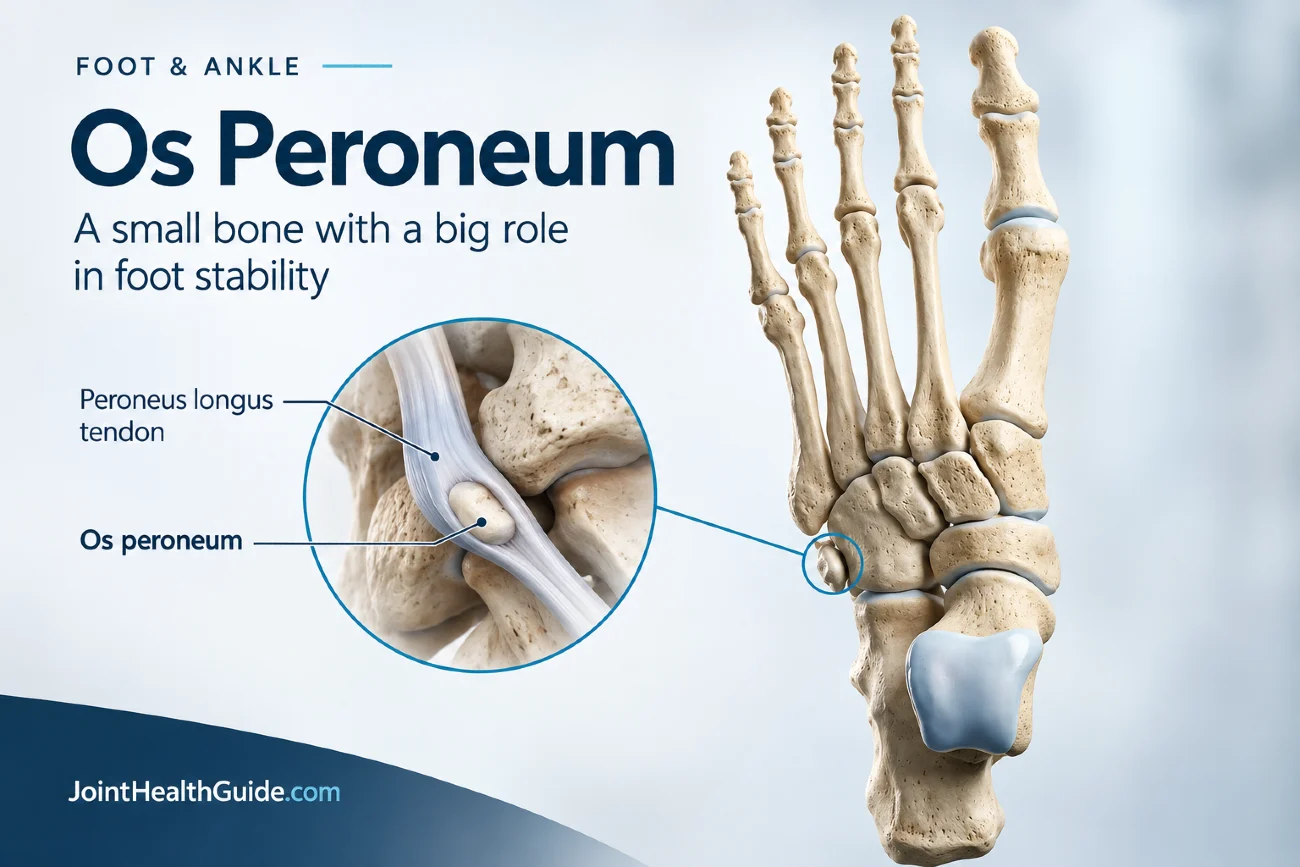
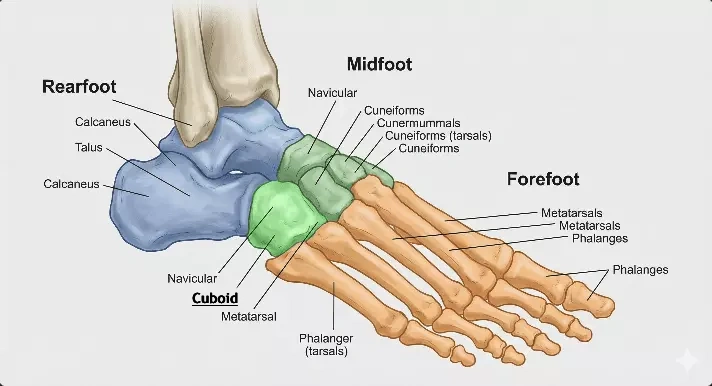
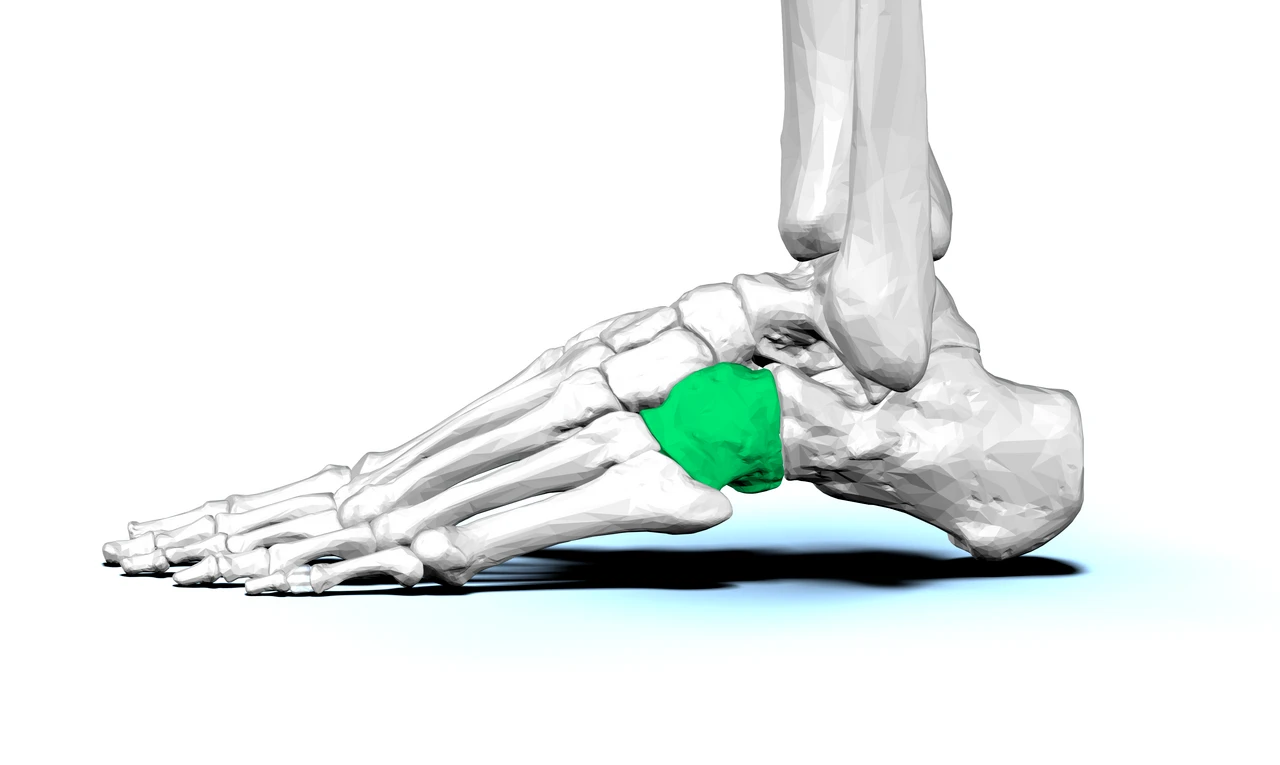
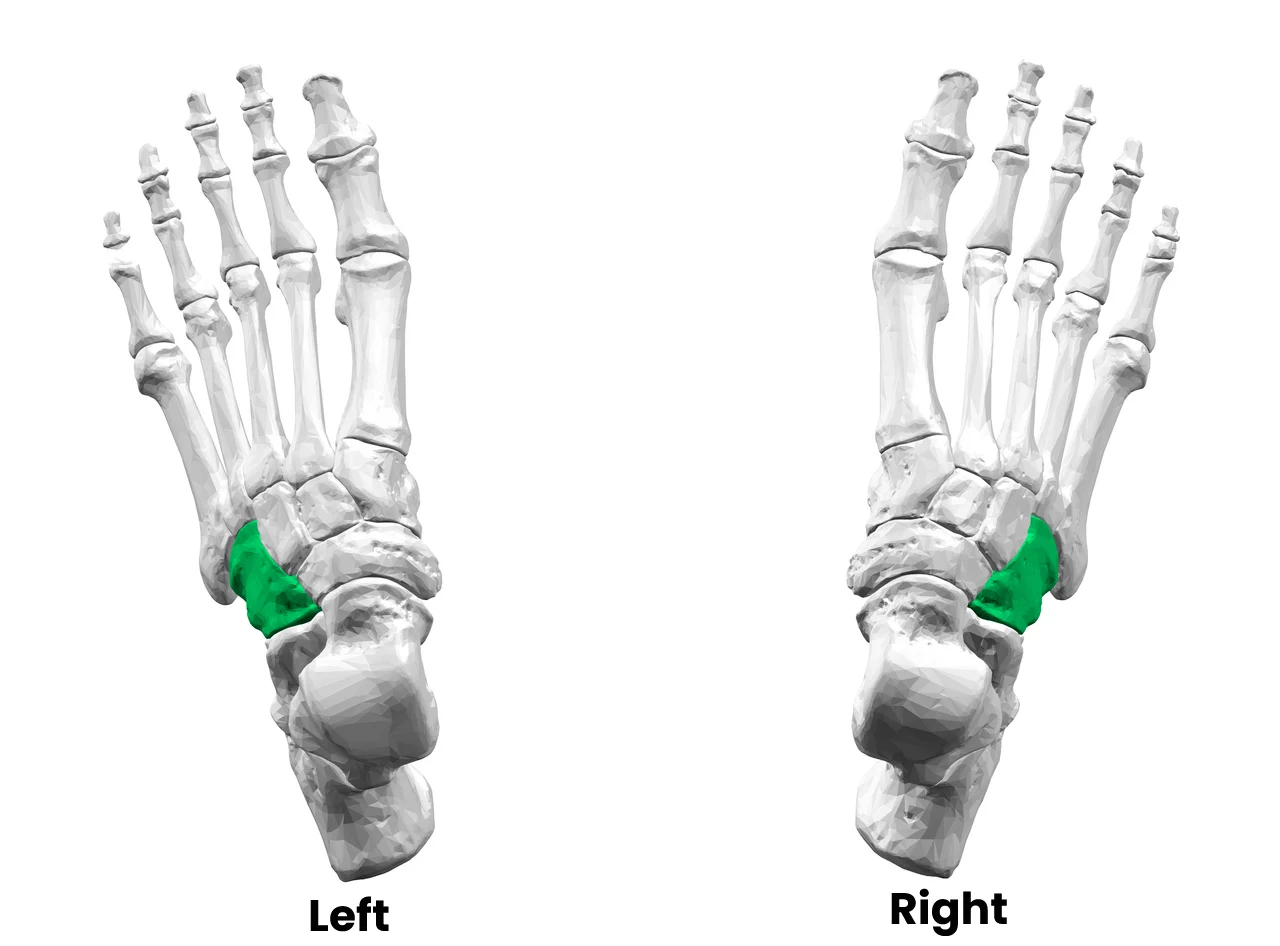
It is located on the outer (lateral) side of the foot, between the heel bone and the base of the fourth and fifth metatarsals. This position allows it to act as a stabilizer and support proper weight distribution across the foot.
If you feel pain on the outer (lateral) side of your foot, the cuboid bone might be involved. Understanding its role can help you better recognize potential issues and know when to take action.
Quick Summary – Cuboid Bone
- The cuboid bone is a small, cube-shaped bone located on the lateral (outer) side of the foot.
- It plays a key role in foot stability as part of the lateral column between the heel and the forefoot.
- The cuboid bone contributes to weight distribution and efficient force transfer during walking and running.
- It is important for smooth foot movement and push-off phase in gait mechanics.
- Common clinical issues include cuboid syndrome, overuse-related pain, and less commonly stress fractures.
- Symptoms typically involve outer foot pain, tenderness, and discomfort during weight-bearing activities.
Cuboid Bone Anatomy
Location
The cuboid bone is located on the lateral (outer) side of the foot. It sits between the calcaneus (heel bone) and the bases of the fourth and fifth metatarsal bones. This position makes it an important structural link between the rearfoot and the forefoot.
Structure
As its name suggests, the cuboid bone has a roughly cube-like shape. It features multiple articular surfaces that allow it to connect smoothly with surrounding bones. These joint surfaces are covered with cartilage, enabling efficient and low-friction movement.
Articulations
The cuboid forms several important joints. Most notably, it articulates with the calcaneus at the calcaneocuboid joint, which plays a key role in foot mobility and stability. It also connects with the fourth and fifth metatarsals, contributing to the function and flexibility of the lateral column of the foot.
Function of the Cuboid Bone
Stability of the Foot
The cuboid plays a key role in maintaining the stability of the foot, particularly within the lateral column. It helps support the outer arch and ensures proper alignment during weight-bearing activities such as standing and walking.
Weight Distribution
During movement, the cuboid bone assists in transferring forces across the foot. It helps distribute weight efficiently from the heel toward the forefoot, especially during walking and other weight-bearing activities, reducing excessive stress on surrounding structures.
Role in Movement
The cuboid bone is essential for smooth and coordinated foot motion, particularly during walking and running. It contributes to the push-off phase of gait, allowing the foot to generate forward momentum. Its position and function make it especially important for activities that involve repetitive loading, such as running and prolonged walking.
Why the Cuboid Bone Matters Clinically
Although the cuboid bone is relatively small, it plays a crucial role in foot mechanics, which is why problems in this area can quickly lead to noticeable pain and dysfunction. Because it sits on the outer side of the foot and helps transfer forces during walking and running, it is exposed to significant mechanical stress.
This bone often becomes a source of pain due to overuse, repetitive strain, or subtle joint dysfunction. Even minor disruptions in its alignment or movement can affect the entire lateral column of the foot, leading to discomfort during everyday activities like walking or standing.
Certain groups are more at risk of developing cuboid-related issues. These include athletes—especially runners—people who engage in repetitive weight-bearing activities, and individuals who spend long hours standing. In these cases, continuous loading of the foot increases the likelihood of irritation or injury in the cuboid region.
Common Cuboid Bone Conditions
The cuboid is frequently involved in lateral foot pain (outside foot pain), especially in active individuals. Because of its role in stability and load transfer, even small issues can lead to noticeable symptoms. Below are the most common conditions associated with the cuboid bone.
1. Cuboid Syndrome
Cuboid syndrome is one of the most common causes of pain related to this bone. It typically occurs when the cuboid bone becomes slightly misaligned or its movement is restricted, often due to overuse or repetitive stress.
Main symptoms include:
- Pain on the outer side of the foot
- Discomfort that worsens with walking or running
- Tenderness over the cuboid area
Common causes:
- Repetitive strain from sports or physical activity
- Sudden changes in training intensity
- Poor foot mechanics
For a more detailed explanation of cuboid syndrome and how it’s treated, explore the full article here.
2. Cuboid Bone Pain (General Causes)
Not all cuboid-related pain is due to a specific diagnosis. In many cases, discomfort develops gradually due to mechanical overload or external factors.
Common contributing factors include:
- Overuse from prolonged walking, running, or standing
- Biomechanical issues such as flat feet or abnormal gait
- Inadequate or unsupportive footwear
3. Stress Fracture
A stress fracture of the cuboid bone is less common but more serious. It usually develops from repetitive loading over time rather than a single injury.
When to suspect a stress fracture:
- Persistent, localized pain that does not improve with rest
- Pain that increases with weight-bearing activity
- Possible swelling in the affected area
Key difference from cuboid syndrome:
While cuboid syndrome is typically related to joint dysfunction, a stress fracture involves an actual break in the bone and often requires longer recovery and stricter activity modification.
4. Arthritis or Joint Dysfunction
Although less common, arthritis or joint irritation can affect the cuboid and its surrounding joints. This may lead to stiffness, reduced mobility, and chronic discomfort in the lateral foot.
These conditions are more likely to develop over time, particularly in individuals with previous injuries or long-term joint stress.
Symptoms to Watch For
Recognizing the right symptoms can help you identify whether the cuboid bone may be the source of your discomfort. Pain in this area is often subtle at first but can worsen over time, especially with continued activity.
Common symptoms associated with the cuboid bone include:
- Localized pain on the outer side of the foot
This is the most typical sign, often described as outer foot pain that becomes more noticeable during movement or weight-bearing activities. - Tenderness to touch
The area over the cuboid may feel sore or sensitive when pressed. - Pain during standing or walking
Discomfort often increases when putting weight on the foot, particularly during walking, running, or prolonged standing. - Swelling
Mild swelling may be present, especially in cases of irritation, overuse, or injury.
These symptoms can vary depending on the underlying cause, but if they persist or worsen, they may indicate a cuboid-related condition that requires further evaluation.
Diagnosis of Cuboid Bone Problems
Diagnosis of cuboid-related issues typically starts with a clinical examination. A healthcare professional will assess the location of pain, check for tenderness over the outer foot, and evaluate movement and weight-bearing.
If needed, imaging tests such as X-rays or MRI may be used to rule out more serious conditions like stress fractures or joint damage. In many cases, diagnosis is based on symptoms and physical findings.
Treatment of Cuboid Bone Problems
Treatment depends on the underlying cause but is usually conservative.
Common approaches include:
- Rest and activity modification
- Ice to reduce pain and inflammation
- Supportive footwear or orthotics
- Physical therapy to improve strength and mobility
In more persistent cases, manual therapy or further medical evaluation may be required. Early treatment usually leads to good recovery and prevents long-term issues.
When to See a Doctor
You should seek medical advice if symptoms do not improve with rest and basic home care. Persistent pain that lasts more than a few days or continues to return may indicate a more serious underlying issue.
It is also important to see a doctor if symptoms worsen over time, such as increasing pain, swelling, or difficulty bearing weight on the affected foot. Early evaluation can help prevent further complications and ensure proper treatment.
Prevention Tips
Preventing cuboid bone problems mainly involves reducing unnecessary stress on the foot and supporting proper biomechanics.
Key prevention strategies include:
- Wearing supportive and well-fitted footwear
- Gradually increasing activity intensity (especially in running or sports)
- Strengthening foot and ankle muscles
- Avoiding repetitive overload without rest
These simple measures can significantly reduce the risk of irritation or injury in the cuboid region.
Conclusion
The cuboid bone is a small but important structure that contributes to foot stability, weight distribution, and movement. Because of its role in the lateral column of the foot, it is often involved in overuse injuries and pain conditions.
Understanding its anatomy, function, and related conditions can help in early recognition of symptoms and more effective management. With proper care, most cuboid-related issues respond well to conservative treatment and have a good recovery outcome.
FAQ – Cuboid Bone
What does cuboid bone pain feel like?
Cuboid bone pain is usually felt on the outer side of the foot. It can range from a dull ache to a sharper pain that worsens during walking, running, or standing.
Where is the cuboid bone located?
The cuboid bone is located on the lateral (outer) side of the foot, between the heel bone (calcaneus) and the fourth and fifth metatarsals.
What causes cuboid bone problems?
Common causes include overuse, repetitive stress from sports, poor footwear, and biomechanical imbalances in the foot.
How is cuboid syndrome treated?
Most cases are treated conservatively with rest, ice, activity modification, supportive footwear, and physical therapy.
When should I worry about cuboid bone pain?
If the pain persists, worsens, or makes it difficult to walk or bear weight, it is important to seek medical evaluation to rule out more serious conditions.
Lau H, Dreyer MA. Cuboid Stress Fractures. StatPearls [Internet]. Updated 2023 Aug 14. https://www.ncbi.nlm.nih.gov/books/NBK542250/
Pountos I, Panteli M, Giannoudis PV. Cuboid Injuries. Indian J Orthop. 2018;52(3):297-303. PMC5961267 – Cuboid injuries review
Tazaki M et al. Anatomical Study of the Cuboid and Its Ligamentous Attachments. Foot Ankle Orthop. 2020. https://journals.sagepub.com/doi/10.1177/2473011420959651
Durall CJ. Examination and treatment of cuboid syndrome: a literature review. Sports Health. 2011. https://journals.sagepub.com/doi/10.1177/1941738111405965
Radiopaedia. Cuboid bone. https://radiopaedia.org/articles/cuboid
Moore KL, Dalley AF, Agur AMR. Clinically Oriented Anatomy. Wolters Kluwer.
Neumann DA. Kinesiology of the Musculoskeletal System. Elsevier.