
Upper back pain refers to pain or discomfort anywhere between the neck and the lower back, including the area between the shoulder blades. Although it is less commonly discussed than low back pain, it remains a frequent clinical problem and can significantly impact daily function. Epidemiological data suggest that around 15–35% of adolescents and adults experience upper back pain.
Thoracic back pain is most commonly associated with poor posture and weakness or imbalance of the spinal stabilizing muscles. It is especially prevalent in individuals who sit for prolonged periods, such as office workers, as well as adolescents with extensive smartphone or tablet use. As a result, middle back pain and related postural discomfort in the thoracic region are increasingly seen in modern sedentary populations.
However, mid back pain is not always purely mechanical. It may also be caused by conditions such as intervertebral disc pathology, nerve root compression, thoracic spondylosis, or inflammatory diseases including ankylosing spondylitis. In selected cases, thoracic spine pain can represent an underlying structural or systemic condition, particularly when symptoms are persistent or atypical.
Key Clinical Points – Upper Back Pain
- Upper back pain refers to pain or discomfort in the thoracic spine region (T1–T12), often between the shoulder blades, and is a common but under-recognized clinical problem.
- Most cases are non-specific and related to poor posture, muscle imbalance, low physical activity, stress, and prolonged sitting, especially in office workers and adolescents.
- A smaller proportion of patients have specific structural causes such as thoracic spondylosis, disc herniation, osteoporosis with compression fractures, trauma, or inflammatory diseases like ankylosing spondylitis.
- Symptoms range from sharp, stabbing pain to dull, aching discomfort, often associated with stiffness, muscle tension, headaches, and referred pain to the neck, shoulders, or chest.
- Red flags include severe or sudden pain after trauma, neurological deficits, loss of bladder or bowel control, and chest pain with systemic symptoms, all of which require urgent medical evaluation.
- Treatment is usually conservative and includes activity modification, heat therapy, pain relievers, physical therapy, manual therapy, lifestyle changes, and in selected cases CBT, mindfulness, or minimally invasive procedures.
- Prevention and prognosis: Regular exercise, ergonomic optimization, weight management, and stress reduction are key to preventing recurrence. Most patients improve with appropriate care and can return to normal daily activities.
Thoracic Spine Anatomy and Upper Back Pain Definition
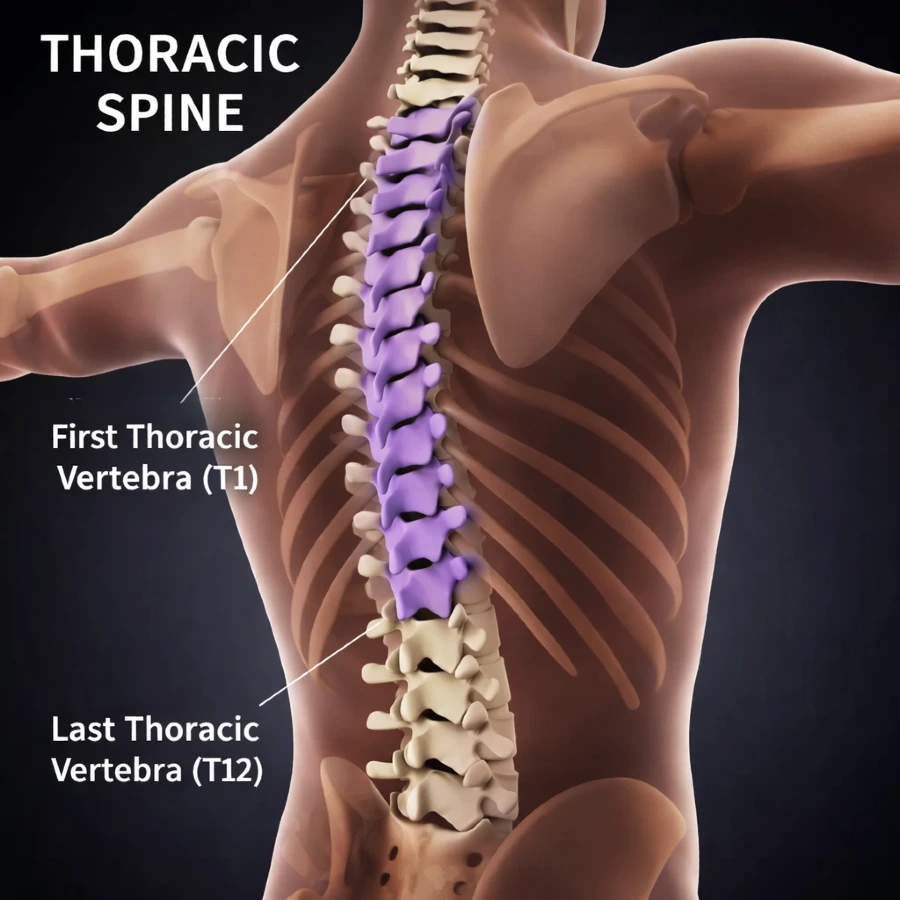
Upper back pain is defined as pain or discomfort occurring in the region of the thoracic spine, specifically between the first and twelfth thoracic vertebrae (T1–T12), along the posterior aspect of the trunk.
The thoracic spine consists of 12 vertebrae (T1–T12) located between the cervical and lumbar regions. Compared to the neck and lower back, the thoracic spine is relatively rigid due to its articulation with the rib cage. Each thoracic vertebra connects to a pair of ribs, which together with the sternum form the thoracic cage, providing structural stability and protection for vital organs.
In addition to the vertebrae and ribs, this region includes surrounding muscles, ligaments, and soft tissues. Within the thoracic cavity lie essential organs such as the heart and lungs. Although less emphasized than low back pain, thoracic back pain and related mid back pain are common clinical complaints that affect individuals across all age groups and are often under-recognized in clinical practice.
Most Common Causes of Upper Back Pain
Upper back pain is a widespread problem affecting people of all ages. Although it can be uncomfortable and sometimes intense, serious medical causes are rare. In fact, around 9 out of 10 people with upper back pain have no identifiable structural cause. This is known as non‑specific upper back pain, and it is usually related to muscles, posture, or lifestyle factors rather than disease or injury. Even severe pain does not necessarily indicate a dangerous condition.
Below are the most common causes of non‑specific upper back pain. In clinical practice and everyday language, several other terms are often used interchangeably with upper back pain, including thoracic back pain, mid back pain, middle back pain, thoracic spine pain, and pain in the thoracic spine.
1. Poor Posture and Weak Back Muscles
One of the leading causes of upper back pain is prolonged poor posture. People who spend many hours sitting at a computer often fall into a slouched position, increasing strain on the thoracic spine. Over time, this leads to muscle fatigue, weakness, and discomfort. This type of thoracic spine pain is especially common in office workers, students, and anyone who sits for long periods without breaks.
2. Muscle Strains and Overuse
Sudden, awkward movements or repetitive activities can cause muscle strains, leading to mid back pain that typically improves within a few days. Overuse injuries often occur when you unexpectedly need to lift or carry more weight than usual — for example:
- lifting a sick child or elderly parent
- helping a partner with mobility
- changes at work requiring heavier physical tasks
These situations can overload the thoracic spine and trigger middle back pain.
3. Stress and Muscle Tension
Psychological stress commonly increases muscle tension, especially in the neck and upper back. Chronic tension can lead to persistent thoracic back pain, even without physical injury.
4. Anxiety and Depression
Emotional health strongly influences physical symptoms. Anxiety and depression can manifest as increased muscle tightness, reduced pain tolerance, and widespread discomfort — including upper back pain.
5. Poor Sleep Quality
Lack of restorative sleep affects the body’s ability to recover. Over time, this can worsen pain in the thoracic spine, especially in people who already have muscle stiffness or poor posture.
6. Low Levels of Physical Activity
Insufficient exercise weakens the muscles of the back and core, increasing the risk of thoracic spine pain. This issue is particularly common in adolescents. Excessive time spent on phones or tablets — especially while lying in a semi‑reclined position — is a major risk factor for upper back pain in younger populations.
7. Excess Body Weight
Being overweight or obese places additional stress on the spine and can contribute to middle back pain and postural problems. Increased load on the thoracic region makes muscles work harder, leading to fatigue and discomfort.
Less Common but “Specific” Causes of Upper Back Pain
Only a small percentage of people with upper back pain have a clearly identifiable structural or medical cause. These are known as specific causes, and although they are less common, it is important to be aware of them — especially when the pain is severe, persistent, or accompanied by neurological symptoms. These conditions can lead to thoracic back pain, middle back pain, mid back pain, or pain in the thoracic spine.
1. Thoracic Spondylosis (Degenerative Changes of the Spine)
Thoracic spondylosis refers to age‑related “wear‑and‑tear” of the discs and facet joints. Most people develop some degree of degeneration with age, but only a minority experience symptoms.
Degeneration may include:
- disc dehydration and thinning
- facet joint arthritis
- small bone spurs
These changes can cause stiffness and thoracic spine pain, but many individuals with spondylosis remain completely asymptomatic.
2. Thoracic Disc Herniation
A thoracic disc herniation occurs when the inner gel-like nucleus pushes through the outer disc layer toward the spinal canal. Although far less common than cervical or lumbar herniations, thoracic disc herniation can cause a range of symptoms depending on whether the disc is irritating a thoracic nerve root or compressing the spinal cord.
When a thoracic nerve root is affected (thoracic radiculopathy), patients may experience:
- sharp or burning mid back pain
- band‑like pain wrapping around the chest or rib cage along the path of an intercostal nerve
- pain radiating from the back toward the chest, often mistaken for heart or abdominal pain
- increased discomfort with coughing, sneezing, or trunk rotation
If the herniation compresses the spinal cord (thoracic myelopathy), symptoms can be more serious and include:
- weakness, heaviness, or stiffness in one or both legs
- numbness or altered sensation below the level of compression
- difficulty walking or maintaining balance
- coordination problems
- in rare cases, bowel or bladder dysfunction
Because the thoracic spinal canal is narrow, even a relatively small herniation can produce noticeable symptoms.
3. Ankylosing Spondylitis
Ankylosing spondylitis is a chronic inflammatory condition that affects the spine and sacroiliac joints. Inflammation in the thoracic region can lead to:
- persistent middle back pain
- morning stiffness
- reduced spinal mobility
Over time, the vertebrae may gradually fuse, reducing flexibility.
4. Osteoporosis and Vertebral Compression Fractures
Osteoporosis weakens bone density and strength. While osteoporosis itself does not cause pain, it increases the risk of vertebral compression fractures, which are a significant cause of acute thoracic back pain in older adults.
Compression fractures may lead to:
- sudden, sharp upper back pain
- loss of vertebral height
- progressive spinal deformity (increased kyphosis)
5. Trauma
Direct injury to the thoracic spine — from falls, sports accidents, or motor‑vehicle collisions — can damage bones, ligaments, or soft tissues. Trauma-related injuries are less common but can cause significant pain in the thoracic spine and require medical evaluation.
6. Rare but Serious Causes (Less Than 1%)
In fewer than 1 in 100 cases, upper back pain is caused by a serious underlying condition such as:
- Spinal infection (osteomyelitis or discitis)
- Spinal tumors (primary or metastatic cancer)
These conditions are rare but may present with:
- unrelenting pain
- night pain
- fever, weight loss, or neurological symptoms
Any such symptoms warrant prompt medical evaluation.
Symptoms
Symptoms of upper back pain can resemble symptoms seen in other regions of the spine, and the intensity may range from mild discomfort to severe pain that limits daily activities.
The pain may be dull or sharp, and depending on duration it can be acute or chronic. Many people experience upper back pain between the shoulder blades, a common pattern often linked to posture, muscle tension, or prolonged sitting.
Sharp Upper Back Pain
Sharp pain is typically described as a stabbing or piercing sensation. Patients often compare it to a “knife‑like” pain. It is usually localized to a specific area of the upper back — for example, pain between the shoulder blades, below left or right shoulder blade, or along the thoracic spine.
Sharp pain often appears suddenly, without a clear trigger, or after a sudden movement such as during sports, lifting a heavy object, or a fall. This type of pain may indicate:
- a muscle strain
- irritation of a thoracic facet joint
- a disc‑related problem
Once present, sharp thoracic back pain often worsens with sudden trunk movements, lifting the arms, turning in bed, coughing, or sneezing. In most cases, this type of pain improves within 7–14 days.
Dull, Aching Upper Back Pain
Dull pain is usually less localized and spreads across a broader area of the upper back. It often develops gradually and is more commonly associated with chronic upper back pain — pain lasting longer than 3–6 months.
This type of discomfort is frequently linked to:
- poor posture
- prolonged sitting
- muscle fatigue
- repetitive strain
- low physical activity
People with chronic dull middle back pain often report stiffness in the upper back and neck, increased muscle tension, and a sensation of tightness between the shoulder blades. This type of pain is also commonly associated with stress, anxiety, and sleep disturbances.
Although dull pain is usually less intense than sharp pain, it can still significantly affect daily functioning and quality of life.
Other Symptoms That Often Accompany Upper Back Pain
Patients with upper back pain often experience associated symptoms in nearby regions, most commonly the neck. The reason lies in shared risk factors such as prolonged sitting, poor posture, lack of physical activity, stress, and sleep disturbances. Because the cervical and thoracic muscles work together to stabilize the spine, tension in one area frequently leads to discomfort in the other.
Pain may radiate from the upper back to the neck, shoulders, arms, or chest, creating a sensation of pain between the shoulder blades or across the upper torso.
Shoulder pain accompanying thoracic back pain is usually dull and similar in character to the aching pain felt in the upper back. It rarely worsens with shoulder movement itself. Some patients report tingling or mild numbness in the arms, which is typically not caused by nerve damage but rather by referred pain from trigger points in the upper back muscles.
If you’re experiencing shoulder discomfort, discover other possible causes of shoulder pain in our detailed guide: Shoulder Pain: 8 Most Common Causes.
Occasionally, upper back pain may extend toward the chest, causing pressure or discomfort that can raise concern about heart problems. While chest pain should always be taken seriously, in many cases this discomfort is musculoskeletal — resulting from tension or strain in the muscles connecting the ribs to the spine.
Headache is another common associated symptom. When upper back pain is caused by muscle tension or poor posture, it can lead to tension‑type headaches that start at the base of the skull and spread to the forehead, temples, or around the eyes. Muscles in the upper back, neck, and shoulders tighten in response to stress or prolonged sitting, creating a chain reaction that culminates in headache and neck stiffness.
Treatment of Upper Back Pain
Acute upper back pain often improves on its own; however, several methods can help reduce discomfort. Chronic upper back pain should be treated, especially when it interferes with daily activities at home or at work.
Treatment differs slightly depending on whether the pain is acute or chronic.
Acute Upper Back Pain Treatment
Acute upper back pain often improves on its own within 7–14 days, but several strategies can help reduce discomfort during this period. The main goal is to ease symptoms while avoiding activities that clearly aggravate the pain.
- Avoid aggravating activities during the first few days, especially sudden or strenuous movements that increase discomfort.
- Heat therapy helps relax tight muscles and reduce pain. Warm baths, hot showers, heating pads, or infrared heat lamps are commonly effective.
- Over‑the‑counter pain relievers such as ibuprofen or paracetamol may ease mild to moderate symptoms when used as directed.
- Massage can reduce muscle tension and improve circulation. Options include self‑massage with a foam roller or massage ball, help from a partner, or professional treatment.
Chronic Upper Back Pain
Chronic upper back pain is more complex to treat than acute pain because multiple factors usually contribute to its development. These include prolonged sitting, low physical activity, stress, anxiety, depression, and poor sleep.
Treatment typically involves a combination of physical therapy, pain‑relief strategies, lifestyle modification, and in some cases psychological techniques such as cognitive‑behavioral therapy (CBT) and mindfulness. If chronic upper back pain is caused by a specific underlying condition, treatment should be directed at that cause.
Methods used for acute pain—heat therapy, massage, and over‑the‑counter pain relievers—can also be helpful in chronic cases, so they are not repeated here in detail.
If self‑management strategies do not lead to meaningful improvement, a consultation with a physiatrist is recommended to plan further treatment.
My clinical view is that chronic upper back pain should be approached in three key directions:
- Reducing pain and muscle tension — Start with available therapeutic options within physical medicine to decrease pain and relax tight muscles.
- Lifestyle modification — Without long‑term changes in daily habits, the effects of therapy are temporary. Regular exercise, physical activity, and weight management are essential for lasting improvement.
- Psychological and relaxation techniques — If the first two steps do not significantly reduce symptoms, stress and psychological factors likely play a major role. In such cases, CBT, mindfulness, and other evidence‑based strategies can be highly beneficial.
Clinical Insight
Sustainable improvement in pain and overall quality of life requires consistent lifestyle changes, including regular exercise, physical activity, weight control, and effective stress management.
Therapeutic Methods for Treating Upper Back Pain
In the following section, we describe in more detail the main therapeutic methods used in the treatment of upper back pain. These approaches target pain reduction, improved mobility, muscle relaxation, and long‑term functional recovery.
Physical Therapy
Physical therapy programs for upper back pain typically focus on strengthening and stretching the muscles of the upper back, neck, shoulders, and core. In addition to exercise, various modalities are used to reduce pain and muscle tension. The most effective include standard LASER therapy, HILT (high‑intensity LASER), therapeutic ultrasound, electrotherapy such as IFS or TENS, and more recently TECAR therapy. Treatment begins gradually and progresses over several weeks, after which patients transition to a home‑based maintenance program.
Manual Therapy
Manual therapy helps restore joint mobility and reduce muscle tension. Therapists use their hands to apply pressure to specific areas, improving circulation and relieving pain. Manual techniques can be effective for musculoskeletal problems, but they do not provide long‑term results on their own. They must be combined with a structured exercise program and lifestyle changes.
Cognitive‑Behavioral Therapy (CBT)
Cognitive‑behavioral therapy helps patients identify and modify negative thought patterns and behaviors that may worsen pain. Conducted by a trained psychologist, CBT teaches coping strategies that reduce emotional stress and improve quality of life in individuals with chronic upper back pain.
Additional Supportive Techniques
- Acupuncture — Thin needles are placed at specific points to relieve tension and reduce pain.
- Dry needling — Targets trigger points within muscle tissue to reduce tightness and discomfort.
- Mindfulness — A focused‑awareness technique that helps reduce stress and anxiety. Regular practice can improve pain tolerance and decrease the emotional impact of chronic pain.
Invasive Options (Rarely Needed)
Corticosteroid injections into the spine under imaging guidance or surgical treatment are rarely required and are reserved for specific structural causes that do not respond to conservative therapy.
In the table below, we summarize the main treatment options for upper back pain, including their key advantages.
| Treatment Method | Main Benefits |
|---|---|
| Activity Modification | Reducing aggravating movements and improving posture helps decrease strain on the thoracic spine and surrounding muscles. |
| Heat Therapy | Warm baths, heating pads, and infrared heat can relax tight muscles and reduce pain and stiffness. |
| Pain Relievers | Over-the-counter medications such as ibuprofen or paracetamol may help reduce mild to moderate upper back pain. |
| Massage Therapy | Massage can decrease muscle tension, improve circulation, and temporarily relieve thoracic back pain. |
| Physical Therapy | Exercise programs improve mobility, strengthen postural muscles, and reduce the recurrence of upper back pain. |
| Manual Therapy | Hands-on techniques may improve joint mobility, reduce stiffness, and decrease muscle tension. |
| CBT and Mindfulness | Psychological approaches help manage stress, anxiety, and chronic pain-related symptoms. |
| Acupuncture and Dry Needling | May help reduce trigger point sensitivity, muscle tightness, and chronic thoracic spine pain. |
| Lifestyle Modification | Regular physical activity, weight control, ergonomic improvements, and stress reduction are essential for long-term recovery. |
| Injections or Surgery | Reserved for selected structural conditions that do not improve with conservative treatment. |
Can Upper Back Pain Be Prevented?
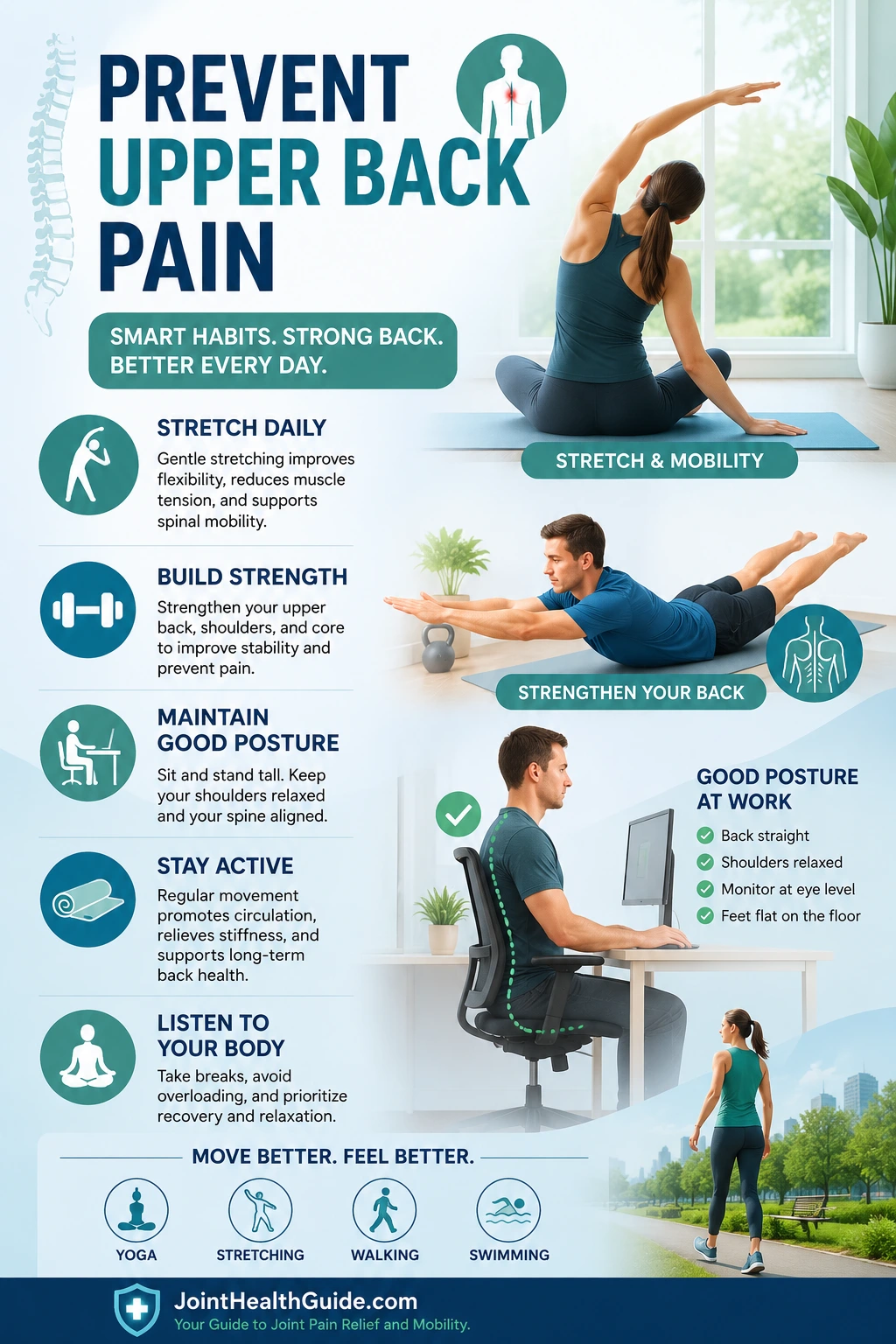
Preventing upper back pain is essential for maintaining long‑term mobility and reducing the risk of injury. By adopting healthy daily habits—especially regular physical activity and proper posture—you can significantly lower the likelihood of developing upper back discomfort.
- Regular physical activity — Your body needs movement. Consistent exercise improves flexibility, muscle strength, and bone health. Start gradually and increase intensity over time. A physiotherapist or exercise specialist can design a personalized program. This is the single most important measure for preventing upper back pain.
- Maintaining a healthy body weight — Excess weight increases the load on the spine. Weight reduction can significantly decrease strain on the upper back. A family physician or nutritionist can help guide this process.
- Smoking cessation — Smoking increases the risk of arthritis, osteoporosis, and back pain, and slows tissue healing.
- Workstation design and posture — Long hours of sitting or standing with poor posture overload the upper back muscles. Proper ergonomics help maintain the natural spinal curve and reduce strain.
- Avoiding prolonged sitting or standing — Take regular breaks to stretch and improve circulation.
- Stress‑reduction techniques — Stress increases muscle tension, especially in the upper back. Relaxation techniques such as meditation and deep breathing can reduce the physical effects of stress.
When to Seek Emergency Medical Care
Upper back pain is most often muscular and rarely caused by serious medical conditions. However, certain warning signs require urgent medical evaluation. Recognizing these symptoms can prevent complications and ensure timely treatment.
Red Flags — Seek Medical Attention If You Experience:
- Severe or sudden pain — Intense, unbearable pain, especially after trauma such as a fall or accident.
- Numbness or tingling — Sensations in the arms, legs, or chest may indicate nerve compression or spinal involvement.
- Loss of bladder or bowel control — A potential sign of spinal cord compression requiring immediate intervention.
- Chest pain — Upper back pain radiating to the chest or accompanied by shortness of breath, dizziness, or nausea may indicate a cardiac issue and requires urgent evaluation.
Conclusion
Upper back pain is a common condition that can significantly affect daily life. The most frequent causes include poor posture, muscle weakness, and stress, while less common causes involve spondylosis, disc herniation, and ankylosing spondylitis. Effective treatment relies on timely diagnosis and a comprehensive approach that includes physical therapy, lifestyle modification, and stress‑management techniques.
Acute pain often resolves on its own, while chronic pain requires a more structured, long‑term strategy. Education on proper posture and maintaining an active lifestyle can greatly reduce the risk of recurrence. With appropriate care, most individuals can expect meaningful improvement and a return to normal activities.
Risetti M, Gambugini R, Testa M, Battista S. Management of non-specific thoracic spine pain: a cross-sectional study among physiotherapists. BMC Musculoskelet Disord. 2023;24(1):398. Clinical practice patterns for managing thoracic spine pain
Briggs AM, Smith AJ, Straker LM, Bragge P. Thoracic spine pain in the general population: prevalence, incidence and associated factors. BMC Musculoskelet Disord. 2009;10:77. Systematic review: epidemiology of thoracic spine pain
Louw A, Schmidt SG. Chronic pain and the thoracic spine. J Man Manip Ther. 2015;23(3):162–168. Review: chronic pain mechanisms involving the thoracic spine
van Kleef M, Stolker RJ, Lataster A, Geurts J, Benzon HT, Mekhail N. Thoracic pain. Pain Pract. 2010;10(4):327–338. Clinical overview: thoracic pain mechanisms and management
Heneghan NR, Gormley S, Hallam C, Rushton A. Management of thoracic spine pain and dysfunction: a survey of clinical practice in the UK. Musculoskelet Sci Pract. 2019;39:58–66. Survey: physiotherapy approaches to thoracic spine pain
De Vitta A, Noll M, Monfort-Pañego M, Miñana-Signes V, Maciel NM. Thoracic Spine Pain in High School Adolescents: A One-Year Longitudinal Study. Healthcare (Basel). 2023;11(2):196. Longitudinal study: thoracic pain in adolescents
Mengistu DA, Mulugeta Demmu Y, Alemu A. Occupational Related Upper and Low Back Pain Among the Working Population of Ethiopia: Systematic Review and Meta-Analysis. Environ Health Insights. 2021;15:11786302211067839. Occupational risk factors for upper and lower back pain
GBD 2017 Disease and Injury Incidence and Prevalence Collaborators. Global, regional, and national incidence, prevalence, and years lived with disability for 354 diseases and injuries, 1990–2017. Lancet. 2018;392(10159):1789–1858. Global Burden of Disease: epidemiology of musculoskeletal disorders