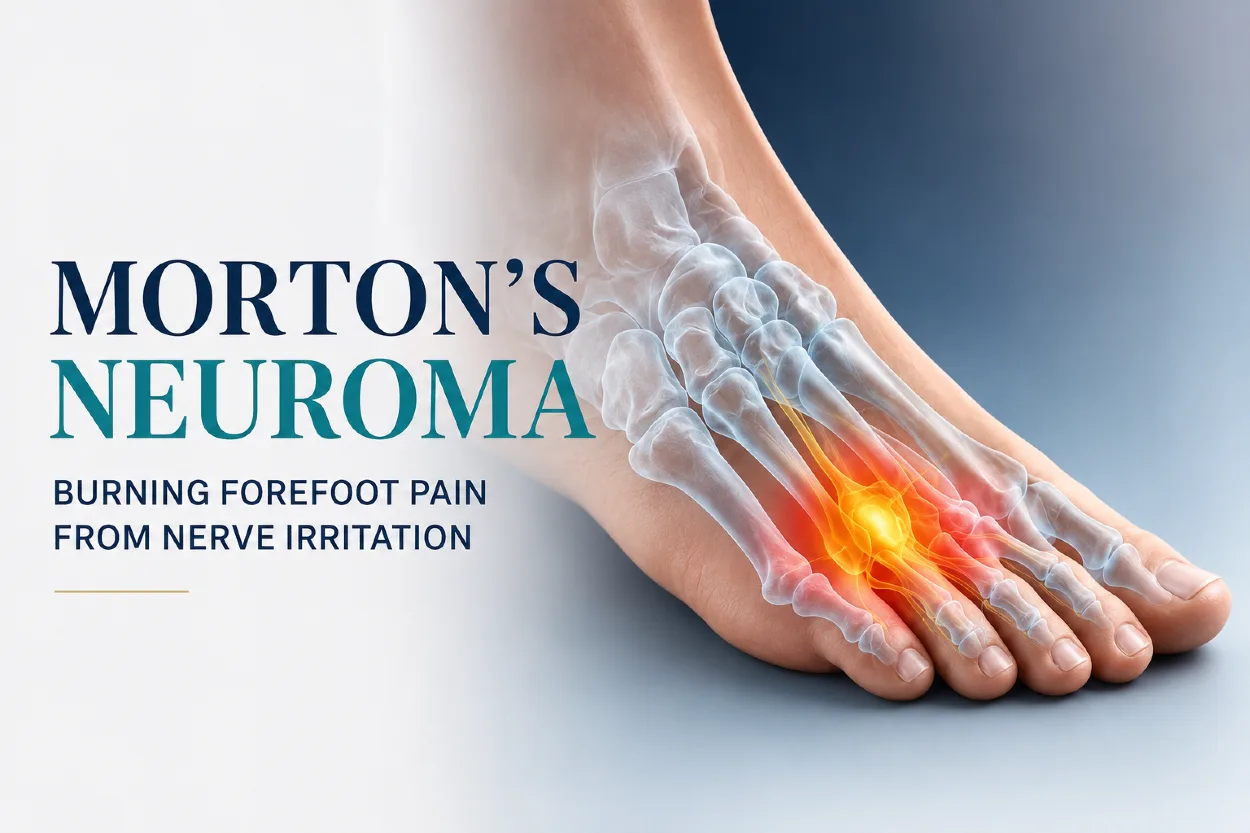
Morton’s neuroma is a common cause of forefoot pain, triggered by irritation and thickening of the nerve between the toes — most often between the 3rd and 4th metatarsals. Although frequently referred to as a “neuroma,” it is not a true tumor but a painful nerve entrapment caused by chronic pressure and friction. The condition is more common in middle‑aged women, especially those who wear narrow shoes or high heels, but it also affects runners, hikers, and people with forefoot deformities.
Typical symptoms of mortons neuroma include sharp, burning pain under the ball of the foot, tingling or numbness in the toes, and the classic sensation of “walking on a pebble.” Symptoms usually worsen in tight footwear or during prolonged walking, and often improve when shoes are removed.
In this article, we explain what Morton’s neuroma is, why foot neuroma develops, the most common symptoms and risk factors, and how to recognize it early. We also review the most effective treatment options — from footwear changes and orthotics to injections and surgical approaches — along with practical prevention tips to help reduce recurrence.
Quick Summary – Morton’s Neuroma
- Morton’s neuroma is a painful interdigital nerve entrapment, most commonly located between the 3rd and 4th metatarsals.
- Typical symptoms include burning forefoot pain, tingling or numbness in the toes, and the classic sensation of “walking on a pebble.”
- The condition is strongly associated with narrow footwear, high heels, and biomechanical factors such as flat feet, high arches, or bunions.
- Diagnosis is clinical and supported by tests such as direct pressure and Mulder’s click; ultrasound can confirm nerve thickening.
- Most patients improve with footwear modification, metatarsal pads, orthotics, and physical therapy.
- Corticosteroid injections provide short‑term relief but symptoms may return in one‑third of patients within 6–12 months.
- Surgery (nerve decompression or resection) has an 80–90% success rate, though recurrence occurs in 5–20% of cases.
- Long‑term prevention relies on proper footwear, load reduction, and maintaining healthy forefoot biomechanics.
What Is Morton’s Neuroma?
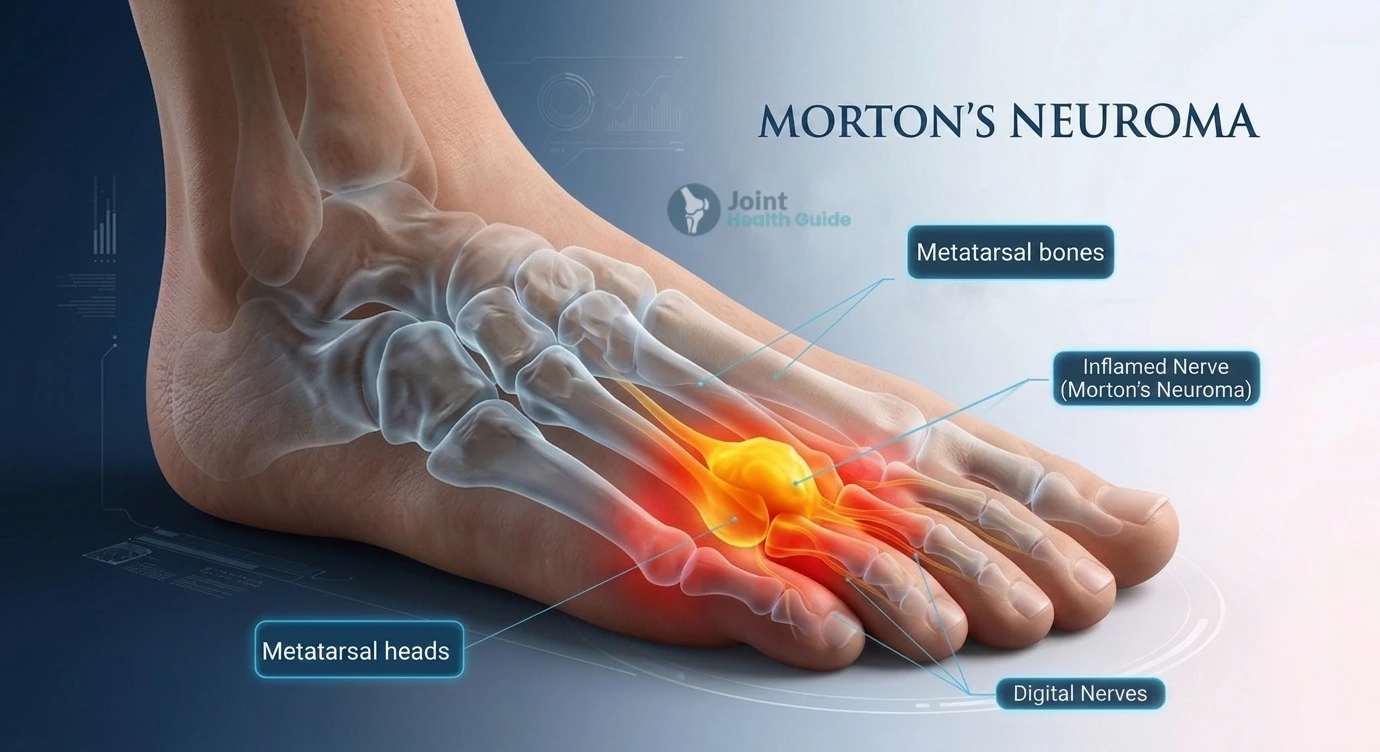
Morton’s neuroma is a condition that causes pain in the forefoot, triggered by compression and irritation of the nerve that runs between the metatarsal bones. The name comes from Dr. Thomas George Morton, the American surgeon who first described the condition in 1876.
Although the term neuroma suggests a benign nerve tumor — which was once believed to be true — modern research shows that Morton’s neuroma is not a true tumor. Instead, chronic pressure and friction lead to thickening and scarring of the tissue around the nerve, along with swelling and enlargement of the nerve itself. These structural changes disrupt normal nerve function and produce neuropathic pain in the forefoot.
The nerve between the third and fourth metatarsal bones is most commonly affected, though the nerve between the second and third metatarsals can also be involved.
Other names for Morton’s neuroma include:
- Morton’s metatarsalgia
- Morton neuroma
- Interdigital neuritis
- Interdigital neuralgia
- Interdigital neuroma
- Interdigital nerve compression syndrome
Why Does Morton’s Neuroma Develop?
Morton’s neuroma develops as a result of chronic compression of the interdigital nerve between the metatarsal heads in the forefoot. Over time, this repeated pressure irritates the nerve, leading to thickening, scarring, and neuropathic pain. But what actually causes this compression?
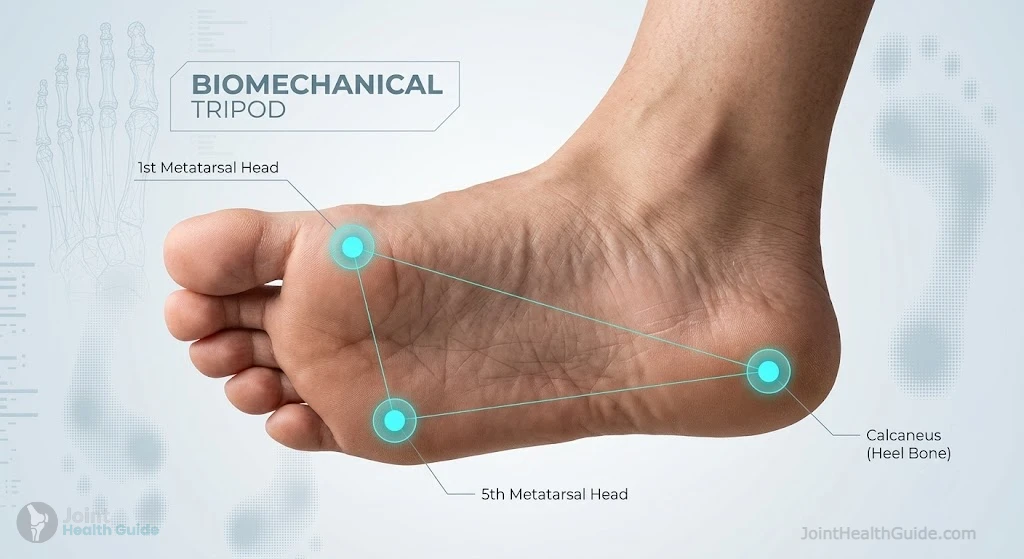
To understand the mechanics, it helps to look at basic foot biomechanics. Functionally, the foot behaves like a three‑point tripod, with weight distributed across the heel, the head of the first metatarsal, and the head of the fifth metatarsal. When this balance is disrupted, excessive load shifts toward the forefoot — increasing the risk of nerve irritation.
Key Factors That Increase Forefoot Load
- High‑heeled shoes Heels shift body weight forward, reducing heel contact and dramatically increasing pressure under the metatarsal heads. Tight calf muscles or a shortened Achilles tendon amplify this effect.
- Flat feet (pes planus) and bunions (hallux valgus) In these conditions, the first metatarsal head often lifts instead of absorbing load. Pressure is redistributed toward the central metatarsals, increasing the likelihood of nerve compression and mortons neuroma.
- High arches (pes cavus) A rigid, high‑arched foot places excessive pressure on the metatarsal heads. Patients often develop calluses under the forefoot — a sign of chronic overload — and are more prone to foot neuroma.
- Long second or third metatarsal bones If these metatarsals are longer than the first, they strike the ground earlier during gait, increasing localized pressure between the metatarsal heads where the nerve runs.
- Narrow footwear Tight shoes squeeze the metatarsal heads together, narrowing the space for the interdigital nerve and increasing mechanical irritation.
- Arthritis of the MTP joints Joint swelling or bony spurs can encroach on the nerve, contributing to compression and irritation.
Who Most Commonly Develops Morton Neuroma?
Morton neuroma is significantly more common in women, who account for roughly three out of four diagnosed cases. The condition most often appears between the ages of 40 and 60, although foot neuroma can occur at any age.
The higher prevalence in women is likely related to footwear choices — particularly high‑heeled shoes and narrow, pointed footwear that increase forefoot pressure and compress the metatarsal heads.
Morton’s neuroma is also frequently seen in:
- Ballet dancers, due to repetitive forefoot loading and tight footwear
- Runners, who place high impact forces on the metatarsal heads
- Athletes in forefoot‑dominant sports (dance, aerobics, court sports)
In some individuals, the underlying cause is not immediately obvious, and mortons neuroma may develop simply due to subtle biomechanical factors or chronic low‑grade overload.
Morton’s Neuroma Symptoms
Morton’s neuroma typically does not produce visible external changes — there is no lump, swelling, or skin discoloration. Instead, symptoms are sensory and mechanical, caused by irritation of the interdigital nerve.
Typical Pain Pattern
Patients usually report pain in the ball of the foot, just beneath the bases of the toes, often radiating into the toes themselves. In some cases, toe pain is the only symptom. The pain is commonly described as:
- sharp or burning pain under the forefoot
- tingling or numbness in the toes
- a sensation of burning in the toes
- the classic feeling of “walking on a pebble” or “a small stone in the shoe”
Less commonly, patients may experience toe cramping or pain along the outer edge of the foot.
When Symptoms Worsen?
Symptoms of mortons neuroma typically intensify during walking, especially in tight shoes, when wearing high heels that increase forefoot pressure, and during sports that require strong forefoot push‑off such as running.
When Symptoms Improve?
Most people with foot neuroma feel relief when they remove their shoes, rest the foot, massage the affected area, or switch to open footwear such as sandals or slides. Many patients tolerate sandals very well, while some report that walking barefoot actually increases pain.
Night pain is uncommon and occurs in roughly 25% of patients.
Clinical Insight
For some individuals, symptoms are persistent and chronic, while for others they appear intermittently, flaring only during certain activities or specific footwear choices.
Diagnosis
Diagnosing Morton’s neuroma usually begins with a detailed discussion of the patient’s symptoms and a thorough physical examination of the foot.
There are no visible external signs of mortons neuroma — no lump, swelling, or skin discoloration — so diagnosis relies entirely on clinical evaluation and targeted tests.
During examination, clinicians look for signs of excessive forefoot loading, such as calluses under the metatarsal heads, and assess for foot deformities that increase the risk of Morton’s neuroma. Conditions like flat feet, high arches, and bunions (hallux valgus) can alter pressure distribution and contribute to nerve compression.
Clinical Tests
Several specific clinical maneuvers help confirm the presence of foot neuroma:
- Direct pressure test — Pressing between two adjacent metatarsal heads over the suspected neuroma often reproduces sharp, localized pain.
- Mulder’s click — Compressing the forefoot from the sides while applying pressure between the metatarsals may produce a painful “click,” a classic sign of mortons neuroma.
Imaging Studies
Imaging is not always required but can help confirm the diagnosis, determine neuroma size, and rule out other causes of forefoot pain.
X‑ray (Weight‑bearing)
A weight‑bearing foot X‑ray is recommended to evaluate metatarsal length, joint alignment, and to exclude conditions that mimic Morton’s neuroma, such as stress fractures, arthritis, degenerative changes, or MTP joint subluxations.
Morton’s neuroma ultrasound and MRI
Ultrasound performed by an experienced clinician is highly effective for visualizing Mortons neuroma. It can also guide injections around the nerve, serving both diagnostic and therapeutic purposes. MRI can accurately detect Morton’s neuroma as well, but it is rarely necessary unless the diagnosis remains unclear or other pathology is suspected.
Morton’s neuroma treatment
Treatment for Morton’s neuroma is divided into conservative (non‑surgical) and surgical approaches. Most patients improve with non‑invasive methods such as footwear modification, orthotic support, physical therapy, or corticosteroid injections. Surgery is reserved for cases where symptoms persist despite adequate conservative care.
Footwear Modification
Before starting any specific treatment, proper footwear selection is essential.
Patients should avoid high‑heeled shoes, narrow or pointed toe boxes, and thin soles. The goal is to reduce forefoot compression and improve load distribution.
Comfortable, wide shoes with cushioned soles help decrease pressure on the metatarsal heads and reduce irritation of the interdigital nerve.
Orthotic Insoles for Morton’s Neuroma
Orthotic insoles are beneficial for many patients with Morton’s neuroma. Their purpose is to improve foot biomechanics and reduce load on the metatarsal heads.
A typical neuroma insole includes:
- a metatarsal pad placed slightly behind the metatarsal heads
- arch support to improve load distribution
The metatarsal pad increases the space between the metatarsal bones, reducing compression on the interdigital nerve and alleviating forefoot pain.
Physical Therapy
Physical therapy focuses on reducing pain and mechanical stress on the affected nerve. It typically includes:
- stretching exercises for the calf and plantar structures
- strengthening exercises for intrinsic foot muscles
- joint mobilization to improve forefoot mechanics
- modalities such as cryotherapy, therapeutic ultrasound, LASER, or electrotherapy
Combined with proper footwear and orthotics, physical therapy can significantly reduce symptoms and prevent progression.
Corticosteroid Injections
If pain persists despite footwear changes and orthotics, the next step is often corticosteroid injections. Steroids reduce inflammation around the neuroma, decreasing pain and local nerve pressure.
Injections may be performed:
- blind, based on anatomical landmarks
- ultrasound‑guided, which improves accuracy
Most patients experience meaningful pain relief. However, symptoms may return in about one‑third of patients within 6–12 months.
The most common side effects of corticosteroid injections include atrophy of the subcutaneous fat tissue and thinning of the plantar fat pad, as well as skin discoloration at the injection site.
Other Minimally Invasive Techniques
Several alternative techniques have been described, including:
- cryoablation (cold nerve destruction)
- radiofrequency ablation (heat‑based nerve destruction)
- alcohol injections
These methods lack strong evidence and may carry risks without proven long‑term benefit. They are generally not recommended.
Morton’s Neuroma Surgery
If conservative treatment fails, surgery is recommended. Surgical options include:
- nerve resection (removal of the neuroma)
- nerve decompression (removal of surrounding tissue causing compression)
The procedure is performed through a small incision on the top or bottom of the foot. If the nerve is removed, patients may experience permanent numbness between the affected toes — a harmless and usually well‑tolerated outcome.
What to Expect After Surgery
After surgery, patients typically need to wear a postoperative shoe for a short period until the incision heals and regular footwear becomes comfortable again. Most people transition back to normal shoes gradually as swelling decreases and mobility improves.
More than three‑quarters of patients are satisfied with the surgical outcome. As with any surgical procedure, there is a small risk of complications such as wound infection. Painful scar tissue develops in roughly 5 out of 100 operated patients. Unfortunately, a minority of individuals may experience worsening pain after surgery.
How Successful Is Morton’s Neuroma Surgery?
The success rate of Morton’s neuroma surgery is approximately 80–90%. However, even after a successful procedure, symptoms can return in about 5–20% of patients, often requiring repeat surgery.
Why do symptoms return in some patients?
- Sometimes the nerve decompression is incomplete, leaving the nerve chronically irritated.
- In cases where the nerve is removed (resection), a new neuroma or a stump neuroma can form from the remaining nerve tissue, which may be very painful.
Even after surgery, it is important to continue wearing appropriate footwear to reduce forefoot compression and prevent recurrence.
Recovery Time After Surgery
Recovery usually takes several weeks to several months. Initially, patients wear a special postoperative shoe, and the timeline for returning to normal activities depends on wound healing, swelling reduction, and symptom improvement.
Prevention: How to Reduce the Risk or Prevent Recurrence
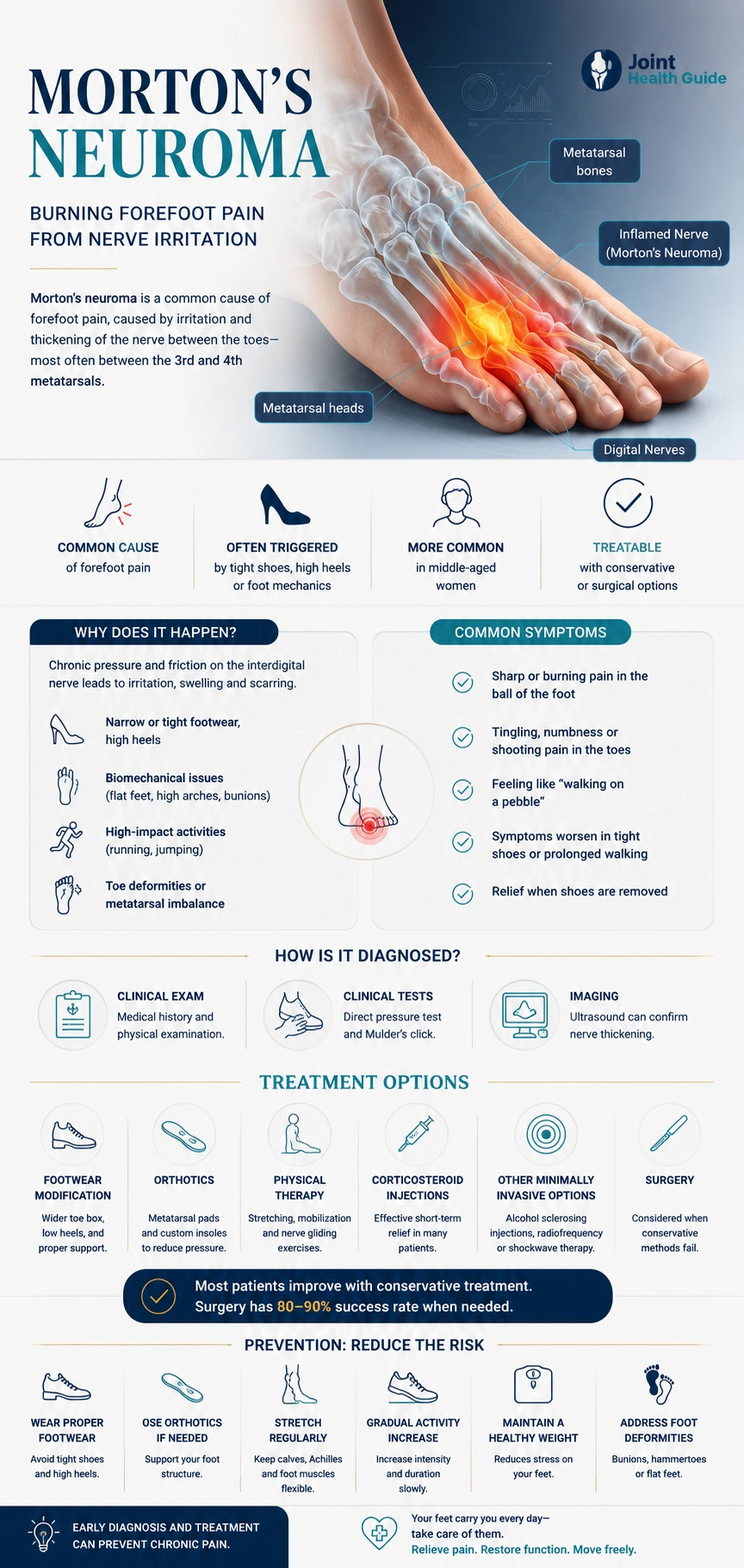
Preventing Morton’s neuroma focuses on minimizing forefoot compression and maintaining healthy foot mechanics. Even after successful treatment or surgery, consistent preventive habits help avoid recurrence.
- Footwear Choice Choose wide, cushioned shoes with a roomy toe box. Avoid high heels and narrow designs that squeeze the metatarsal heads.
- Activity Modification Limit repetitive forefoot loading such as running on hard surfaces or wearing tight sports shoes. Alternate activities to reduce impact.
- Forefoot Load Reduction Use metatarsal pads or orthotic insoles to redistribute pressure and increase space between metatarsal bones.
- Stretching Routine Regularly stretch the calf muscles and plantar fascia to improve flexibility and reduce tension across the forefoot.
- Orthotic Strategy Custom orthotics with arch support and metatarsal padding help maintain proper alignment and prevent nerve compression.
Consistent attention to footwear and biomechanics is the most effective way to keep symptoms from returning.
Exercises for Morton’s Neuroma
Targeted exercises help reduce forefoot pressure, improve flexibility, and support nerve recovery. They should be gentle and performed regularly to maintain healthy foot mechanics.
1. Calf Stretch
Stand facing a wall, place one foot behind the other, and keep the back heel on the ground. Lean forward until you feel a stretch in the calf. Hold for 20–30 seconds, repeat 3 times per leg.
2. Toe Spread Exercise
Sit or stand barefoot and actively spread your toes apart. Hold for 5 seconds, relax, and repeat 10–15 times. This improves intrinsic muscle control and reduces nerve compression.
3. Ball Roll Massage
Roll a small ball (like a golf or massage ball) under the forefoot for 1–2 minutes. Focus on the area behind the metatarsal heads to release tension and stimulate circulation.
4. Towel Scrunch
Place a towel on the floor and use your toes to pull it toward you. Repeat 10–15 times to strengthen the small foot muscles that stabilize the metatarsals.
5. Arch Lift
While standing, gently lift the arch without curling the toes. Hold for 5 seconds, relax, and repeat 10 times. This helps maintain proper foot alignment and reduces forefoot strain.
These exercises complement footwear modification and orthotic use, helping prevent recurrence and improve long‑term comfort.
Prognosis (How Long Morton’s Neuroma Lasts)
Morton’s neuroma has a variable course, depending on severity, biomechanics, and treatment consistency. Most patients improve with conservative care, but recurrence is possible.
- Short‑Term Prognosis Symptoms often improve within weeks when footwear is adjusted and forefoot pressure is reduced. Some patients experience rapid relief, especially when switching to wide shoes or using metatarsal pads.
- Long‑Term Prognosis With proper footwear and orthotics, many patients maintain long‑term comfort. Chronic cases may fluctuate, with symptoms returning during periods of increased forefoot loading.
- Recurrence Risk Even after successful treatment, symptoms can return — especially if patients go back to narrow footwear or high‑impact activities. After surgery, recurrence occurs in 5–20% of patients.
- Surgery vs Conservative Care Conservative care helps most patients, but surgery offers an 80–90% success rate. Recovery takes several weeks to months, and footwear modification remains essential afterward.
FAQ: Morton’s Neuroma
Is Morton’s neuroma dangerous?
Morton’s neuroma is not dangerous, but it can be very painful and limit daily activities if untreated.
Can Morton’s neuroma go away on its own?
Symptoms may improve with rest and footwear changes, but true neuroma rarely disappears completely without treatment.
Is walking barefoot good or bad?
Some patients feel worse when barefoot because forefoot pressure increases. Sandals or cushioned shoes are often better tolerated.
How do I know if I need surgery?
Surgery is considered when pain persists despite proper footwear, orthotics, physical therapy, and injections.
Can neuroma cause toe numbness?
Yes. Irritation of the interdigital nerve can cause numbness, tingling, or burning in the toes.
Why does it feel like a pebble in my shoe?
The swollen, irritated nerve creates a sensation of pressure under the forefoot, often described as “walking on a pebble.”
Does Morton’s neuroma always affect the 3rd–4th toes?
Most commonly, yes — but it can also occur between the 2nd and 3rd metatarsals.
Can running worsen Morton’s neuroma?
High‑impact activities can aggravate symptoms, especially on hard surfaces or in tight shoes.
Are injections safe?
They are generally safe but may cause fat pad thinning or skin discoloration at the injection site.
Can orthotics really help?
Yes. Metatarsal pads and arch support reduce nerve compression and often provide significant relief.
Munir U, Tafti D, Morgan S. Morton Neuroma. StatPearls Publishing. Evidence-based review: Morton neuroma diagnosis, anatomy, and treatment (StatPearls)
Bhatia M, Thomson L. Morton’s neuroma – Current concepts review. Journal of Clinical Orthopaedics and Trauma. Current concepts review: Diagnosis and management of Morton’s neuroma
Gougoulias N, Lampridis V, Sakellariou A. Morton’s interdigital neuroma: instructional review. EFORT Open Reviews. Comprehensive review: Clinical presentation, imaging, and treatment of Morton’s neuroma
Matthews BG, Thomson CE, Harding MP, McKinley JC, Ware RS. Treatments for Morton’s neuroma. Cochrane Database of Systematic Reviews. Cochrane systematic review: Effectiveness of treatments for Morton’s neuroma
AAOS (American Academy of Orthopaedic Surgeons). Morton’s Neuroma. AAOS patient guide: Symptoms, diagnosis, and treatment of Morton’s neuroma
Matthews BG, Hurn SE, Harding MP, Henry RA, Ware RS. The effectiveness of non-surgical interventions for common plantar digital compressive neuropathy (Morton’s neuroma): a systematic review and meta-analysis. Journal of Foot and Ankle Research. Systematic review and meta-analysis: Conservative treatment options for Morton’s neuroma
Morscher E, Ulrich J, Dick W. Morton’s intermetatarsal neuroma: morphology and histological substrate. Foot & Ankle International. Histopathology study: Morphological characteristics of Morton’s neuroma
Bourke G, Owen J, Machet D. Histological comparison of the third interdigital nerve in patients with Morton’s metatarsalgia and control patients. Australian and New Zealand Journal of Surgery. Histological study: Interdigital nerve changes in Morton’s neuroma
Colò G, Rava A, Samaila EM, et al. The effectiveness of shoe modifications and orthotics in the conservative treatment of Civinini-Morton syndrome: state of the art. Acta Biomedica. State-of-the-art review: Shoe modifications and orthotics for Morton’s neuroma
de Oliveira HAV, Natour J, Vassalli M, et al. Effectiveness of customized insoles in patients with Morton’s neuroma: a randomized, controlled, double-blind clinical trial. Clinical Rehabilitation. Randomized controlled trial: Customized insoles for Morton’s neuroma