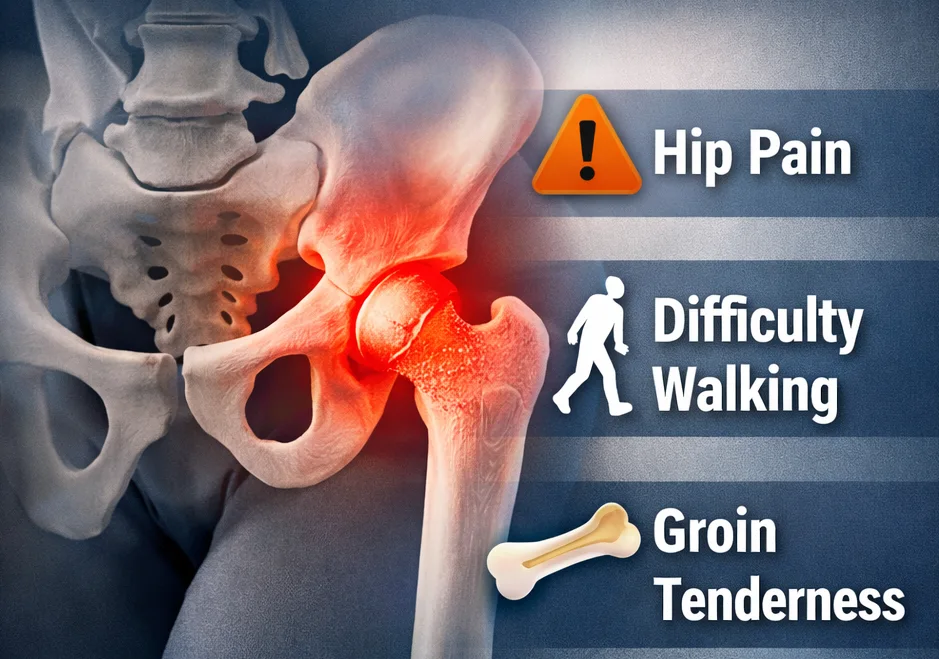
A hip stress fracture often doesn’t start with sudden, sharp pain — instead, the symptoms tend to develop gradually and can be easy to ignore at first. What may feel like a mild discomfort in the hip or groin can slowly progress into persistent pain that interferes with everyday activities.
Recognizing the early signs of a hip stress fracture is crucial, especially for active individuals, runners, or anyone who has recently increased their physical activity. Left untreated, this type of injury can worsen and lead to more serious complications.
In this guide, we’ll break down the most common signs and symptoms so you can identify a potential hip stress fracture early and take the right steps before it becomes a bigger problem.
What Does a Hip Stress Fracture Feel Like?
A hip stress fracture usually feels like a deep, dull ache in the hip or groin that develops gradually over time. Unlike sudden injuries, the pain often starts off mild and may only be noticeable during physical activity.
As the condition progresses, the discomfort typically becomes more persistent and intense. You may feel pain when walking, running, or putting weight on the affected leg, and it often worsens the longer you stay active. In early stages, the pain might ease with rest, but over time it can start to linger even after activity stops.
Many people describe it as a deep, hard-to-pinpoint pain rather than sharp or surface-level soreness — which is why it’s often mistaken for a muscle strain or overuse injury at first.
Common Signs of a Hip Stress Fracture
The most common signs of a hip stress fracture typically develop gradually and worsen over time. Key symptoms to watch for include:
- Gradual onset of hip or groin pain
- Pain that worsens with weight-bearing activities like walking or running
- Pain that improves with rest in the early stages
- Tenderness or sensitivity in the hip area
- Limping or changes in your walking pattern (altered gait)
- Reduced range of motion in the hip
- Pain at night or even at rest (in more advanced stages)
These symptoms can vary in intensity, but a key warning sign is pain that becomes more consistent and doesn’t fully go away with rest.
Early vs. Advanced Symptoms of a Hip Stress Fracture
Hip stress fracture symptoms often start subtly and become more severe over time. Understanding the difference between early and advanced signs can help you act before the injury worsens.
Early signs:
- Mild, dull pain in the hip or groin
- Pain that appears only during physical activity
- Discomfort that improves with rest
- Occasional stiffness after exercise
Advanced signs:
- Persistent pain, even at rest
- Night pain that may interfere with sleep
- Increased pain with simple movements like walking or standing
- Noticeable limping or difficulty bearing weight
As symptoms progress, the pain typically becomes more constant and harder to ignore — which is a strong signal that medical evaluation is needed.
If you are experiencing persistent hip or groin pain, it may be more than simple overuse. Learn more about causes, diagnosis, and recovery in our full guide on hip stress fracture.
Where Is the Pain Located?
Pain from a hip stress fracture is most commonly felt in specific areas around the hip joint, although it can sometimes be difficult to pinpoint exactly.
- Hip: A deep, aching pain in the joint itself is the most typical symptom
- Groin: Many people feel discomfort in the front of the hip or groin area
- Outer thigh: Less commonly, pain may appear along the outer part of the thigh
In some cases, the pain may radiate to nearby areas, making it harder to identify the exact source. This is one reason why hip stress fractures are sometimes mistaken for muscle strains or other soft tissue injuries.
When Should You See a Doctor?
It’s important not to ignore persistent hip pain, especially if it doesn’t improve with rest. Early evaluation can prevent a minor stress injury from progressing into a more serious fracture.
You should consider seeing a doctor if:
- The pain lasts longer than a few days despite reducing activity
- The discomfort is getting progressively worse over time
- You notice limping or difficulty walking normally
A healthcare professional can assess your symptoms, perform a physical examination, and recommend imaging tests if needed. Getting an accurate diagnosis early is key to avoiding complications and ensuring proper recovery.
If your symptoms suggest a possible hip stress fracture, early diagnosis is essential to prevent complications and ensure proper healing. Learn more about hip stress fracture diagnosis and recovery and what to expect during the healing process.
Hip Stress Fracture vs. Muscle Strain (Quick Comparison)
Because the symptoms can feel similar, a hip stress fracture is often mistaken for a muscle strain. However, there are key differences:
Hip stress fracture:
- Pain develops gradually over time
- Worsens with weight-bearing activity
- May persist even at rest (later stages)
- Often difficult to pinpoint exactly (deep, aching pain)
Muscle strain:
- Pain starts suddenly, often after a specific movement or injury
- Usually linked to overstretching or sudden force
- Improves relatively quickly with rest
- Pain is more localized and easier to identify
If you’re unsure which one you’re dealing with, it’s always best to get a proper evaluation — especially if the pain is persistent or worsening.
| Condition | Pain Pattern | Key Characteristics |
|---|---|---|
| Hip Stress Fracture | Gradual onset; worsens over time, especially with weight-bearing activity | Deep, hard-to-localize pain; may persist at rest in later stages; often no clear injury trigger |
| Muscle Strain | Sudden onset, typically after a specific movement or strain | Localized pain; linked to overstretching or overload; usually improves with rest and time |
Conclusion
A hip stress fracture often starts with subtle symptoms that are easy to overlook, but early recognition is essential for preventing further damage. Persistent hip or groin pain that worsens with activity should never be ignored, especially if it begins to affect your ability to walk or exercise normally.
If you notice any of the signs described in this article, it’s important to reduce physical activity and seek medical evaluation as soon as possible. Early diagnosis can significantly improve recovery outcomes and help you avoid more serious complications.
For a deeper look at causes, diagnosis, and recovery options, read our full guide on hip stress fractures.
FAQs
Can you walk with a hip stress fracture?
In some early cases, you may still be able to walk, but it often causes increasing pain. Continuing to walk on it can worsen the injury.
Does hip stress fracture pain come and go?
Yes, in the early stages the pain may come and go, often improving with rest and returning with activity. Over time, it typically becomes more constant.
How do I know if it’s serious?
If the pain is persistent, worsening, or affecting your ability to walk normally, it should be considered serious and evaluated by a medical professional.
Robertson GA, Wood AM. Femoral Neck Stress Fractures in Sport: A Current Concepts Review. Sports Med Int Open. 2017;1(2):E58–E68. PubMed: Femoral neck stress fractures in sport review
Bernstein EM et al. Femoral Neck Stress Fractures: An Updated Review. J Am Acad Orthop Surg. 2022;30(7):302–311. PubMed: Updated review of femoral neck stress fractures
Arendt EA, Griffiths HJ. Femoral Neck Stress Fractures: MRI Classification and Prognostic Value. AJR Am J Roentgenol. MRI-based classification of femoral neck stress injuries
Ackerman KE, Misra M. Bone health and the female athlete triad in adolescent athletes. Phys Sportsmed. 2011;39(1):131–141. Female athlete triad and bone health in adolescents
StatPearls. Stress Fractures. NCBI Bookshelf. Comprehensive review of stress fracture diagnosis and management