
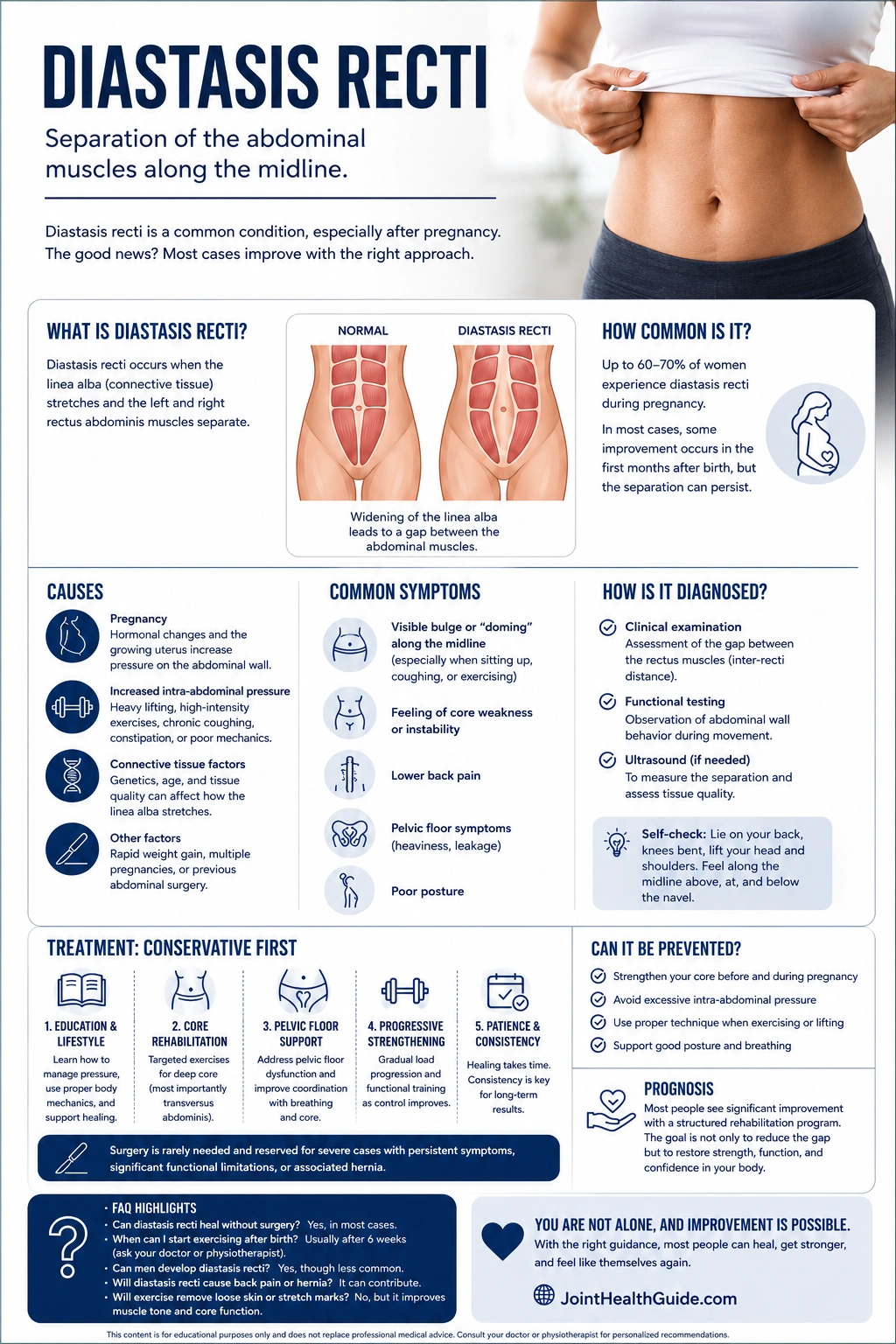
Diastasis recti (also called rectus diastasis or abdominal muscle separation) is a condition where the two sides of the rectus abdominis (“six-pack”) muscles become separated due to stretching and weakening of the abdominal wall connective tissue.
It is most commonly seen during pregnancy and after childbirth, when hormonal changes and the growing uterus place increased stress on the abdominal muscles. However, diastasis recti can also occur in men and women who have never been pregnant.
The most noticeable sign is a visible abdominal bulge or “doming” during certain movements or exercises. Some people may also experience reduced core stability, lower back pain, pelvic discomfort, or pelvic floor-related symptoms.
The good news is that most cases improve with targeted rehabilitation. In this article, we will explain what causes diastasis recti, how to recognize it, which exercises can help, and when additional treatment may be needed.
Quick Oveview – Diastasis Recti
- Diastasis recti is a condition in which the two sides of the rectus abdominis muscles separate due to stretching and widening of the linea alba, most commonly during pregnancy.
- The condition is very common after childbirth and represents an adaptation of the abdominal wall to pregnancy-related changes rather than a true muscle tear.
- Typical signs include abdominal bulging or “doming” during movement, reduced core stability, and sometimes associated symptoms such as lower back pain or pelvic floor dysfunction.
- Diagnosis is usually made through clinical examination by assessing the inter-recti distance, abdominal wall tension, and functional control during movement.
- Conservative rehabilitation with targeted core exercises and progressive strengthening is the first-line treatment and can significantly improve abdominal wall function.
- Surgery is rarely required and is generally reserved for severe cases with significant functional limitations, associated hernia, or persistent symptoms despite appropriate rehabilitation.
Anatomy of the Abdominal Wall
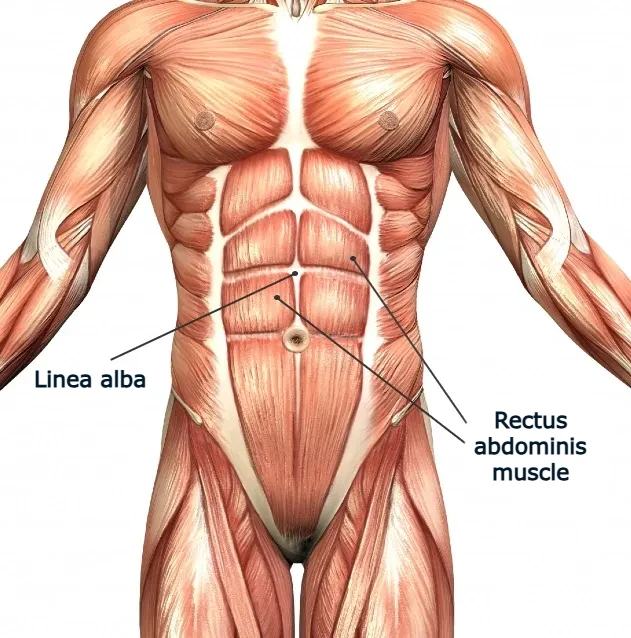
The rectus abdominis is a long paired muscle that runs vertically along the front of the abdomen, extending from the lower ribs to the pubic bone. Commonly known as the “six-pack” muscle, it plays an important role in trunk movement, posture, and core stability.
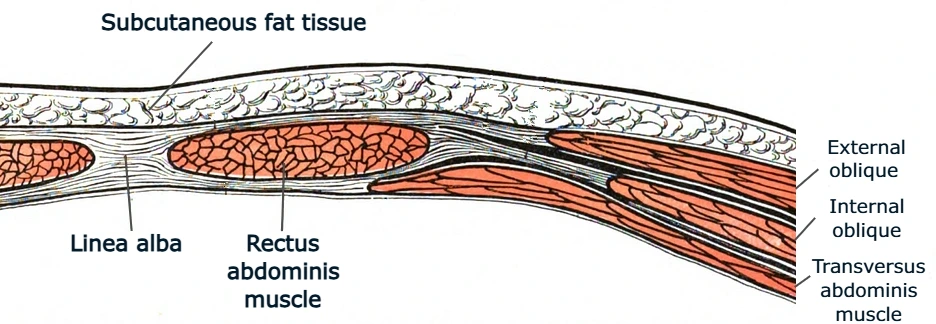
The left and right rectus abdominis muscles are connected by a strong band of connective tissue called the linea alba, which runs down the middle of the abdomen. In people with diastasis recti, this connective tissue stretches and widens, increasing the distance between the two muscles without causing a tear.
The abdominal wall also includes the external oblique, internal oblique, and transversus abdominis muscles. Although these muscles contribute to core stability and abdominal function, the hallmark of diastasis recti is the widening of the linea alba between the two rectus abdominis muscles.
What Is Diastasis Recti and Why Does It Occur?
Diastasis recti (also called rectus diastasis) is a condition in which the left and right rectus abdominis muscles become separated due to stretching and thinning of the linea alba, the connective tissue that joins them along the midline of the abdomen. Rather than a muscle tear, diastasis recti is characterized by an increased inter-recti distance.
The condition most commonly develops during the second or third trimester of pregnancy. As the uterus expands, the growing baby places increasing pressure on the abdominal wall. At the same time, pregnancy-related hormonal changes make connective tissues more flexible, allowing the linea alba to stretch. Together, these mechanical and hormonal factors can cause the abdominal muscles to move farther apart.
After childbirth, the abdominal wall gradually begins to recover. In many women, the linea alba regains tension and the separation decreases naturally during the first weeks and months postpartum. However, if the connective tissue has been stretched beyond its ability to recover, the gap between the rectus muscles may persist, resulting in long-term diastasis recti.
A persistent separation often causes a visible bulge or “doming” along the midline of the abdomen, especially when sitting up, coughing, lifting, or performing abdominal exercises. As a result, some women continue to appear pregnant months or even years after giving birth despite losing their pregnancy weight.
How Common Is Diastasis Recti?
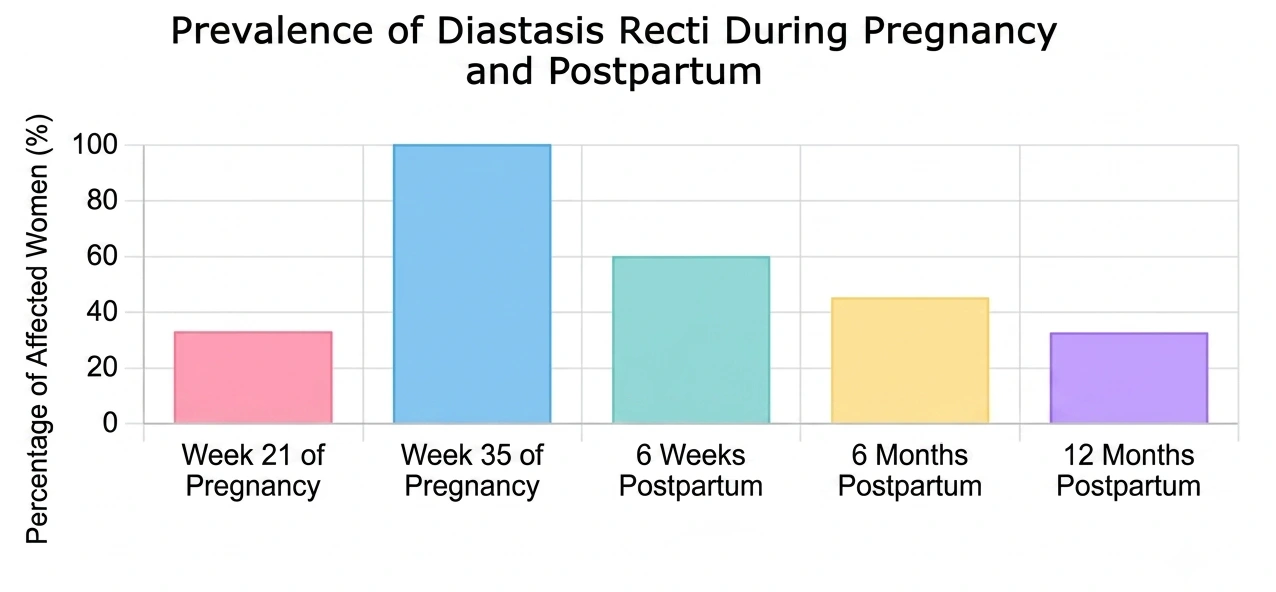
Diastasis recti is most commonly associated with pregnancy and is considered a normal adaptation of the abdominal wall as the uterus grows. Studies show that approximately 30% of women have diastasis recti by around the 21st week of pregnancy, while the condition becomes almost universal during the final weeks of pregnancy.
“Diastasis recti is a normal part of late pregnancy and occurs in nearly all women as the abdominal wall adapts to the growing baby.”
Following childbirth, the abdominal wall gradually recovers in most women. As the linea alba regains tension, the gap between the rectus abdominis muscles often decreases naturally over the first weeks and months postpartum.
However, recovery is not complete for everyone. Research suggests that about one in three women continues to have diastasis recti 12 months after delivery, indicating that the connective tissue has not fully regained its previous tension and function.
The graph below illustrates how the prevalence of diastasis recti changes throughout pregnancy and during the first year after childbirth.
Diastasis Recti Symptoms
Diastasis recti that develops during pregnancy can be difficult to recognize because the abdomen is already stretched. Most women first notice the condition during the first few weeks after childbirth, although some may not realize they have diastasis recti until much later.
The condition itself is usually not painful. However, the reduced support provided by the abdominal wall may contribute to symptoms in other parts of the body.
The most common sign of diastasis recti is a visible bulge or “doming” along the midline of the abdomen, especially when sitting up from lying down, coughing, lifting, or performing abdominal exercises. Some women also notice a persistent postpartum belly or stomach bulge that remains despite losing pregnancy weight.
Common symptoms of diastasis recti include:
- A visible bulge or doming in the middle of the abdomen
- A soft or “mushy” feeling around the belly button
- Reduced core strength and difficulty lifting, exercising, or performing daily activities
- Lower back pain
- Pelvic pain or hip discomfort
- Pelvic floor dysfunction, including stress urinary incontinence
- Constipation
- A feeling of weakness or instability in the abdominal wall
Although diastasis recti is not a life-threatening condition, its physical and cosmetic effects can significantly impact confidence, body image, and quality of life. If symptoms interfere with daily activities or exercise, a professional assessment is recommended.
How Is Diastasis Recti Diagnosed?
Diastasis recti is usually diagnosed through a physical examination. A healthcare professional, such as a physiatrist or physical therapist, can assess whether abdominal separation is present, where it is located, and how it affects abdominal wall function.
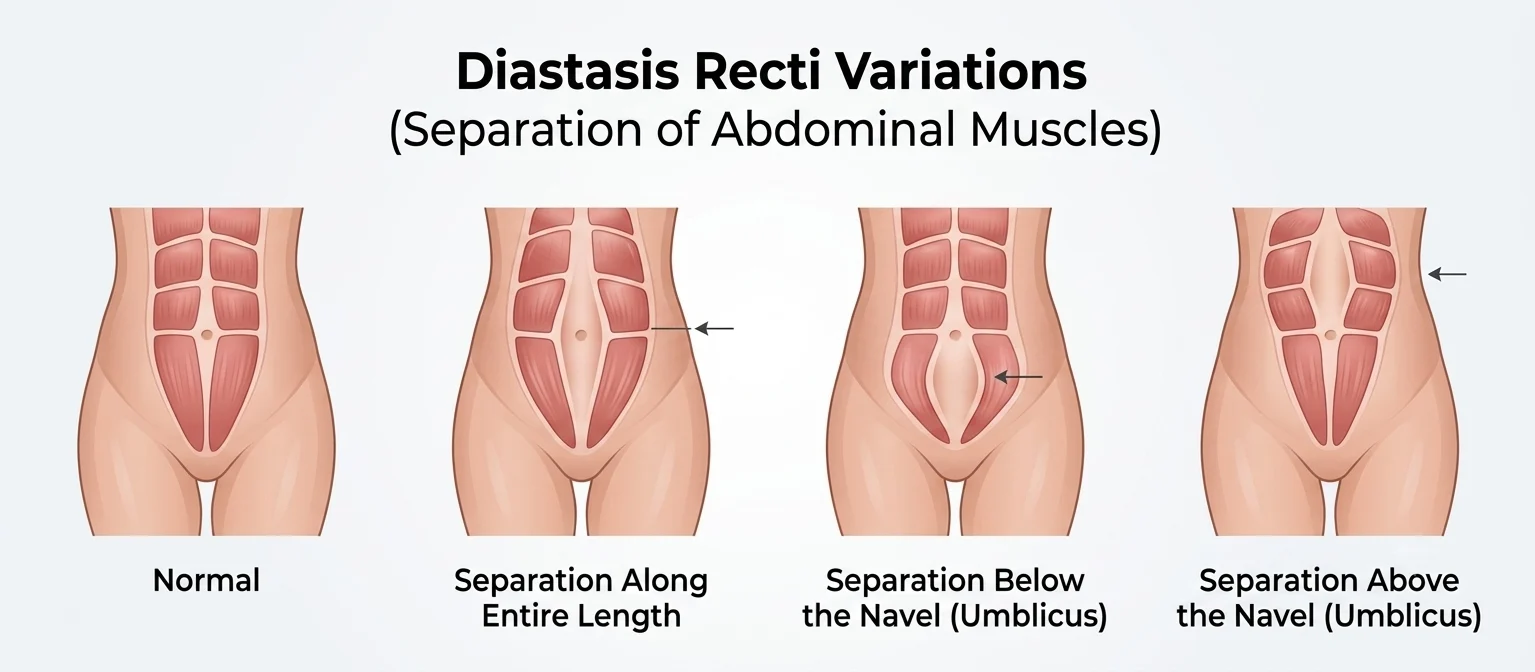
The separation can occur above the belly button, at the level of the belly button, or below the belly button. During the examination, the clinician evaluates the tension of the abdominal wall and measures the distance between the two sides of the rectus abdominis muscles, known as the inter-recti distance (IRD).
A simple clinical assessment can often be performed by gently palpating the midline of the abdomen while the patient activates the abdominal muscles. The distance may be estimated using finger widths or measured more precisely with tools such as a caliper or measuring tape.
As a general clinical guideline, a separation of more than 2 cm or approximately two or more finger widths between the rectus abdominis muscles is commonly considered consistent with diastasis recti. However, the significance of the gap depends not only on its size but also on the tension of the linea alba, abdominal wall function, and the presence of symptoms.
In some cases, ultrasound imaging can be used to provide a more accurate measurement of the linea alba and assess abdominal wall function. Other imaging tests are rarely needed unless there is suspicion of another condition, such as an abdominal hernia.
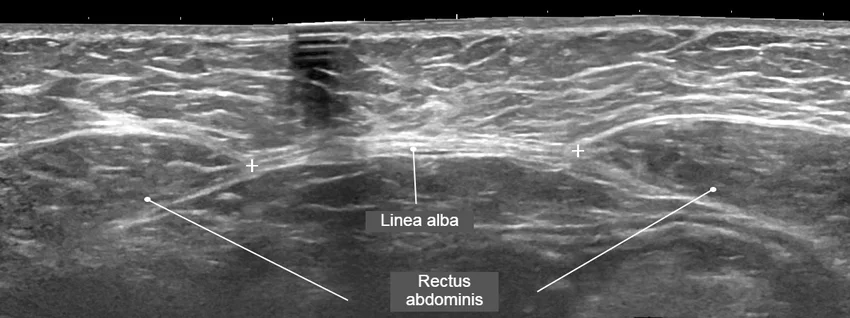
A complete assessment should therefore consider both the anatomical separation and how well the abdominal wall functions during everyday activities and exercise.
How Do You Know If You Have Diastasis Recti?
Many people with diastasis recti first notice a change in the appearance of their abdomen, especially after pregnancy. A persistent stomach bulge, a soft area around the belly button, or a visible ridge along the middle of the abdomen during certain movements can be signs of abdominal muscle separation.
One simple way to check for possible diastasis recti at home is the following:
- Lie on your back with your knees bent and your feet flat on the floor.
- Place your fingers along the midline of your abdomen, around the belly button area.
- Gently lift your head and shoulders slightly off the floor, as if starting a small abdominal crunch.
- Feel for a gap between the two sides of the rectus abdominis muscles and notice whether your fingers sink into a soft area along the midline.
A separation of approximately two or more finger widths (or more than about 2 cm) may suggest diastasis recti. However, the size of the gap alone does not determine whether treatment is needed. The tension of the linea alba, abdominal wall strength, and the presence of symptoms are also important.
A self-check can help you recognize possible diastasis recti, but a professional assessment is recommended if you have significant abdominal weakness, pain, pelvic floor symptoms, or difficulty returning to exercise.
Diastasis Recti Treatment
The first-line treatment for diastasis recti is a structured rehabilitation program that includes physical therapy and targeted exercises. The main goal of treatment is not only to reduce the separation between the rectus abdominis muscles but, more importantly, to restore abdominal wall function, improve core stability, and reduce symptoms.
In most cases, conservative treatment can significantly improve abdominal strength and function. Surgery is rarely needed and is usually reserved for selected cases with severe functional problems or associated abdominal wall conditions.
Some healthcare professionals recommend short-term use of an abdominal binder after childbirth. However, it is important to understand that an abdominal support belt does not heal diastasis recti or strengthen the abdominal muscles. It may provide temporary support, improve comfort, and serve as a reminder to maintain proper posture and movement patterns.
Long-term dependence on abdominal binders is generally not recommended, as recovery should focus on restoring active muscular control and strength.
Exercises for Diastasis Recti
Targeted exercises are the cornerstone of conservative treatment for diastasis recti. A well-designed rehabilitation program focuses on improving coordination and strength of the deep core muscles, including the transversus abdominis, while gradually restoring trunk stability, posture, and functional movement involving the abdominal wall, spine, and hips.
Many women can begin gentle rehabilitation exercises during the early postpartum period, with progression depending on recovery, symptoms, and individual circumstances. The goal is not only to reduce the separation between the rectus abdominis muscles but, more importantly, to improve abdominal wall function, core strength, confidence, and quality of life.
Some rehabilitation programs may also include electrical muscle stimulation as an adjunct to exercise, particularly in the early stages when activating the abdominal muscles is difficult. However, it should be viewed as a supplement rather than a replacement for active exercise.
When performing these exercises, avoid holding your breath or allowing the abdomen to bulge outward (“doming”). Progress gradually, and stop any exercise that causes pain or loss of abdominal control.
The following exercises can be safely performed at home by most people with diastasis recti.
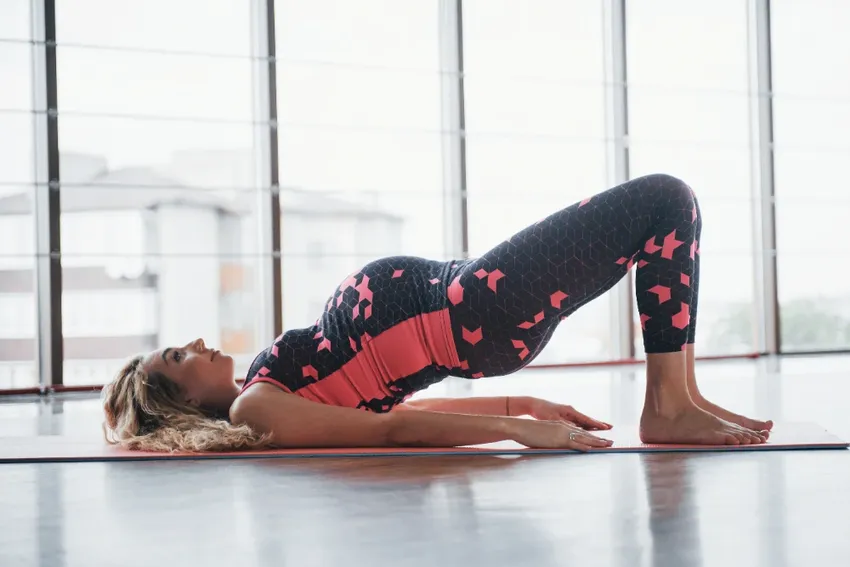
1. Glute Bridge
Difficulty level: 🟢 Beginner
The glute bridge is one of the best beginner exercises for people with diastasis recti. It strengthens the gluteal muscles and posterior chain while improving pelvic stability without placing excessive stress on the abdominal wall.
Why it helps
- Strengthens the gluteal muscles and hamstrings
- Improves pelvic and trunk stability
- Encourages coordinated activation of the core muscles
- Places relatively little strain on the linea alba
How to perform the glute bridge
- Lie on your back with your knees bent to approximately 90 degrees and your feet flat on the floor, hip-width apart.
- Gently engage your deep abdominal muscles while maintaining normal breathing.
- Press through your heels and slowly lift your hips until your shoulders, hips, and knees form a straight line.
- Hold the position for 3–5 seconds while breathing normally.
- Slowly lower your hips back to the starting position.
Perform 10–15 repetitions for 2–3 sets, depending on your comfort level.
Progression
Once you can perform the exercise without abdominal doming or loss of pelvic control, progress to a marching bridge by alternately lifting one foot a few centimeters off the floor while keeping your pelvis level.
Tip: If you notice your abdomen bulging outward during the exercise, reduce the height of the bridge and focus on controlled breathing and gentle core activation before progressing.
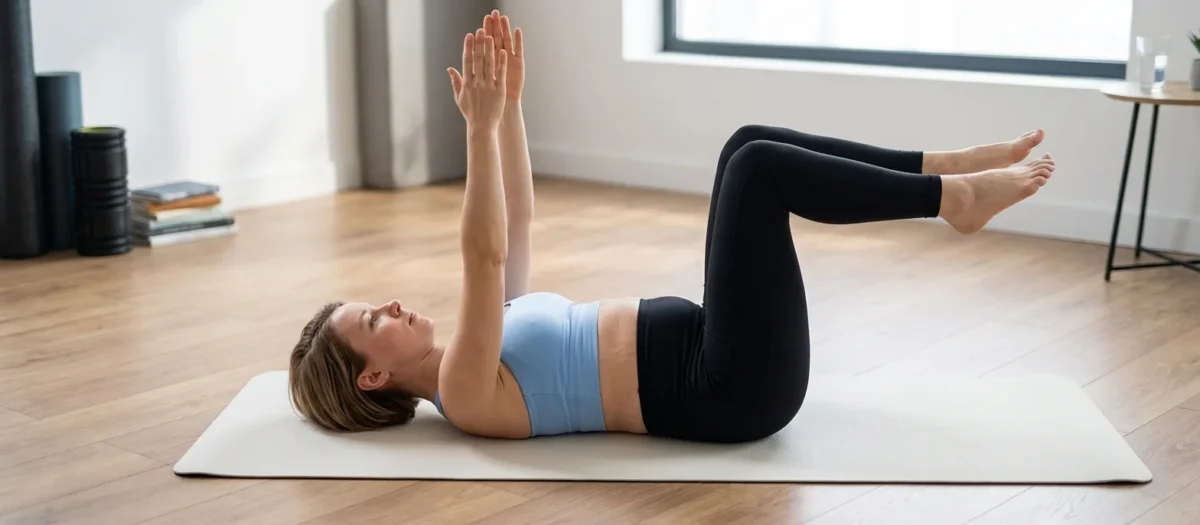
2. Dead Bug
Difficulty level: 🟢 Beginner
The dead bug is an excellent exercise for improving deep core muscle activation and coordination. It teaches the abdominal muscles to stabilize the spine while the arms and legs move independently, making it particularly useful during diastasis recti rehabilitation.
Why it helps
- Improves deep core muscle activation
- Promotes coordinated movement between the upper and lower body
- Enhances trunk stability and movement control
- Helps manage intra-abdominal pressure during movement
How to perform the dead bug
- Lie on your back with your hips and knees bent to 90 degrees and your arms extended toward the ceiling.
- Gently engage your deep abdominal muscles while maintaining a neutral spine.
- Slowly extend one leg and the opposite arm toward the floor without allowing your lower back to arch.
- Return to the starting position and repeat on the opposite side.
- Continue alternating sides in a slow and controlled manner.
Perform 8–12 repetitions on each side for 2–3 sets.
Progression
As your core strength improves, gradually increase the range of motion or hold the extended position for a few seconds before returning to the starting position.
Tip: Keep your breathing steady throughout the exercise. If you notice abdominal doming or your lower back lifting off the floor, reduce the range of motion and focus on maintaining good core control.
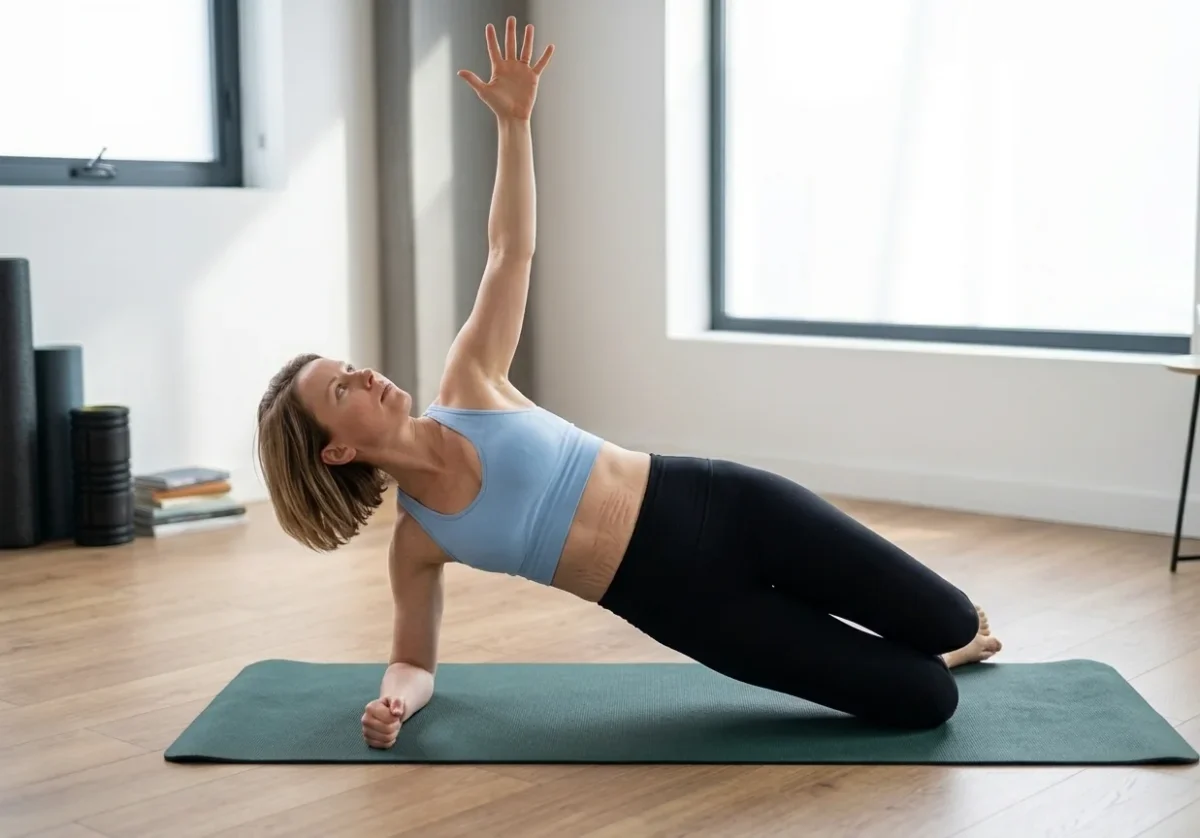
3. Modified Side Plank
Difficulty level: 🟢 Beginner
The modified side plank strengthens the muscles along the sides of the trunk, including the obliques and the deep core muscles. It improves lateral stability while placing relatively little stress on the linea alba compared with many traditional abdominal exercises.
Why it helps
- Strengthens the oblique abdominal muscles
- Improves lateral trunk and pelvic stability
- Enhances core control during everyday movements
- Places relatively low strain on the abdominal wall
How to perform the modified side plank
- Lie on your side with your knees bent and your elbow directly beneath your shoulder.
- Tighten your core muscles while keeping your neck in a neutral position.
- Lift your hips off the floor until your shoulders, hips, and knees form a straight line.
- Hold the position for 5–10 seconds while breathing normally.
- Slowly lower your hips and repeat.
Perform 8–10 repetitions on each side for 2–3 sets.
Progression
As your strength improves, progress to a full side plank by straightening your legs and supporting your body on your feet instead of your knees.
Tip: Keep your hips level throughout the exercise. If you feel excessive strain in your shoulder or notice abdominal bulging, return to the modified version and shorten the hold time.
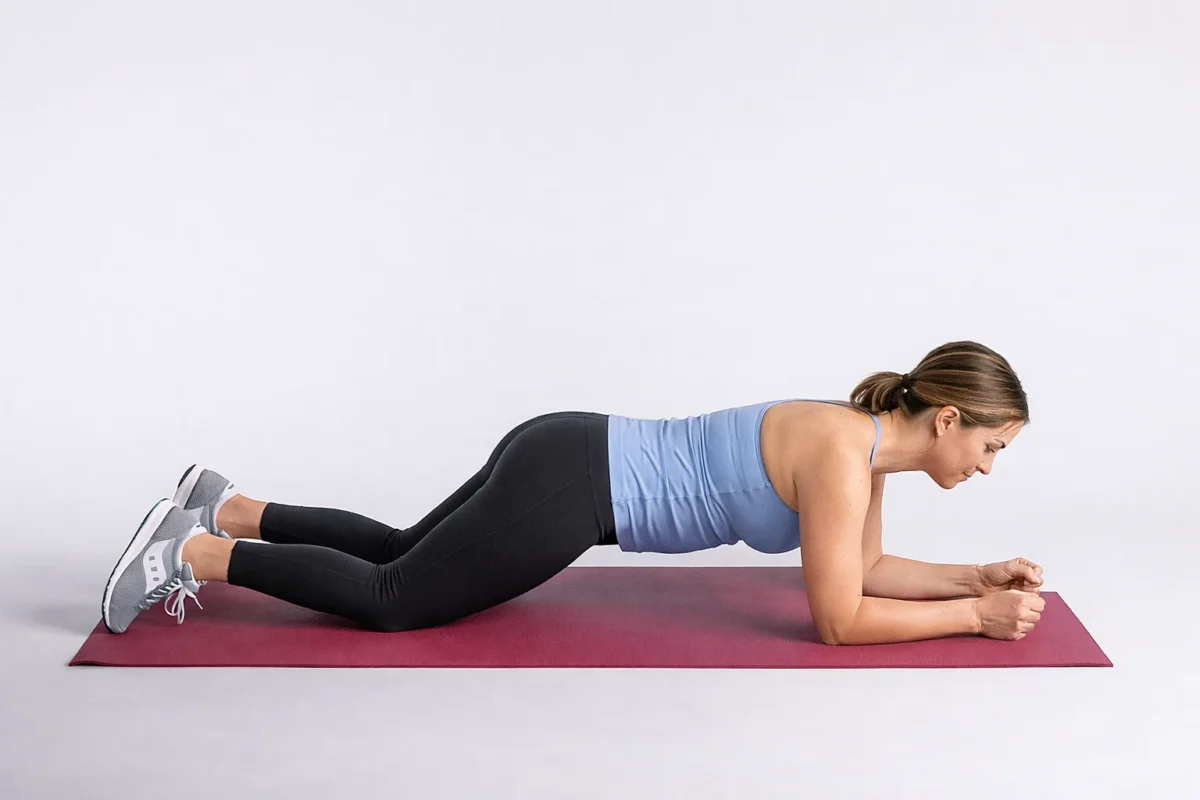
4. Modified Plank
Difficulty level: 🟡 Intermediate
The modified plank is an effective exercise for improving overall core strength and trunk stability. It should be introduced gradually and only when you can maintain good abdominal control without pain or abdominal doming.
Why it helps
- Strengthens the deep core muscles
- Improves trunk stability and postural control
- Enhances coordination between the abdominal, back, and hip muscles
- Prepares the body for more demanding functional activities
How to perform the modified plank
- Begin on your forearms and knees, with your elbows directly beneath your shoulders.
- Tighten your core muscles while maintaining a neutral spine.
- Lift your hips until your shoulders, hips, and knees form a straight line.
- Hold the position for 10–20 seconds while breathing normally.
- Slowly return to the starting position.
Perform 3–5 repetitions, gradually increasing the hold time as your strength improves.
Progression
When you can comfortably perform the modified plank without abdominal bulging, progress to a standard forearm plank or a high plank on your hands.
Tip: Watch your abdomen throughout the exercise. If you notice bulging or “doming” along the midline, stop the exercise and return to an easier variation until you develop better core control.
5. Modified Curl-Up
Difficulty level: 🟡 Intermediate
The modified curl-up strengthens the upper portion of the rectus abdominis while encouraging coordinated activation of the deep core muscles. Unlike a traditional sit-up, this variation minimizes stress on the abdominal wall when performed with proper technique.
Why it helps
- Strengthens the rectus abdominis
- Improves functional core strength
- Enhances trunk control during everyday activities
- Encourages coordinated breathing and abdominal muscle activation
How to perform the modified curl-up
- Lie on your back with your knees bent and your feet flat on the floor.
- Tighten your deep abdominal muscles and maintain a neutral spine.
- Exhale as you slowly lift your head and shoulders a few inches off the floor.
- Hold the position for 5–10 seconds while breathing normally.
- Slowly lower yourself back to the starting position.
Perform 8–12 repetitions for 2–3 sets.
Progression
As your abdominal strength improves, gradually increase the hold time or the height of the lift while maintaining good control and avoiding abdominal doming.
Tip: Keep the movement small and controlled. If you notice bulging along the midline of your abdomen, reduce the height of the lift or return to an easier exercise until your core control improves.
6. Heel Slides
Difficulty level: 🟢 Beginner
Heel slides are a simple but effective exercise for improving deep core activation and abdominal wall control. They teach you to maintain stability in the trunk while moving the legs, which is important for everyday activities such as walking, lifting, and changing positions.
Why it helps
- Improves activation of the deep core muscles
- Trains abdominal wall control during leg movement
- Helps maintain pelvic stability
- Builds a foundation for more advanced core exercises
How to perform heel slides
- Lie on your back with your knees bent and your feet flat on the floor.
- Gently activate your deep abdominal muscles while maintaining normal breathing.
- Slowly slide one heel away from your body until the leg is partially extended.
- Return the heel to the starting position while maintaining control of your pelvis and abdomen.
- Repeat with the opposite leg.
Perform 10–15 repetitions on each side for 2–3 sets.
Progression
As your control improves, increase the distance of the heel slide or progress to more challenging exercises such as dead bug variations.
Tip: Keep your abdomen relaxed and controlled during the movement. If you notice abdominal doming or your lower back arching excessively, reduce the range of motion.
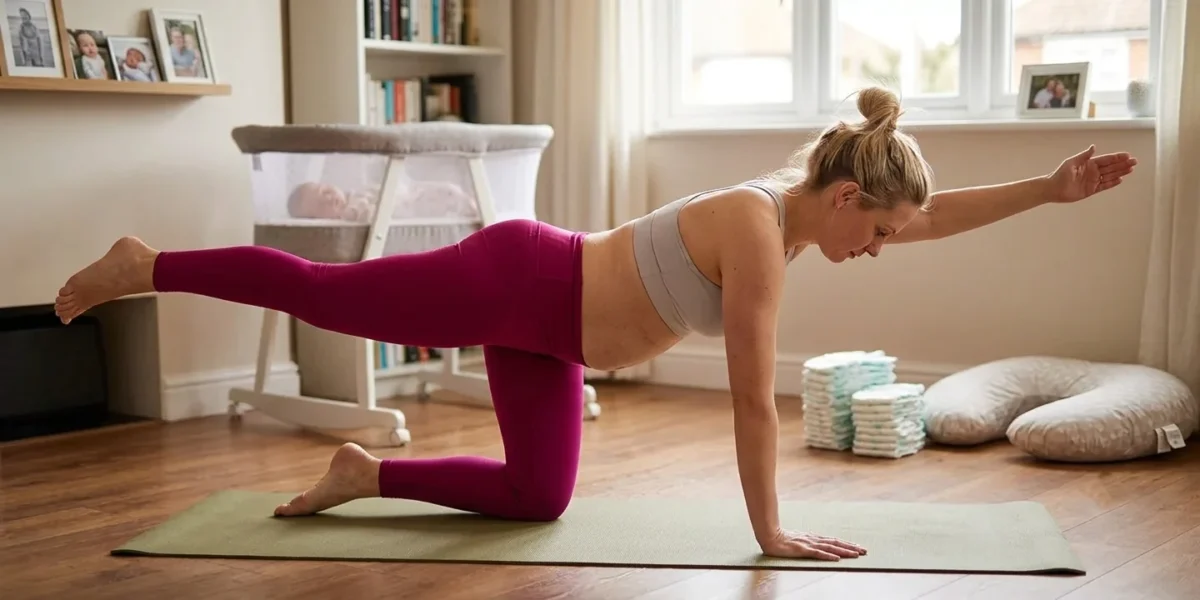
7. Bird Dog
Difficulty level: 🔴 Advanced
The bird dog is an advanced core stabilization exercise that improves balance, coordination, and trunk control. It challenges the abdominal muscles to stabilize the spine while the arms and legs move in opposite directions, making it an excellent progression for people with good core control.
Why it helps
- Strengthens the deep core and back muscles
- Improves spinal and pelvic stability
- Enhances coordination between the upper and lower body
- Develops functional balance for everyday activities
How to perform the bird dog
- Begin on your hands and knees with your hands directly beneath your shoulders and your knees beneath your hips.
- Gently engage your deep core muscles while maintaining a neutral spine.
- Slowly extend one arm forward and the opposite leg backward until both are parallel to the floor.
- Hold the position for 3–5 seconds while breathing normally.
- Return to the starting position and repeat on the opposite side.
Perform 8–12 repetitions on each side for 2–3 sets.
Progression
As your stability improves, increase the hold time or perform the exercise on an unstable surface under the guidance of a healthcare professional.
Tip: Keep your pelvis level throughout the movement. Avoid rotating your hips or arching your lower back, and stop the exercise if you notice abdominal doming or loss of core control.
Surgery for Diastasis Recti
Most people with diastasis recti achieve significant improvement with a structured rehabilitation program that includes targeted exercises and physical therapy. As a result, surgery is rarely the first treatment option and is generally considered only after conservative treatment has failed.
Surgical repair may be recommended if diastasis recti is associated with an abdominal hernia, causes significant functional impairment, or remains a major cosmetic concern after completing rehabilitation and allowing adequate time for postpartum recovery.
Several surgical techniques are available, and the most appropriate approach depends on the severity of the separation, the quality of the abdominal wall, and whether excess skin or a hernia is present.
Open Repair (Abdominoplasty)
Open repair, often combined with abdominoplasty (tummy tuck), is the most commonly performed procedure. During surgery, the separated rectus abdominis muscles are brought back together, and excess skin can be removed if necessary. This approach is often preferred for larger diastasis recti or when significant skin laxity is present.
Laparoscopic Repair
Laparoscopic repair is a minimally invasive technique performed through several small incisions using a camera and specialized instruments. Compared with open surgery, it typically results in smaller scars, less postoperative pain, and a faster recovery. However, it is not suitable for every patient, particularly those with excess skin or very large abdominal separations.
Endoscopic Repair
Endoscopic repair is another minimally invasive option that uses very small incisions to repair the abdominal wall. It is generally best suited for carefully selected patients with moderate diastasis recti and good skin quality. While it offers excellent cosmetic results, it does not address excess abdominal skin.
The choice of surgical technique should always be individualized after consultation with an experienced surgeon. Regardless of the procedure performed, postoperative rehabilitation and a gradual return to physical activity remain essential for achieving the best long-term results.
Can Diastasis Recti Be Prevented?
Because diastasis recti is a normal adaptation of the abdominal wall during pregnancy, it cannot always be prevented. However, healthy lifestyle habits and appropriate exercise may help reduce the risk of persistent abdominal separation after childbirth.
The following strategies may support recovery and reduce the likelihood of long-term diastasis recti:
- Maintain a healthy pregnancy weight gain. Excessive weight gain and larger babies may place greater stress on the abdominal wall.
- Stay physically active during pregnancy. Regular, moderate exercise helps maintain core strength, improves posture, and supports overall trunk stability.
- Choose postpartum exercises carefully. During the early stages of recovery, avoid exercises that cause the abdomen to bulge or “dome,” such as aggressive sit-ups or high-intensity abdominal training.
- Avoid excessive abdominal strain. Heavy lifting and activities that markedly increase intra-abdominal pressure should be introduced gradually during the postpartum period. When getting out of bed, roll onto your side first and use your arms to push yourself up instead of performing a sit-up.
Although these measures cannot completely prevent diastasis recti, they may help improve abdominal wall function and support a smoother recovery after pregnancy.
Prognosis
The outlook for people with diastasis recti is generally excellent. In many women, the separation decreases naturally during the first weeks and months after childbirth as the abdominal wall gradually regains tension.
For women with persistent diastasis recti, a structured rehabilitation program that includes targeted exercises and progressive strengthening can significantly improve core function, trunk stability, and quality of life. Even when a small separation remains, many people become completely symptom-free and return to normal daily activities and exercise.
Only a small proportion of patients require surgical treatment, usually because of significant functional limitations, an associated abdominal hernia, or cosmetic concerns. With appropriate treatment and gradual rehabilitation, the long-term prognosis is favorable for the vast majority of patients.
FAQ
Can diastasis recti heal without surgery?
Yes. In most cases, diastasis recti improves with targeted exercises, physical therapy, and gradual strengthening of the core muscles. Surgery is usually reserved for people with significant functional limitations, an associated abdominal hernia, or persistent cosmetic concerns after conservative treatment.
When can I start exercising after giving birth?
Gentle breathing and core activation exercises can often begin soon after childbirth if there are no medical complications. More structured strengthening exercises are typically introduced around 6 weeks after a vaginal delivery, while recovery after a cesarean section may take longer. Always follow your healthcare provider’s advice.
Is it ever too late to fix diastasis recti?
No. Many women improve their abdominal strength and function months or even years after pregnancy. Although the separation may not completely close, targeted rehabilitation can significantly improve core stability, posture, and everyday function.
Which exercises should I avoid with diastasis recti?
Avoid exercises that cause your abdomen to bulge or “dome,” particularly during the early stages of rehabilitation. High-intensity sit-ups, crunches, or heavy lifting may need to be modified until you develop better core control. Exercise programs should progress gradually based on your symptoms and ability.
Can diastasis recti cause lower back pain?
Yes. Weakness of the abdominal wall may reduce trunk stability, leading to increased strain on the lower back and pelvis. Many people experience improvement in back pain after completing a structured core strengthening program.
Can diastasis recti cause a hernia?
Diastasis recti itself is not a hernia, because there is no hole in the abdominal wall. However, some people may have both conditions at the same time. If you notice a painful lump, increasing swelling, or symptoms that worsen with coughing or lifting, you should seek medical evaluation.
Can men develop diastasis recti?
Yes. Although diastasis recti is most common during and after pregnancy, it can also occur in men, particularly those with obesity, chronic abdominal strain, heavy lifting, or previous abdominal surgery.
Will exercise remove loose skin or stretch marks?
No. Exercise can strengthen the abdominal muscles and improve abdominal wall function, but it cannot remove excess skin or stretch marks left after pregnancy. These concerns may improve over time but often require different cosmetic treatments if they remain bothersome.
Will I always have a visible belly bulge?
Not necessarily. Many people notice a significant improvement after completing a rehabilitation program. Even if a small separation remains, strengthening the core muscles often reduces abdominal bulging and improves overall function.
Can I become pregnant again if I have diastasis recti?
Yes. Diastasis recti does not usually prevent future pregnancies. However, another pregnancy may stretch the abdominal wall again, so women considering surgery are often advised to postpone it until they have completed childbearing.
Hall H, Sanjaghsaz H. Diastasis Recti Rehabilitation. StatPearls [Internet]. Updated 2023 Aug 8. Evidence-based review: Diastasis recti rehabilitation and management principles
Sperstad JB et al. Diastasis recti abdominis during pregnancy and 12 months after childbirth: prevalence, risk factors and report of lumbopelvic pain. British Journal of Sports Medicine. Clinical study: Prevalence of diastasis recti and association with postpartum pain
Fernandes da Mota PG et al. Prevalence and risk factors of diastasis recti abdominis from late pregnancy to 6 months postpartum, and relationship with lumbo-pelvic pain. Manual Therapy. Research study: Postpartum prevalence, risk factors, and relationship with pelvic pain
Radhakrishnan M, Ramamurthy K. Efficacy and Challenges in the Treatment of Diastasis Recti Abdominis: A Scoping Review on the Current Trends and Future Perspectives. Diagnostics (Basel). Review article: Current treatment approaches and rehabilitation strategies for diastasis recti
Jessen ML et al. Treatment Options for Abdominal Rectus Diastasis. Frontiers in Surgery. Review article: Conservative and surgical treatment options for rectus diastasis
Cavalli M et al. Prevalence and risk factors for diastasis recti abdominis: a review and proposal of a new anatomical variation. Hernia. Review: Prevalence, risk factors, and anatomical aspects of diastasis recti
Soto-González M et al. Effect of hypopressive and conventional abdominal exercises on postpartum diastasis recti: A randomized controlled trial. PLOS One. Randomized controlled trial: Effects of postpartum abdominal exercise programs
Skoura A et al. Diastasis Recti Abdominis Rehabilitation in the Postpartum Period: A Scoping Review of Current Clinical Practice. International Urogynecology Journal. Scoping review: Current rehabilitation practices after pregnancy
Laframboise FC et al. Postpartum Exercise Intervention Targeting Diastasis Recti Abdominis. International Journal of Exercise Science. Clinical study: Postpartum exercise intervention for diastasis recti recovery