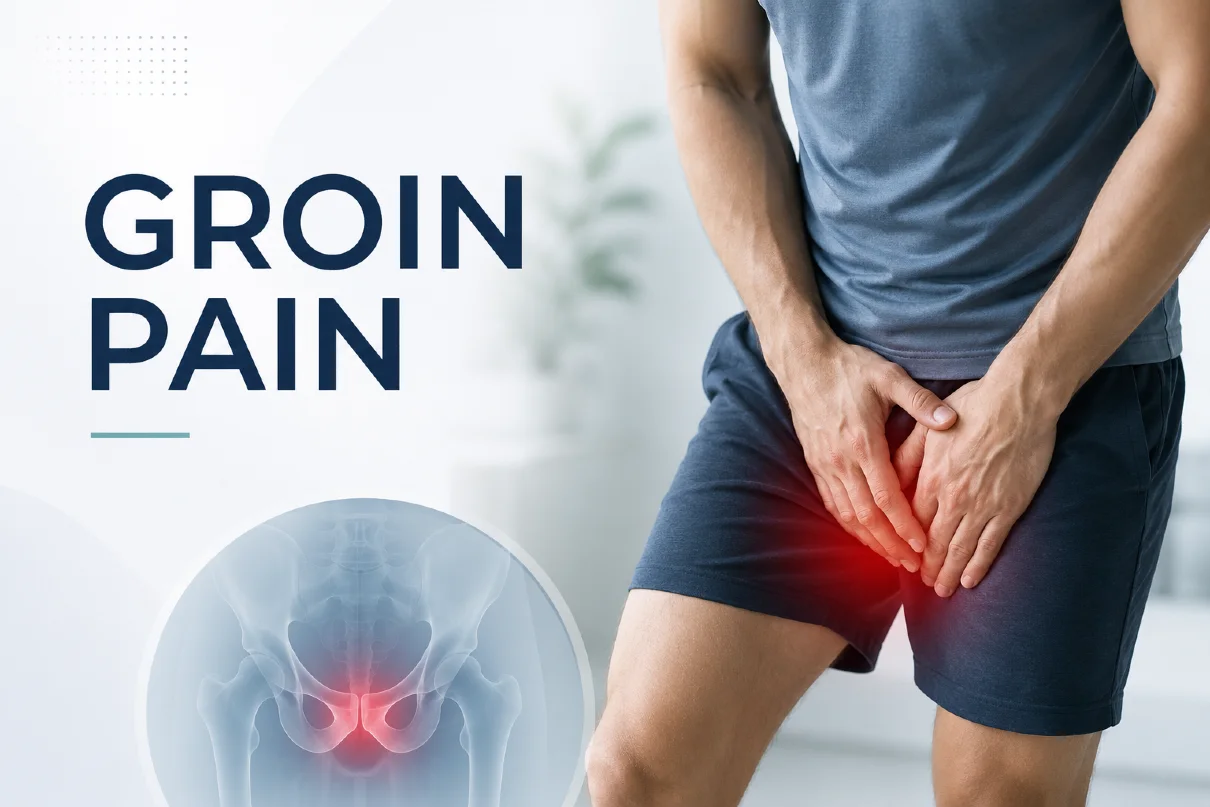
Groin pain refers to discomfort felt in the area between the lower abdomen and the inner thigh, where the trunk transitions into the legs. Because this region contains muscles, tendons, nerves, lymph nodes, reproductive organs, and parts of the urinary and digestive systems, groin pain can have many different causes — from simple muscle strain to conditions that require urgent medical attention.
In athletes, groin pain is most commonly related to overuse injuries, sudden changes of direction, sprinting, or kicking movements. However, groin pain can also originate from inguinal hernias, hip osteoarthritis, kidney stones, or inflammatory conditions of pelvic organs. Due to the anatomical complexity of the area, identifying the exact source of pain can sometimes be challenging.
Many non‑musculoskeletal conditions — including disorders of the urinary tract, male and female reproductive organs, intestines, and lymphatic system — may present primarily as groin pain. In certain cases, groin pain can be a sign of a serious underlying condition, making timely evaluation essential.
The goal of this article is to provide a clear overview of the most common causes of groin pain, key symptoms to watch for, and evidence‑based treatment options for each condition.
Key Clinical Points – Groin Pain
- Groin pain has many possible causes, including muscle injuries, hip disorders, nerve compression, hernias, and internal organ conditions.
- The most common athletic causes are groin muscle strain, pulled groin injury, and sports hernia (athletic pubalgia).
- Non‑athletic causes include hip osteoarthritis, labral tears, nerve compression (L1–L3), and urinary tract conditions such as kidney stones or cystitis.
- In women, groin pain may result from ovarian cysts, endometriosis, or ectopic pregnancy; in men, from varicocele, epididymitis, or prostatitis.
- Imaging such as ultrasound, X‑ray, or MRI is often required to confirm the diagnosis, especially when symptoms persist.
- Most patients improve with rest, physical therapy, and targeted treatment, while urgent conditions (torsion, ectopic pregnancy) require immediate medical care.
What Is the Groin?
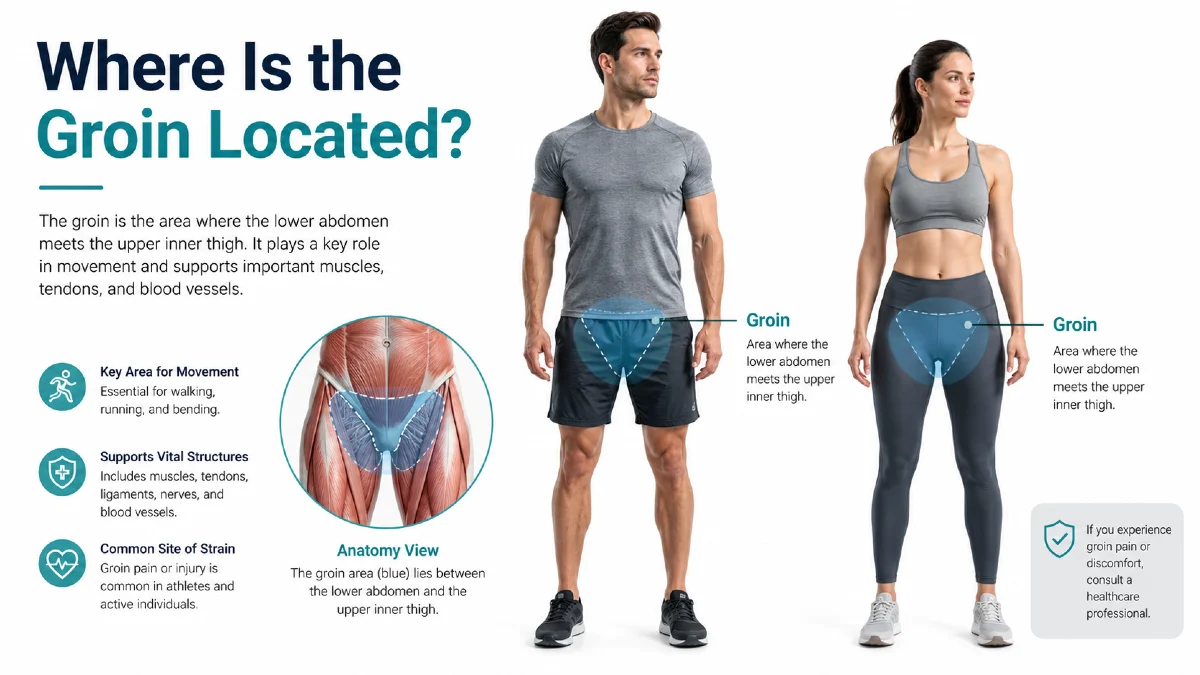
The groin is the area where the lower abdomen meets the inner thigh. It represents the transition zone between the trunk and the legs, containing multiple layers of muscles, tendons, nerves, blood vessels, and lymph nodes. Because so many important structures pass through this region, groin pain can originate from several different anatomical systems — not only from muscles and joints.
Where Is the Groin Located?
The groin region is located on the inner side of the hip, extending from the pubic bone toward the upper inner thigh. It includes the inguinal area (just above the crease of the thigh), the adductor region (inner thigh muscles), and the front of the hip joint. This is also the pathway through which major blood vessels, nerves, and lymphatic structures travel from the abdomen into the legs.
Relevant Anatomy of the Groin Region
The groin is a highly complex anatomical zone where muscles, bones, joints, nerves, and internal organs meet and interact. This complexity explains why groin pain can be difficult to diagnose and why it may come from musculoskeletal, abdominal, pelvic, or urogenital sources.
Below is a clear overview of the key structures.
Bones and Joints
- Hip Joint — connects the femur (thigh bone) to the pelvis; pain from hip osteoarthritis or labral tears often radiates into the groin.
- Pubic Symphysis — the joint where the two sides of the pubic bone meet; common source of pain in athletes (osteitis pubis).
Muscles
- Adductor Muscles — located on the inner thigh; responsible for pulling the leg toward the midline. Adductor strain is one of the most common causes of groin pain in athletes.
- Iliopsoas — a powerful hip flexor that runs from the lumbar spine and pelvis to the front of the hip; irritation or tendinopathy can cause deep groin pain.
- Abdominal Wall Muscles — rectus abdominis, obliques, and transversus abdominis attach to the pelvis and inguinal ligament; weakness or overload can contribute to sports hernia (athletic pubalgia).
- Rectus Femoris and Sartorius — thigh muscles that originate just above the hip joint; their strain can mimic groin pain.
Nerves
- Femoral Nerve — supplies sensation to the front of the thigh and motor function to hip flexors; compression can cause pain radiating into the groin.
- Obturator Nerve — innervates the adductor muscles; irritation or entrapment can cause deep medial groin pain.
Blood Vessels and Lymph Nodes
- The groin contains major femoral blood vessels that carry blood between the trunk and the legs.
- It is also rich in inguinal lymph nodes, which may become enlarged or painful due to infection, inflammation, or systemic disease.
Nearby Organs
Although not located inside the groin, several organs lie close enough that their disorders often present as groin pain:
- Urinary tract (e.g., kidney stones, infections)
- Male reproductive organs (testicular torsion, epididymitis)
- Female reproductive organs (ovarian cysts, endometriosis)
- Lower abdominal organs (appendix, intestines)
Symptoms of Groin Pain
Symptoms of groin pain can vary widely depending on the underlying cause. In general, pain that appears during movement or physical activity is most often related to muscles, tendons, or joints.
Pain that occurs independently of movement may come from nerve compression, abdominal or pelvic organs, or the urinary or reproductive system. Groin pain is usually one‑sided, but it can also appear on both sides.
Below are the most common symptom patterns and what they typically suggest.
1. Sharp Pain During Movement (Muscle or Tendon Injury)
Muscle strain symptoms often include:
- Sudden, sharp groin pain during activity
- Pain that worsens when activating or stretching the injured muscle
- Localized tenderness when pressing on the painful spot
- Difficulty sprinting, kicking, or changing direction
This pattern is typical for adductor strain, iliopsoas strain, or injuries involving rectus femoris or sartorius.
2. Groin Pain Triggered by Straining or Standing (Inguinal Hernia)
Symptoms of inguinal hernia often include:
- Groin pain during coughing, lifting, or straining
- Pain when standing for long periods or getting up from a chair
- A visible or palpable bulge in the groin that may disappear when lying down
- Discomfort that increases with physical effort
This is one of the most common non‑musculoskeletal causes of groin pain.
3. Groin Pain Related to Hip Joint Disorders
Conditions such as hip osteoarthritis or avascular necrosis often cause:
- Deep, aching groin pain during walking
- Pain after prolonged sitting
- Stiffness and reduced hip mobility
- Pain radiating down the thigh toward the knee
Hip joint pathology is one of the most frequent sources of chronic groin pain in older adults.
4. Burning or Electric Pain (Nerve Compression)
Nerve‑related groin pain may feel:
- Burning, shooting, or electric
- Present even at rest, especially at night
- Triggered by walking, sitting, or certain hip positions
- Sometimes accompanied by numbness or altered sensation
This is most often caused by compression of nerve roots L1–L3 or irritation of the obturator or femoral nerve. Low back pain may or may not be present.
5. Severe, Fluctuating Pain Radiating Into the Groin (Kidney Stones)
Symptoms of kidney stone pain include:
- Sudden, intense pain that comes in waves
- Pain starting in the back or abdomen and radiating into the groin
- In men: pain spreading into the testicles
- In women: pain spreading into the labia or vaginal area
- Nausea, sweating, or difficulty finding a comfortable position
This type of pain is typically very strong and requires medical evaluation.
When Groin Pain Signals a Serious Condition
Although many causes of groin pain are mild and self‑limiting, some conditions require urgent medical evaluation. You should seek medical attention immediately if groin pain appears after a significant injury such as a fall, traffic accident, or sports‑related trauma.
Groin pain becomes more concerning when it is accompanied by any of the symptoms listed below.
Red Flags: Symptoms That Require Immediate Medical Attention
If groin pain occurs together with any of the following warning signs, contact a doctor right away:
- Fever
- Chills or shaking
- Blood in urine
- Abdominal or pelvic pain
- Nausea or vomiting
- General weakness or feeling unwell
- Inability to walk
- Bruising, redness, or swelling
- Painful groin bulge that cannot be pushed back
- Swelling and pain in the testicle
- Unexplained weight loss
Even if none of these symptoms are present, persistent or severe groin pain should still be evaluated by a healthcare professional.
Testicular Torsion: A Surgical Emergency
If you experience severe, sudden, one‑sided testicular pain and swelling, go to the nearest emergency department immediately. This may indicate testicular torsion — a condition in which the spermatic cord twists and cuts off blood supply to the testicle. It requires urgent surgery to prevent permanent damage.
Athletic Causes of Groin Pain
Athletic groin pain can develop as a result of acute injury — such as a sudden strain during sprinting, kicking, or changing direction — or due to chronic overuse, where repetitive stress gradually irritates muscles, tendons, or the pubic symphysis. These conditions typically cause sharp, movement‑dependent pain and are common in football, hockey, martial arts, and running.
In the following section, we will outline the most common athletic causes of groin pain, including both acute injuries and chronic overuse conditions.
1. Muscle Injuries
Muscle injuries are among the most common athletic causes of groin pain. They typically occur due to sudden overstretching, explosive contraction, or repetitive overload of the muscles that cross the hip and groin region. The most frequent forms include groin muscle strain and the commonly used sports term pulled groin injury, both referring to overstretching or tearing of the adductor muscles.
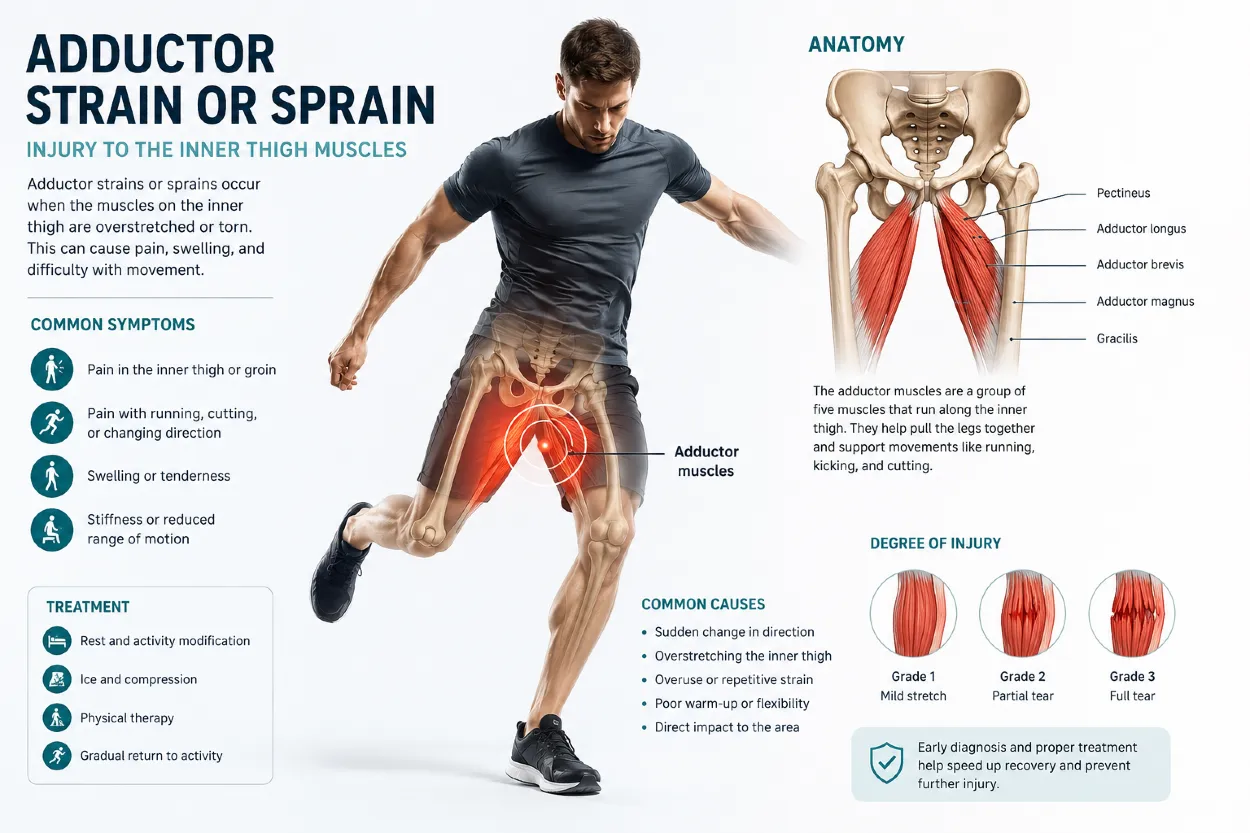
Adductor Muscle Strain (Inner Thigh Muscle Injury)
Adductor strain is the single most common cause of groin pain in athletes. It occurs when the adductor muscles on the inner thigh are overstretched or forced into a strong contraction.
Typical symptoms include:
- Sharp groin pain during movements such as leg adduction or lifting the knee
- Pain during wide leg positions or forced stretching
- Tenderness along the inner thigh or pubic bone
- Difficulty sprinting, kicking, or changing direction
Adductor strains range from mild overstretching to partial or complete muscle tears.
Other Muscle Injuries
Several additional muscles can contribute to groin pain when injured:
- Iliopsoas — hip flexor strain or tendinopathy causing deep groin pain, especially when lifting the knee
- Rectus femoris — injury at its origin above the hip joint, common in kicking sports
- Sartorius — pain along the front‑inner hip region
- Abdominal wall muscles — rectus abdominis and obliques may be involved in sports hernia/athletic pubalgia
These injuries often mimic adductor pain and may coexist in athletes.
2. Other Injuries
Not all athletic groin pain comes from muscles. Bone‑related injuries are also common, especially in young athletes exposed to repetitive stress.
Avulsion Fracture
An avulsion fracture occurs when a tendon pulls off a small piece of bone at its attachment site. This injury is more common in adolescents because their growth plates are not fully closed.
Typical locations:
- The iliac crest (ilium)
- The ischial tuberosity (sit bone)
Symptoms include sudden pain, weakness, and difficulty using the affected muscle group.
Stress Fractures of the Femoral Neck or Pubic Bone
Stress fractures are tiny cracks in the bone caused by repetitive overload. They are common in runners, football players, and basketball players.
Key features:
- Gradually increasing groin pain
- Pain that worsens with weight‑bearing activity
- Localized tenderness
- Pain that improves with rest
Early recognition is crucial to prevent progression to a complete fracture.
Recovery and Healing Time
General recovery principles for muscle injuries include:
- Rest and activity modification
- Ice application
- Elevation of the leg
- Compression if swelling is present
Typical healing times:
- Mild muscle strains: a few days to 2–3 weeks
- Moderate to severe strains or partial tears: 6–12 weeks
- Complete ruptures or significant avulsion injuries: may require longer rehabilitation or surgical evaluation
3. Overuse Syndromes
Overuse syndromes in the groin represent a group of injuries caused by repetitive loading, leading to gradual tissue irritation and pain. Unlike acute injuries, where there is a clear traumatic event, overuse injuries develop slowly due to continuous mechanical stress during physical activity.
These conditions most commonly occur at tendon attachment sites — where the muscle and tendon anchor to the bone. Pain usually develops gradually and is provoked by physical activity, especially movements that load the affected structure.
Muscle‑Related Overuse Syndromes
Similar to acute muscle injuries, the most common overuse syndrome in the groin involves the adductor muscles. Repetitive stress on the adductor tendons can lead to chronic irritation and pain during running, cutting, or kicking movements.
Other frequent muscle‑related overuse syndromes include:
- Rectus abdominis insertional overload — irritation at the attachment of the abdominal muscles to the pubic bone
- Iliopsoas overuse syndrome — causing deep anterior groin pain, especially during hip flexion activities
In sports medicine literature, these conditions are sometimes grouped under terms like “sports groin” or “sports hernia”, although this is misleading because a true hernia is usually not present.
Osteitis Pubis
Osteitis pubis is a chronic inflammatory condition affecting the pubic symphysis and surrounding soft tissues. It is caused by repetitive stress on the pelvis, especially in sports that involve running, twisting, and kicking.
Typical patient groups:
- Long‑distance runners
- Football (soccer) players
- Dancers
Key symptoms include:
- Gradual onset of groin pain
- Pain during physical activity, especially running or kicking
- Pain radiating toward the inner thigh, lower abdomen, or pubic bone
- Worsening symptoms with continued activity
Osteitis pubis is one of the hallmark overuse injuries in athletes with chronic groin pain.
Non‑Athletic Causes of Groin Pain
Non‑athletic causes of groin pain include a wide range of conditions that are not related to sports injuries or mechanical overload. These causes often involve internal organs, nerves, the hip joint, inguinal hernias, or lymphatic structures. Unlike athletic injuries, which typically produce sharp, movement‑dependent pain, non‑athletic causes may lead to deep, persistent, or radiating pain that can occur even at rest.
Groin pain from non‑athletic sources is frequently associated with:
- Hip joint disorders
- Inguinal hernias
- Nerve compression
- Kidney or urinary tract conditions
- Reproductive organ disorders
- Enlarged lymph nodes
These conditions often present with different symptom patterns compared to sports‑related injuries and may require imaging or laboratory evaluation to determine the exact cause.
In the following sections, we will outline the most common non‑athletic causes of groin pain, along with their typical symptoms and clinical characteristics.
4. Inguinal and Femoral Hernias
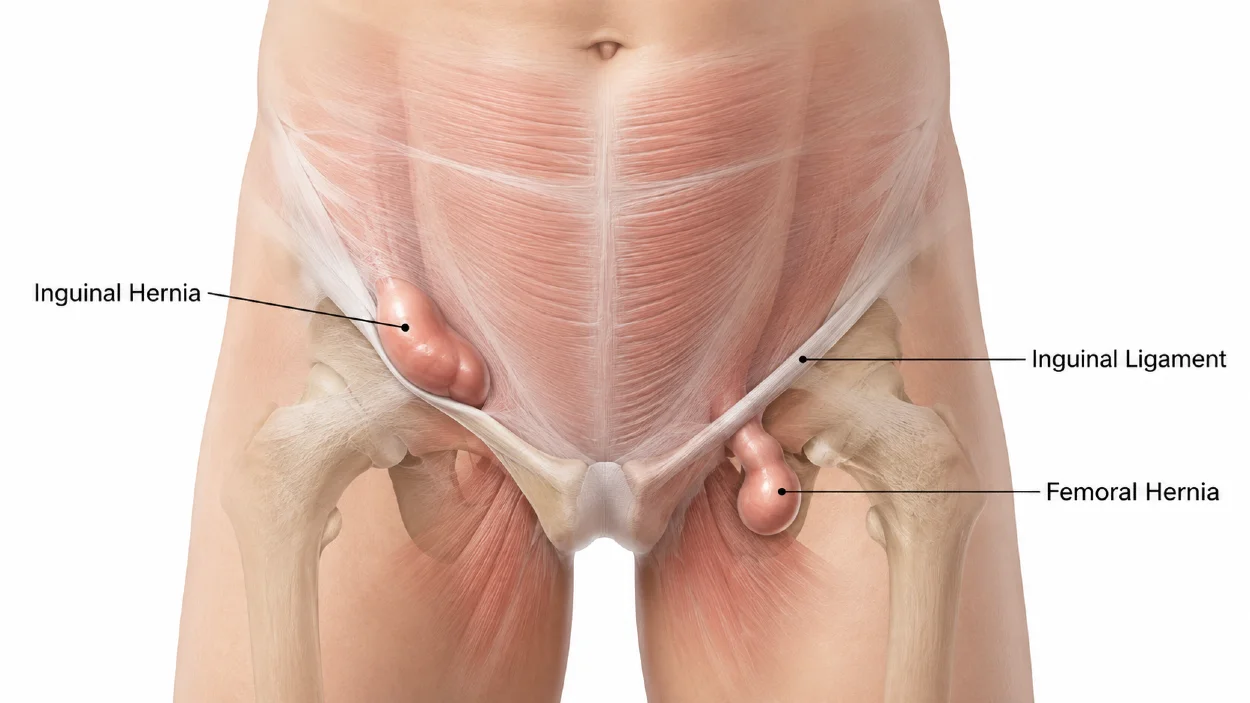
A hernia occurs when a weak spot in the abdominal wall allows internal organs — most commonly a portion of the intestine — to protrude outward. This often creates a visible bulge in the groin region, which may or may not be painful. Hernias are among the most common non‑athletic causes of groin pain.
In the groin area, three main types of hernias are typically seen.
Inguinal Hernia (Groin Hernia)
An inguinal hernia is the most common type of groin hernia. It occurs when abdominal contents push through a weakened area of the abdominal wall in the inguinal canal.
Typical features include:
- A tender or soft bulge in the groin
- Dull groin pain when lifting, coughing, or straining
- A feeling of pressure, heaviness, or discomfort
- Bulge that may disappear when lying down
Inguinal hernias are often associated with repetitive straining, chronic coughing, or heavy lifting.
Femoral Hernia
A femoral hernia is less common but occurs more frequently in women, especially older adults. It is located lower in the groin, below the inguinal ligament, whereas inguinal hernias sit slightly higher.
Key characteristics:
- Small bulge in the upper thigh or lower groin
- More common in women
- Higher risk of complications such as incarceration or strangulation
Because femoral hernias can be subtle, they are sometimes diagnosed late.
Sports Hernia (Athletic Pubalgia)
A sports hernia is not a true hernia. Despite the name, there is usually no actual protrusion of abdominal organs. Instead, it involves weakening or tearing of the abdominal wall or tendon attachments near the pubic bone.
It is most commonly diagnosed in:
- Football (soccer) players
- Hockey players
- Athletes performing repetitive twisting, sprinting, or kicking
Typical symptoms:
- Pain in the lower abdomen and groin
- Pain that worsens with twisting, sprinting, or sit‑ups
- No visible bulge
Treatment often includes rest, physiotherapy, and in some cases, surgery.
5. Hip‑Related Causes of Groin Pain
Several disorders of the hip joint can present primarily as groin pain. This is because the hip joint and the groin share overlapping nerve pathways, and pain originating deep within the hip is often felt in the front of the hip or the groin.
In older adults, the most common cause is hip osteoarthritis, while younger individuals more frequently experience structural or mechanical hip problems.
Hip‑related groin pain is typically described as deep, aching, or sharp, and often worsens with walking, prolonged sitting, bending the hip, or rotational movements.
Hip Osteoarthritis
Hip osteoarthritis — often called “wear‑and‑tear arthritis” — is a degenerative joint disease most common in older adults. Typical symptoms include:
- Pain in the groin and front of the hip
- Morning stiffness and reduced hip mobility
- Difficulty walking, climbing stairs, or rising from a chair
- Gradual loss of range of motion
Hip osteoarthritis can significantly limit daily activities and is one of the most frequent non‑athletic causes of chronic groin pain.
Avascular Necrosis of the Femoral Head
Avascular necrosis (AVN) occurs when the blood supply to the femoral head is disrupted, leading to bone death and eventual collapse of the joint surface. Common causes include:
- Previous hip trauma (e.g., hip fracture)
- Long‑term corticosteroid use
- Chronic alcohol abuse
Symptoms typically include deep groin pain that worsens with weight‑bearing and may progress rapidly as the condition advances.
Femoroacetabular Impingement (FAI)
Femoroacetabular impingement is most often seen in younger and middle‑aged adults. It occurs when abnormal bone shapes on the femoral head or acetabulum cause the bones to pinch against each other during movement.
Typical symptoms:
- Groin pain ranging from dull discomfort to sharp pain
- Pain triggered by hip flexion, twisting, or prolonged sitting
- Reduced hip mobility
- Symptoms that worsen with sports or repetitive hip loading
FAI is considered by many experts to be a precursor to hip osteoarthritis.
Hip Labral Tear
A labral tear involves damage to the ring of cartilage (labrum) that surrounds the hip socket and helps stabilize the joint. It is commonly associated with sports, trauma, or underlying FAI.
Key symptoms include:
- Persistent groin or anterior hip pain
- Pain that worsens with walking, running, or prolonged sitting
- Clicking, catching, or a “giving‑way” sensation in the hip
- Reduced hip mobility
Labral tears are a frequent cause of chronic groin pain in active individuals.
6. Urinary Tract Conditions
Diseases of the urinary tract can also cause groin pain. The two most common conditions that refer pain to the groin are kidney stones and bladder inflammation (cystitis). These conditions often produce pain that is not related to movement, which helps distinguish them from musculoskeletal causes.
Kidney stones are the most frequent urinary tract condition associated with groin pain. Bladder inflammation can also cause discomfort in the lower abdomen and groin in both men and women.
Kidney stones are hard mineral deposits that form inside the kidney. Pain typically begins when the stone starts moving down the urinary tract. The pain is usually very intense and unrelated to physical activity or movement. It is most commonly felt between the ribs and the hip or in the lower abdomen, and it may radiate into the groin. Blood in the urine may also be present. Anyone who suspects kidney stones should seek medical evaluation.
Bladder inflammation (cystitis) is a common condition, especially in women. Cystitis can cause discomfort and pain in various parts of the lower abdomen, including the groin region. Groin pain from cystitis is usually bilateral and results from irritation of the bladder wall. The infection may spread to the kidneys, which is typically accompanied by fever and general malaise. Cystitis often requires antibiotic treatment prescribed by a healthcare professional.
7. Groin Pain Caused by Nerve Compression
Groin pain can also be caused by nerve compression or nerve irritation. This most commonly involves compression of the nerve roots as they exit the lumbar spine, typically due to a herniated disc or narrowing of the neural foramina caused by degenerative changes.
Disc herniation is more frequently seen in younger and middle‑aged adults, while degenerative narrowing is a more common cause in older individuals.
The nerves most often involved are the L1–L3 nerve roots, which supply sensation to the groin and upper thigh. When these nerves are irritated, patients may experience groin pain radiating down the leg, which can be present continuously and often worsens at night. Pain may also be triggered by walking, prolonged sitting, or certain movements. Lower back pain may or may not be present, which can make diagnosis less straightforward.
Nerve compression is confirmed using MRI imaging. Treatment typically includes physical therapy, activity modification, and pain‑relief strategies. Symptoms may last from several weeks to several months. In a subset of patients, surgical treatment may be required if conservative measures fail or if neurological symptoms progress.
8. Groin Pain in Women
Groin pain in women can indicate a variety of medical conditions. Because the female reproductive system differs anatomically from the male, certain disorders are unique to women and may present with groin discomfort. Groin pain in women — whether on the left or right side — may be caused by conditions affecting the ovaries, uterus, or even an ectopic pregnancy.
Ovarian cysts are fluid‑filled sacs that develop inside or on the surface of the ovary. Many cysts cause no symptoms, but when symptoms do occur, they may include pelvic pain, groin pain, irregular menstrual cycles, or discomfort during sexual intercourse. Women who suspect ovarian cysts should consult their gynecologist.
Endometriosis occurs when endometrial tissue — normally found inside the uterus — grows outside of it. Common symptoms include severe menstrual cramps, pain during or after intercourse, lower abdominal pain, and groin pain. Endometriosis is a frequent cause of chronic pelvic and groin discomfort in reproductive‑age women.
Ectopic pregnancy develops when a fertilized egg implants outside the uterus, most commonly in the fallopian tube. This is a medical emergency because the tube can rupture, causing severe internal bleeding. Symptoms typically include intense, one‑sided pelvic or groin pain, vaginal bleeding, dizziness, or fainting. Immediate medical attention is essential.
9. Groin Pain in Men
Groin pain in men — whether on the left or right side — can be caused by conditions affecting the male reproductive organs, particularly the testicles and prostate. When groin pain is not related to sports injuries or overuse, disorders of the scrotum or prostate are among the most common non‑athletic causes.
Varicocele is a dilation of the veins within the scrotum caused by malfunctioning venous valves, leading to blood pooling and enlarged testicular veins. It is very common and usually harmless. Many varicoceles cause no symptoms, but some may lead to groin pain, scrotal discomfort, or reduced fertility. Men with symptoms or fertility concerns should consult a urologist.
Hydrocele, a buildup of fluid around the testicle, can also cause scrotal swelling and groin discomfort.
Testicular torsion is a medical emergency that occurs when the testicle twists around its spermatic cord, cutting off blood supply. It causes sudden, severe scrotal pain that often radiates into the groin. Immediate medical attention is essential to prevent permanent testicular damage.
Orchitis is inflammation of one or both testicles, usually due to bacterial or viral infection. It causes pain, swelling, and redness of the scrotum, often accompanied by groin pain and fever.
Epididymitis — inflammation of the epididymis — produces similar symptoms and is a common cause of scrotal and groin discomfort in adult men.
Prostatitis is inflammation of the prostate gland, which sits below the bladder and surrounds the urethra. It may be acute (usually bacterial) or, more commonly, chronic. Symptoms include groin pain, lower abdominal or pelvic pain, painful urination, and a sensation of incomplete bladder emptying.
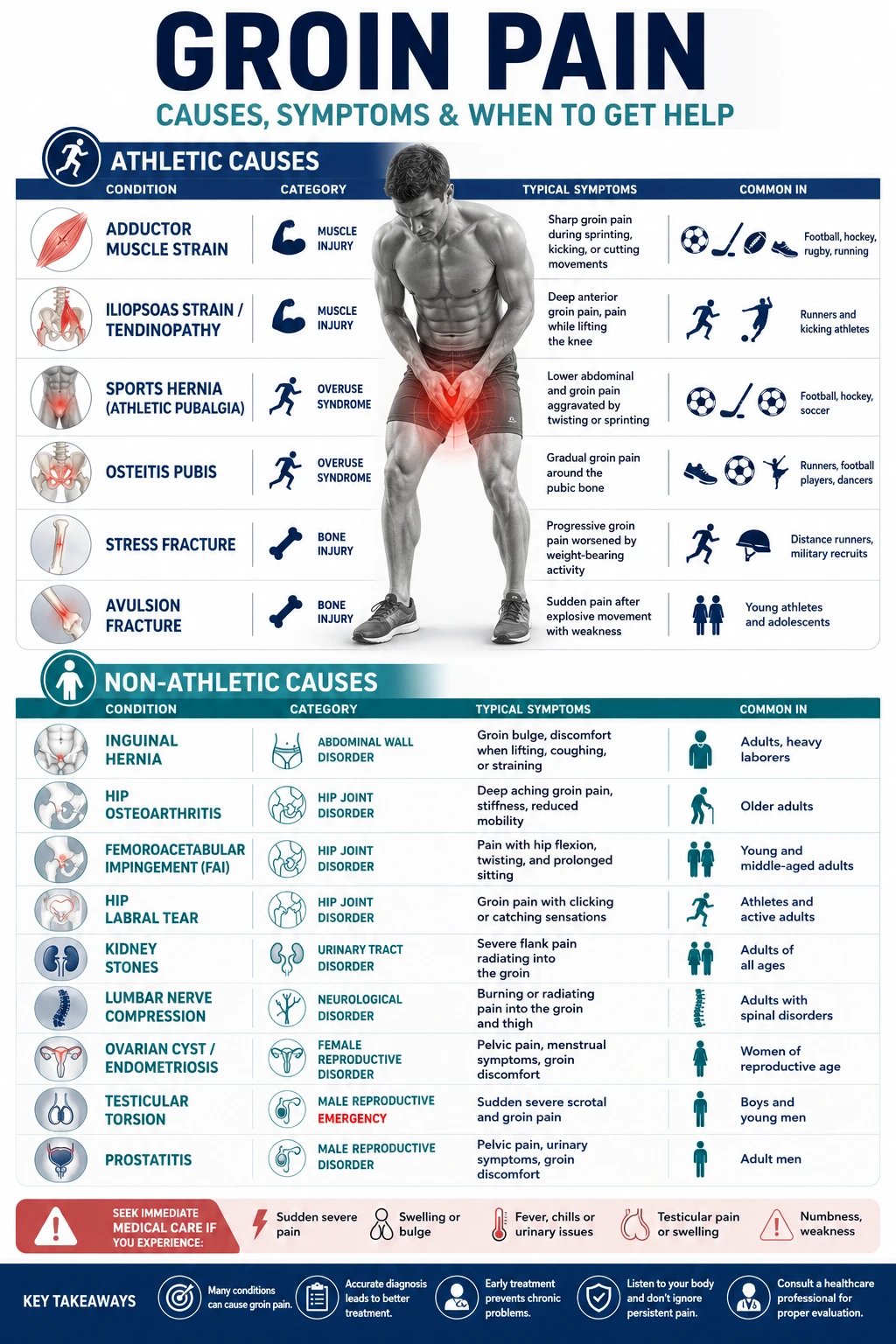
| Condition | Category | Typical Symptoms | Common in |
|---|---|---|---|
| Athletic Causes of Groin Pain | |||
| Adductor Muscle Strain | Muscle Injury | Sharp groin pain during sprinting, kicking, or cutting movements | Football, hockey, rugby, running |
| Iliopsoas Strain / Tendinopathy | Muscle Injury | Deep anterior groin pain, pain while lifting the knee | Runners and kicking athletes |
| Sports Hernia (Athletic Pubalgia) | Overuse Syndrome | Lower abdominal and groin pain aggravated by twisting or sprinting | Football, hockey, soccer |
| Osteitis Pubis | Overuse Syndrome | Gradual groin pain around the pubic bone | Runners, football players, dancers |
| Stress Fracture | Bone Injury | Progressive groin pain worsened by weight-bearing activity | Distance runners, military recruits |
| Avulsion Fracture | Bone Injury | Sudden pain after explosive movement with weakness | Young athletes and adolescents |
| Non-Athletic Causes of Groin Pain | |||
| Inguinal Hernia | Abdominal Wall Disorder | Groin bulge, discomfort when lifting, coughing, or straining | Adults, heavy laborers |
| Hip Osteoarthritis | Hip Joint Disorder | Deep aching groin pain, stiffness, reduced mobility | Older adults |
| Femoroacetabular Impingement (FAI) | Hip Joint Disorder | Pain with hip flexion, twisting, and prolonged sitting | Young and middle-aged adults |
| Hip Labral Tear | Hip Joint Disorder | Groin pain with clicking or catching sensations | Athletes and active adults |
| Kidney Stones | Urinary Tract Disorder | Severe flank pain radiating into the groin | Adults of all ages |
| Lumbar Nerve Compression | Neurological Disorder | Burning or radiating pain into the groin and thigh | Adults with spinal disorders |
| Ovarian Cyst / Endometriosis | Female Reproductive Disorder | Pelvic pain, menstrual symptoms, groin discomfort | Women of reproductive age |
| Testicular Torsion | Male Reproductive Emergency | Sudden severe scrotal and groin pain | Boys and young men |
| Prostatitis | Male Reproductive Disorder | Pelvic pain, urinary symptoms, groin discomfort | Adult men |
Diagnosis of Groin Pain
Accurate diagnosis of groin pain requires a structured clinical approach because symptoms may originate from muscles, tendons, nerves, the hip joint, abdominal wall, urinary tract, or reproductive organs. A detailed medical history is essential to determine whether the pain is related to physical activity, trauma, internal organ disorders, or systemic illness.
Clinical examination typically includes assessment of gait, hip range of motion, abdominal wall integrity, palpation of the groin, and evaluation of the spine. Depending on the suspected cause, several diagnostic tests may be used:
- Ultrasound — useful for detecting muscle injuries, tendon pathology, hernias, and scrotal conditions
- X‑ray — helpful for identifying hip osteoarthritis or bone abnormalities
- MRI — the most sensitive method for evaluating soft tissues, labral tears, nerve compression, and early bone stress injuries
- CT scan — occasionally used for complex bone injuries or kidney stones
- Laboratory tests — indicated when infection, inflammation, or systemic disease is suspected
A precise diagnosis ensures that treatment is targeted and effective.
Treatment of Groin Pain
Treatment depends on the underlying cause, but most patients benefit from a structured, stepwise approach. General management of groin pain includes:
- Rest and activity modification to reduce mechanical stress
- Ice or heat therapy depending on the type of injury
- NSAIDs or analgesics for pain relief
- Physical therapy, focusing on mobility, strengthening, and gradual return to activity
- Manual therapy for soft‑tissue dysfunction or hip joint stiffness
- Core and pelvic stability exercises to reduce recurrent strain
Urgent medical evaluation is required for conditions such as testicular torsion, ectopic pregnancy, severe kidney stone pain, or rapidly worsening neurological symptoms.
Surgical treatment may be necessary for:
- Inguinal or femoral hernias
- Labral tears unresponsive to conservative therapy
- Advanced hip osteoarthritis
- Severe nerve compression
- Testicular torsion (immediate surgery required)
Most patients recover well with early diagnosis and appropriate management.
FAQ: Groin Pain
1. What does it mean when I have groin pain radiating down the leg? This often suggests nerve compression from the lumbar spine (L1–L3), but hip disorders can also refer pain down the thigh.
2. Why do I feel sharp groin pain when walking? This may be caused by hip joint problems such as FAI, labral tears, or osteoarthritis.
3. What causes groin pain on the left vs right side? Side‑specific pain may indicate hernias, ovarian or testicular conditions, kidney stones, or unilateral muscle injuries.
4. Can groin pain come from the hip? Yes — hip osteoarthritis, labral tears, and FAI commonly present as groin pain.
5. Is groin pain in women different from men? Women may experience groin pain from ovarian cysts, endometriosis, or ectopic pregnancy, while men more often have testicular or prostate‑related causes.
6. When should I worry about groin pain? Seek urgent care if pain is severe, sudden, associated with fever, vomiting, dizziness, scrotal swelling, or suspected torsion or ectopic pregnancy.
7. Can groin pain be muscular even without injury? Yes — overuse syndromes, tendon irritation, and core muscle dysfunction can cause chronic groin pain without a single traumatic event.
Conclusion
Groin pain is a complex symptom with many potential causes, ranging from simple muscle strain to hip joint disorders, nerve compression, urinary tract disease, and reproductive organ conditions. A careful clinical evaluation is essential to identify the underlying problem and guide appropriate treatment. Most causes of groin pain respond well to early diagnosis, targeted therapy, and gradual return to activity. Persistent, severe, or unexplained groin pain should always be evaluated by a healthcare professional to prevent complications and ensure optimal recovery.
BMJ Best Practice. Groin Pain Assessment and Differential Diagnosis. BMJ clinical guide: Evaluation, causes, and management of groin pain
Mitrousias V, Chytas D, Banios K, et al. Anatomy and Terminology of Groin Pain: Current Concepts. Journal of ISAKOS. 2023;8:381–386. Current concepts review: Groin anatomy, terminology, and clinical classification
Suarez JC, Ely EE, Mutnal AB, et al. Comprehensive Approach to the Evaluation of Groin Pain. Journal of the American Academy of Orthopaedic Surgeons. 2013;21(9):558–570. Orthopedic review: Clinical evaluation and differential diagnosis of groin pain
Healthdirect Australia. Groin Pain or Swelling. Patient guide: Causes, symptoms, and when to seek medical care for groin pain
Thorborg K, Sheen AJ. Inguinal-Related Groin Pain and/or Disruption in Athletes: Current Understanding, Assessment and Management Strategies. Open Access Journal of Sports Medicine. 2026;16:510774. Narrative review: Current concepts in inguinal-related groin pain assessment and management in athletes