
Deltoid pain (also known as deltoideus pain or deltoid muscle pain) refers to pain located in the outer shoulder caused by irritation, strain, or injury of the deltoid muscle. It commonly occurs due to overuse, repetitive overhead movements, or sudden mechanical stress on the shoulder.
This type of pain is typically felt on the lateral aspect of the shoulder and may worsen with arm movement, lifting, or direct pressure on the deltoid muscle.
Understanding the difference between true deltoid muscle pain and referred pain from the rotator cuff or cervical spine is important for accurate diagnosis and effective treatment. In most cases, deltoid pain is mechanical in nature and responds well to conservative management, including rest, physical therapy, and targeted rehabilitation.
- Deltoid pain is most commonly caused by muscle strain, overuse, or microtrauma of the deltoid muscle.
- It typically presents as localized deltoid muscle pain over the outer (lateral) shoulder.
- Pain may worsen with arm elevation, lifting, or overhead movements, especially under load.
- Referred pain from the rotator cuff or cervical spine can mimic true deltoid pain.
- Deltoideus pain can be acute (injury-related) or chronic (overuse or poor biomechanics).
- Diagnosis is based on clinical examination, functional assessment, and pain pattern evaluation.
- Most cases respond well to conservative treatment, including rest, physiotherapy, and exercise.
What Is Deltoid Pain?
Deltoid pain (also referred to as deltoideus pain or deltoid muscle pain) is pain located over the outer shoulder caused by irritation, strain, or injury of the deltoid muscle. It most commonly occurs due to overuse, repetitive overhead activity, or acute trauma affecting the muscle fibers.
Definition:
Deltoid pain is pain in the outer shoulder caused by injury or irritation of the deltoid muscle, typically presenting as localized pain that worsens with movement or pressure.
It is important to distinguish deltoid muscle pain from other types of shoulder pain. Muscle-related pain is usually localized and worsens with movement or palpation, while joint-related pain originates from structures such as the shoulder joint and may be deeper and more diffuse. In contrast, nerve-related pain (neuropathic pain) often radiates, may include numbness or tingling, and can extend beyond the shoulder into the arm.
Understanding whether the pain is muscular, joint-related, or nerve-related is essential for accurate diagnosis and appropriate treatment.
Deltoid Muscle Anatomy and Function
The deltoid muscle is a large, triangular muscle covering the outer shoulder that is responsible for arm movement, especially lifting and rotating the arm. It plays a key role in shoulder stability and mobility.
The deltoid muscle plays a key role in shoulder stability and mobility. It is divided into three parts: the anterior, middle, and posterior fibers, each contributing to different movements of the arm.
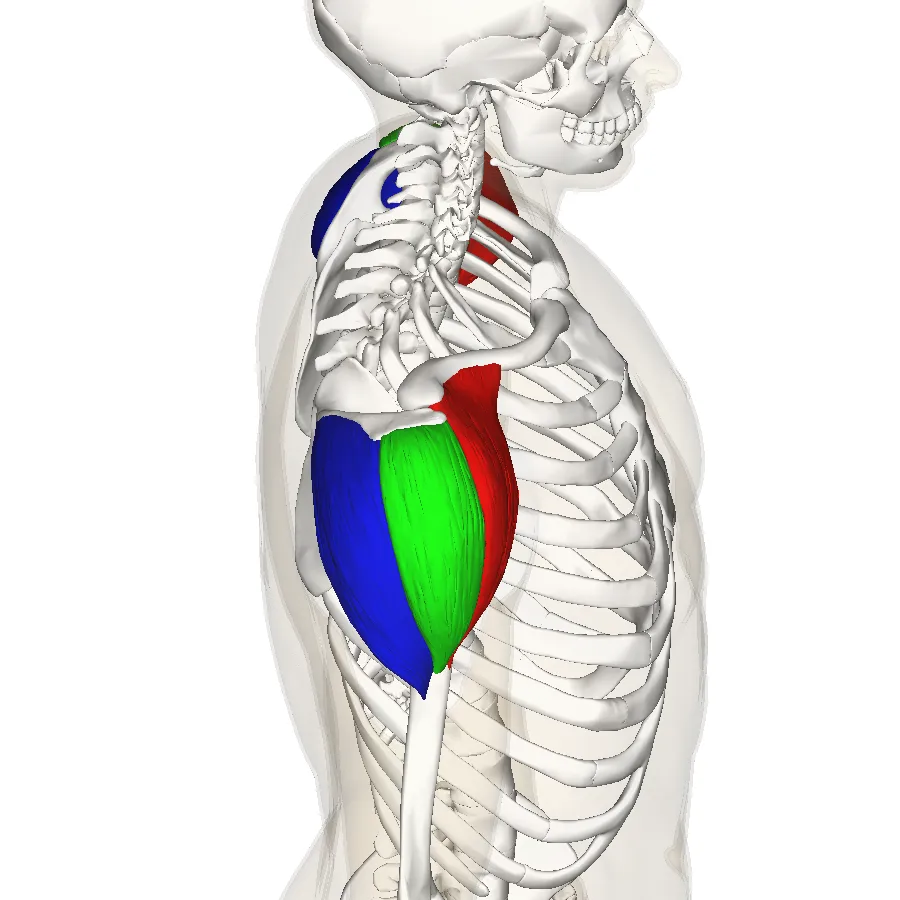
The middle portion is primarily responsible for arm abduction, while the anterior and posterior fibers assist in flexion, extension, and rotation. Because of its constant involvement in daily activities, the deltoid muscle is highly susceptible to overuse, strain, and injury.
Causes of Deltoid Pain
Deltoid pain is most commonly caused by muscle strain, overuse, repetitive overhead activity, or direct trauma to the shoulder.
In many cases, deltoid muscle pain develops due to repetitive stress or sudden overload of the muscle, especially during activities involving lifting, throwing, or overhead movements. Poor posture and improper biomechanics can further increase stress on the deltoid muscle.
Other possible causes include referred pain from the rotator cuff, cervical spine, or nearby soft tissue structures. This is why deltoideus pain is sometimes confused with joint or nerve-related shoulder pain.
Common causes include:
- Referred pain from the rotator cuff or cervical spine
- Muscle strain due to sudden overload or improper lifting
- Overuse injuries from repetitive activities or sports
- Direct trauma to the shoulder
- Poor posture and prolonged improper positioning
Symptoms and Clinical Presentation of Deltoideus Pain
Deltoideus pain most commonly presents as localized discomfort in the outer shoulder, often resulting from muscle strain, overuse, or irritation. Symptoms can range from mild, activity-related discomfort to more persistent pain that limits shoulder function.
Common Symptoms
Deltoid pain is typically characterized by a combination of the following symptoms:
- localized outer shoulder pain
- tenderness over the deltoid muscle
- pain that worsens with movement or lifting the arm
- reduced strength or muscle weakness
- discomfort when pressing on the affected area
In many cases, the pain is described as a deep, aching sensation that becomes more noticeable during physical activity.
Pain Patterns
One of the key clinical features of deltoid pain is its behavior during movement and loading:
- deltoid muscle pain that increases with activity
- pain when lifting objects or carrying weight
- discomfort during overhead movements
- increased pain with direct pressure on the shoulder
These pain patterns help differentiate deltoideus pain from other shoulder conditions.
Acute vs Chronic Deltoid Pain
Deltoid pain can develop suddenly or gradually, depending on the cause:
Acute deltoid pain
- sudden onset, usually after injury or strain
- often associated with a specific event
- may involve sharp pain and reduced movement
Chronic deltoid pain
- develops over time due to overuse or poor posture
- persistent, dull, or aching pain
- often aggravated by repetitive activities
Understanding whether the pain is acute or chronic is essential for proper diagnosis and treatment.
Referred Pain vs True Deltoid Pain
Not all pain felt in the deltoid region originates from the deltoid muscle itself.
True deltoideus pain
- localized to the outer shoulder
- directly related to the deltoid muscle
- worsens with movement or pressure
Referred pain
- originates from other structures such as:
- rotator cuff
- cervical spine
- nearby nerves or soft tissues
- may radiate into the shoulder area
- often accompanied by additional symptoms such as neck pain or radiating discomfort
Distinguishing between these two types of pain is important, as it directly affects diagnosis and treatment decisions.
Key Clinical Insight
Deltoid pain is most often mechanical in nature, meaning it is influenced by movement, posture, and physical load.
However, if symptoms are persistent, worsening, or associated with neurological signs, further medical evaluation is recommended to rule out underlying conditions such as nerve compression or rotator cuff injury.
Deltoid Pain vs Rotator Cuff Injury (Detailed Comparison)
Deltoid pain and rotator cuff injuries are two of the most common causes of shoulder pain, but they differ in their underlying mechanisms, clinical presentation, and treatment approach. Because both conditions can cause pain with movement and overhead activity, they are often confused.
Understanding these differences is essential for accurate diagnosis and effective treatment.
Key Differences
Deltoid pain typically originates from the deltoid muscle itself, most often due to strain, overuse, or mechanical stress. The pain is usually localized to the outer shoulder and worsens with direct pressure or muscle activation.
In contrast, rotator cuff injuries involve the tendons and muscles that stabilize the shoulder joint, most commonly the supraspinatus tendon. These injuries often present with deeper shoulder pain, weakness, and difficulty performing overhead movements.
Another important distinction is that rotator cuff injuries frequently cause functional impairment, while deltoid muscle pain is more often related to localized discomfort without significant loss of strength.
Clinical Differentiation
In clinical practice, differentiation is based on:
- location of pain (localized vs deep shoulder pain)
- presence of weakness
- response to movement and loading
- specific physical examination tests
Rotator cuff injuries are more likely to present with weakness and limited range of motion, while deltoid pain is typically more superficial and mechanically triggered.
Diagnostic Approach
A thorough clinical examination is usually sufficient to distinguish between the two conditions.
- Deltoid pain → diagnosed clinically based on tenderness and pain patterns
- Rotator cuff injury → may require imaging such as MRI or ultrasound
Accurate diagnosis is essential because treatment strategies differ significantly.
Treatment Differences
Treatment depends on the underlying cause:
- Deltoid pain → usually responds well to rest, activity modification, and physical therapy
- Rotator cuff injury → may require more structured rehabilitation, and in some cases, injections or surgical intervention
| Feature | Deltoid Pain | Rotator Cuff Injury |
|---|---|---|
| Source of Pain | Deltoid muscle (outer shoulder) | Rotator cuff tendons (deep shoulder structures) |
| Pain Location | Localized lateral shoulder pain | Deeper shoulder pain, may radiate |
| Pain Trigger | Movement, pressure, muscle use | Overhead activity, lifting, arm rotation |
| Muscle Weakness | Usually mild or absent | Common and clinically significant |
| Range of Motion | Generally preserved | Often limited |
| Cause | Strain, overuse, mechanical stress | Tendon injury, degeneration, tear |
| Diagnosis | Clinical examination | Clinical + imaging (MRI/ultrasound) |
| Treatment | Conservative (rest, therapy) | Rehabilitation, possible injections or surgery |
Diagnosis of Deltoid Pain
The diagnosis of deltoid pain is primarily based on a combination of clinical examination and patient history. In many cases, imaging is not immediately required unless symptoms are severe, persistent, or unclear.
Clinical Examination
A thorough clinical examination is essential to identify the source of pain and rule out other conditions. It typically includes:
- palpation of the deltoid muscle to detect tenderness or localized pain
- assessment of range of motion to evaluate shoulder mobility and identify movement limitations
- strength testing to detect muscle weakness or functional impairment
During the examination, a healthcare professional also evaluates pain patterns and functional limitations to better understand the underlying cause.
Differential Diagnosis
Deltoideus pain can be mistaken for several other shoulder conditions, making differential diagnosis crucial.
Common conditions to rule out include:
- rotator cuff injury – often presents with pain, weakness, and limited shoulder movement
- bursitis – inflammation of the bursa causing localized shoulder pain and swelling
- nerve compression – may cause radiating pain, numbness, or tingling sensations
Accurate differentiation is essential to ensure appropriate treatment and avoid misdiagnosis.
Imaging (if needed)
Imaging is typically used when symptoms are persistent, severe, or not clearly explained by clinical examination.
- MRI is considered the most effective imaging method for evaluating soft tissue structures, including muscles, tendons, and nerves
- Ultrasound can be used to assess muscle injuries, inflammation, and dynamic shoulder movement
In many cases, imaging helps confirm the diagnosis and rule out more serious underlying conditions.
Because several shoulder conditions can mimic deltoideus pain, careful differential diagnosis is essential for accurate evaluation and appropriate treatment.
| Condition | Key Features | Differentiation from Deltoid Pain |
|---|---|---|
| Rotator Cuff Injury | Shoulder pain, weakness, limited range of motion, pain with overhead activity | Pain is deeper, often involves weakness and impaired shoulder function, not just localized deltoid pain |
| Bursitis | Inflammation of the bursa, swelling, tenderness, pain with movement or pressure | Often includes swelling and more diffuse shoulder pain rather than isolated deltoid muscle pain |
| Nerve Compression | Radiating pain, numbness, tingling, possible neurological symptoms | Pain is not localized only to the deltoid; often accompanied by sensory or neurological deficits |
| Cervical Spine Pathology | Neck pain, radiating shoulder pain, stiffness, possible arm symptoms | Pain originates from the neck and radiates to the shoulder, unlike isolated deltoid pain |
Treatment of Deltoid Pain
Treatment of deltoid pain focuses on reducing inflammation, relieving pain, and restoring normal shoulder function. In most cases, a conservative approach is highly effective, especially when symptoms are identified early.
Conservative Treatment
Conservative treatment is the first-line approach for most cases of deltoideus pain and is often sufficient for recovery.
Common methods include:
- rest to allow the deltoid muscle to heal and reduce further strain
- ice application to decrease inflammation and pain
- activity modification to avoid movements that trigger or worsen symptoms
These simple measures help reduce stress on the deltoid muscle and promote natural healing.
Physical Therapy
Physical therapy plays a key role in long-term recovery and prevention of recurrence.
It typically includes:
- strengthening exercises to improve deltoid and shoulder stability
- mobility exercises to restore full range of motion
- structured rehabilitation programs tailored to the patient’s condition
A well-designed rehabilitation plan improves function and reduces the risk of future injury.
Medications
Medications are often used to manage pain and inflammation, especially in the early stages.
- NSAIDs (nonsteroidal anti-inflammatory drugs) help reduce inflammation and pain
- pain relief medications may be used for short-term symptom control
These should be used under medical guidance, especially for prolonged symptoms.
When More Advanced Treatment Is Needed
In some cases, more advanced treatment options may be required if symptoms persist or worsen.
These may include:
- injections, such as corticosteroid injections, to reduce inflammation
- further medical evaluation to rule out underlying conditions like nerve compression or structural shoulder injuries
Advanced treatment is typically reserved for cases that do not respond to conservative management.
| Treatment Approach | Key Methods | Purpose / Benefits |
|---|---|---|
| Conservative Treatment | Rest, ice application, activity modification | Reduces inflammation, relieves pain, and allows natural healing of the deltoid muscle |
| Physical Therapy | Strengthening exercises, mobility work, rehabilitation programs | Improves shoulder strength, restores mobility, and prevents recurrence of deltoid pain |
| Medications | NSAIDs, pain relief medications | Helps control pain and inflammation, especially in the acute phase |
| Advanced Treatment | Injections, medical evaluation | Used for persistent or severe cases to reduce inflammation and address underlying causes |
Prevention and Lifestyle Changes
Preventing deltoideus pain is essential for maintaining long-term shoulder health and reducing the risk of recurrence. Most cases can be prevented by optimizing daily habits, improving biomechanics, and reducing unnecessary strain on the deltoid muscle.
Ergonomics
Proper ergonomics play a key role in preventing deltoid strain, especially in workplace settings.
- adjust desk, chair, and screen height to maintain neutral shoulder position
- avoid prolonged reaching or awkward arm positions
- ensure proper setup when working with computers or repetitive tasks
Good ergonomics reduces unnecessary load on the shoulder and supports healthy muscle function.
Posture
Maintaining correct posture is critical for reducing stress on the shoulder and surrounding structures.
- keep shoulders relaxed and aligned
- avoid slouching or forward head posture
- maintain a neutral spine during sitting and standing
Poor posture can increase strain on the deltoid muscle and contribute to chronic deltoid muscle pain over time.
Workload Management
Managing physical workload helps prevent overuse injuries and repetitive strain.
- avoid sudden increases in activity intensity
- take regular breaks during repetitive tasks
- distribute physical effort evenly throughout the day
Overloading the deltoid muscle is a common cause of deltoid pain, especially in athletes and active individuals.
Warm-up Routines
Proper warm-up routines prepare the muscles and reduce the risk of injury.
- perform dynamic stretching before physical activity
- gradually increase intensity during exercise
- activate shoulder muscles before lifting or overhead movements
A good warm-up improves blood flow, flexibility, and muscle readiness, significantly lowering injury risk.
When to See a Doctor (Red Flags)
Deltoid pain is often mild and resolves with rest, but certain symptoms may indicate a more serious underlying condition that requires medical evaluation.
You should see a doctor if you experience:
- severe or worsening pain that does not improve with rest
- muscle weakness in the shoulder or arm
- history of trauma, such as a fall or direct injury
- neurological symptoms, including numbness, tingling, or radiating pain
These red flags may suggest conditions such as nerve compression, rotator cuff injury, or other structural shoulder problems that require further assessment.
Early evaluation helps ensure accurate diagnosis and prevents complications.
FAQ (Frequently Asked Questions)
What causes deltoid pain?
Deltoid pain is most commonly caused by muscle strain, overuse, repetitive overhead activity, or direct trauma to the shoulder. It can also result from poor posture, improper biomechanics, or referred pain from the rotator cuff or cervical spine.
How long does deltoideus pain last?
The duration of deltoideus pain depends on the cause and severity. Mild cases may resolve within a few days to a couple of weeks with rest and conservative treatment, while more severe or chronic cases can last several weeks or longer.
How do you treat deltoid muscle pain?
Treatment typically includes rest, ice application, and activity modification. Physical therapy, including strengthening and mobility exercises, is often recommended. In some cases, medications such as NSAIDs or further medical evaluation may be necessary.
Can deltoid pain be serious?
Deltoid pain is usually not serious, but it can indicate underlying issues such as rotator cuff injuries, nerve compression, or other shoulder conditions. If the pain is severe, persistent, or associated with weakness or neurological symptoms, medical evaluation is recommended.
Conclusion
Deltoid pain is a common shoulder condition most often caused by muscle strain, overuse, or repetitive stress on the deltoid muscle. In many cases, symptoms are mild and improve with conservative treatment, including rest, ice, and physical therapy.
However, when pain persists or is accompanied by weakness, trauma, or neurological symptoms, further medical evaluation is important to rule out more serious conditions such as nerve compression or rotator cuff injury.
Early recognition, proper management, and preventive strategies such as good posture, ergonomics, and workload control are key to reducing the risk of deltoid muscle pain and maintaining long-term shoulder health.
Institute for Quality and Efficiency in Health Care (IQWiG). Overview: Shoulder pain. InformedHealth.org [Internet]. Cologne (Germany): IQWiG; 2006-. [Updated 2024 Apr 22]. Available from: NCBI Bookshelf
StatPearls Publishing. Rotator Cuff Injury. In: StatPearls [Internet]. Treasure Island (FL): StatPearls Publishing; 2025 Jan-. Available from: NCBI Bookshelf
Lewis JS. Rotator cuff related shoulder pain: assessment, management and uncertainties. Br J Sports Med. 2016;50(24):1497–1506. doi:10.1136/bjsports-2016-096515. PubMed
Luime JJ, Koes BW, Hendriksen IJ, et al. Prevalence and incidence of shoulder pain in the general population. Scand J Rheumatol. 2004;33(2):73–81. doi:10.1080/03009740310004667. PubMed
American Academy of Orthopaedic Surgeons (AAOS). Shoulder Pain and Common Shoulder Problems. Available from: OrthoInfo AAOS
Mitchell C, Adebajo A, Hay E, Carr A. Shoulder pain: diagnosis and management in primary care. BMJ. 2005;331:1124–1128. doi:10.1136/bmj.331.7525.1124. BMJ
Khan Y, Nagy MT, Malal J, Waseem M. The painful shoulder: shoulder impingement syndrome. Open Orthop J. 2013;7:347–351. doi:10.2174/1874325001307010347. PubMed