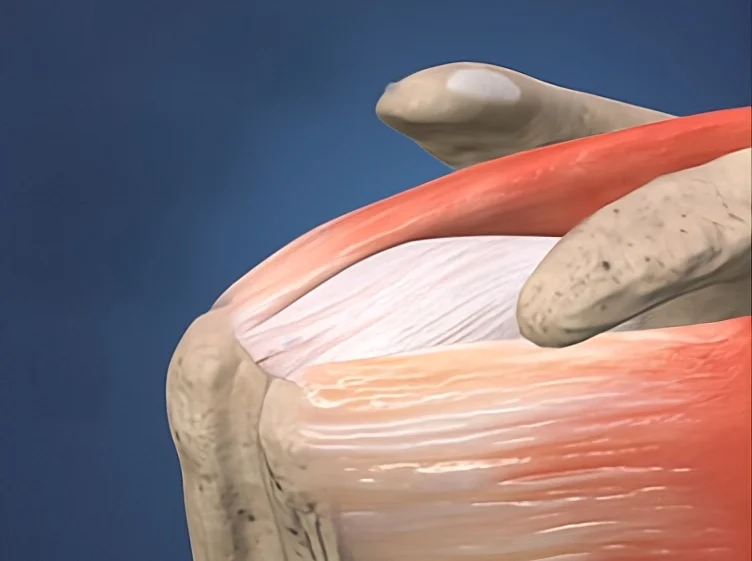
The supraspinatus is one of the four muscles that form the rotator cuff and plays a crucial role in shoulder movement and stability. The supraspinatus muscle originates from the supraspinous fossa of the scapula and continues as the supraspinatus tendon, which attaches to the greater tuberosity of the humerus. Together, the supraspinatus muscle and tendon are responsible for initiating arm elevation and maintaining proper alignment of the shoulder joint during movement.
Because of its anatomical position beneath the acromion and its involvement in repetitive shoulder activity, the supraspinatus tendon is particularly vulnerable to mechanical stress and degenerative changes. As a result, conditions affecting the supraspinatus muscle and supraspinatus tendon are among the most common causes of shoulder pain and rotator cuff injury.
Understanding the anatomy and function of the supraspinatus is essential for recognizing common shoulder disorders, including supraspinatus tendinopathy, impingement syndrome, and supraspinatus tendon tears.
Rotator Cuff Anatomy
The rotator cuff is a group of four muscles and their tendons that surround the shoulder joint and provide both stability and movement. These muscles originate from the scapula (shoulder blade) and attach to the head of the humerus, forming a functional cuff around the glenohumeral joint.
The rotator cuff consists of four muscles:
- Supraspinatus
- Infraspinatus
- Subscapularis
- Teres minor
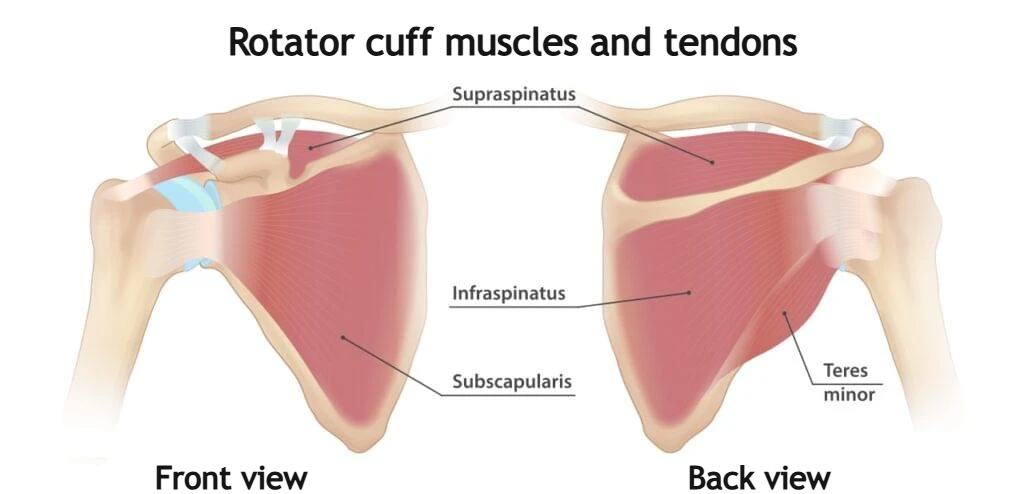
Among these, the supraspinatus muscle and supraspinatus tendon are the most frequently involved in shoulder injuries.
The primary function of the rotator cuff is to stabilize the humeral head within the glenoid cavity during shoulder movement. While larger muscles such as the deltoid generate powerful arm motion, the rotator cuff muscles ensure precise control and maintain joint stability.
The supraspinatus plays a particularly important role during arm elevation. The supraspinatus muscle initiates the first phase of shoulder abduction, while the supraspinatus tendon transmits the force of the muscle to the humerus. Because of its position beneath the acromion and its exposure to mechanical stress, the supraspinatus tendon is especially susceptible to degeneration and injury compared with the other rotator cuff tendons.
Anatomy of the Supraspinatus Muscle and Tendon
The supraspinatus muscle is one of the four muscles that form the rotator cuff of the shoulder. The rotator cuff also includes the infraspinatus, teres minor, and subscapularis muscles. Together, these muscles provide stability and controlled movement to the shoulder joint, particularly during arm elevation and rotation.
The supraspinatus muscle originates from the supraspinous fossa of the scapula (shoulder blade). From this origin, the muscle fibers run laterally beneath the acromion and converge into the supraspinatus tendon. This tendon passes through the subacromial space, a narrow anatomical corridor between the acromion and the head of the humerus.
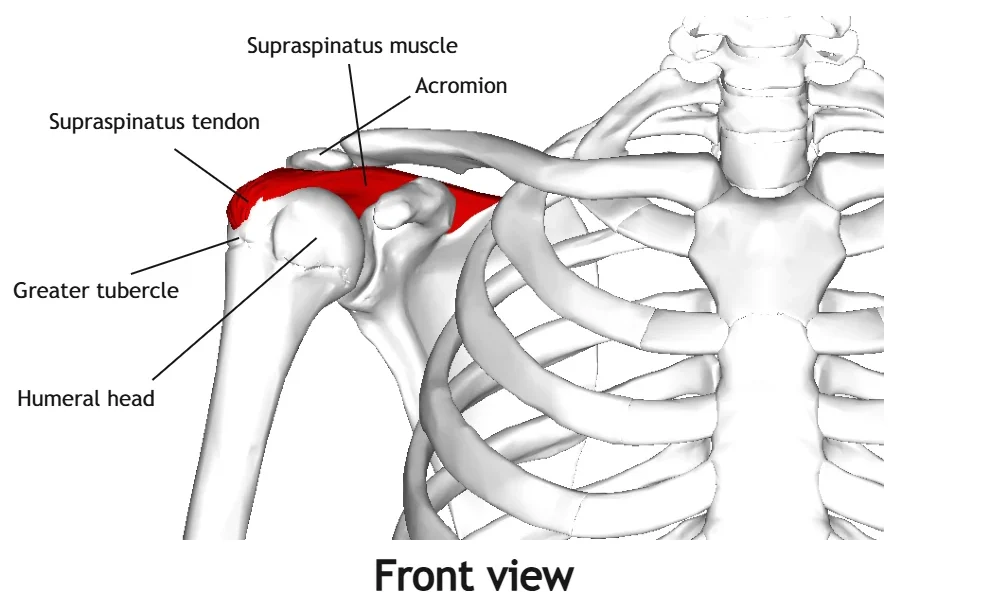
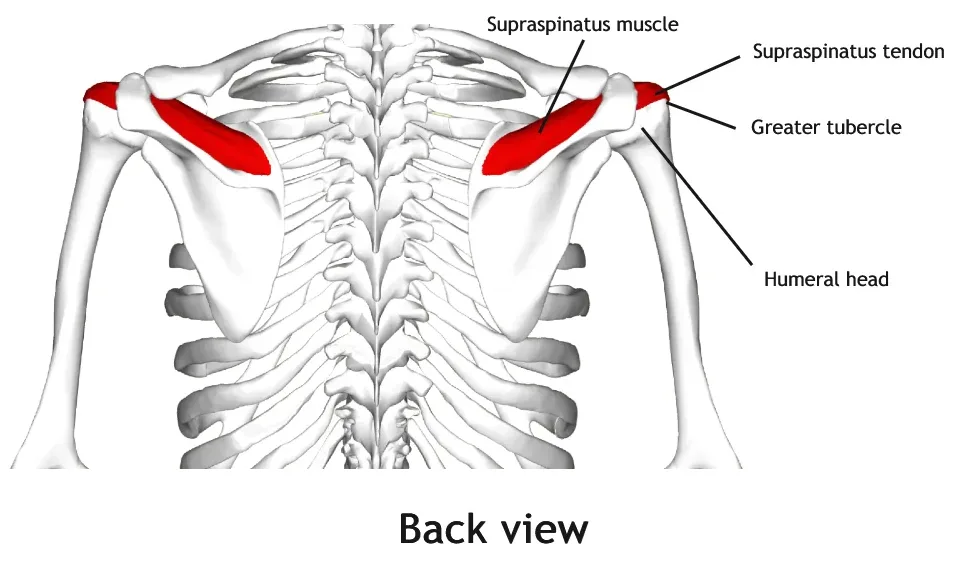
The supraspinatus tendon inserts onto the greater tubercle of the humerus, specifically on its superior facet. This anatomical position allows the muscle to effectively initiate shoulder abduction and contribute to stabilization of the glenohumeral joint.
The supraspinatus tendon is particularly vulnerable to mechanical stress because of its location in the confined subacromial space. During shoulder movement—especially repeated overhead activity—the tendon may experience compression against the acromion and surrounding structures. This biomechanical environment partly explains why the supraspinatus tendon is one of the most frequently injured tendons in the shoulder.
The muscle is innervated by the suprascapular nerve, which arises from the upper trunk of the brachial plexus (C5–C6 nerve roots). Blood supply to the supraspinatus muscle is provided primarily by the suprascapular artery, with additional contributions from surrounding vascular networks.
Understanding the anatomy of the supraspinatus muscle and tendon is essential for recognizing common shoulder disorders, including supraspinatus tendinopathy, subacromial impingement, and rotator cuff tears.
Function of the Supraspinatus Muscle
The supraspinatus muscle plays a crucial role in shoulder movement and stability. It is primarily responsible for initiating shoulder abduction, which is the movement of lifting the arm away from the body. Specifically, the supraspinatus muscle initiates the first 10–15 degrees of arm abduction, after which the deltoid muscle becomes the main contributor to further arm elevation.
In addition to initiating abduction, the supraspinatus tendon helps stabilize the glenohumeral joint, which is the main shoulder joint formed by the head of the humerus and the glenoid cavity of the scapula. During shoulder movement, the supraspinatus muscle works together with the other rotator cuff muscles to keep the humeral head centered within the glenoid socket.
This stabilizing function is extremely important because the shoulder joint has a very large range of motion but relatively limited structural stability. The rotator cuff muscles, including the supraspinatus, provide dynamic stabilization that prevents excessive upward movement of the humeral head during arm elevation.
The supraspinatus muscle is particularly active during overhead movements, such as reaching, throwing, or lifting objects above shoulder level. Because of this role, it is heavily used in many daily activities and sports, including swimming, tennis, volleyball, and weightlifting.
Another important function of the supraspinatus muscle is its role in force coupling within the rotator cuff. It works in coordination with muscles such as the infraspinatus and subscapularis to balance forces around the shoulder joint. This coordination allows smooth and controlled shoulder movement while protecting joint structures from excessive stress.
Due to its constant involvement in shoulder motion and its anatomical position within the narrow subacromial space, the supraspinatus tendon is particularly susceptible to overuse and degenerative changes. As a result, dysfunction of the supraspinatus muscle can significantly affect shoulder mobility, strength, and overall joint stability.
Why the Supraspinatus Tendon Is Prone to Injury
The supraspinatus tendon is particularly vulnerable to injury due to its unique anatomy and biomechanical function. Positioned beneath the acromion, the tendon passes through a narrow space as it attaches to the greater tuberosity of the humerus. This “critical zone” has relatively poor blood supply, making the tendon more susceptible to degeneration over time.
During everyday activities—especially overhead motions like lifting, throwing, or reaching—the supraspinatus muscle contracts repeatedly, placing stress on the tendon. Combined with age-related tendon wear, repetitive mechanical loading can easily lead to supraspinatus tendinopathy or partial tears.
Additionally, structural factors such as bone spurs on the acromion or poor posture can contribute to subacromial impingement, further increasing the risk of supraspinatus tendon injury. Over time, these repeated stresses can result in full-thickness tears of the supraspinatus tendon, which significantly compromise shoulder function.
Common Supraspinatus Pathology
The supraspinatus muscle and tendon are commonly affected by a variety of shoulder conditions. These pathologies can result from overuse, degenerative changes, or acute trauma, often causing pain, weakness, and limited range of motion. Understanding the most frequent supraspinatus disorders helps in early recognition and appropriate management.
Common supraspinatus pathologies:
1. Supraspinatus Tendinopathy
Supraspinatus tendinopathy involves degenerative changes in the tendon fibers due to chronic overuse or age-related wear. The tendon gradually becomes weakened and thickened, leading to structural changes that impair its ability to transmit force from the muscle to the humerus.
Patients with supraspinatus tendinopathy often experience chronic shoulder pain, especially during overhead movements or lifting the arm. The discomfort may worsen at night or after prolonged activity, and early treatment through physical therapy and activity modification can prevent progression to more severe tendon injuries.
2. Supraspinatus Tendon Tear
A supraspinatus tendon tear occurs when the tendon fibers are partially or completely disrupted. Partial-thickness tears affect only a portion of the tendon, while full-thickness tears extend through the entire tendon, sometimes causing retraction of the muscle from its insertion on the humerus.
Symptoms include pain, weakness, and limited shoulder mobility, particularly with abduction and overhead activity. Tears can result from acute trauma, degenerative changes, or a combination of both. Prompt diagnosis with imaging and appropriate treatment, whether conservative or surgical, is crucial to restore function and prevent further damage.
Learn more about supraspinatus tendon tears and their treatment options in our dedicated article: Supraspinatus Tendon Tear: Causes, Symptoms, Diagnosis and Treatment
3. Subacromial Impingement Syndrome
Subacromial impingement syndrome occurs when the supraspinatus tendon is compressed between the humeral head and the acromion during shoulder elevation. This repetitive compression can irritate the tendon and the overlying bursa, leading to inflammation and pain.
The condition is closely linked to supraspinatus tendon tears, as chronic impingement weakens the tendon over time. Patients typically report pain during overhead movements, reaching, or lifting, and conservative management often includes physical therapy, anti-inflammatory treatments, and posture correction to relieve pressure on the tendon.
4. Calcific Tendinitis of the Supraspinatus
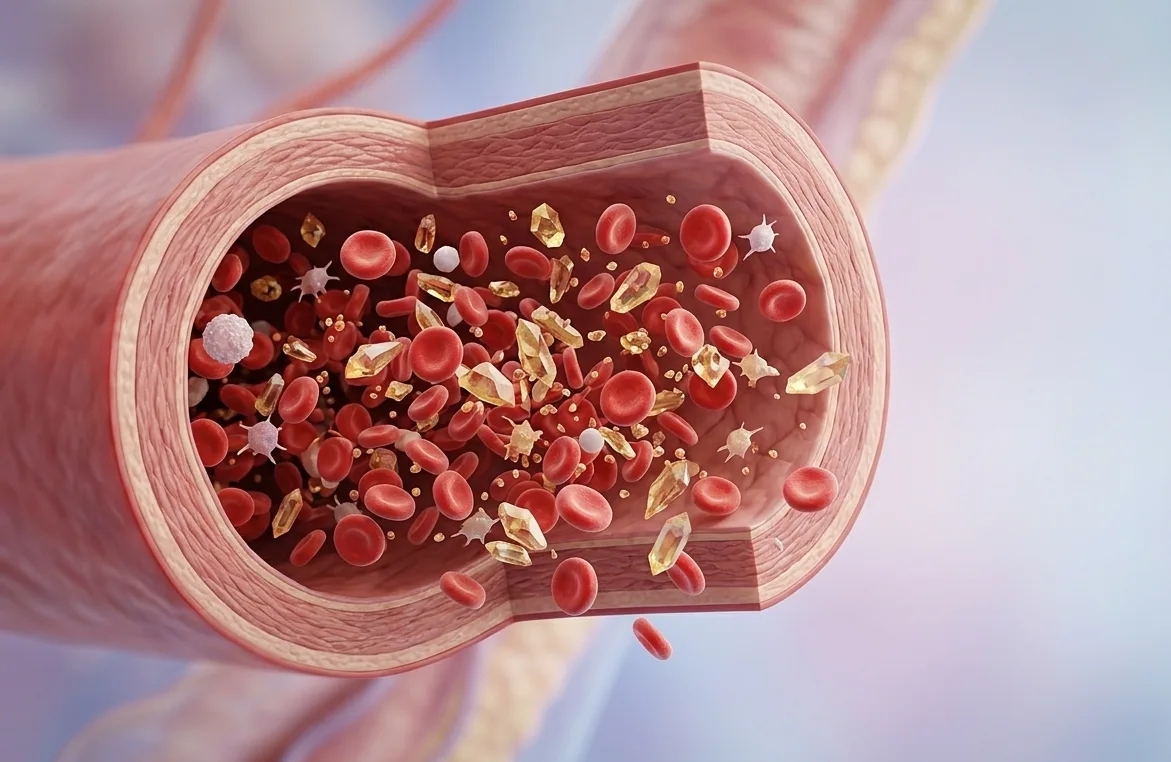
Calcific tendinitis is characterized by the deposition of calcium crystals within the supraspinatus tendon, leading to acute inflammation. The exact cause is unclear, but it is associated with tendon degeneration and repetitive microtrauma.
This condition often causes sudden and severe shoulder pain, sometimes limiting all arm movements. Swelling, tenderness, and a decreased range of motion are common, and treatment may involve rest, anti-inflammatory medication, physical therapy, or in some cases, ultrasound-guided removal of calcium deposits to reduce inflammation and restore function.
Prevention of Supraspinatus Injuries
Preventing injuries to the supraspinatus muscle and tendon is key to maintaining healthy shoulder function. Strengthening the rotator cuff, including the supraspinatus, helps stabilize the shoulder and reduces the risk of tendon overload.
Maintaining proper sports technique, especially during overhead movements, protects the supraspinatus tendon from repetitive stress. Good posture and avoiding chronic overuse further minimize the chances of developing supraspinatus tendinopathy or a tendon tear.
FAQ About the Supraspinatus Tendon and Muscle
What does the supraspinatus muscle do?
The supraspinatus muscle initiates arm abduction and helps stabilize the shoulder by keeping the humeral head centered in the glenoid cavity.
Can a supraspinatus tendon tear heal without surgery?
Partial supraspinatus tendon tears often improve with conservative treatment, while full-thickness tears may require surgical repair depending on severity and function.
Where is supraspinatus pain located?
Pain from a supraspinatus injury is usually felt on the outer shoulder and can radiate down the upper arm, especially during lifting or overhead movements.
How long does supraspinatus injury recovery take?
Recovery time varies: mild tendinopathy may improve in weeks, partial tears in 6–12 weeks, and post-surgical full-thickness tears may take 4–6 months.
What are common supraspinatus pathologies?
Frequent conditions affecting the supraspinatus tendon and muscle include tendinopathy, partial and full-thickness tears, subacromial impingement, and calcific tendinitis.
How can supraspinatus injuries be prevented?
Injury prevention involves strengthening the rotator cuff, maintaining proper sports technique, good posture, and avoiding chronic overuse of the shoulder.
Conclusion
The supraspinatus muscle and tendon play a crucial role in shoulder mobility and stability. Injuries such as tendon tears, tendinopathy, and impingement are common and can significantly impact daily activities. Early diagnosis and proper treatment are essential to restore function, reduce pain, and prevent long-term complications.